For a moment I could picture helping him sell it. Taking photographs, answering buyers, making the arrangement painless enough that he could do the right thing. I had done that sort of work for him before. Even then, part of me wanted to finish his problem so I could stop being inside it.
“I won’t keep it private,” I said. “And I’m not arranging your sale.”
Back in the office, I told Celia what he had admitted. Graham followed me in and didn’t contradict it. Celia called June again, with me beside her and Graham standing near the door.
June asked whether any of the grant had been spent on eligible production costs. Celia said no. The costume invoice predated the deposit, and the transfer had gone to Graham’s business.
“The spending deadline has passed,” June said. “You need to disclose the misuse and return the unspent award. Replacing it now doesn’t give you a new spending period.”
I had thought restitution might still buy us the production. Celia pulled up the remaining budget and went through it with me. Without the grant, there wasn’t enough. We could not make the numbers work by asking another volunteer to cover a little more.
“So we cancel,” I said.
Celia nodded. I looked away from her, toward the cupboard where we kept the rehearsal supplies. Children had already spent evenings learning lines for something we could no longer put on.
Graham said, “There must be another way to describe this.”
“No,” I said. “You repay it. The board records why. June gets the records.”
I wanted the show saved. I also wanted everyone who had heard his accusation to hear that it was false. I wasn’t going to pretend that second wish was noble, or give it up to make his repayment easier.
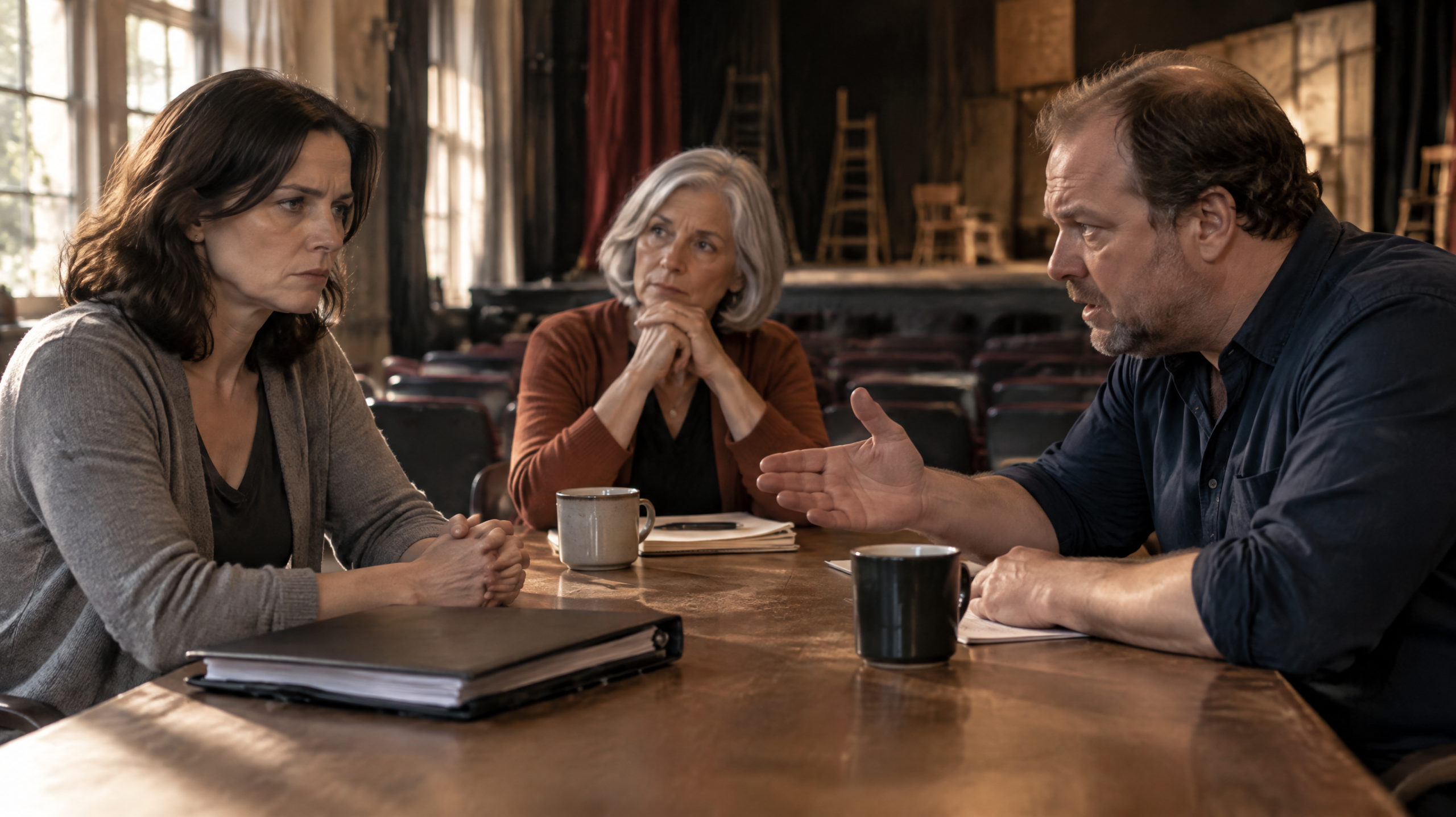
At the board meeting after the press sale, Celia put the sale receipt beside the cleared credit in the theater account. The full $4,800 was back. I checked the amount twice, then stopped myself from reaching for a pen. These were no longer my books to fix.
Graham sat across from me. When Celia asked him to explain the reimbursement for the minutes, he began with the shop rent.
“Start with Nora,” I said.
He looked down at the table.
“Nora didn’t receive the money. She didn’t buy those costumes or direct a payment to my business. I made that up.”
Celia worked through the records while the board listened. The cleared check showed the grant had arrived three weeks before the accusation. The transfer description used my name; the recipient detail identified his business. His emailed attachment supplied the false reason for paying it. Victor’s settled $620 invoice left no costume debt to reimburse.
Graham confirmed that he’d used the approval limit to authorize the transfer himself. He confirmed the rent payment and the lie about the missing check. Nobody asked me to explain where the money had gone again.
The board voted to remove him as treasurer and terminate his membership. The correction clearing me was approved for circulation to the members, along with his admission in the minutes sent to June. Celia apologized in front of the same people who had heard her demand my money.
“I treated Graham’s account as evidence,” she said. “I should have checked before accusing you.”
“Yes,” I said. I couldn’t help her make that exchange warmer.
Before we left, Celia returned the full grant and submitted the disclosure with me watching. She showed us the transfer confirmation. The theater had recovered the money only to send it away, and the production was formally canceled.
June’s closure email came later, copied to me. The returned funds have been received. The grant file is closed with the misuse documented. I read it once, then filed it with my copy of the correction.
Celia offered to restore my access. Every reimbursement would now require independent approval. I was glad she’d changed the rule. I still declined.
Graham’s apology remained unanswered in my inbox. He said losing the press had left his shop without its main production equipment. I believed he was sorry. That didn’t mean I would do his accounts, lend him money, or help him rebuild. At family gatherings I could be civil. I wasn’t offering more.
When I emptied my bookkeeping drawer, I found a packet of pencils I’d bought myself and never claimed back. I put those in my bag. The theater’s receipt folders stayed in the cabinet where Celia could find them. For six years I’d kept something there that needed finishing, even on nights I wasn’t supposed to come in.
I brushed the pencil shavings into my palm and closed the empty drawer.