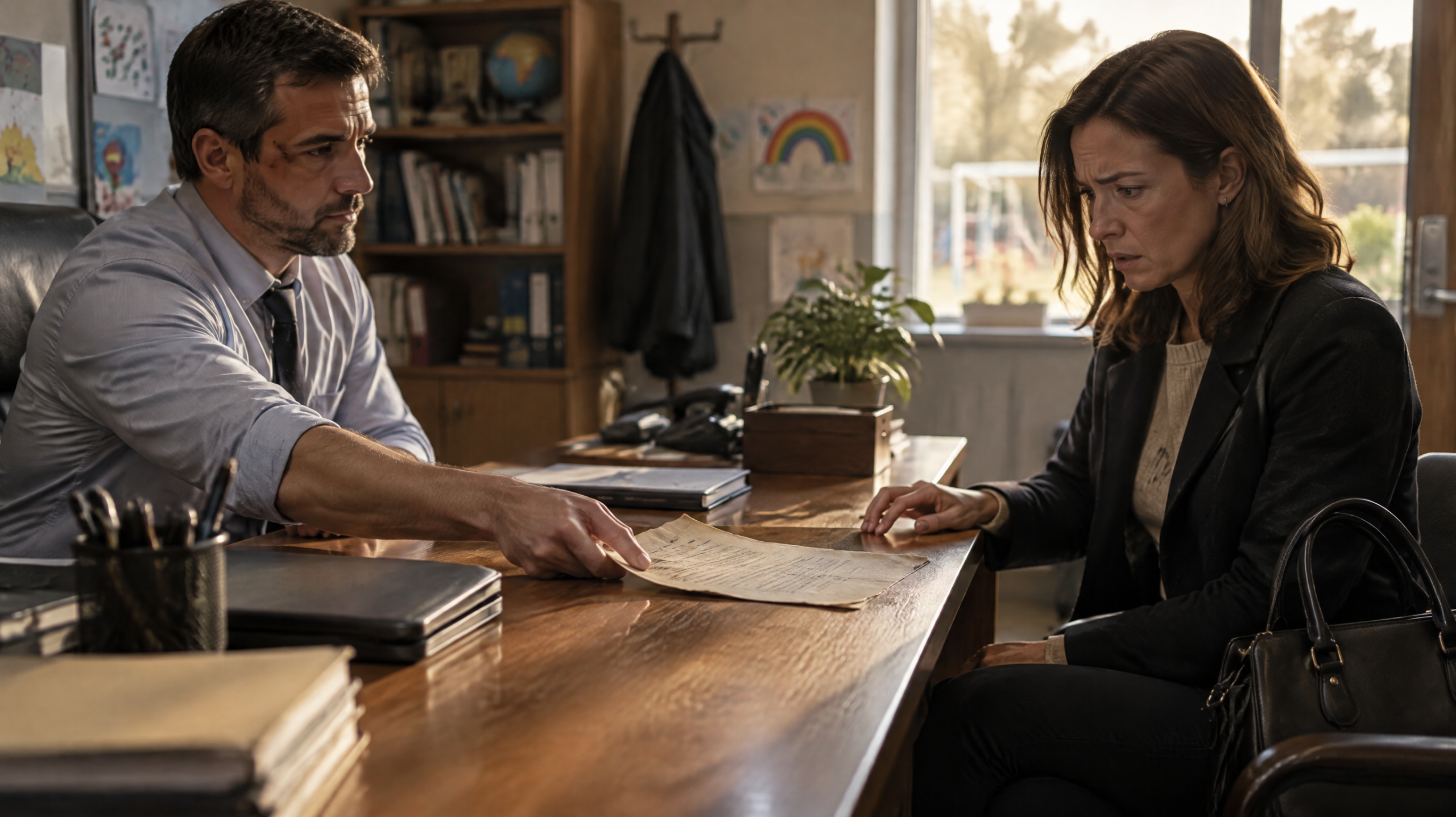
The note was a carbon, triplicate, the top sheet gone to the driver. Two pallets of oak flooring. A cage of cordless tools. Copper fittings, itemised by box count. Collected by head office transport at six forty on the Wednesday morning. In the box marked authorising signature, in blue-black biro, small and level: G. Marsh.
I sat down on the upturned bucket by the kettle and read it four times.
The stock was not missing. It had been signed out of the building by the man reporting it missing. There were forty-one transfer notes in that drawer, and I went through every one under the flickering light. Only one carried a name from head office. Only one had his.
I photographed it front and back, put it back where it had been, and turned the drawer key the way Marek turns it, a quarter turn and a push, because he taught me that too.
Two days after that, Lena texted me.
Not in the building. The Queen’s Head car park, half seven. Come alone and don’t bring that page.
She was in her car with the engine off and the window down, shoes off in the footwell, a bottle of white in the cup holder and a plastic cup she had already filled twice. She did not look like a woman who had spent the day auditing anything.
“I ran the variance,” she said.
“Say that again.”
“I ran it. On the Friday, from the count sheet dated the Monday. The transfer went out on the Wednesday morning. I’ve seen the docket since. I was told the Ashfield count had been taken wrong, that the pallets were ours and they were moving to Wrexham to balance the region.”
“You compared Monday’s count to a stockroom on Friday.”
“I compared a count to a count. The second one was never taken. I rolled the first forward and the gap came out at thirty-eight.” She turned the cup round in her hands. “I didn’t invent a number. I typed what the sheet gave me.”
“Then the loss doesn’t exist. The tools are in Wrexham.”
“They were in Wrexham nine days and then they were in Wrexham’s sales.” She put the cup down. “I’m not saying another word on the record. I want that understood now, before you get ideas about who your witness is.”
“You just told me.”
“I told you in a car park. There’s no minute taker in a car park.” She looked at the windscreen, not at me. “I’m sixty-one. Eleven months to my package and a mortgage that runs to seventy. If I say that in a boardroom I’m not a witness, I’m a co-signatory. My name is on the file. I typed it.”
“And Marek’s name is on a suspension.”
“Yes,” she said. “It is.”
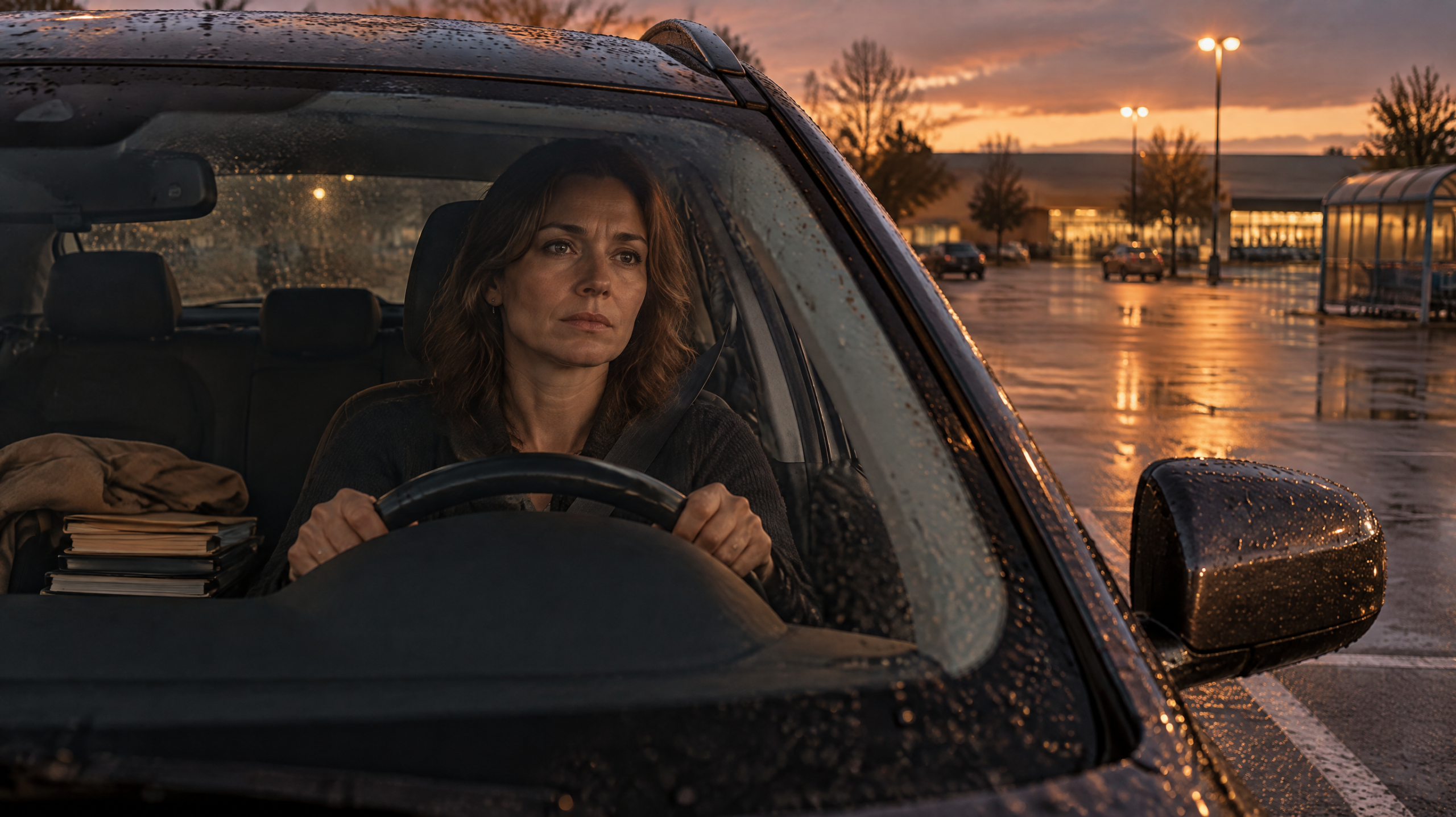
She started the engine, then put the window down another inch.
“Ask Rosalind who commissioned the review,” she said. “Not who presented it. Who commissioned it. Then ask yourself why a woman who owns the building needed a stranger to carry it.”
The window went up. Her brake lights came on, and then she was gone.
Marek’s keys were still in my coat pocket. I sat in my own car with the heater on my feet, and I thought about how easy it had been, all these years, to be the person who fixed things quietly and never said a word in a room where it counted.
Rosalind Bramwell saw me on the Wednesday, in the panelled office on the fourth floor, under the portrait of her father with one hand on a stair rail.
She didn’t tell me to sit. She finished a sentence, capped her pen, and set it down parallel with the blotter.
“Lena tells me you’ve been asking who commissioned the review.”
“I’m asking you.”
“I commissioned it.” She said it the way she would confirm a delivery slot. “In February. I engaged the firm and asked them for a list of branches that couldn’t be carried another year.”
“Ashfield was on it.”
“Ashfield was the reason for it.”
That stopped me. Eleven years of monthly figures, nine per cent up on the year, best in the region, and the store was the reason.
She didn’t soften the rest. Five of the six were losing money or would be inside eighteen months, and she wanted all six shut before the next accounts, by somebody who wasn’t called Bramwell.
“When a Bramwell closes a Bramwell store it’s a family argument,” she said. “When a stranger does it, it’s a strategy. My father built eleven branches. I’m not going to be the one who shut six of them in her own handwriting.”