“You thought I’d go back.”
“Yes. He’d apologize, and you’d start wondering whether leaving had been cruel. I’ve watched that happen before.”
I had let her watch it. I couldn’t pretend otherwise. But a telephone conversation would not necessarily have meant reconciliation, and even if I had made that mistake again, it would have been mine.
“The letter wasn’t only blame, was it?”
“There was an apology,” she said. “And then he blamed you for leaving him to die without you. Both were in there.”
I asked whether she remembered the words. She started to answer, then stopped.
“Not exactly.”
“Then don’t give me a version I’ll spend the rest of my life treating as his.”
There was no copy. The shredded pages were gone. I would never know where the apology ended and the accusation began.
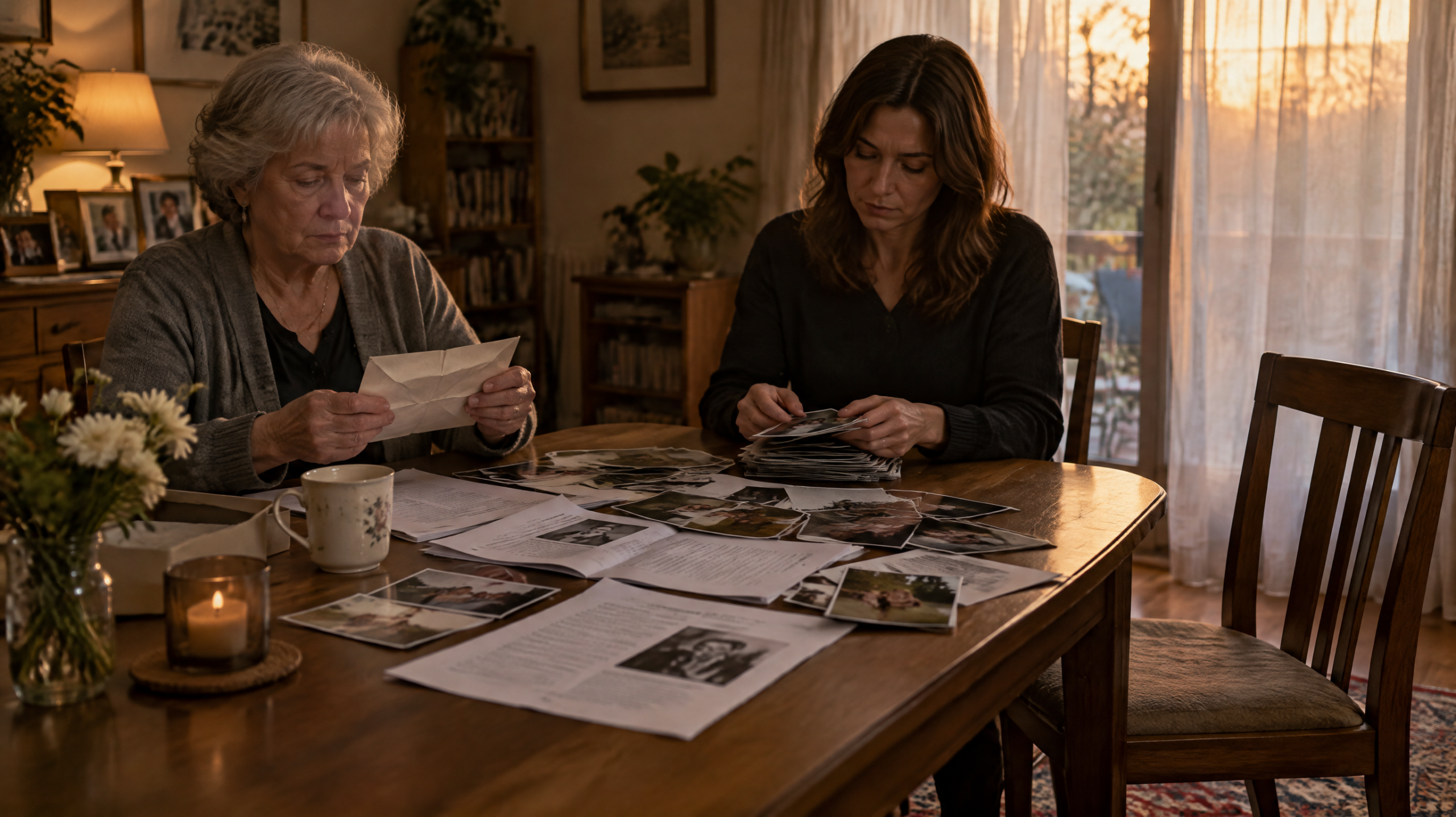
“Why keep the envelope?”
“For his handwriting. For you, later. I thought without the letter it couldn’t hurt you.”
She had saved the part she believed I could safely have.
“I might have refused to see him anyway,” I told her. “That doesn’t make this something you were allowed to do.”
“I was trying to protect you.”
“You told me my husband was dead. You told other people I’d refused information. Don’t ask me to call that protection.”
Before we left, I told Celia to correct the family account. She wanted to do it at home. I said I needed to see it done.
With me beside her, she sent the family a message: Dad died on September 18, not September 12. I knowingly told Mom he was dead while he was alive. I falsely told hospice she wanted no more updates. I also read and destroyed his letter to her without her permission.
She held out the phone until I had finished reading.
“You won’t be giving the memorial reading,” I said. “And our weekly visits are stopping.”
She began crying then. I stayed until she could drive, but I didn’t take back either decision.
At the memorial, the printed date was correct. I read the passage I had chosen. There was no final message from Martin, no claim that everything between us had been repaired. Celia sat with the family and did not speak.
Afterward, I completed the formal revocation of her healthcare appointment with legal help. I notified Celia and sent the required documents to my clinicians. At my next appointment, I checked that the change was in my chart and gave the office instructions to contact me directly.
It hurt to do that. I signed anyway.
When Celia asked whether she could ever visit again, I offered one afternoon a month. No access to my medical communications. No speaking for me. She agreed.
“I haven’t forgiven you,” I said.
“I understand.”
I didn’t know whether she fully did. She accepted the arrangement without bargaining, which was enough for that day.
I kept the envelope. Keeping Martin’s handwriting did not mean forgiving his cruelty, either. I put it in my own drawer after the memorial, beneath the reading I had chosen, and closed it myself.