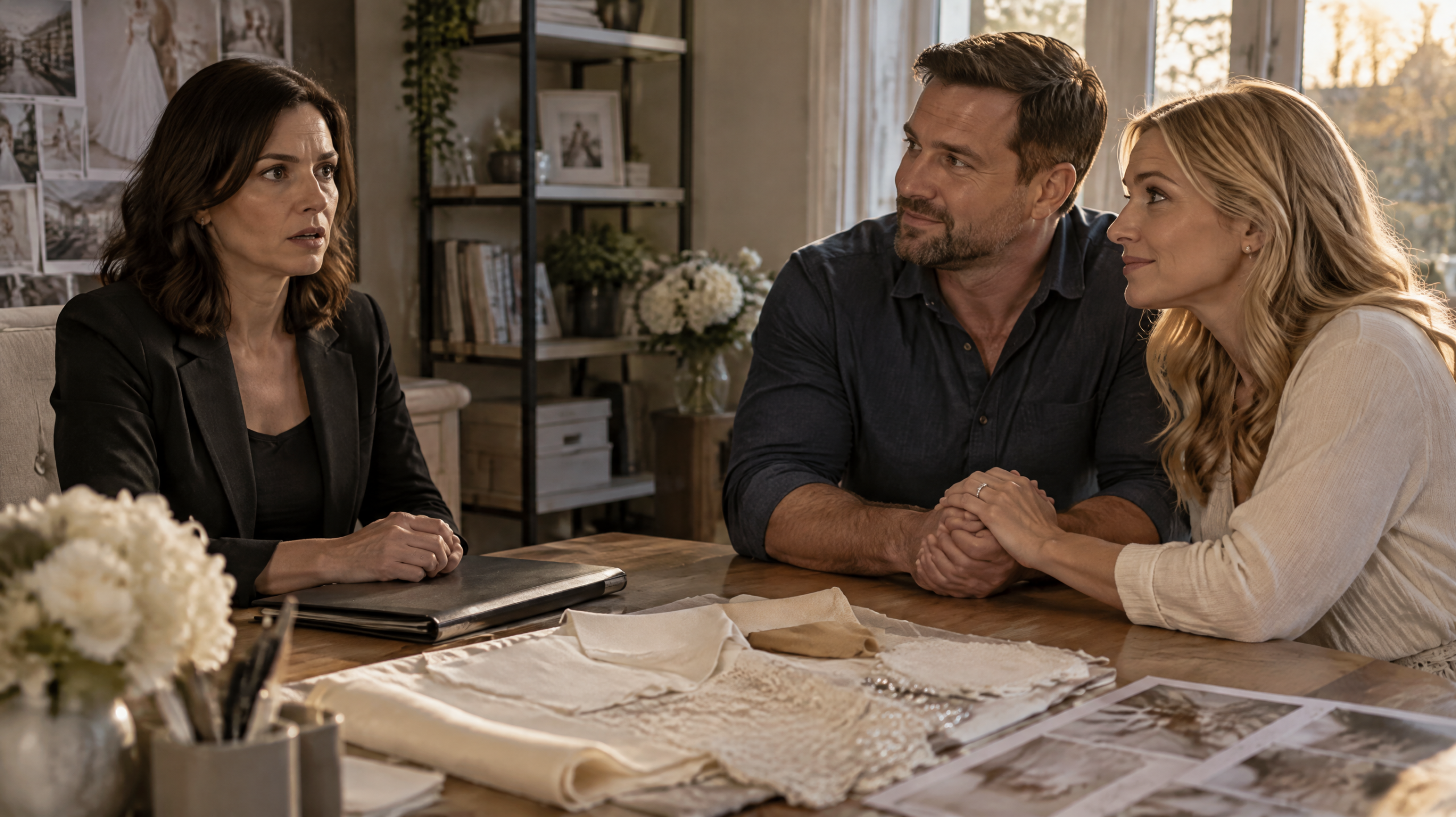
Celia’s face tightened. “You can’t take out the whole point of our story.”
“That passage isn’t necessary to marry you.”
“I’m asking you to keep it,” she said. “Without names. That’s a reasonable compromise.”
“No.”
The word came out louder than I intended. I lowered my voice and ended the call after telling them no script would go forward with my approval as written.
A portal notification arrived while I was still staring at my own blank camera window.
Celia had written: Please read the correspondence I uploaded with our questionnaire. It supplies the context for the relationship story. The passage needs to stay.
For a minute, I refused to open it. I was tired of being assigned homework about why they had hurt me.
Then I clicked the attachment.
It was an email chain, uploaded by Celia through the same client portal where couples sent readings and family details. I scrolled past a recent forwarding note to the older messages beneath it.
Celia’s address. Grant’s address. A date just after the breakup.
Tell them she threatened to come to the door and confront us. She hasn’t, but they need something concrete or they’ll keep blaming the affair.
I pushed the laptop away. Then I pulled it back and checked who had written that line.
Celia.
Below it, Grant had replied before his accusation went out to our shared circle.
Yes. That wording works. I’ll send it.
Until then, I had thought my best friend had stood beside him while he lied about me. I sat at my desk with the attachment open and let myself understand that she had given him the lie.
I called Grant before I could talk myself into waiting.
“Celia helped me phrase it,” he said. “That doesn’t mean nothing happened.”
“She wrote that it hadn’t happened.”
“You’re pulling apart an old conversation.”
I opened my archived copy of his accusation beside the attachment. The sentence about coming to their door and confronting them was identical. Not a remembered argument made worse in the telling. A sentence written in advance, approved, then sent to people who knew me.
I read both versions aloud. Grant stopped interrupting.
“Send a correction to everyone you copied,” I said. “Tell them I never threatened to turn up.”
He said we should discuss it at the planning meeting at his mother’s house the next afternoon. For once, I agreed with him. Ruth had received the original email. I wanted someone besides me to hear his answer.
At Ruth’s table, the rehearsal-dinner menu lay between the salt cellar and my laptop. I had almost left the laptop at home. Carrying proof into somebody’s dining room felt ugly, and I resented that more than I expected. I still wanted Celia to say something that would make opening it unnecessary.
Grant started with the booking.
“We didn’t know it was your company. This has become personal.”
“The booking was a mistake,” I said. “The email wasn’t.”
I turned the screen toward Ruth. She read slowly, then asked Celia, “Did Nora threaten to come to your door?”
Celia picked at the folded edge of her napkin.
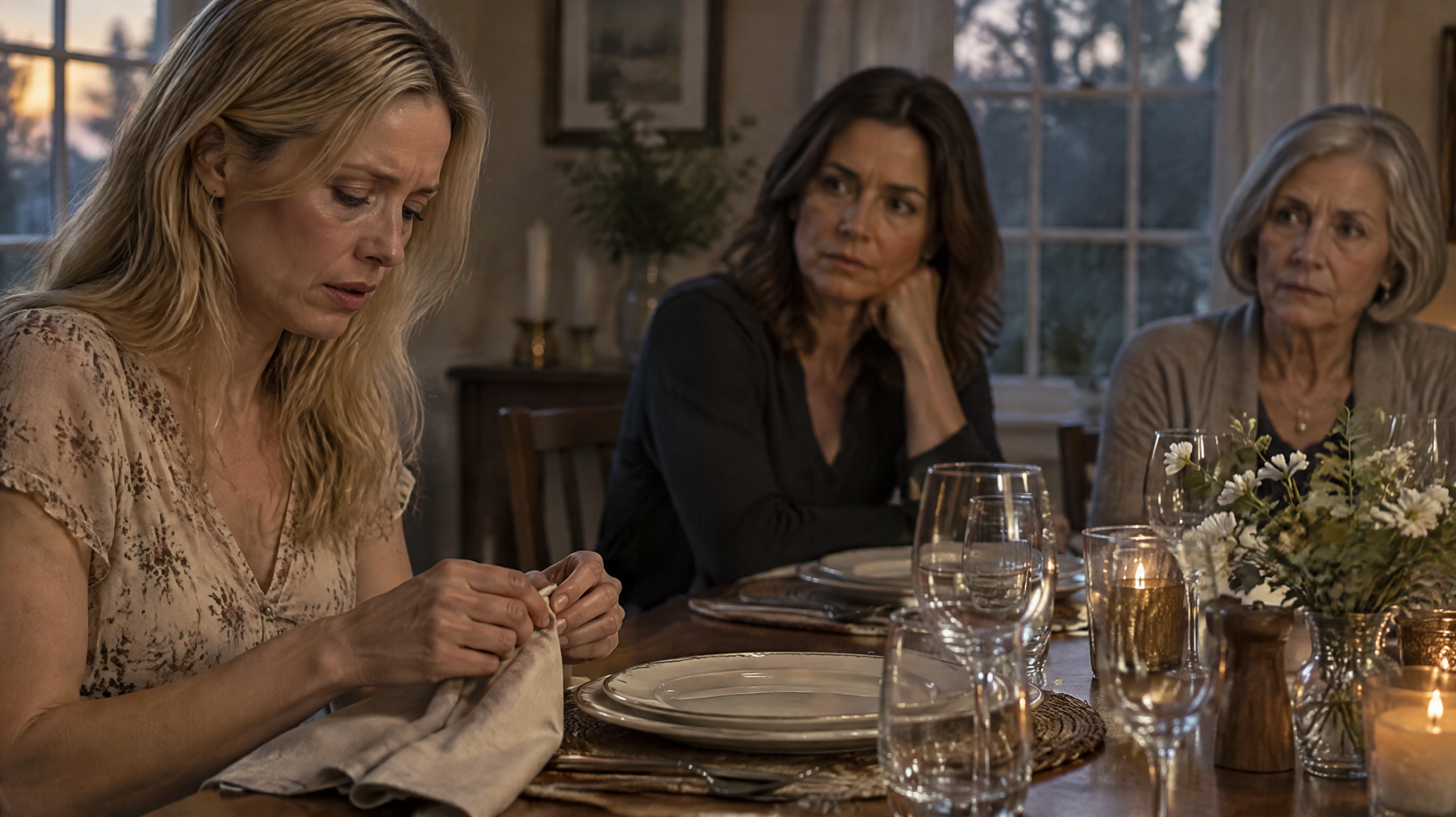
“No. I wrote that.”
“Why?” Ruth asked.