Mara stopped in the corridor near the coat check. I stayed several feet away, on the side that left her a clear path to the exit.
“We can leave,” I said.
“I know where the doors are.”
“Right.”
A coat attendant looked up, then returned to sorting hangers. Mara rubbed the place on her wrist where her bracelet had twisted.
“I didn’t mean you couldn’t,” I said. “I promised we could go.”
“You also just asked whether I understood my own conversation with your sister.”
I opened my mouth, then shut it. There wasn’t a nicer description of what I had done.
Mara looked at the folded program in my hand.
“I gave them that story years ago. For one newsletter. I wanted to help. They’d given me somewhere to sleep, and I thought somebody might read it and donate.”
“So that’s where this came from.”
“Yes. And afterward, people kept recognizing me. Someone would introduce me, and before I’d said anything, the other person would mention the bag. Or the shoes.”
I looked down at the page I had folded across her name.
“They meant well sometimes,” she said. “That didn’t make it easier to stand there while they talked about the worst year of my life.”
I thought of how quickly I had read the first paragraph. How readily I had asked for the rest.
“Is that why you didn’t tell me?”
“It’s why I stopped telling people when I met them.” She finally looked at me. “I wanted you to know me without that being the first thing.”
I moved the program behind my leg, then brought it back. Hiding it wouldn’t undo my having read it.
“I should have believed you in there.”
“Yes,” she said.
I stayed where I was and let her decide whether she wanted me any closer.
Mara took her phone from her bag and held it against her skirt while she searched. I could hear applause through the ballroom doors. Someone inside was having the evening they had expected.
“You don’t have to show me anything,” I said.
“I shouldn’t have to. But they’re still using it.”
She turned the screen toward me. Her email was addressed to Celia, sent three weeks before the gala.
I am happy to attend with Evan, but I do not consent to my name, photograph, or shelter account being used in the program, on screens, or in any publicity. I do not want to speak or be introduced. Please confirm that I can come simply as his guest.
I read it twice. Not because it was unclear. Because I had asked this woman whether she had mistaken nerves for a refusal, and here was the care she had taken to prevent exactly that question.
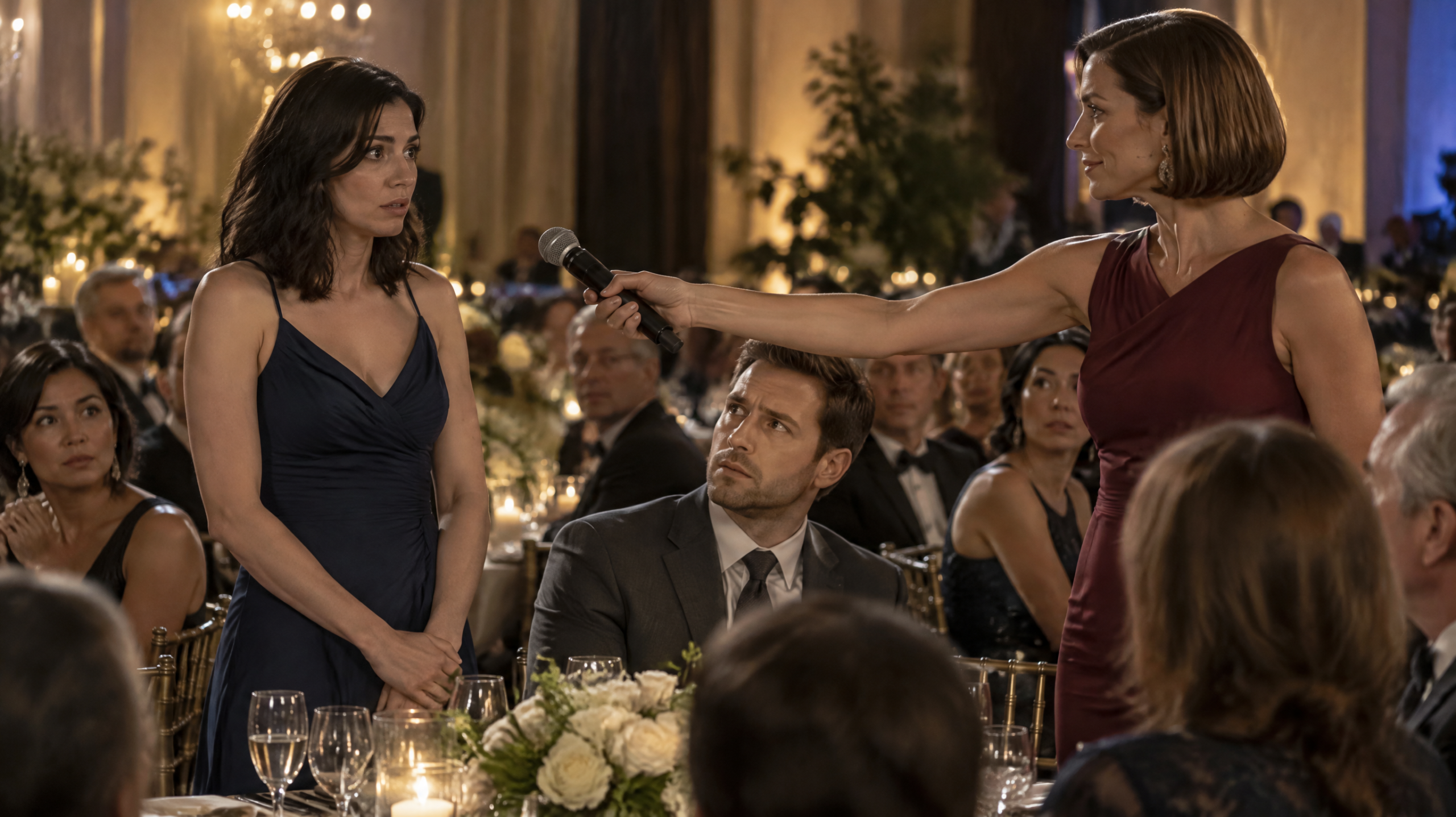
The ballroom door opened. Celia came out carrying the microphone by its stem, her thumb over the switch.
“We need to get this sorted out,” she said. “People are waiting.”
“Mara told you no in writing.”
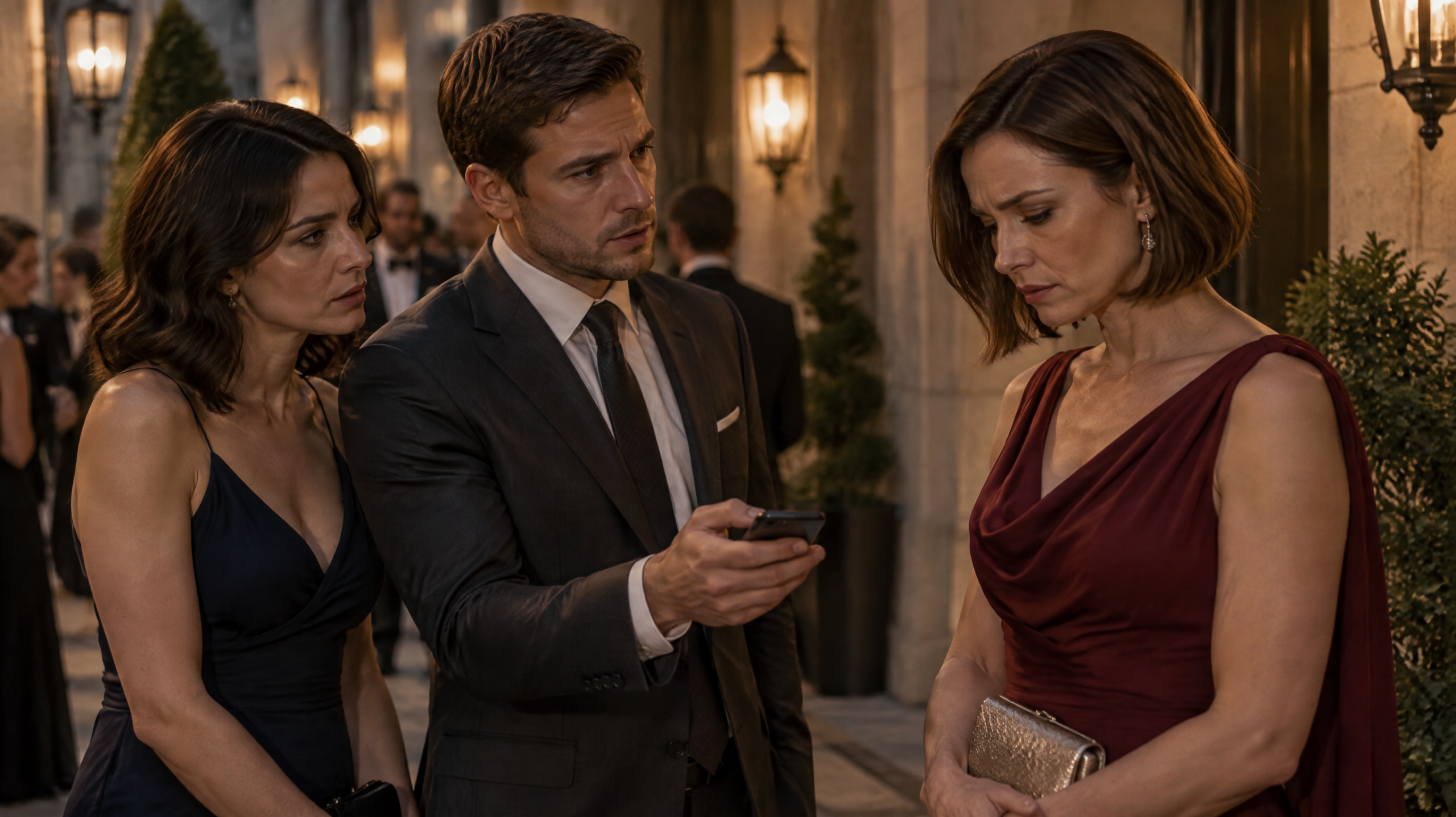
Celia glanced at the phone. “That was the initial email.”
“Did you read it?”
“Of course I read it, Evan. We spoke afterward. You’re looking at one piece of a longer conversation.”
Mara lowered the phone. “You called to ask whether we needed parking.”
“We discussed the evening.”
“Parking. Arrival time. Whether Evan was wearing a suit.”
Celia looked at me. “It wasn’t a formal negotiation. She sounded comfortable with the arrangements.”
There it was again, an explanation offered to me instead of to the person who had supposedly agreed. I had accepted that arrangement inside. It had let me feel useful without having to challenge my sister.
“Comfortable arriving isn’t permission to print her childhood,” I said.
“You weren’t on the call.”
“No,” I said. “Neither was anyone reading that program.”
Celia shifted the microphone to her other hand. “Can we lower our voices?”
Nobody had raised one.
I looked at Mara. “Joel can stop this. Would you like me to bring him out here?”
She glanced toward the doors, then back at me. “Tell him it’s about permission. Don’t tell him my story.”
“I won’t.”
I left her near the coat check, where she had chosen to stand. Celia followed me as far as the ballroom doorway.
“Don’t make this bigger than it needs to be,” she said.
Through the gap, I could see the tables and the programs propped against glasses. It was already bigger than a conversation in the corridor. I had just been slow to notice who was paying for it.
Joel stood beside the sound desk, checking something on a tablet. I waited until he looked up.
“Mara needs to speak to you about permission for her segment,” I said. “Outside. Now, please.”