At three-twenty I drove to Fenwick Road.
The gate arm lifted for me the way it lifts for anyone. I pulled a ticket from the machine. The first level was full, so I went up the ramp to the second, and his truck was the third vehicle from the stairwell, backed in, the way he always backs in, because he says it makes for a faster exit.
I sat with both hands on the wheel for a minute. Then I got out, used my spare key, and opened the passenger door.
The cab smelled like him. Coffee, the cedar air freshener he buys at the car wash, a trace of something sweet I did not want to identify. In the glovebox there was the registration folded into thirds, a flashlight, three ketchup packets, and a rubber band wrapped twice around a stack of white slips.
Wexler House Garage. Fourteen of them.
I counted twice, on the concrete, with the door hanging open and the dome light on. The oldest was fourteen months old. The newest was three weeks old. Every one of them was dated to a night I had eaten dinner alone and gone to bed early because my husband was in Denver.
I put all fourteen in my coat pocket. I locked his truck with my own key and stood there a second, because locking a man’s truck for him is a strange thing to do in the middle of taking his life apart.
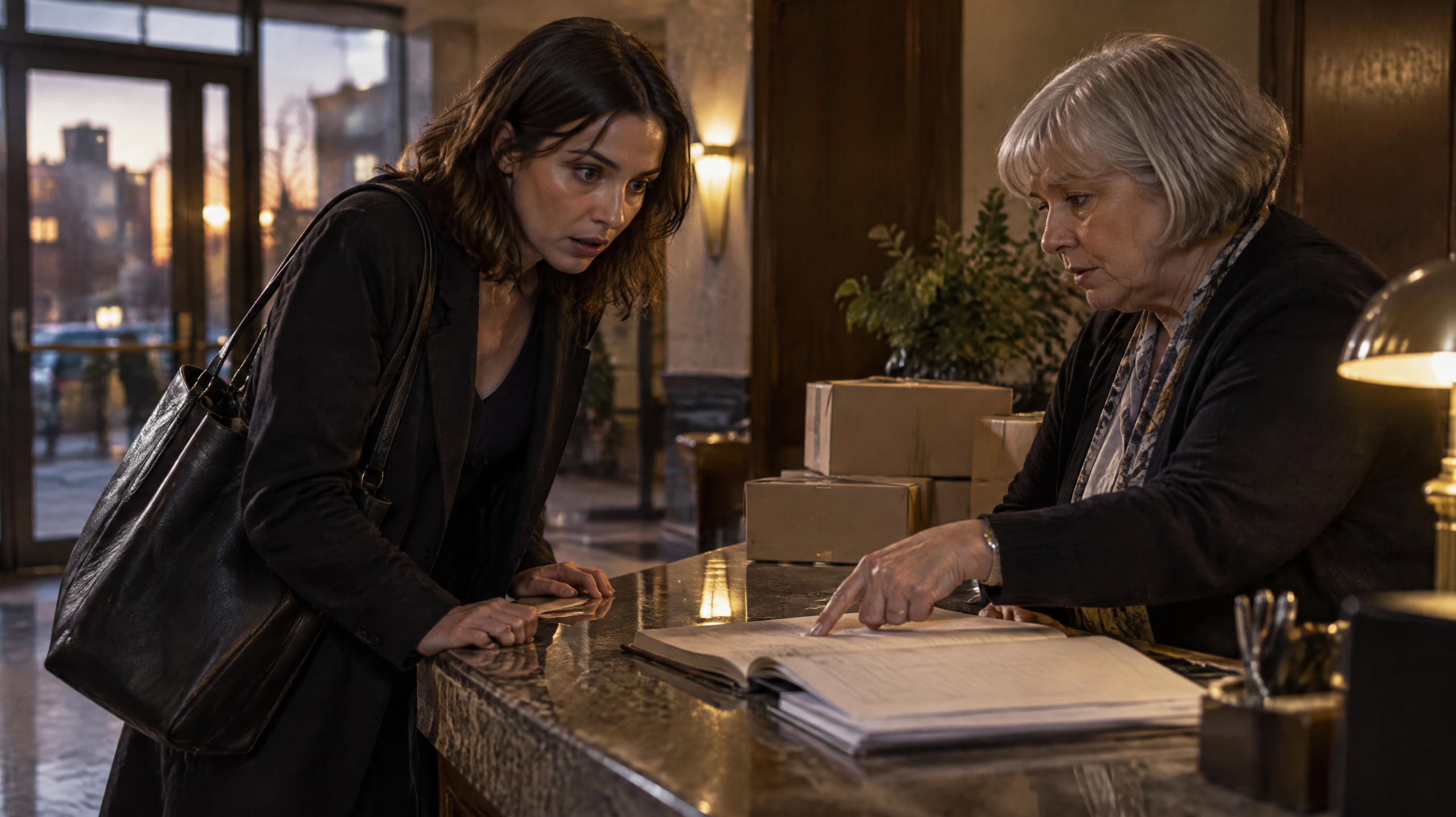
Then I walked into the lobby and asked for Owen.
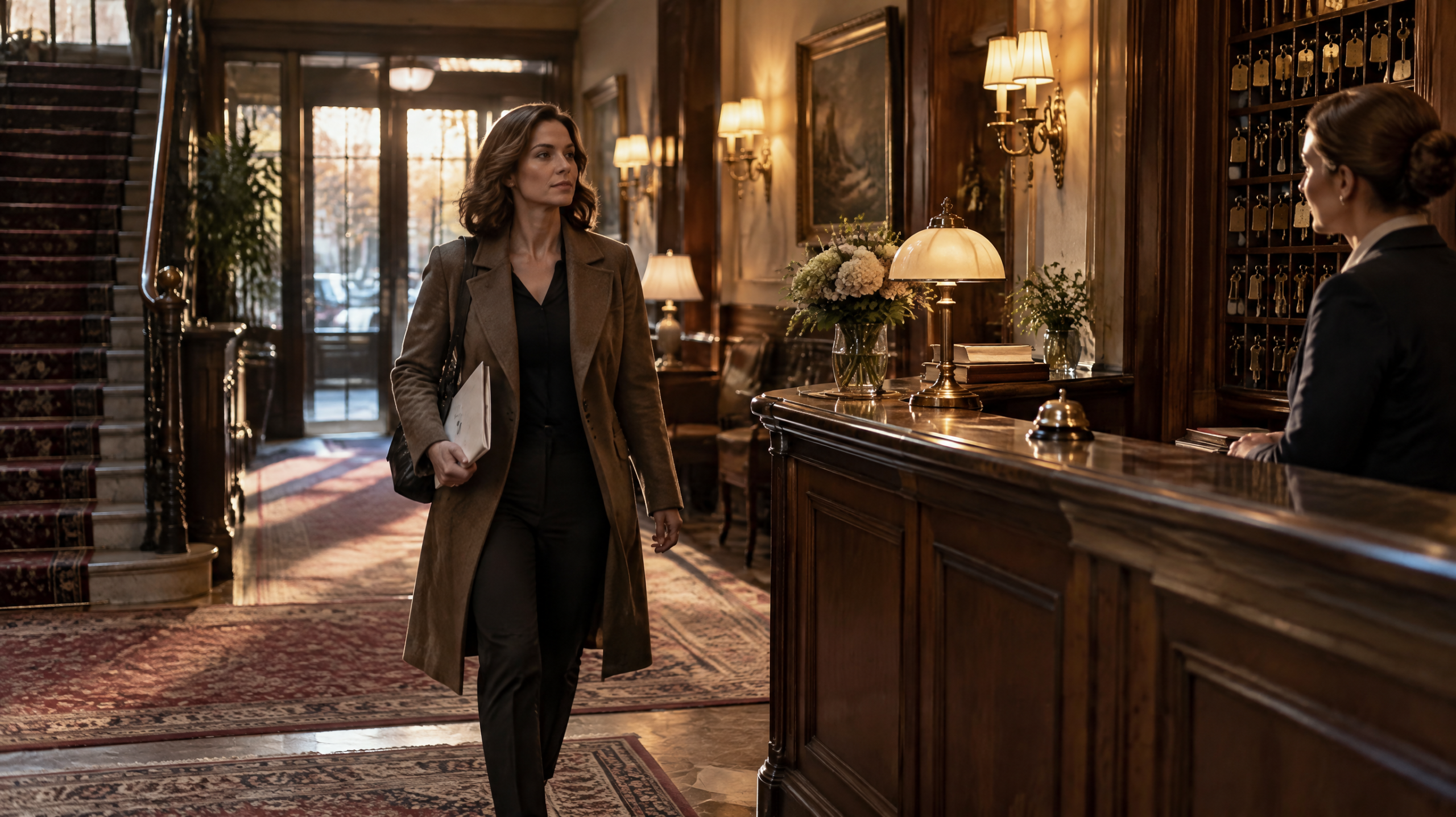
He was older than his voice, sixty or so, gray hair, reading glasses on a cord. He looked at the folio in my hand, then at my face.
“That’s my husband’s room,” I said. “I’m his wife.”
He did not ask what I wanted. He looked at the doors behind me, then at the clock, and said, “Come back to the office.”
He pulled out a chair and clicked at the monitor for a while. Then he turned the screen toward me.
The corridor outside 412, in gray. A time stamp in the corner, 6:58 in the morning, six weeks earlier. The door opened and my husband came out holding it with one hand, his shirt untucked, and a woman followed him, small and dark-haired, her cardigan over her arm. He put his hand at her back. At the elevator he said something and she laughed with her head down, and the camera kept going, because cameras do not know when to stop.
“She’s been in that room most weeks since spring,” Owen said. “I should have called somebody. I couldn’t work out who I would have called.”
“Can I have a copy?”
“No. But I keep the log and I keep the tape, and I’ll put my name on a piece of paper for you, if that’s any use.” He wrote on the back of a Wexler House card and pushed it across the desk. Owen Trask, a phone number, the date, his signature.
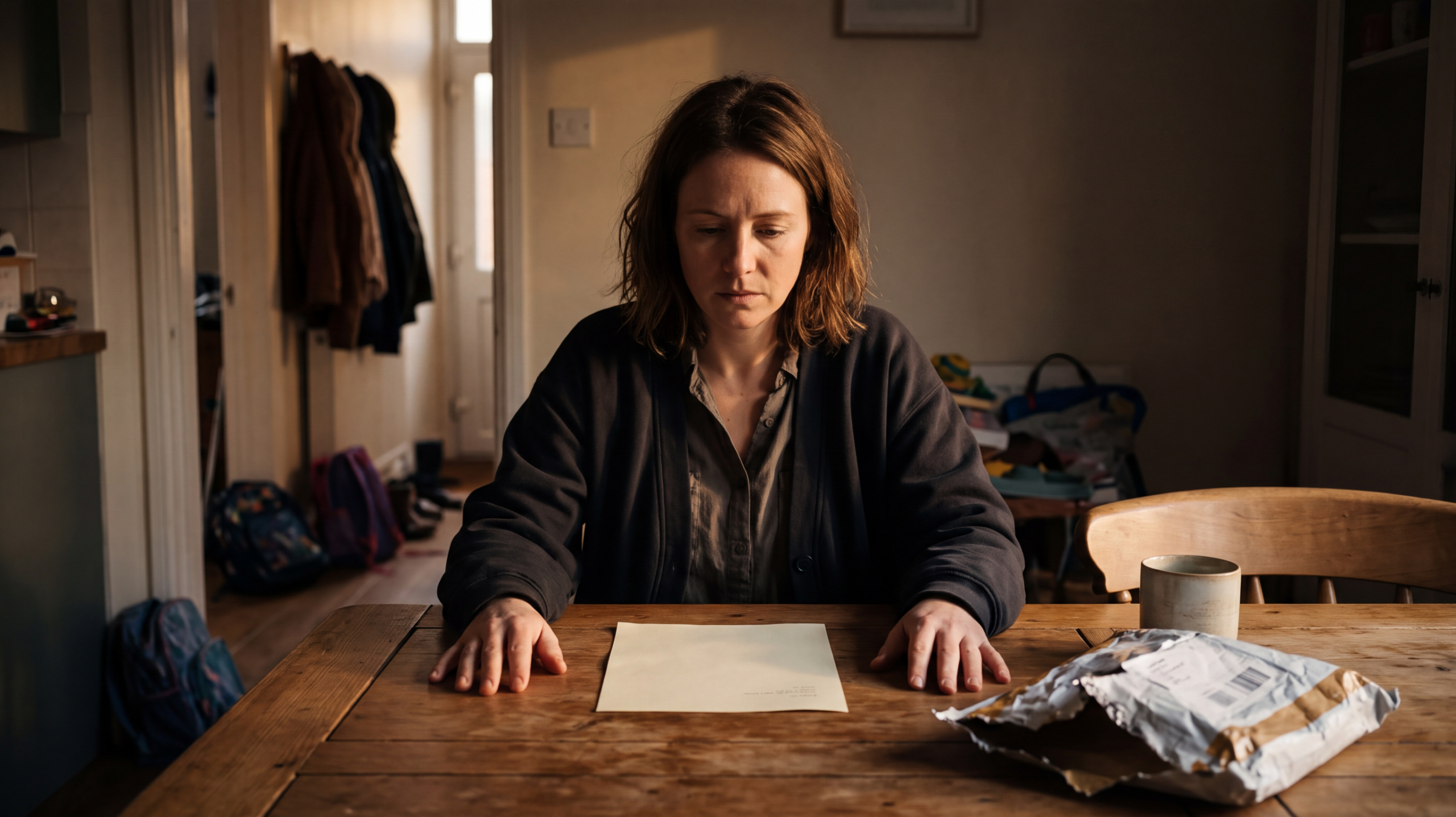
I got home a little before six and made myself eat a piece of toast standing up. Then I laid the stubs in a line across the kitchen table, oldest to newest, with the folio at one end and the printed claim at the other. Then I sat down and waited, because his suitcase was in his truck and his truck was four miles away, and he was supposed to stay until Friday.
He came in at twelve-forty. I heard the wheels slap down twice over the doorsill, that sound I could pick out of a crowded airport, and he came around the corner still in his coat and stopped.
He looked at the table for a long time. Then he sat down across from me and put both hands flat on the wood.
“It’s finished,” he said. “It’s been finished since October. I ended it.”
“Fourteen parking stubs,” I said. “In your glovebox.”
“I know.”
“Fourteen nights you were in Denver.”