The suitcase wheels woke me before the alarm did. Grant never lifts that bag over the doorsill. He tips it back and lets the wheels slap down twice, and I could pick that sound out of a crowded airport at fifty yards.
“Five o’clock,” he said, kissing my temple. “Go back to sleep, Nor.”
I did go back to sleep. I have thought about that more than I should, as if staying awake would have changed the mail.
Denver. Four times a quarter, sometimes five. Mandatory, he called it, in the flat voice men use for jury duty. He came home tired and generous, with stories about airport food, the eight-dollar sandwich, a gate change in Grand Junction, the salesman beside him who snored the whole flight. Nine years of that. I do speech therapy at Fairholt Primary, which means I spend my days teaching six-year-olds to make sounds other people get for free, and I can hear a lie in a child’s voice before the sentence ends. I never heard one in his. That is the part I have to sit with.
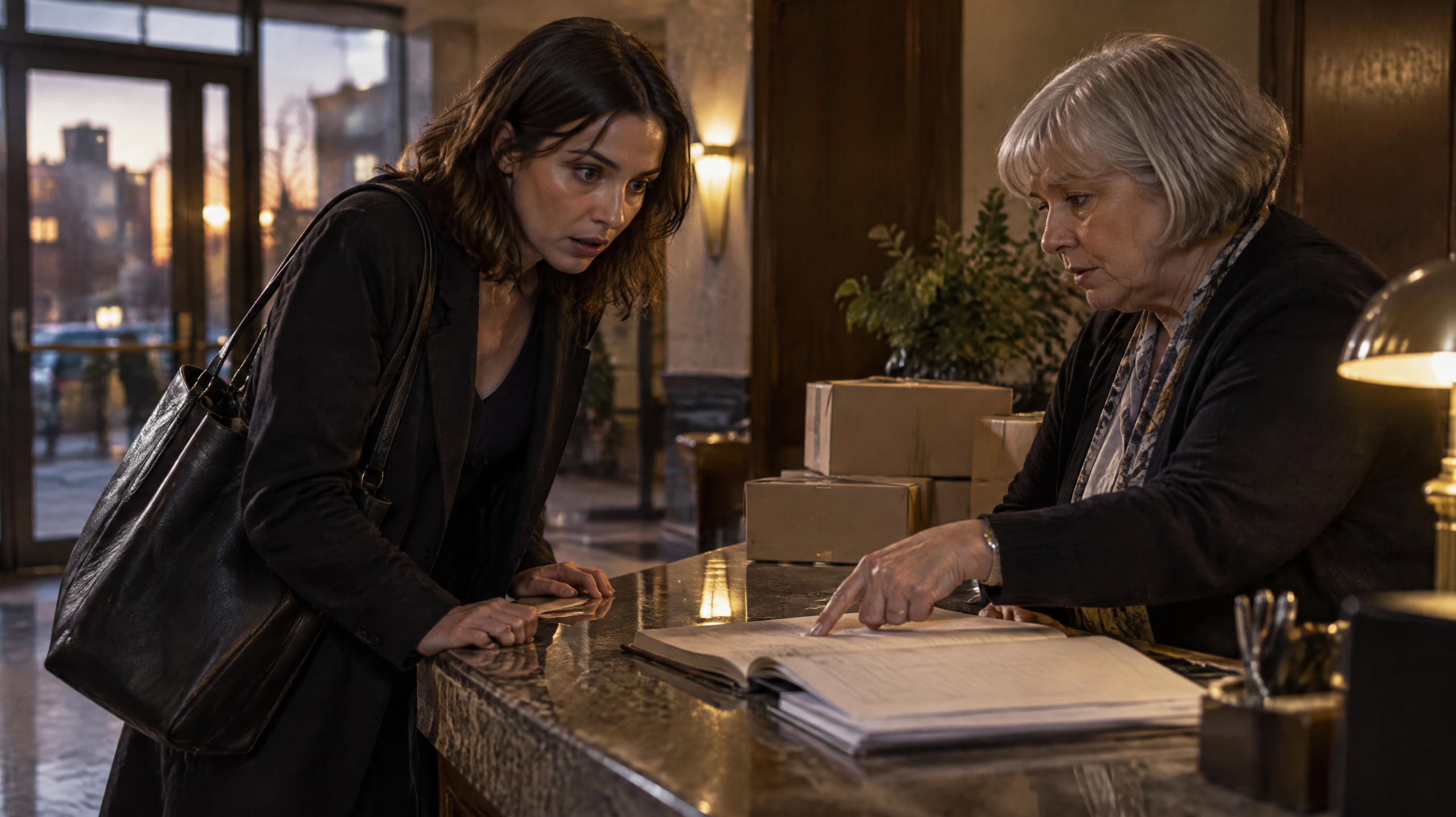
At eleven-thirty I walked home for lunch, six blocks, and a courier was on the porch with a flat envelope and a signature pad.
“Nora Bellamy?”
“That’s me.”
No return address. My name in a printer’s font, a courier number in the corner, and the van already pulling away from the curb.
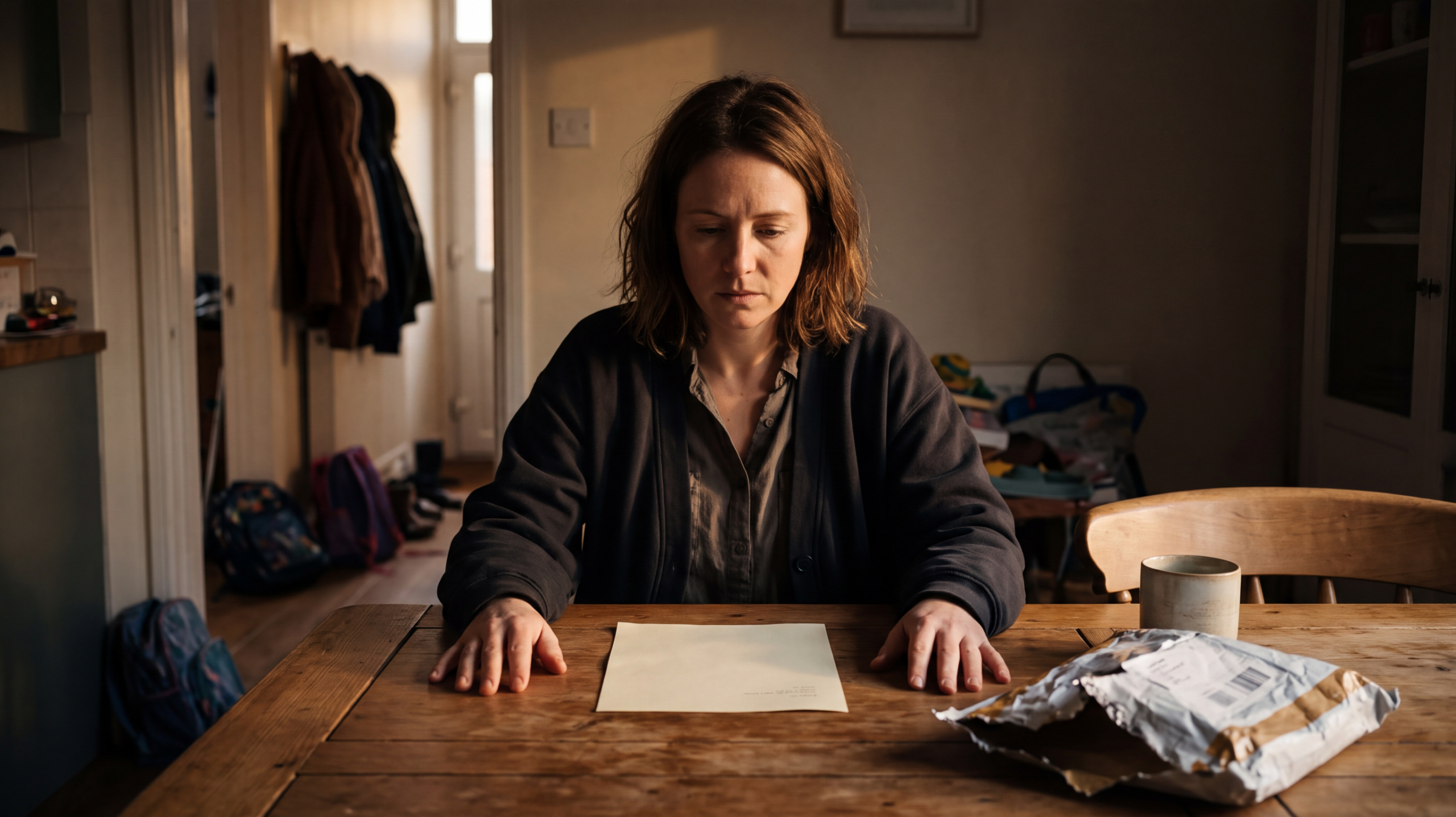
I opened it at the kitchen counter with my coat still on. A hotel folio slid out, the long kind with the perforated edge, and behind it a single folded sheet.
Wexler House, 1420 Fenwick Road, Room 412. Three nights.
The dates were last Tuesday through Friday. The bill was made out to Corinne Adair. I read the name four times and it stayed a stranger’s. The total was $1,240.60, paid on a card ending 4471. At the bottom, in small print, the folio gave the time it had been printed: 6:14 that morning, about an hour after my husband’s truck left our driveway.
Fenwick Road is four miles from my kitchen. I pass the Wexler House sign on my way to the grocery store. I have bought gas at the station beside it for nine years.
The folded sheet was blue ink, slanted, pressed hard enough to raise the letters on the back.
Ask him who paid for the room.
I stood there until the furnace shut off. Then I did the thing I am not proud of. I decided it was a clerical mistake. Somebody at a front desk had typed a stranger’s name into the wrong field and mailed a stranger’s bill to the wrong house, and by the time I walked back to Fairholt I had built a whole morning inside that idea.
My first group came in at twelve-forty and ran to one-fifteen. Two of them still say wabbit. I got through it with the folio in my tote bag and one hand on the zipper the entire time.
Between that group and the next one I sat in the supply closet with the door shut and called the Wexler House.
“Front desk, Owen speaking.”
“I’m calling to confirm a reservation for Grant Bellamy.”
Keys clicked. “Mr. Bellamy is checked in. Room 412.”
I had rehearsed nothing past that. “Checked in today?”
“One-ten this afternoon.”
“And the room is in his name?”
“In his name.” A pause, paper moving. “The card on file isn’t his, though. Different name entirely. Is there a problem with the bill?”
I said no. I said thank you. I sat in the dark with the smell of construction paper and said the words room four twelve to myself until they stopped sounding like a room.
Then I called my husband on his cell, and he laughed.
“Corinne Adair.” He said it easily, the way you would read a road sign. “She’s a contracts clerk. I interviewed her for the Kessler opening in March and gave it to somebody else. She’s been sour about it since April. This is what she does, Nor. She prints things.”