🎧 Listen to this story
Full narration — When My Father Died, My Stepmother Said We’d Split Everything Fairly.
Narrated by Dramateller
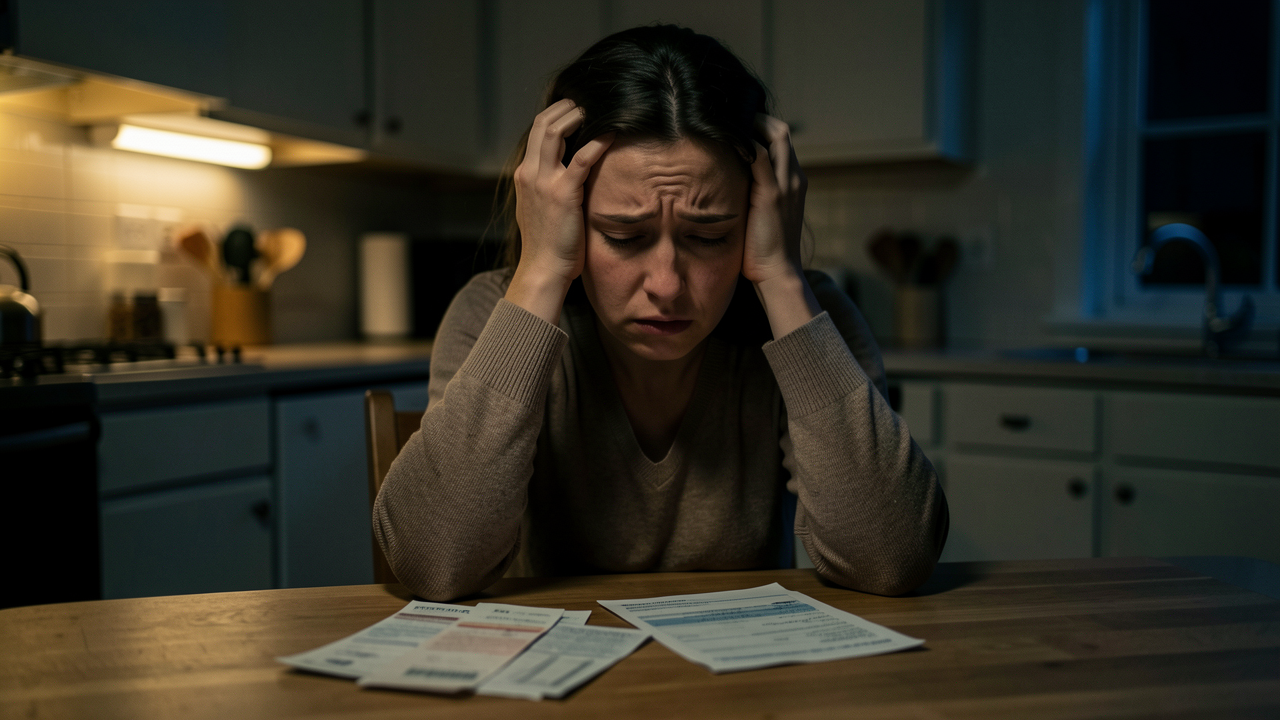
My father died on a Tuesday morning in June, alone in the house he’d shared with my stepmother for eleven years. I got the call while I was at work, and by the time I reached the hospital, he was already gone. Aortic aneurysm, they said. Quick. He wouldn’t have suffered.
I told myself that was supposed to be comforting.
My stepmother, Diane, was waiting in the hallway when I arrived. She hugged me and cried against my shoulder. “We’ll get through this together,” she whispered. “Your father wanted us to take care of each other.”
I believed her.
I was twenty-seven years old, and I had just lost my only surviving parent. My mother had died when I was fifteen, and my father had remarried two years later. Diane had been kind enough in the beginning. She wasn’t warm, exactly, but she showed up. She came to my college graduation. She remembered my birthday. I had learned to be grateful for small kindnesses.
When my father’s estate attorney called three days after the funeral to schedule the reading of the will, Diane insisted we go together.
“There’s no reason to be formal about it,” she said over the phone. “Your father and I discussed everything. We’ll split everything fairly. He wanted you taken care of.”
I remember exhaling when she said that. I had been bracing myself for conflict, for tension, for the kind of stepmother stories you read about online. But Diane was being gracious. She was grieving too, and she wanted to honor my father’s wishes.
I told myself I was lucky.
Then the house went on the market six days after the funeral.
I found out through a real estate alert I’d set up months earlier when I was casually browsing listings. I opened the email expecting another random property, and there it was: my childhood home, listed at $425,000 with photos I’d never seen taken.
The listing agent’s name was Diane’s brother-in-law.
I called her immediately. She didn’t answer. I left a voicemail, trying to keep my voice steady. “Hey, Diane, I just saw the listing for Dad’s house. Could you call me back? I thought we were going to talk about things first.”
She texted back two hours later: “The market is hot right now. Your father would have wanted us to move quickly. I’ll send you your share once it closes.”
That was the first crack. But I told myself maybe I was being sensitive. Maybe she was just practical. Maybe grief looks different in different people.
I gave her the benefit of the doubt.
A week later, I drove to the house to collect my father’s personal things: his photo albums, his tools, his old record collection, the wooden jewelry box he’d kept on his dresser that had belonged to my mother. I wanted something of his to hold onto. Something that carried his smell, his presence, his history.
The house was empty.
Every room. Every closet. Every drawer. Cleaned out like he’d never lived there. The furniture was gone. The photos were gone. The smell of his coffee and his Old Spice and the leather of his favorite chair were gone. The house was a shell, already painted a neutral beige, already staged with generic rental furniture.
I stood in the middle of the living room and felt the floor tilt under me.
I called Diane again. This time she picked up.
“I had to clear it out for the showings,” she said, her voice flat. “Staging companies need empty rooms. I put a few things in storage. You can go through them when I have time.”
“When you have time?” My voice cracked. “Diane, that was my father’s life. His entire life was in that house. You didn’t even tell me.”
“I didn’t think you’d want to see it like that,” she said. And then, softer: “I’m trying to protect you, sweetheart.”
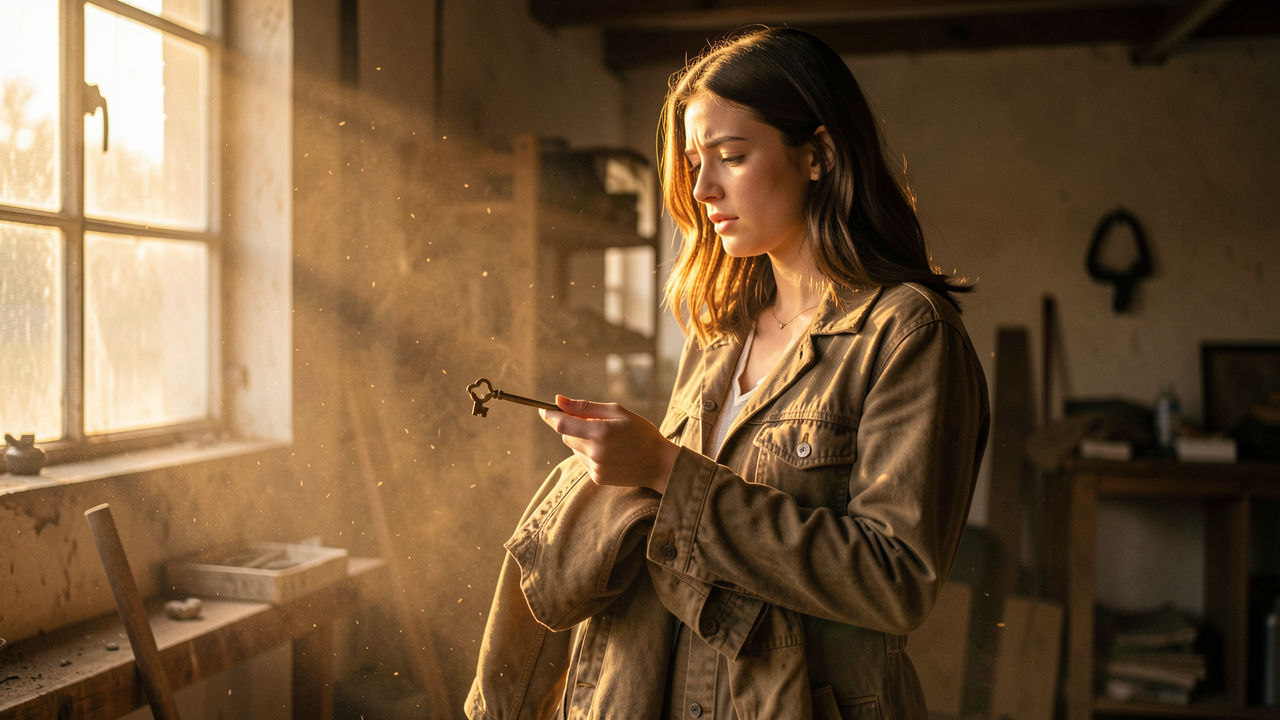
I hung up and walked to the garage, the one part of the house she’d forgotten to clean. It was cluttered with old tools, paint cans, and cardboard boxes. My father’s workbench was still there, covered in sawdust and half-finished projects. I sat on an overturned bucket and cried until I couldn’t breathe.
That’s when I saw it.
A coat hanging on a hook by the garage door. My father’s old work coat, the one he’d worn for twenty years, the one with the torn elbow patch my mother had sewn before she got sick. It was still there, overlooked, forgotten.
I pulled it off the hook and hugged it. It still smelled like him. Sawdust and motor oil and coffee. I pressed my face into the collar and let myself grieve the way I hadn’t been able to at the funeral.
And then my hand closed around something in the left pocket.
It was a small brass key. Old, slightly tarnished, with a number stamped into the head: 217. Below the number, in tiny engraved letters, the name of a bank I didn’t recognize.
I stared at it for a long time. My father had never mentioned a safety deposit box. He wasn’t the type for secrets. He paid his taxes, kept his tools organized, and watched the evening news at exactly six o’clock. A hidden bank box didn’t fit the man I thought I knew.
But I went to the bank the next morning.
The branch was a small credit union on the other side of town, one I’d never been to. The teller checked my ID, checked the estate paperwork I’d brought, and led me to a quiet room in the back. She inserted her key. I inserted mine. The box slid out of the wall with a soft metallic scrape.
Inside, there were three things: a recent will, dated eight months before his death; a handwritten letter addressed to me; and a small leather journal.
The will was not the same one Diane had filed with the probate court.
This one was newer. It had been drafted by a different attorney, signed in front of two witnesses, and notarized. Under its terms, the house was to be transferred to me outright. The life insurance policy was to be split evenly, but the investment accounts, valued at just under $300,000, were also mine. Diane was left a generous cash settlement and the right to remain in the house for six months after my father’s death.
Six months. It had been less than two weeks, and she’d already listed it.
I sat in that small bank room and read my father’s letter with shaking hands.
“If you’re reading this,” it began, “then I’m gone, and Diane has done something she shouldn’t have. I suspected she might. I’m sorry I didn’t confront her when I was alive. I was tired. I was sick. And I think I was afraid of being alone. But I wanted you to have what’s yours. You are my daughter, and I have never stopped being proud of you.”
The journal was a record of the last year of my father’s life. In it, he’d documented conversations with Diane about money, about the house, about her growing impatience with what she called “his loyalty to a ghost” — meaning me. He’d written about the pressure she put on him to change the will, to leave everything to her, to start fresh without the “baggage” of his first family.
He had refused. And then he had made his own arrangements.
I walked out of that credit union with the box under my arm and drove straight to the attorney whose name was on the new will. He confirmed everything. The will was valid. Diane had filed the older version knowing it had been superseded. Whether that was fraud or just aggressive grief management was a question for a different kind of conversation.
I called Diane one last time.
“I found the safety deposit box,” I said. “I know about the real will. I know you filed the old one on purpose.”
There was a long silence on the other end of the line. When she spoke, her voice was different. Colder. Sharper. “That old man was never going to let you go,” she said. “Even when he was dying, all he talked about was you. You and your mother. I spent eleven years building a life with him, and I was still second place.”
“He left you more than enough,” I said. “He could have left you nothing.”
“He should have left me everything,” she whispered. And then she hung up.
The new attorney handled the rest. The estate was sorted according to my father’s final wishes. The house sale was stopped. Diane moved out within the month, and I spent a long weekend painting the walls and making the place feel like mine for the first time in my life.
I still have my father’s work coat hanging in my entryway. The brass key is on my nightstand. And sometimes, late at night, I open the journal and read about the man I thought I knew, who turned out to be braver and more protective than I ever understood.
Maybe that makes me lucky. Or maybe it just means the people we love are always more complicated than we give them credit for.
Would you have confronted your stepmother, or let the old will stand and walked away?