🎧 Listen to this story
Full narration — My Wife Said We’d Split Everything 50/50 — Then Her Father’s Attorney
Narrated by Dramateller
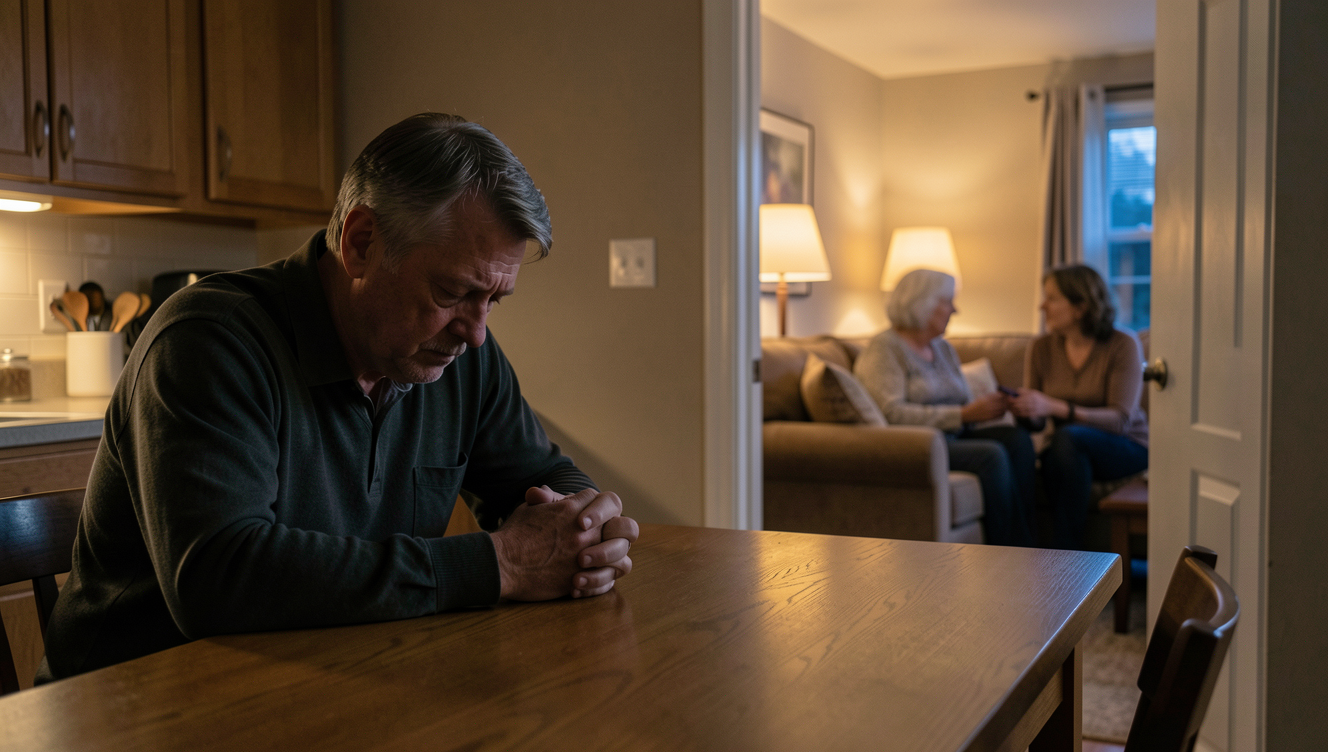
My wife sat across the kitchen table with the same calm expression she’d used to tell me she wanted to separate. No anger. No tears. Just the quiet, practiced composure of someone who had planned this conversation for a long time.
“I don’t want this to be ugly,” she said, sliding a folder across the table. “Fifty-fifty. No lawyers. We split everything fair and move on.”
That was six months ago. I thought I understood what fair meant.
We’d been married for ten years. We owned a house together. We had joint savings, retirement accounts, a car, furniture, the accumulated weight of a decade of shared life. I wasn’t trying to take anything that wasn’t mine. I just wanted what we’d built together.
Naomi had always been the one who handled the numbers. She was an accountant, meticulous with every receipt and tax form. I trusted her with our finances the way I trusted her with everything else. When she said fifty-fifty, I believed her.
I should have asked more questions.
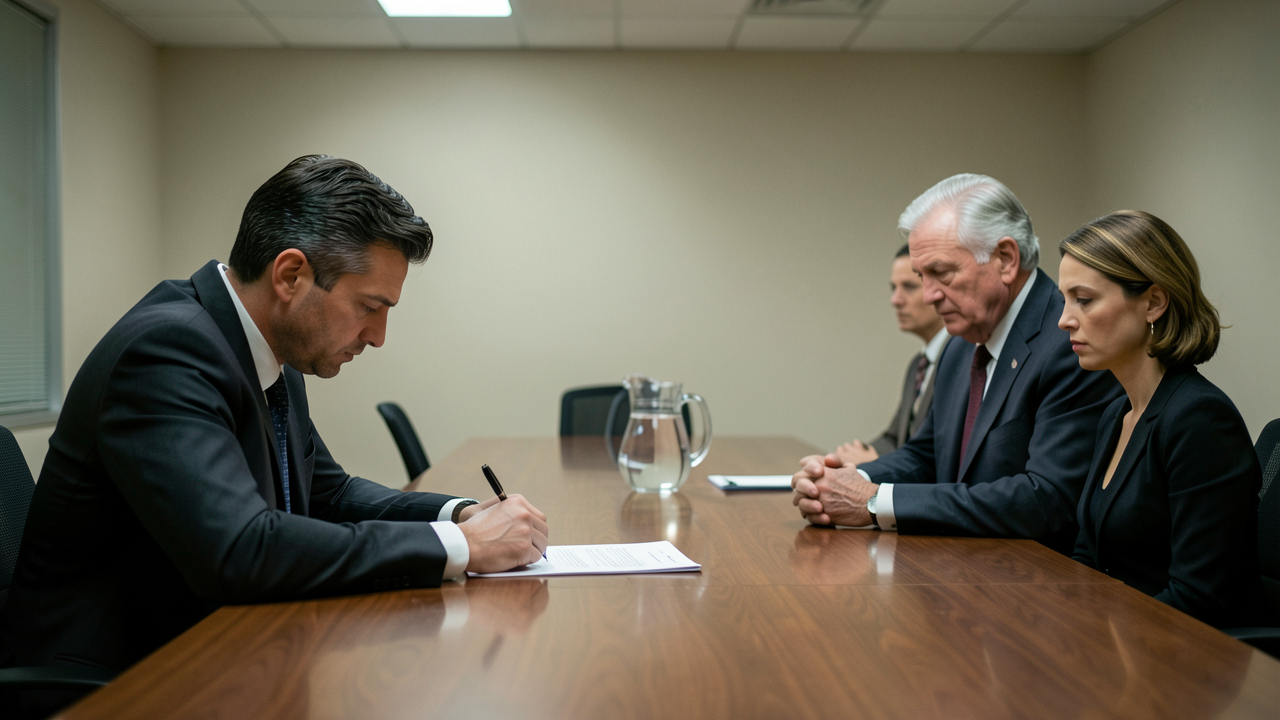
The mediator’s office was neutral territory. Beige walls, a water pitcher, fluorescent lights that hummed quietly. Naomi sat on one side of the table with her father, Leonard. Leonard had been a corporate attorney for forty years. He wore the same kind of suit to a divorce mediation that he wore to close million-dollar deals.
I came alone.
“I think we can resolve this quickly,” Leonard said, opening a leather briefcase. “My daughter wants to be fair. But there are some documents we need to review first.”
He placed a single sheet of paper on the table, rotated it so I could read it. It was a prenuptial agreement.
Not a draft. Not a proposal. A signed, notarized, fully executed prenuptial agreement dated the morning of my wedding day.
I stared at the signature at the bottom. It was mine.
“You signed this at ten in the morning on June 14th, 2016,” Leonard said, his voice flat. “The notary was a woman named Patricia Holloway. She was my paralegal at the time.”
I didn’t remember signing it.
I remembered the morning of our wedding. I remembered pacing in my hotel room, checking my tie in the mirror three times, calling my mother to make sure she’d arrived at the venue. I remembered the champagne toast and the way Naomi’s dress caught the afternoon light.
I did not remember signing away my right to anything we would build together for the next ten years.
“You told me there was no prenup,” I said, looking at Naomi.
She didn’t meet my eyes. “It was your idea,” she said quietly. “You said you wanted to protect me from your student loans.”
I didn’t. Because it never happened.
Leonard slid another page across the table. “Each party waives any claim to the other’s assets acquired during the marriage, including real property, retirement accounts, investment portfolios, and business equity.”
I had built a consulting firm during our marriage. It had started as a side project and grown into something that supported both of us for the last four years. According to the document I’d supposedly signed, I had waived my right to claim any of Naomi’s assets — and she had waived her right to claim any of mine.
But the house was in her name. The retirement accounts were in her name. The investment portfolio her father managed was in her name. I had been depositing my consulting income into our joint account for years, and Naomi had been quietly moving that money into accounts that, according to the prenup she wanted me to forget, were exclusively hers.
I looked at the notary stamp. Patricia Holloway. Leonard’s paralegal.
“She passed away two years ago,” Leonard said. “Car accident.”
He said it the way someone says the traffic was bad. Flat. Final.
“You can contest it,” Naomi said, finally looking at me. “But it will take years and cost more than you’d get. Or you can take the original offer. Fifty-fifty of what we both agree is marital property. Which, according to this document, is the furniture and the car.”
I sat there for a long time. The fluorescent lights hummed. The water in the pitcher sat still.
I thought about the ten years I had spent building a life with someone who had kept a signed document in her father’s safe, waiting for the right moment to use it.
I didn’t contest it. I signed the agreement Leonard placed in front of me, took the car and the furniture, and walked out of the mediator’s office into a parking lot where the sun was too bright and the air smelled like nothing.
It took me three months to find Patricia Holloway’s obituary. It was real. She had died in 2024. I spent another two weeks calling every law firm in the city until I found someone who had worked with her.
“She handled a lot of notarizations for Leonard,” the woman told me. “But she told me once that she never actually watched people sign. He would bring the documents to her already signed. She just stamped them.”
I asked if she would put that in writing. She said no.
Maybe that makes me a fool for trusting a woman whose father was a corporate attorney. Maybe it makes me naive for believing fifty-fifty meant what it was supposed to mean.
Maybe it just makes me someone who didn’t know that the person he was marrying had already planned the ending before the beginning had started.
I still have the car. I still have the furniture. And I still have a copy of that prenuptial agreement in a drawer in my desk. I look at it sometimes — the signature that’s supposed to be mine, the date that should have been the best day of my life.
And I wonder how many other people have signed something they don’t remember, on a morning they thought was about love, while someone else was already thinking about the exit.
What would you do if you found out your divorce was planned before your wedding even started?