The rest of it Marcus stacked on his desk like a bad hand of cards. Della’s 2019 tax return, filed with the county grant application, claiming a $180,000 charitable deduction for a building she did not own. A filing from her agency’s bankruptcy case, and the county vendor list showing Kessler Insurance had won the library’s contract that same spring. And clipped to the back of the 2019 re-recording, a loan record: $60,000, secured against 14 Pell Street, for a roof the county had refused to pay for.
That was the part that sat in my chest at night. If that roof had failed inspection, the branch would have closed and a bank would have taken a building that never belonged to her.
I asked for ten minutes on the county board’s agenda and got them. Room 2B, folding tables, a flag. Priya sat behind me with the ledger. Marcus brought the microfilm printouts. Ada Whitlock’s granddaughter came, and Lena Boyd’s son, and neither of them had known their mothers’ names had been typed off a deed.
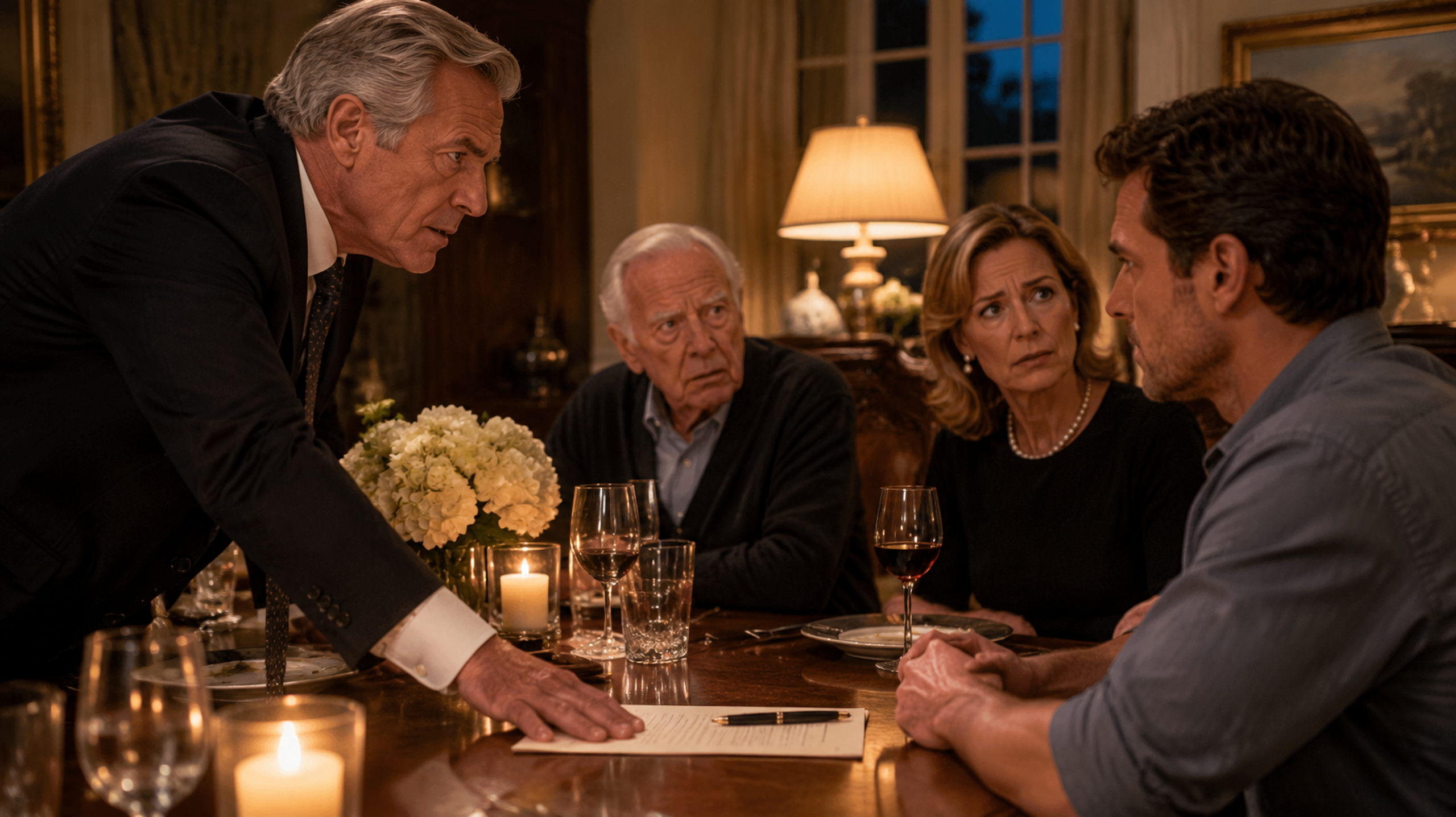
I put it up in order. The 1997 deed. The 2019 deed. The two returned envelopes. The bank card. The letter with the fluent blue signature, and my grandmother’s doctor’s note saying her right hand never recovered.
Della said she had been protecting the building. She said the county would have sold it and the roof would have caved in on the children’s section, and nobody else was going to pay for it.
The board’s lawyer asked one question. “Mrs. Kessler, did you sign Ruth Vance’s name to this letter?”
She looked at the table. “She asked me to.”
Richard came in late, in his work coat. He set something down and unwrapped it: a brass plate in a yellow bath towel, four screws in a sandwich bag. He didn’t look at Della once.
“She took it off the wall the night before the unveiling,” he said. “I held the flashlight.”
The vote took four minutes. The 2019 deed was void. The three original trustees were restored. The $180,000 deduction was reversed and referred to the state insurance department. The library’s insurance contract was terminated that afternoon. A man from buildings came with a screwdriver and took Della’s plaque off the wall while we watched.
The chairman asked her and Richard to step out while the trustees were seated. She walked out with her chin up, the way she walked past the cake.
The state letter came in April and Priya read it standing up, because she said it deserved that. License on probation for twenty-four months. Civil penalty of eighteen thousand dollars. The agency survived. It did not get the county back.
At the first meeting of the restored trust, the treasurer passed around a statement. We owed $60,000 on the roof. I took the chair of the roof fund, and I did not put my name on the donor wall, and we paid it off over three years, one pledge card at a time.
The assistant district attorney asked me twice whether I wanted to pursue forgery charges. I signed the insurance fraud affidavit and said no. Not for Della. For my grandmother, who would have hated a courtroom more than she hated being erased.
The branch is open on a new ten-year lease, one dollar a year. Della and I speak at Christmas.
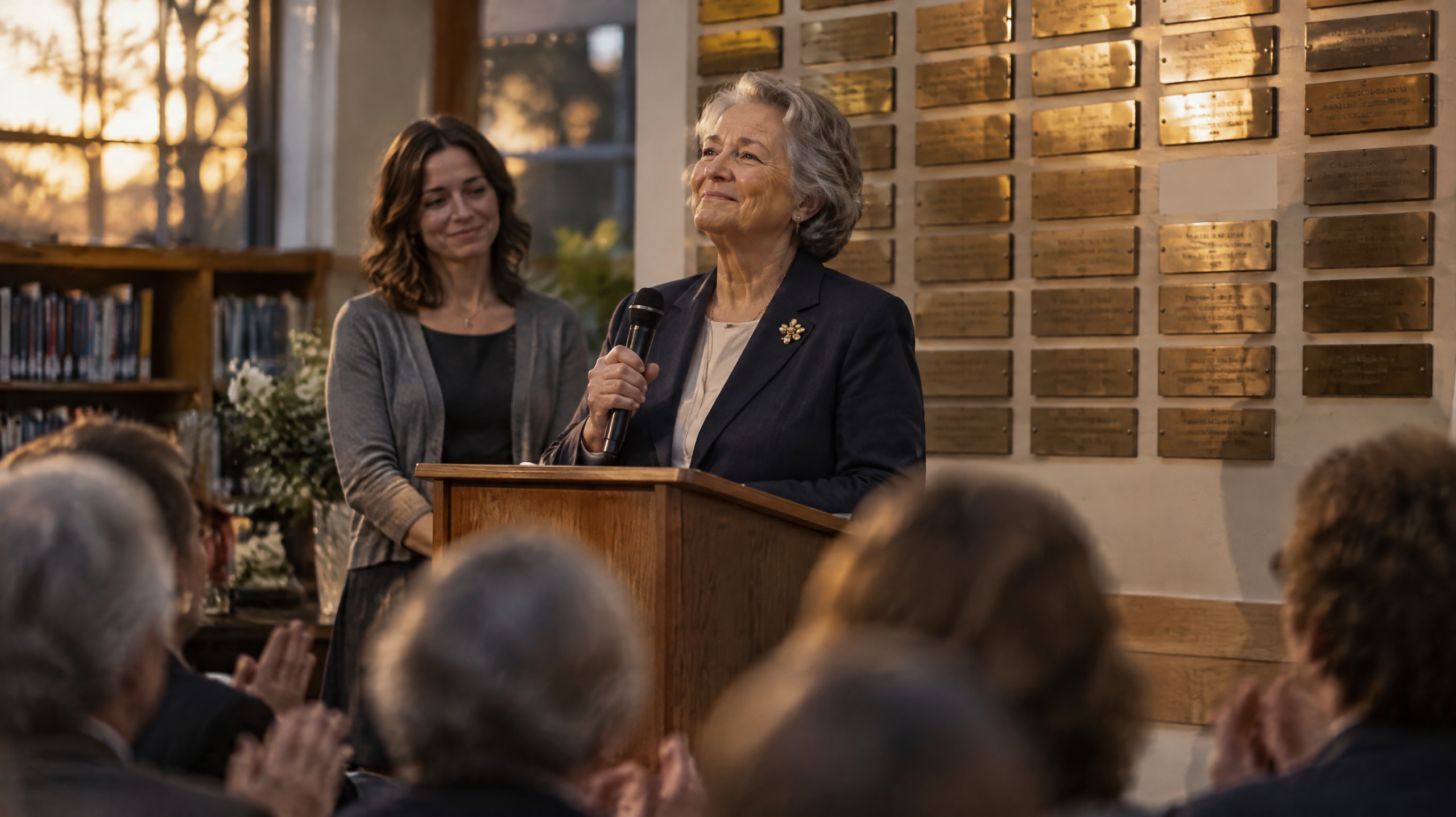
In June I took the brass plate out of the envelope the trust had kept it in, lined its four holes up with the four in the wall, and turned the screws until it sat flat against its own clean rectangle. Then I sat in the chair by the window where my grandmother taught me the alphabet and listened to a boy at the far table read a page out loud to his mother, getting the long words wrong and trying them again.