🎧 Listen to this story
Full narration — My Best Friend Called My Wife Paranoid for Questioning Our Partnership
Narrated by Dramateller
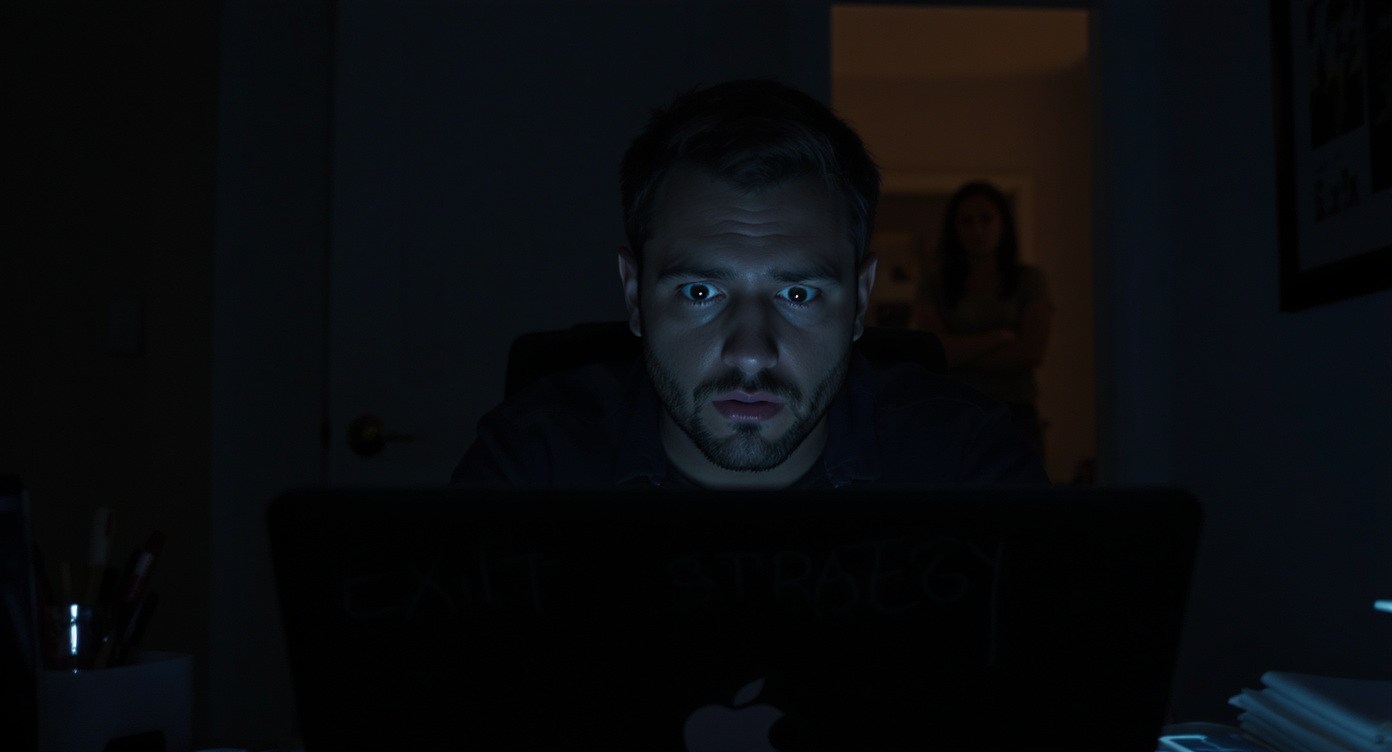
My wife woke me at 2:47 AM by putting her hand on my shoulder and saying my name in a voice I had never heard before.
Not scared. Not angry. Something colder. Something that made me sit up before my brain was even fully awake.
“You need to see this,” Sarah said.
She was standing on my side of the bed with my laptop open. The screen was too bright for the dark room, and I squinted at whatever she was holding out to me. It looked like a Google Drive folder. I didn’t recognize the subdirectory name at first.
“What is it?” I asked.
“It’s Marcus’s shared drive. The one you said you never look at because he handles the business side.”
Marcus and I met freshman year of college. We were nineteen years old, living in the same dorm, both too broke to buy the textbooks we needed. By sophomore year we were building a software tool for student scheduling. By senior year we had twelve thousand users and an angel investor who believed in us.
Fifteen years later, we had a company with thirty-two employees, an office in a converted warehouse, and a partnership built on nothing but handshake trust. No contract. No operating agreement. Just Marcus and me, the way it had always been.
I was the builder. I handled product, engineering, and client delivery. Marcus handled sales, partnerships, and the business side. It worked because we trusted each other completely. I never questioned his meetings or his expense reports or the late nights he said were “relationship building.” That was his domain. I stayed in mine.
Until Sarah found the folder.
“He has a subfolder called ‘Archived’ inside the main ops drive,” she said. “I was looking for the Q3 financials because our accountant asked about a discrepancy. I wouldn’t have opened it otherwise.”
She turned the laptop toward me. Inside the Archived folder there was a document. The filename was simple.
Exit_Strategy_Q3_final.docx
I clicked it open. Fifteen pages. A complete plan for transferring all of our intellectual property into a new LLC. Marcus’s name was the only name on the formation documents. A timeline showing client migration over a six-month window. Email drafts to our five biggest accounts, explaining that the company was “restructuring” and that I would be “stepping away from day-to-day operations” due to “personal health reasons.”
There was a spreadsheet attached. A client-by-client breakdown of our highest-value accounts, with projected revenue after the migration. Three point seven million dollars in annual recurring revenue. All of it going to the new entity. All of it under Marcus’s sole control.
I read the whole thing twice before I said anything. My hands were shaking. Not from anger. From the kind of cold that hits you when you realize you have been living in a version of reality that was never real.
“There’s more,” Sarah said.
She scrolled down. There were emails. Fourteen months of them. Drafts, sent messages, replies from clients. I recognized the names. People I had flown to meet, pitched to, demoed our product for. People who had looked me in the eye and said they were “thinking about it.”
The emails told a different story. Marcus had been telling them I was unstable. That the engineering team was struggling. That he was putting together a “new structure” that would ensure continuity. Some of them had already agreed to move their contracts.
I closed the laptop and sat in the dark for a long time.
“How did you find it?” I asked.
“I didn’t sleep. I kept thinking about the credit card statement. The one with the legal fees.”
I had noticed it too. Three months ago, Marcus expensed a five-thousand-dollar payment to a law firm I had never heard of. When I asked about it, he said it was for “general contract review” and that I didn’t need to worry about it. I let it go. I always let things go.
I called Marcus the next morning. I didn’t tell him what I had found. I just said we needed to talk and asked him to come to the house.
He showed up at 10 AM with two coffees and a smile. He handed me one and sat down at my kitchen table like nothing had changed.
“You look rough, man,” he said. “Sarah still giving you grief about the late nights?”
I didn’t answer. I opened my laptop and turned it toward him with the exit strategy document on the screen.
He looked at it for maybe three seconds. Then he leaned back in his chair and let out a breath like I had just asked him to do something exhausting.
“That’s not what you think it is,” he said.
“What is it then?”
“Scenario planning. Every business does this. You map out worst-case outcomes so you’re prepared. It doesn’t mean you execute them.”
“Then why is my name not on the LLC?”
“Because it was a draft. Drafts don’t have the final structure.”
I opened the email folder. I scrolled to the first message, dated fourteen months ago. A response from one of our biggest clients — a logistics company we had been working with for three years. The client wrote: “Appreciate the heads-up. We’ll start transitioning our account to the new entity as soon as you give us the green light.”
Marcus stopped leaning back. He sat forward and put both hands on the table.
“That’s not —”
“Fourteen months, Marcus. You’ve been planning this for fourteen months. You told our clients I was having health problems. You told them I was stepping away. You’ve been running this behind my back while I sat in the same office as you every single day.”
He didn’t say anything for a long time. Then he did something I will never forget. He looked at me with complete sincerity and said: “I was trying to protect the company.”
I almost laughed. “Protect it from what?”
“From you, if something happened. You don’t have any documentation in place. No succession plan. If you got hit by a bus tomorrow, the company would collapse. I was building a contingency.”
“A contingency where I don’t exist?”
“That’s not fair.”
“What’s not fair is that I trusted you for fifteen years and you spent the last fourteen months of that trust preparing to take everything I built.”
I told him to leave. He stood up slowly, like he expected me to change my mind. I didn’t.
That afternoon I called a lawyer. The next day I filed an injunction to freeze any asset transfers. The day after that, I sent an email to every client on the spreadsheet explaining exactly what had happened.
The responses came in fast. Most of our clients were horrified. Two of them admitted Marcus had approached them about the new entity but said they had been uncomfortable with how secretive it seemed. One of them — a logistics VP I had known for five years — said something that still stays with me: “I wondered why you never returned my calls. Marcus said you were struggling. I should have called you directly.”
The company is being restructured now. Marcus is out. We’re negotiating a buyout that will leave me with the IP, the clients, and the brand. It’s going to cost me more than I can afford, but it’s better than the alternative.
Sarah still wakes up sometimes at 2 AM. She doesn’t open my laptop anymore. She just lies there, staring at the ceiling, and I know she’s thinking about what would have happened if she hadn’t looked.
My wife was never paranoid. She was paying attention. And I almost didn’t believe her because I couldn’t imagine that my best friend would burn down everything we built while smiling at me across our shared desk.
Maybe trust is just a slower kind of blindness. Maybe the people closest to you are the only ones who can really hurt you, because they’re the only ones you never think to watch.
Would you have confronted him immediately, or gathered more evidence first?