
The pasta I’d made was getting cold.
Patricia hadn’t touched it. She was too busy studying the bookshelf behind me, the one I’d bought from a vintage shop in Brooklyn for forty dollars, its paint chipping in two places I kept meaning to sand down. She tilted her head like she was cataloguing a defect.
“Charming,” she said, in the tone people use when they mean the opposite.
James refilled her wine glass and smiled at me over her head, the smile that said just give her a minute, she warms up. Fourteen months together and I still wasn’t sure that was true. Patricia had the posture of a woman accustomed to marble countertops, and my kitchen had butcher block I’d reclaimed from a restaurant closing in Williamsburg. I liked it. I’d chosen it deliberately, the same way I’d chosen the apartment: second floor of a prewar building in a decent neighborhood, nothing remarkable, nothing that announced itself.
That was the point.
“The neighborhood’s quite lively,” Patricia said, setting down her fork. “James mentioned you’ve been here three years.”
“Almost four.”
“Mm.” She looked at the window, at the fire escape visible through the glass. “At your age, I imagine you must be saving.”
James said, “Mom,” in the mild way he said most things to her.
She smiled at me. “I only mean it must be a priority. Rent in this city.”
I told her the rent was manageable and got up to put more bread on the table. Standing at the counter with my back to them, I heard her ask James, in a voice calibrated to carry, whether I had a retirement account. A real one.
That was beat one. I catalogued it the way I catalogued everything she said that night: quietly, with my hands busy, giving her nothing.
The accusation came with the dessert.
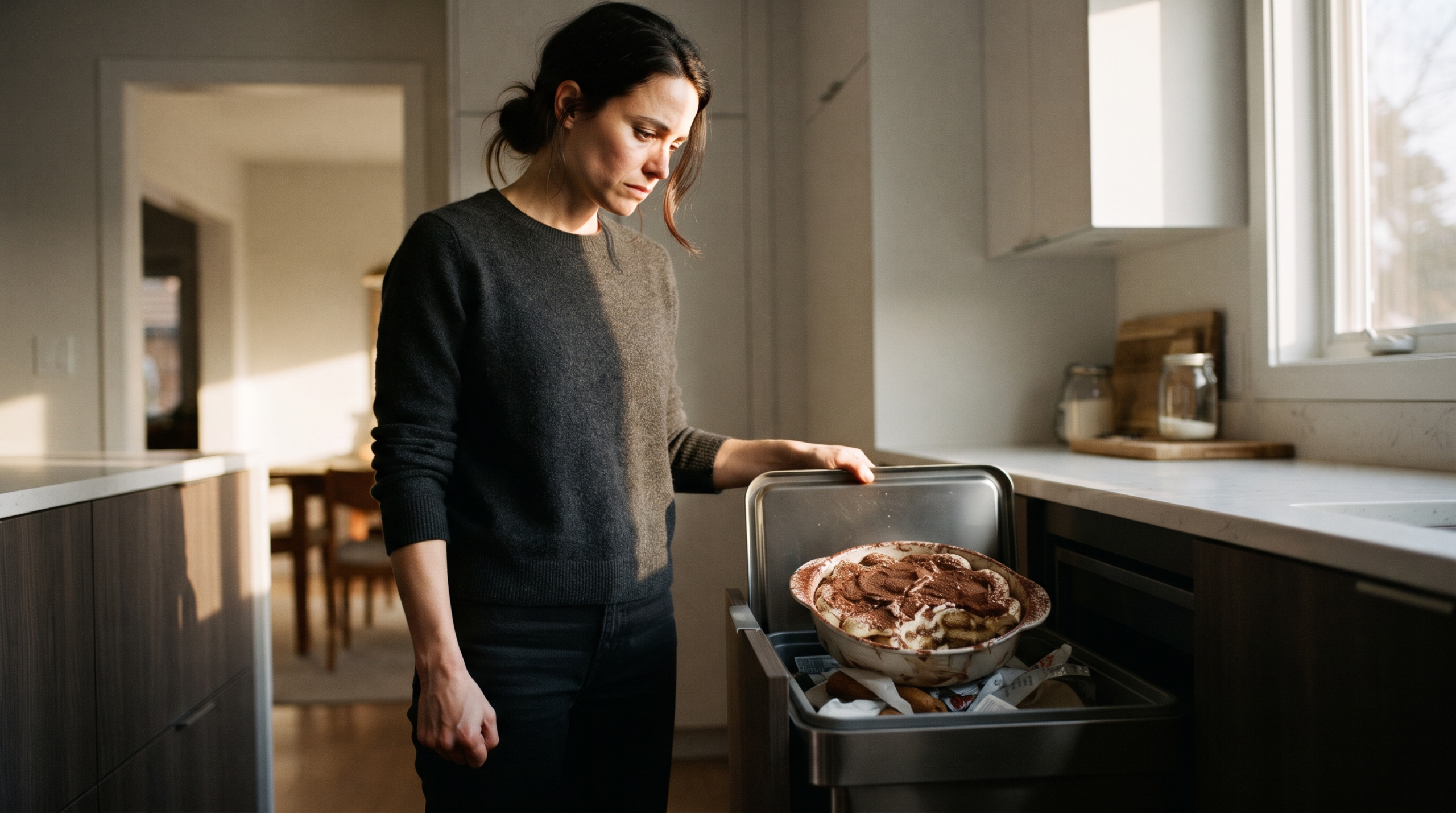
I’d made tiramisu from scratch, which I later thought was almost funny, because nobody touched that either.
Patricia had been circling something for two hours, a wide lazy orbit, and then she simply landed. She set her wine glass down with a small precise click and looked at me with what I can only describe as relief, the way someone looks when they’ve finally decided to say the thing they’ve been holding back.
“Emma, I’ll be honest with you, because I think you’d prefer that.” She folded her hands. “I’ve seen this before. A woman who attaches herself to a man with good prospects and a family name. I’m not saying you’re a bad person. I’m saying I know what you are.”
The room went very quiet.
I looked at James.
He looked at his tiramisu.
“Mom,” he said. And then nothing followed it. Just the word, floating there, doing no work at all.
“She doesn’t mean—” he started.
“I mean it precisely,” Patricia said. She wasn’t unkind about it, which was almost worse. “James has built something. He has a name, a business, a future. You seem like a smart girl. I understand the appeal.”
I waited for James to finish whatever sentence he’d started. He picked up his fork instead.
There is a particular kind of silence that happens when someone you love chooses comfort over you. I had never experienced it before that night, and I recognized it immediately, the way you recognize a sound you’ve only heard described. Something shifted in my chest. Not broken. Not yet. But a hairline thing, the kind you feel only when you press on it.
“I think,” I said, very carefully, “that you don’t know what you’re talking about.”
Patricia smiled as though I’d proved her point.
We stood in my hallway after she left, James with his jacket still on, me with the dish towel still in my hand.
“She’s protective,” he said. “That’s all it is. She worries.”
“She called me a gold digger. In my home. At my table.”
“She didn’t use that word.”
“She used every word around it.”
He reached for my hand, and I let him take it, because I wanted to believe the explanation that was coming. That’s the part I find hardest to admit now. I wanted it. I was already building the architecture of forgiveness before he’d even given me a reason.
“She comes from a different generation,” he said. “She sees a woman without — ” He paused. “Without visible financial stability, and she worries. It’s not personal.”
“It was entirely personal. It happened to me personally.”
He pulled me into a hug and pressed his mouth to the top of my head. “I’ll talk to her.”
I stood there inside that hug and understood, with a clarity that didn’t yet have anywhere to go, that he would not talk to her. That talking to her was not something James did. And that I had just watched him watch someone insult me and choose, consciously, the path of least resistance.
The tiramisu was still sitting on the table. I threw it out after he left.