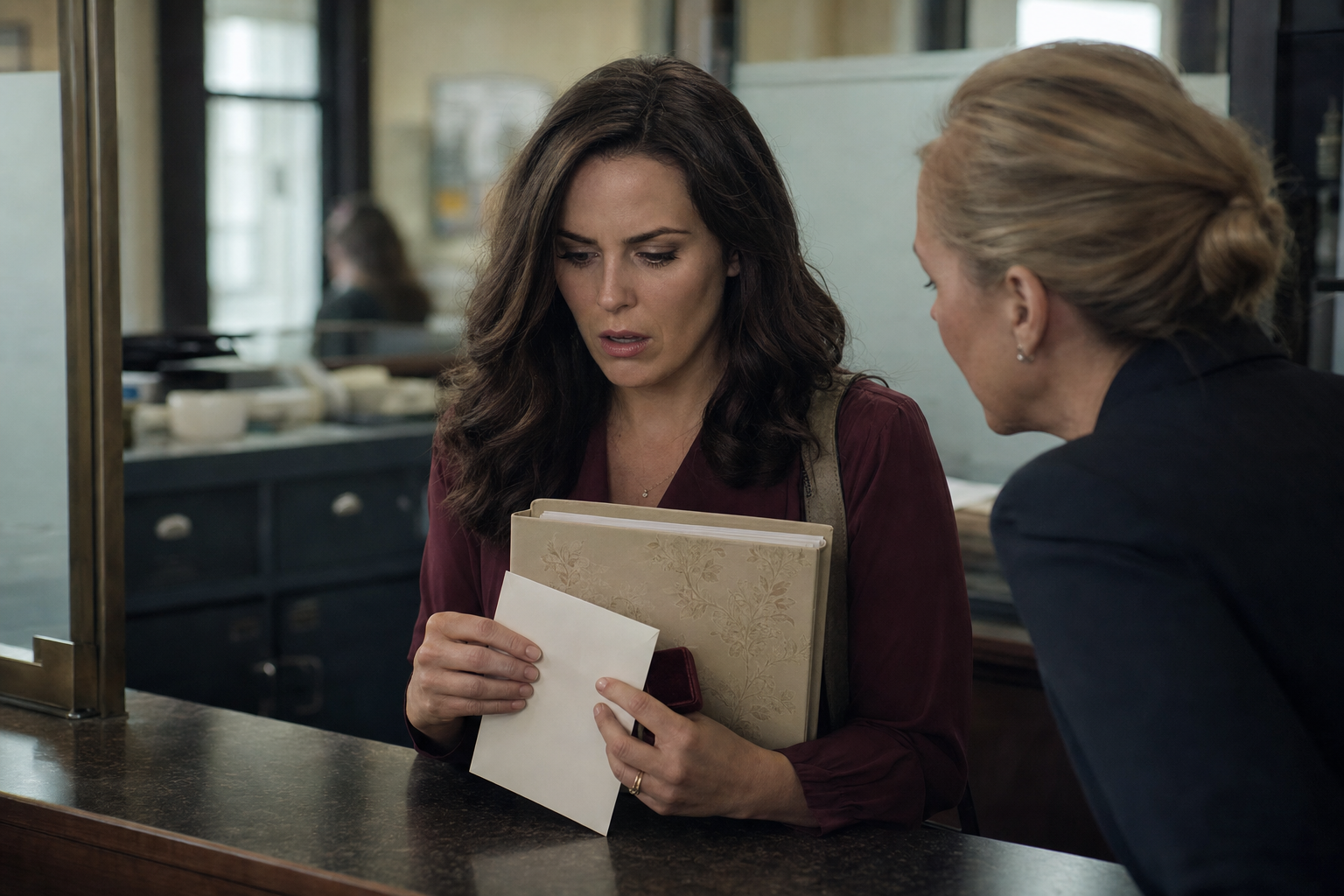

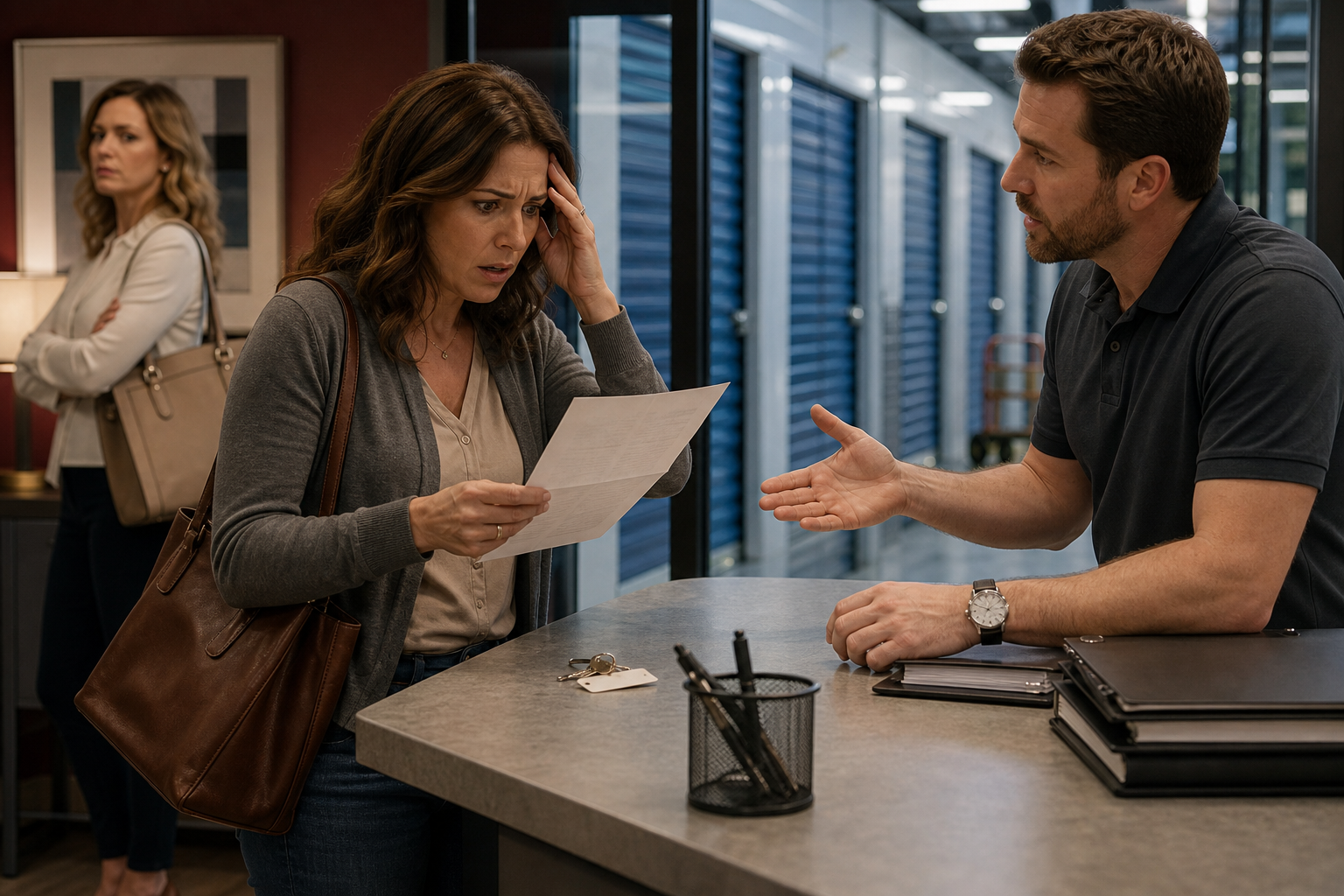
The storage manager said I had until Friday to stop the auction of a unit I had never opened.
He said it gently, like he had already learned that my kind of silence usually meant the story was getting worse in real time.
“Ms. Heller?” he asked. “The unit is in your name. If the balance isn’t cleared or the contents aren’t removed, we proceed.”
I was standing in the hallway outside the dental office where I have worked for eleven years, still wearing gloves because I had stepped out between patients to answer a number I didn’t recognize. I actually looked behind me, as if there might be another Marissa Heller nearby with a storage unit problem I could hand this call to.
“There has to be some mistake,” I said.
“Unit C-114,” he replied. “Rented in January. Past due for three months. We’ve sent notices to the mailing address on file and left messages for the secondary contact, but you’re the legal renter.”
January.
That was when Alyssa was telling everyone her husband had destroyed her life.
Alyssa has been my best friend since we were nineteen and sharing a freezing apartment over a laundromat while pretending generic noodles counted as a personality trait. She was in my wedding. She sat with me at the hospital when my husband, Daniel, had his first heart scare. She brought lasagna after his funeral even though I only ate three bites and cried into the foil pan like it had personally betrayed me.
So when she called me seven months ago from a grocery-store parking lot, crying so hard I could barely understand her, I did what women like me are trained to do. I made room.
“He changed the garage code,” she said about her husband, Greg. “The movers are here, the kids’ beds are here, and my sister says I can stay with her but she doesn’t have room for any of this. Mari, I just need one favor. One month, tops.”
The favor was a storage unit.
Alyssa said her cards were frozen because her lawyer had told her not to move money around until the temporary orders were sorted out. She said Greg was watching every charge. She said she was too embarrassed to ask anyone else. All she needed was for me to put the unit in my name for thirty days, just until she got into an apartment and transferred everything over.
I knew it was a bad idea while I was saying yes.
That should have mattered more than it did.
We met at the storage office after work. The manager that day was a college-aged kid who slid a tablet toward me and said, “Initial here, here, and here.” Alyssa was juggling two crying children, a lamp, and three calls from her attorney. I remember signing fast because one of her daughters was asking where her pink blanket was, and Alyssa looked like she might crumble into the linoleum.
“Thirty days,” she said in the parking lot after the movers left. “I swear. The second I get my feet under me, this comes out of your name.”
I believed her because grief had made me sentimental about loyalty, and because people who have held your hand at your worst can ask for too much without sounding dangerous.
The first month, she sent me the payment on time.
The second month, she sent it four days late with a text that said, Sorry, mediation ran long and my account is a mess.
The third month, she told me not to worry because she had set up autopay.
That was the phrase I kept replaying while the storage manager explained the overdue balance.
“Could you email me the contract?” I asked him.
“Of course,” he said. “And if you want to come in before Friday, we can let you inspect the unit.”
Inspect. As if there might be anything inside that belonged to me.
I hung up and called Alyssa immediately. No answer. I texted Call me now. Storage facility just contacted me.
She replied twenty-three minutes later with In court. Don’t spiral. I’m handling it.
Don’t spiral.
That was Alyssa’s favorite phrase anytime a problem she created landed too close to my shoes.
By then, if I’m honest, I had already noticed a pattern I kept trying to dress up as temporary chaos. She had moved from her sister’s house into a pretty townhouse on the other side of town. She still complained constantly about money, but her social media had quietly filled with little signs of recovery that never seemed to include paying the people who floated her through it. New bar stools. A white comforter that looked expensive. Matching baskets in the mudroom. A “fresh start” birthday dinner where everyone raised glasses to her courage.
Every time I asked whether the storage unit had been transferred yet, she had an answer ready.
The website is down.
They said I have to come in with two forms of ID.
Greg is still trying to weaponize my mail.
You know I would never leave you hanging.
That last line should be stitched onto a pillow for women who absolutely will.
I left work early the next day and drove to the storage facility myself.
The manager from the call was there, late forties maybe, with tired eyes and the kind of patience people develop by watching the same bad decisions arrive in different clothes. His name tag said Ron.
He printed the account history for me. Three on-time payments. One partial payment. Then nothing.
“There’s also gate activity,” he said carefully, as if deciding how much insult to place on top of injury. “Your access code has been used regularly.”
“My access code?” I said.
He turned the paper so I could read it. The unit had been accessed twenty-eight times since March.
Most of those visits happened on weekends.
Several were after nine at night.
One line showed an additional authorized user added in April. The name was Darren Pike.
I stared at it long enough for Ron to ask if I was all right.
Darren was Alyssa’s new boyfriend. The one she had introduced to me in May as if the divorce had been emotionally over for years and I was the unreasonable one for looking surprised.
Ron walked me down the corridor and rolled up the metal door on C-114.
I had expected boxes of children’s clothes, maybe a mattress, the sad remains of a house cut in half by lawyers.
Instead I saw a carefully stacked second life.
There were bar stools still in cardboard sleeves. A framed mirror. A ring light. Two unopened rugs. Three black plastic bins labeled Darren Events in silver marker. A faux-marble coffee table still wrapped at the corners. The girls’ bunk bed parts were shoved along one wall behind an exercise bike. Their family photo boxes were on the floor beside a tower of decorative throw pillows that looked more expensive than my monthly car payment.
I actually laughed.
Not because anything was funny. Because sometimes rage arrives wearing the wrong face.
“She told me this was for her kids’ things,” I said.
Ron gave the small shrug of a man who had no professional way to say it usually is until it isn’t.
If friendship betrayals are your kind of read, you might also like My Best Friend Said I Was Only Her Emergency Contact — Then the Property Manager Read My Name Off the Lease.
I called Alyssa from inside the unit.
This time she picked up.
“Please tell me you’re not at storage,” she said before I could speak.
“I’m standing in front of Darren’s plastic bins and your brand-new bar stools.”
Silence.
Then, incredibly: “Mari, lower your voice.”
“There is nobody here but me and the man auctioning your fresh start.”
She let out a long breath, the kind she uses when she wants the other person to feel childish for noticing reality.
“I was going to fix it,” she said. “Things have been insane.”
“You added your boyfriend to a unit in my name.”
“Because he was helping me move things.”
“You told me this was one month.”
“And then my life exploded, Marissa. I didn’t think you of all people would keep score right now.”
That sentence landed harder than the debt.
Because there it was. Not panic. Not shame. Just entitlement dressed up as pain.
“You let notices come to my house for months,” I said.
“I was trying not to stress you out.”
I almost admired the nerve.
We argued in circles for ten minutes. She said Greg had delayed support payments. She said Darren had fronted moving costs. She said the girls deserved stability. She said I had a house, a steady paycheck, and no idea what it was like to rebuild from nothing.
Then she said the one thing that finally burned off the last of my guilt.
“After everything I did for you when Daniel died, I really thought you’d carry me for longer than this.”
Carry me.
As if grief had opened a permanent line of credit in my name.
I told Ron I wanted the paperwork to surrender the unit unless the balance was paid in full by Alyssa before Friday.
Then I called my brother, who has a pickup truck and the useful habit of loving me without making me audition for it. We went back the next morning. I pulled out the girls’ photo boxes, their school art, and the bag with the pink blanket Alyssa’s youngest had cried over in January. I dropped those at Alyssa’s sister’s house with a short note that said, The rest can be picked up after the bill is paid.
Alyssa sent me fourteen texts that afternoon.
She called me cold.
She called me self-righteous.
She said I was humiliating her during the worst year of her life.
What she never said was that I was wrong.
She paid the balance on Friday, though not before calling two mutual friends and telling them I was threatening to sell her children’s things. One of those friends phoned me ready to mediate until I forwarded the account history and the photo of Darren’s labeled bins. Funny how quickly people rediscover nuance when receipts show up.
A week later, Alyssa moved the unit into her own name at a different facility. Ron called to confirm I had been removed from the account. I thanked him so sincerely he laughed.
I haven’t spoken to Alyssa since June.
I still miss the version of her I thought I had.
That is the part nobody tells you about friendship betrayal when you’re old enough to have built a life around history. You do not just lose the person. You lose the meaning you attached to all the years before the loss.
For a while, I kept replaying every kindness between us, trying to decide whether she had changed or whether I had simply mistaken intensity for loyalty. Maybe it doesn’t matter.
What matters is that helping someone through a crisis is not the same thing as volunteering your name for their consequences.
And if that sounds less compassionate than the woman I used to be, maybe that is because the woman I used to be kept signing things in moments when everyone else was crying.
I don’t do that anymore.