🎧 Listen to this story
Full narration — My Brother Called Once a Year While I Changed Mom’s Diapers — Th
Narrated by Dramateller
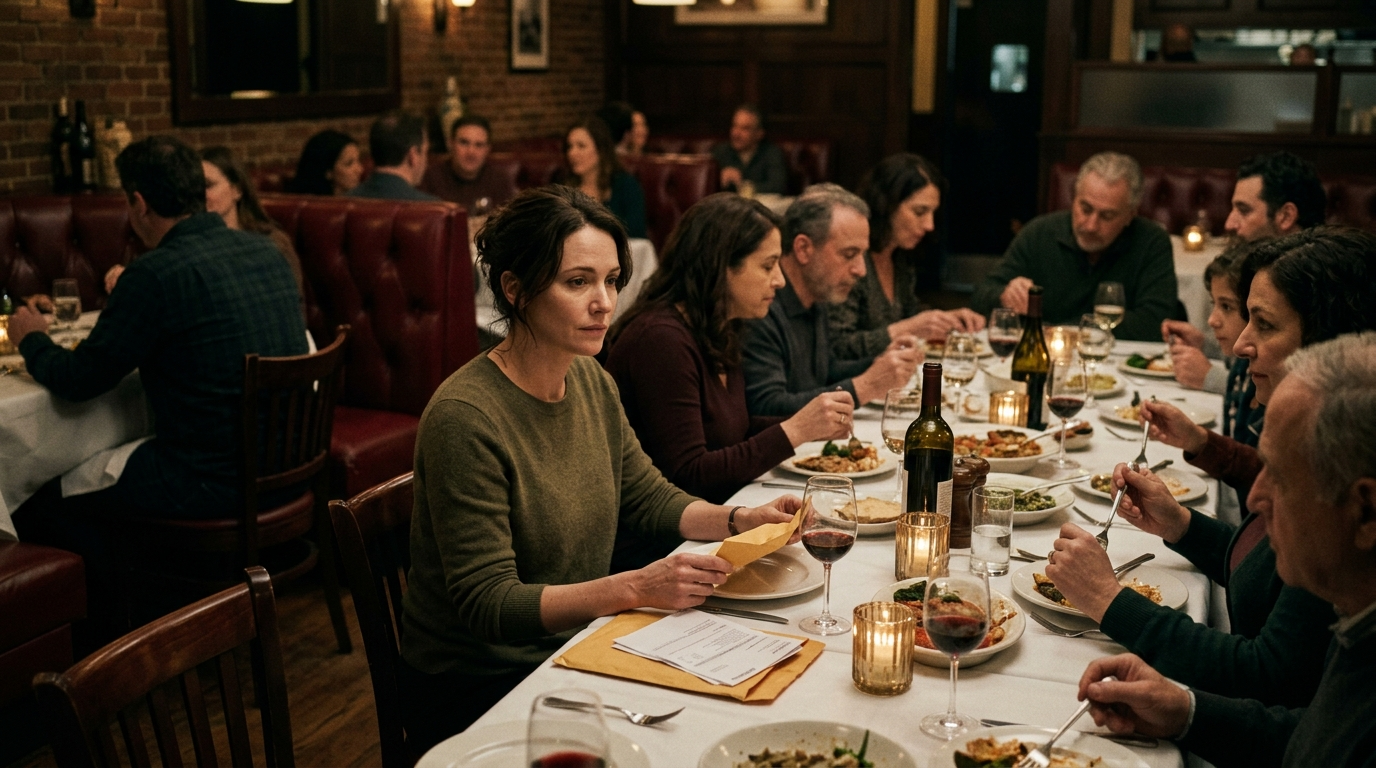
The lawyer’s office smelled like old paper and lemon furniture polish. My brother sat across the table in a suit that cost more than my entire wardrobe, checking his watch like he had a flight to catch. He’d flown in from Singapore that morning. He hadn’t seen Mom in three years.
“Sorry I couldn’t make it back sooner,” he said to the lawyer, not to me. “Work keeps me busy.”
I didn’t say anything. I was still wearing the same gray cardigan I’d worn to Mom’s funeral three weeks ago, because grief doesn’t care about laundry schedules.
The lawyer adjusted his glasses and began reading.
I already knew what the will said. Mom had told me two months before she died, when she was lucid enough to hold a pen but too tired to lift her head. She’d looked at me with those eyes that had watched me grow up, change her bandages, feed her soup, and hold her hand through three code blues.
“I know what you gave up,” she’d whispered. “I see it. He doesn’t call, and I don’t expect him to start carrying the weight now.”
I told her not to talk like that. She squeezed my hand and signed the amendment anyway.
When my brother realized he was getting jewelry and photo albums while I inherited the house and everything in it, he didn’t just get upset. He erupted.
“This is a mistake.” He pointed at me. “She manipulated Mom. Mom was sick. She didn’t know what she was signing.”
The lawyer explained that the amendment had been witnessed by two nurses and reviewed by a second attorney. My brother wasn’t listening.
“I’m her son. She loved me just as much as she loved her. This isn’t fair and you know it.”
He said “her” instead of my name. I was just the daughter to him. The one who stayed behind while he built his life in a country I’d never visited.
I didn’t argue. I just sat there and let him vent, because I’d learned over three years of feeding tubes and bed baths that some battles don’t need words. They need proof.
My brother had always been the golden child. He graduated top of his class, got the overseas job, married the right woman, sent the right Christmas gifts. When Mom first got diagnosed with Parkinson’s, he called me from a taxi in Hong Kong and said, “You’re closer. Can you handle the doctors?”
I said yes. I was thirty-two, single, and working in marketing for a mid-size firm. I thought I could handle everything. I was wrong.
Within six months, I was visiting Mom’s apartment every night after work. Within a year, I’d hired a part-time aide because she couldn’t bathe alone. Within eighteen months, I’d sold my apartment, quit my job, and moved into her spare bedroom full-time.
My brother sent a check for five hundred dollars. One time. It covered two weeks of the part-time aide.
He called on birthdays and Mother’s Day. Sometimes Christmas. He’d say, “How’s Mom doing?” and I’d say, “She fell again last week,” and he’d say, “That’s tough,” and then he’d talk about his promotion.
I don’t blame him for living his life. I blame him for thinking that living his life meant he still deserved half of what I’d paid for with mine.
The night after the will reading, my aunt called.
“You need to do the right thing,” she said, her voice sweet and poisoned at the same time. “Family shares everything. He’s your brother.”
I asked her how many times she’d changed Mom’s adult diaper. She didn’t answer.
My cousins started chiming in on the family group chat. “Mom always wanted us to stay united.” “Money destroys families.” “Think about what Mom would have wanted.”
I muted the chat and sat in Mom’s bedroom, which was now my bedroom because I hadn’t been able to afford an apartment in three years. The room still smelled like her lavender lotion. The dresser still had her hairbrush on it. I picked it up and found a strand of her gray hair tangled in the bristles, and I held it for a long time before I put it back.
I thought about the two years of Sundays I’d spent in that room, reading aloud to her from old romance novels because her eyes couldn’t track words anymore. I thought about the night she’d had a seizure and I’d driven her to the ER myself because the ambulance would have taken forty minutes. I thought about the way she’d looked at me when the home health aide had said, “Your daughter is a saint,” and Mom had nodded like it was the only thing in the world she was still sure of.
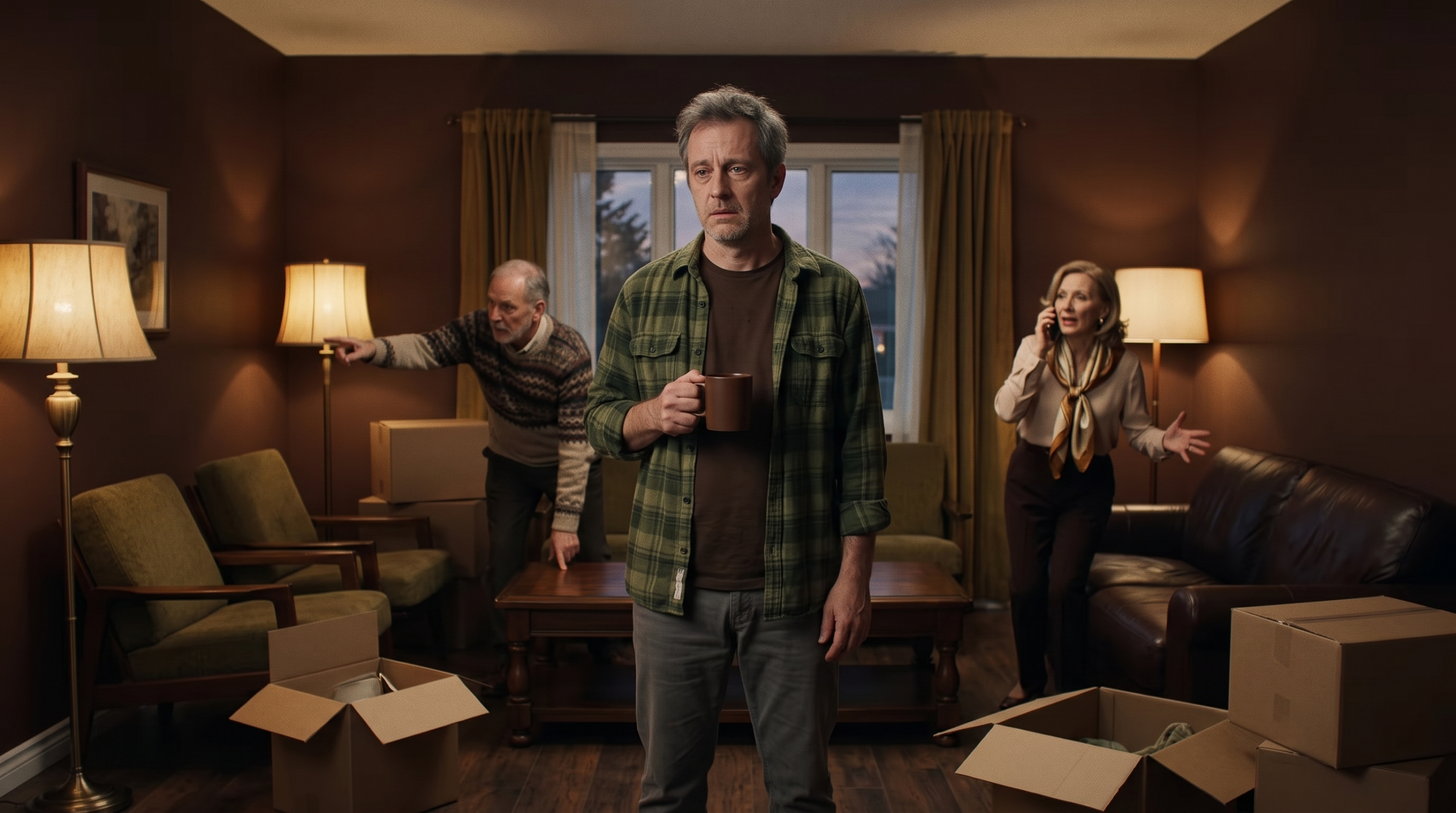
My brother showed up at the house the next morning. He brought his wife, probably as a witness. They stood in the kitchen where I’d fed Mom her oatmeal every single morning for two years, where I’d held her upright when her hands couldn’t grip the spoon anymore.
“I’ll take forty percent,” he said. “We forget this happens. No lawyers. No fighting. We’re still family.”
His wife nodded, her arms crossed, her expression hard.
“Forty percent of what?” I asked quietly. “You didn’t pay the property taxes. You didn’t replace the water heater. You didn’t pay the home health aide. You sent five hundred dollars once.”
“I was supporting my family,” he said. “I have a wife. I have responsibilities.”
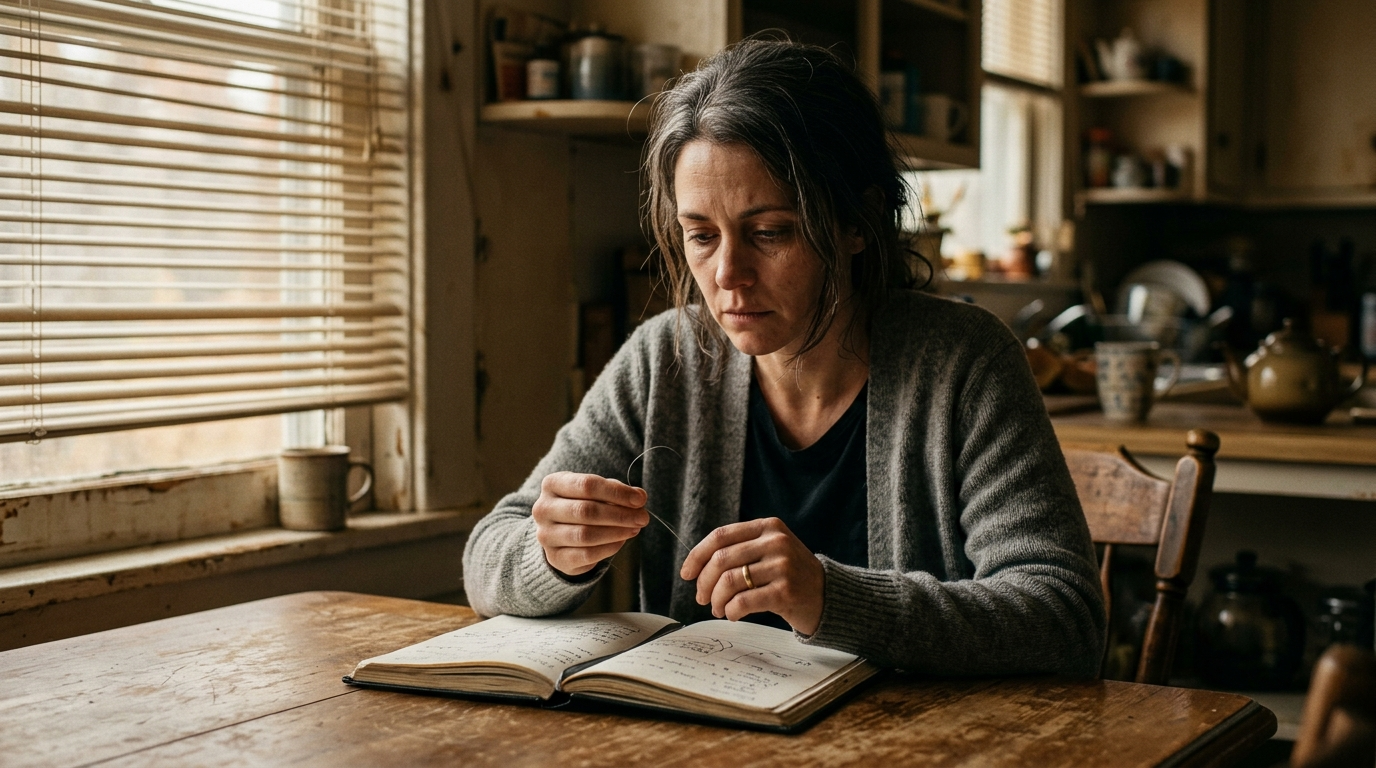
I opened the kitchen drawer where Mom used to keep her grocery list and her spare keys. Instead, I pulled out the journal.
It was a plain black notebook. Mom had started it the week her symptoms got bad enough that she couldn’t drive anymore. She wrote in it every single day for three years.
I handed it to my brother. “Read March fifteenth, two years ago.”
He opened it reluctantly. His wife leaned in to read over his shoulder.
The entry was short. Mom had written about a fall she’d had that morning. She’d hit her head on the bathroom sink and I’d rushed her to urgent care. She wrote: “Sarah called David. He didn’t answer. She left a message. He hasn’t called back yet. I think he’s too busy for me now.”
My brother’s face went pale.
“Keep reading,” I said. “There are three hundred more entries like that. Some mention you. Most don’t. She stopped expecting you to call after the first year.”
His wife took the journal from him and flipped through it herself. I watched her expression shift from defensive to uncomfortable to something that looked almost like shame.
She handed it back to me silently. “We should go,” she said to my brother.
He looked at me. For a second, I thought he might apologize. But he just turned and walked out the front door, and his wife followed.
The journal is still in the kitchen drawer. I don’t know what I’ll do with it. Maybe I’ll keep it forever. Maybe I’ll give it to him someday, when he’s ready to read what he missed.
I live in the house now. I sleep in Mom’s room, but I painted the walls a different color so it doesn’t feel like a shrine. I work part-time at a local bookstore because I don’t need to earn much anymore. The house is paid off. Mom left me enough to get by.
My brother hasn’t called since that day. My aunt stopped talking to me. The cousins’ group chat is quieter now.
On the hard nights, I wonder if I should have shared. Maybe keeping the house makes me just as greedy as he was. Maybe real family would have found a way to split everything, even when it wasn’t fair.
But then I remember Mom’s hand in mine, the weight of her head on my shoulder, the sound of her breathing when she finally let go. I remember that I earned every wall of this house, every creaking floorboard, every room where she took her last breath. And that’s something he can’t buy with half of anything.
Do I owe him something still? Or did I pay my share three years ago, one day at a time?