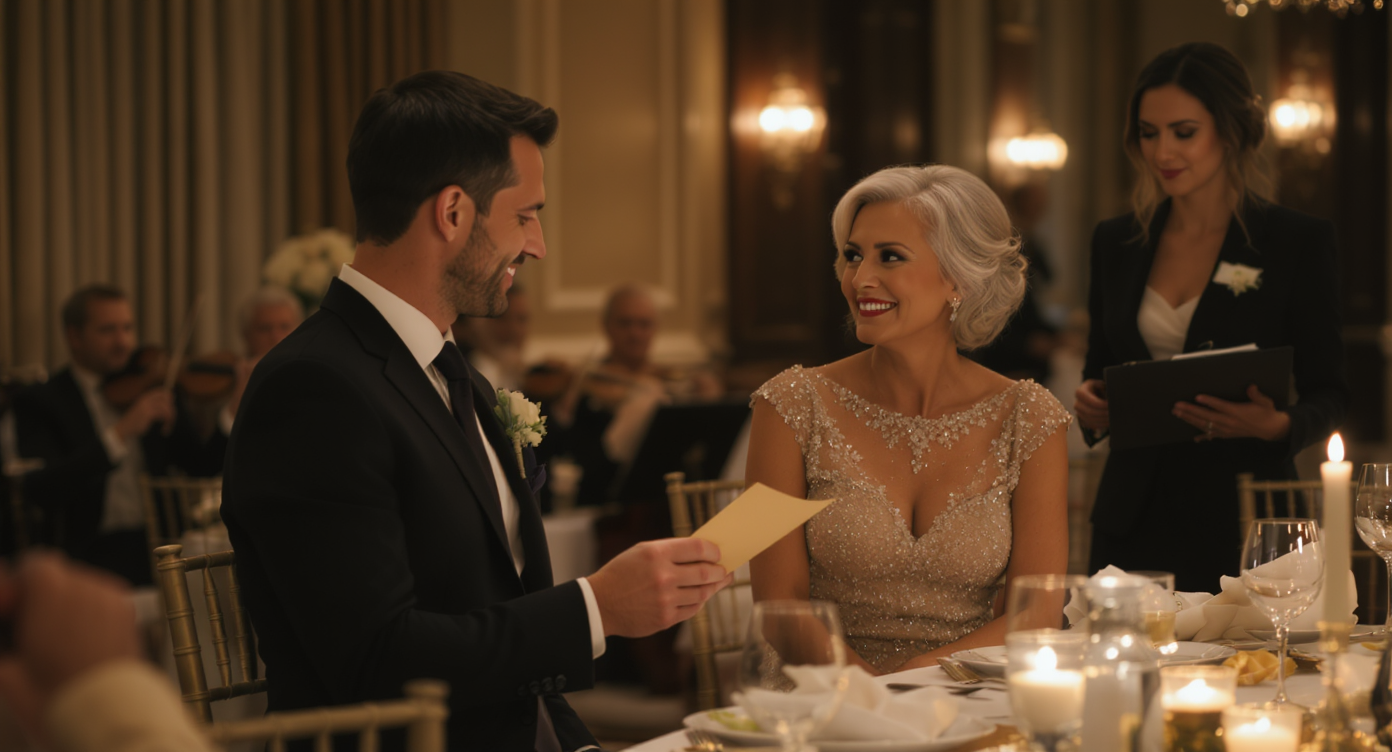

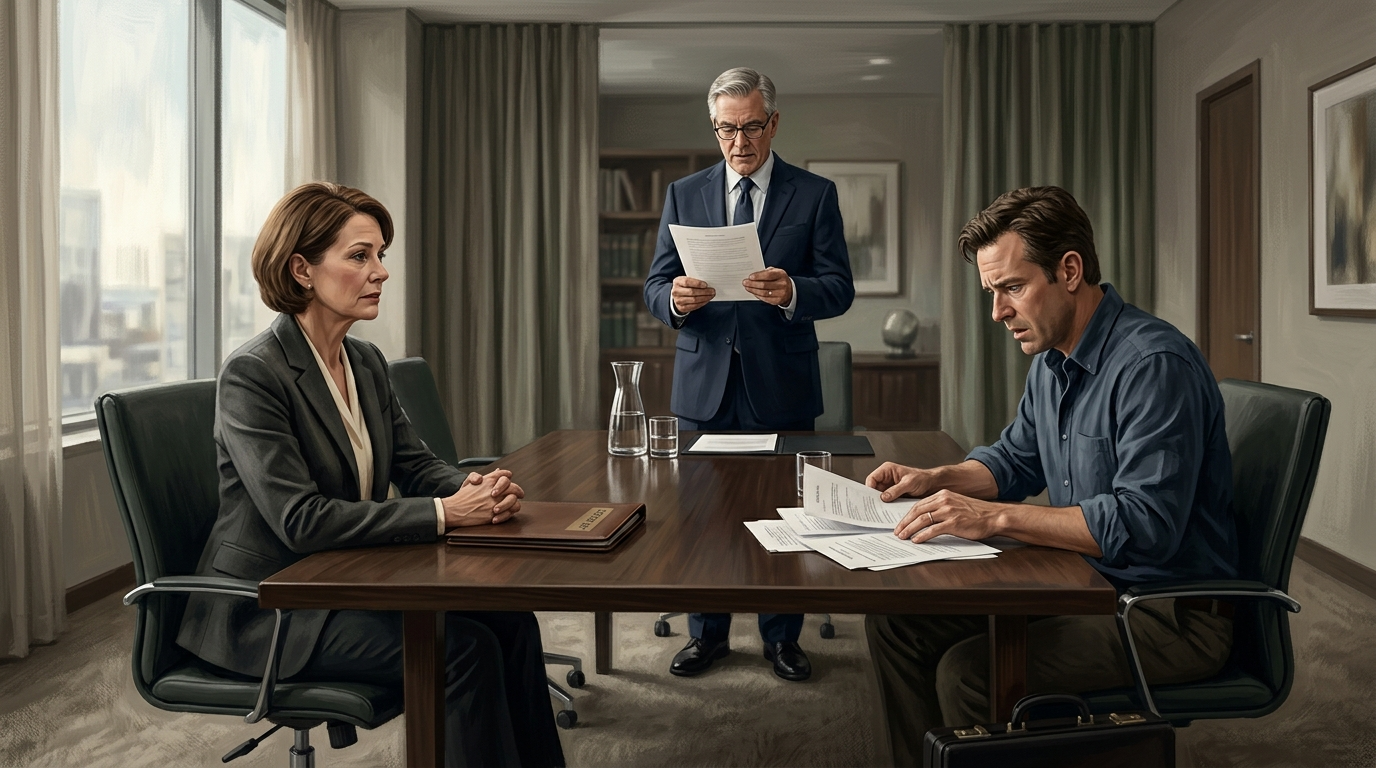
The estate attorney read our father’s will in front of the buyer, and I watched my brother’s whole life change expression.
It was a Thursday morning, three weeks after the funeral. Derek had called the meeting himself. He wanted to “sort out the paperwork” so the sale of Dad’s house could close before the end of the month. He had brought the signed purchase agreement, a folder full of receipts for the dumpster rental and the paint samples, and the buyer’s agent, a cheerful woman named Corinne who kept saying what a good deal the property was.
What Derek had not brought was the one piece of paper that mattered.
I knew what the will said. I had known since the week after Dad died, when our father’s lawyer, a tired man named Mr. Bell, called me and read it over the phone. Dad had left everything to me. The house, the old pickup, the savings account with the strange two-thousand-dollar cushion Dad always said was “for a rainy day.” Everything.
I did not tell Derek.
That is the part of this story I have to live with. I could tell you I forgot. I could tell you I assumed the lawyer would handle it. Neither would be true. The truth is that I wanted him to walk into that room and hear it himself, the way I had heard about a thousand small things my whole life — after everyone else already knew.
Let me back up.
Our father, Frank, had been the kind of man who gave his love in the form of opinions. Derek was the son who got the encouragement — the truck at sixteen, the “this kid is going places” at every family dinner. I was the daughter who got the instruction manual. Be responsible. You’re the strong one. When our mother left, when I was fifteen and Derek was seventeen, Dad did not have much to give us except a roof and rules, but he gave Derek the car keys and gave me the grocery list.
We grew up and slid back into the same pattern. Derek moved two states away, called on birthdays, and built a life around the idea that Dad admired him. I stayed. I lived forty minutes away, close enough that when Dad’s knee gave out I was the one driving him to the clinic. When he needed the roof fixed, I was the one on the phone with three contractors. When the cancer showed up, I was the one who learned the word metastasized at two in the morning and did not call anyone, because Derek had just started a new job and I did not want to be the sister who ruined a fresh start.
The funny thing about being the responsible one is that nobody thanks you for it. They just stop asking.
Dad was in the hospital for six weeks at the end. Derek came twice. The first time, he sat with Dad for an afternoon and told me afterward that I looked exhausted and should take better care of myself. The second time was the one that mattered. Dad had a good day — one of those clear, almost embarrassing days when a dying man suddenly sounds like himself. He talked to Derek about the house. About how the kitchen needed work, how the oak tree out front had been there since before Derek was born, how he hoped the place would stay in the family.
“Take care of it for me,” Dad said to Derek. And Derek heard: it’s yours.
I was standing in the doorway with a cup of lukewarm hospital coffee. I heard Dad say it. I saw the light come on in Derek’s eyes. And I knew, in that moment, that there was going to be a fight — because the will had been sitting in Mr. Bell’s office for three years, and Dad had never changed it, and Dad had told me, in a quiet moment of his own, that he trusted me with the house because I was the one who had never stopped showing up.
“Don’t tell your brother about the paperwork,” Dad said to me, three days before he died. “Let it be a surprise.”
I did not know if he meant it kindly or cruelly. I still do not. But he was my father, and it was the last thing he asked of me, so I kept the secret.
After the funeral, Derek went to work like a man who had inherited the sun. He told our cousins. He told his wife. He hired a realtor before the flowers on Dad’s grave had settled, listed the house at “as-is, quick close,” and took a deposit from a young couple who had been looking for a starter home with a big yard. He quit his job — I’m going to flip the old man’s place, take a year off, figure out what I actually want — and started measuring rooms with a laser level he bought on the way home.
And I let him.
I let him because I was tired. I let him because for thirty years I had watched Derek get handed things I had to earn, and some quiet, ugly part of me wanted to see what it felt like to be the one who knew. I kept telling myself I would tell him next week. I kept telling myself the lawyer would call him first. I told myself a hundred gentle lies while my brother spent money he did not have on paint samples for a house that was never going to be his.
Then the buyer’s agent called to set up the closing, and Derek called Mr. Bell’s office to “get the transfer paperwork started,” and Mr. Bell, in the mild voice of a man who has seen too many families do exactly this, said: “Why don’t we all sit down together.”
The morning of the meeting, Derek was in a good mood. He had brought a folder with the purchase agreement and a checklist. He had told Corinne it would be “a formality.” He had not shaved — a choice he thought made him look like a man who owned a house now.
Mr. Bell read the will first. He read the part about me being named executor. He read the part about the house being left to me, along with the pickup and the savings account. And then he read the sentence Dad had written in his own handwriting, the one I had read over the phone three weeks earlier, the one I had imagined Derek hearing a thousand times and never once told him about:
“To my son Derek, I leave my regret that I never learned how to say no to him. I hope someone teaches him before it is too late.”
Corinne went very quiet. The buyer’s couple, who were supposed to be “just here to confirm timing,” looked at each other. Derek opened his mouth and closed it. He laughed once, a short wrong sound, and said there had been a mistake. Dad had given him the house. Dad had said so. Right in front of you, he said, and he pointed at me. You heard him. You were standing right there.
And that was the moment. I could have said, Derek, I’m sorry, I should have told you. I could have softened it. I could have done the thing I had done my whole life, which was make myself small so my brother could keep his version of the world.
I did not.
“I heard Dad ask you to take care of it,” I said. “I did not hear him sign it over.”
Mr. Bell slid the will across the table and asked Derek to read the date. Three years before Dad got sick. Before the cancer. Before the hospital. Before any of the promises that were made with love and never put on paper.
Derek did not read it. He stood up, walked out, and let the door close behind him. Corinne followed a moment later, apologizing for him. The buyer’s couple sat there for a long, uncomfortable minute, and then asked me, quietly, whether I wanted to sell the house anyway.
I said I did not know.
That night, Derek called me. He was drunk, or something close to it. He said I had planned the whole thing. He said I had always been jealous of him. He said Dad had loved him more and everyone knew it.
He was right about part of that. Dad had loved him differently. Loudly. The way you love something you never have to worry about.
“Did you know?” Derek asked me. “When I took the deposit. When I quit my job. Did you know the whole time?”
I told him the truth. “Yes.”
There was a long silence. Then he said, “You’re a monster,” and hung up.
Maybe he is right. I think about it all the time. I could have stopped him at the funeral, at the realtor’s office, at any of the fifty dinners where he told the story of the house and I sat there with the truth in my mouth like a stone. I did not stop him because I wanted him to hear it from someone else for once. I wanted him to feel what it was like to be the last one to know.
In the weeks after, I made Derek an offer. I told him I would sell the house, split the money, and he could use his half however he wanted. All I asked was that he tell the buyer’s couple himself what had happened — that the house had never been his to sell.
He refused. He said I was trying to make him look bad in front of people he would have to see at holidays.
I sold the house anyway. I gave him half, because Dad never taught him how to say no and I suppose I wanted to be the one who finally did. The buyer’s couple got their starter home. Corinne got her commission. Derek got a check and a story he tells people about the sister who “stole” their father’s house.
He does not tell them about the will. He does not tell them about the date. He does not tell them that I sat in the doorway of a hospital room and heard Dad make a promise he never meant to keep, and I knew, and I said nothing.
Here is what I know now: being the responsible one does not mean you are immune to being petty. It does not mean you are kind. It just means you have gotten very good at carrying things until the day you decide to put one down — and you do not always get to choose which one, or where it lands.
Maybe that makes me a monster. Or maybe it just makes me my father’s daughter, finally learning how to say no, twenty years too late.
I do not know if I regret it. That is the part that scares me. I am not sorry the house is mine. I am sorry about the way it happened, and I am sorry about the part of me that enjoyed watching him walk out that door.
Would you have told him at the funeral? Or would you have let him find out, the way I did — in a room full of people who already knew?