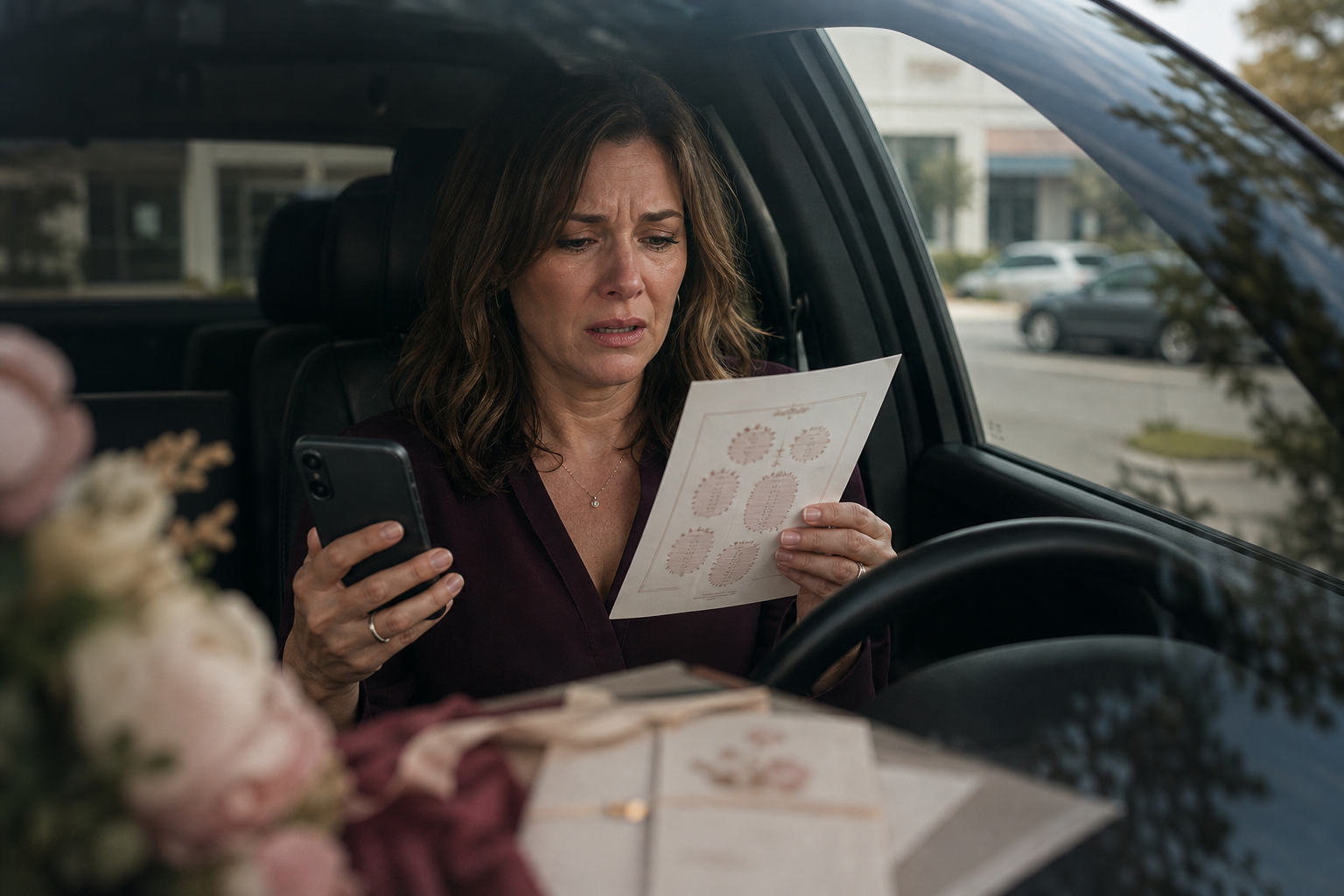

The school registrar called me at 10:14 on a Tuesday morning and asked whether Lily had finished moving into our district full-time.
I stared at my office computer, then at the legal pad where I had written pick up Owen’s inhaler refill and call plumber back, and said, “I’m sorry — moving in for what?”
The woman on the phone paused. “For her enrollment packet. We have the residency affidavit from your husband, and I just needed to confirm that this is Lily Mercer’s primary address now.”
That was how I found out my husband had turned a summer visit into a permanent plan without ever saying the word permanent to me.
Mark and I had been married for three years. I had one son, Owen, who was twelve and painfully attached to order, routine, and the small blue bedroom he had called his own since second grade. Mark had one daughter, Lily, who was fifteen, bright, funny when she relaxed, and old enough to notice every shift in a room even when adults pretended nothing was happening.
Most weekends with Lily were easy enough. She came over every other Friday with a duffel bag, her earbuds, and the expression of a teenager trying not to need anything from anyone. I made pasta, Owen gave up the bathroom counter without complaining, and Mark acted like all blended families eventually became natural if you just kept smiling through the awkward parts.
But Mark also had a habit of presenting decisions after he had already made them in his head.
He called it optimism.
I called it cleaning up after him.
The summer arrangement started in May, three days after Lily’s mother, Tessa, announced she was losing her rental and would be staying “temporarily” with a cousin across town.
Mark brought it up while I was scraping burnt cheese off a casserole dish.
“Lily should stay with us for a while,” he said. “Just the summer. She needs stability.”
I asked where, exactly, he thought she would stay.
We lived in a two-bedroom bungalow with a finished back room that technically counted as my office, though it was also where the printer lived, where the dog slept, and where Owen did his homework because it had the best light. Lily usually took the pullout sofa when she visited.
Mark leaned against the counter like the answer was obvious. “Owen can use the back room for a couple of months. Lily’s older. She needs privacy.”
That sentence bothered me more than I said out loud.
Not because Lily did not deserve privacy. She did. But because Mark said it as if Owen’s room were an adjustable part of the house and not the one place my son did not have to negotiate for space.
I told him we needed to discuss it with both kids first.
He sighed the way people sigh when compassion becomes inconvenient. “Melissa, I’m not asking us to adopt a stranger. I’m asking you to make room for my daughter for one summer.”
That was his gift in an argument. He could take a practical concern and dress it up as a moral failure.
By the time we sat the kids down that Sunday, the plan sounded less like a discussion and more like an announcement.
Lily looked relieved before she looked guilty, which told me she had already been promised something. Owen looked straight at me and asked, “So where does my stuff go?”
Mark said, “Buddy, it’s just for the summer.”
Owen nodded, but I saw the color rise in his face the way it always did when he was trying not to cry in front of adults.
That night I helped him move his books, his lamp, and the framed photo of him with his late grandfather into the back room. He kept saying it was fine. Kids say that when they understand they have no vote.
For the first week, I tried to believe Mark had been right.
Lily settled in quickly. She put a throw blanket on the bed. She lined up skin-care bottles on Owen’s old dresser. She asked if she could hang fairy lights. None of that bothered me. Teenagers make nests anywhere they can. What bothered me was how little any of it looked temporary.
By the second week, winter clothes had appeared in the closet.
By the third, there was a new desk chair in the room, ordered under Mark’s account and delivered while I was at work.
At the end of June, Tessa dropped off two more plastic bins and said, “I’ll get the rest once things calm down.”
I asked what things.
She smiled too brightly and said, “You know. Life.”
That was not an answer. It was a hand placed over one.
Owen started spending more time at his dad’s apartment that summer, even on weekends he would usually be home. At first I told myself that was normal — swimming pool, cousins nearby, less structure. Then one night, while I was folding laundry, he asked if I knew when he was getting his room back.
“When school starts,” I said automatically.
He looked at me for a long second and said, “Lily told me she’s starting school here.”
I actually laughed at first, because the alternative was understanding him.
“No, sweetheart,” I said. “She’s going back to her mom before school.”
He pressed his lips together. “Then why did Mark tell her my desk was hers now?”
I did not sleep much that night.
When I asked Mark about it, he said I was taking a teenager’s words too literally.
“She’s nervous,” he said. “She needs reassurance.”
“Reassurance about what?” I asked. “A plan we supposedly don’t have?”
He kissed my forehead like I was being dramatic and went outside to take a phone call.
That was three days before the registrar called.
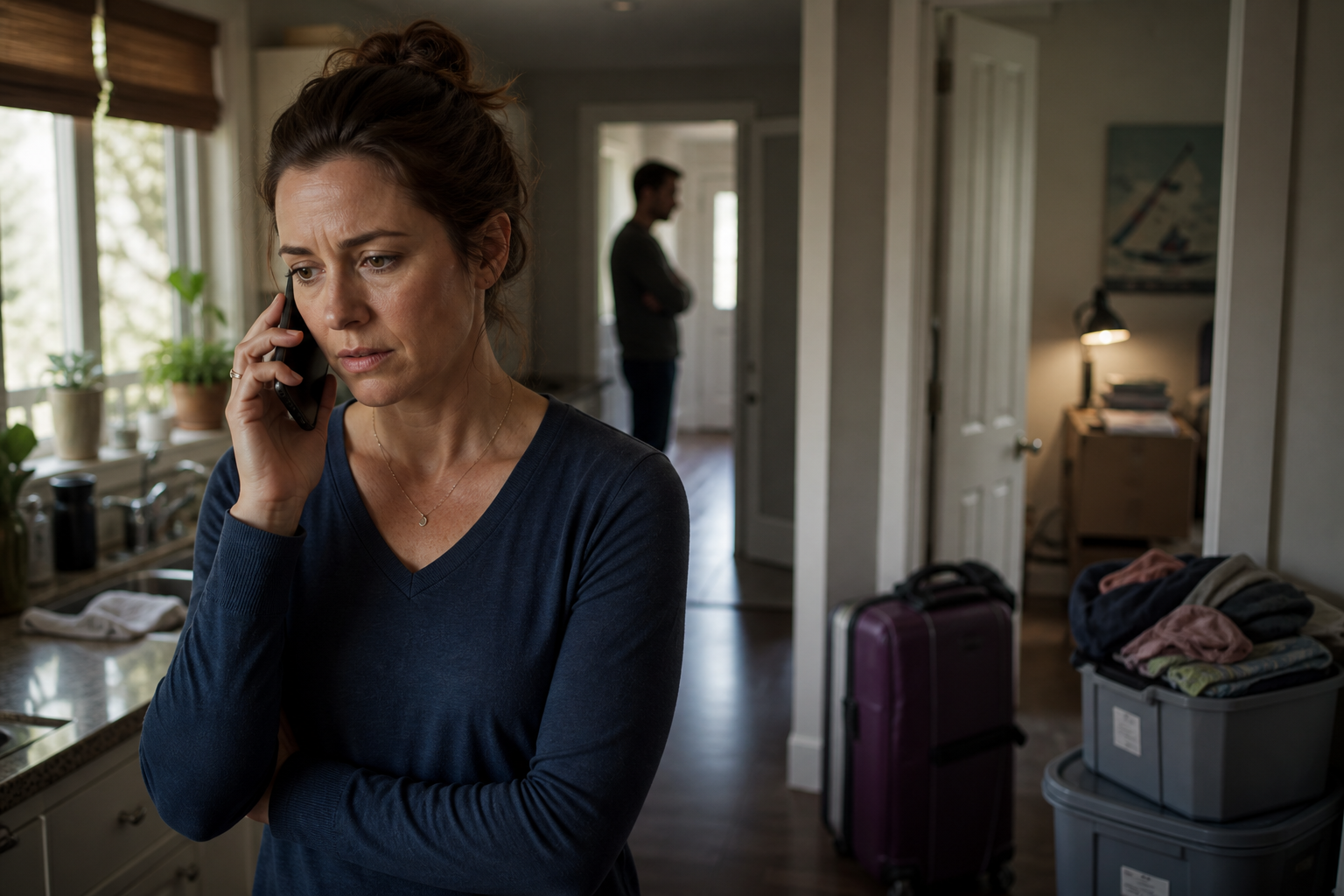
After I got off the phone with the school, I closed my office door and called Mark immediately.
He declined the first call.
On the second, he answered with, “I’m in a meeting.”
I said, “Then step out of it, because the school registrar just asked me to confirm Lily’s primary address.”
There was a silence so quick and sharp it felt like a confession.
Then he said, “I was going to talk to you tonight.”
People always say that when what they mean is: I hoped this would be harder for you to stop once it was already done.
“You filed school paperwork using my house,” I said. “Without asking me.”
“Our house.”
“Then why did only one of us know about it?”
He exhaled like I was slowing down a process that should have been easy. “Tessa’s situation is worse than she’s saying. Lily needs consistency. Owen will adjust.”
I gripped the edge of my desk so hard my wrist hurt. “My son is not a storage problem you solve by moving him around.”
Mark’s voice changed then — flatter, colder, the tone he used when he thought kindness had failed and pressure might work better. “This is exactly why I didn’t want to bring it up too early. You always frame support as sacrifice when it involves Lily.”
I almost hung up on him right there.
Instead I said, “Be home by six. And do not ask that school to process one more thing before we talk.”
At 5:40, Tessa pulled into my driveway with Lily in the passenger seat.
I watched from the kitchen window as she climbed out carrying a manila folder and suddenly understood that tonight’s conversation had never been intended as a conversation either.
Mark got home eight minutes later.
He walked in smiling too hard, saw the folder on the table, saw my face, and dropped the smile like it had become heavy.
Lily looked between us and said, very quietly, “Should I go to my room?”
My room.
Not Owen’s old room. Not the guest room. Not the room for summer.
My room.
I told her she could sit in the den with Owen and put on a movie while the adults talked. She went without arguing, which somehow made me feel worse. None of this was her fault. She had believed the adults who were supposed to tell her the truth.
Tessa opened the folder and started laying out papers as if she were setting a table. Residency affidavit. School transfer form. Emergency contact sheet. A printout of our utility bill.
“We’re just trying to give Lily one stable year,” she said. “You know how hard transitions are at this age.”
I looked at Mark. “Did you give her our bill?”
He said, “I printed it.”
Like that was somehow cleaner.
“You forged a family decision,” I said.
“No,” Tessa snapped. “We made a decision for a child who needs adults to stop overcomplicating things.”
There it was. The part where my consent became selfishness because it was inconvenient.
I asked one question. “Where is Owen supposed to live in this stable year you planned?”
Tessa blinked. Mark looked away. That was answer enough.
Mark tried again. “He has the back room.”
“The back room with no closet, no door that locks properly, and my work files in it?” I said. “That back room?”
He spread his hands. “We were going to make improvements.”
“After enrollment? After the address was filed? After Lily had been told the room was hers?”
No one answered, because all the honest versions of the answer sounded ugly.
What hurt most was not even the paperwork. It was the choreography. Mark had let Owen live in uncertainty while reassuring Lily in private, and then he brought her mother into my kitchen to help make refusal look cruel.
I said, as evenly as I could, “I am not discussing this in front of a folder that was assembled behind my back. I’m calling the school in the morning and telling them I do not consent to my address being used for primary enrollment.”
Tessa pushed back her chair. “So Lily loses a school because your son won’t share a room?”
“No,” I said. “Lily loses a lie because you both built it before you had permission.”
Mark stood up so fast his chair scraped the floor. “Do you hear yourself? She’s my daughter.”
I stood up too. “And Owen is my son. I will not teach him that the price of keeping peace in this house is pretending his place in it can be negotiated without him.”
He stared at me like he had expected anger, but not a boundary.
That night he slept on the couch. Tessa took Lily home angry enough to peel paint. Before she left, Lily stopped by the hall and said, “I didn’t know they hadn’t told you.”
I believed her immediately.
“I know,” I said. “This isn’t on you.”
She nodded once, but her face crumpled anyway. She was fifteen. Adults had turned her into evidence.
The next morning I drove Owen to his father’s place, then went straight to the school district office in person because I no longer trusted phone calls to carry the full weight of no.
The registrar recognized my name and brought me into a side office. I told her the residency packet had been submitted without my approval and that the living arrangement in my home was temporary and disputed. She was polite, careful, and not nearly as surprised as I wanted her to be. Apparently adults lie to institutions all the time when children are involved. They just call it urgency.
She flagged the file for review and said no transfer would be finalized without corrected documentation.
When I got back to the car, Mark had left four voicemails.
None of them said, I’m sorry I did this without you.
They said things like, “You embarrassed me,” and “You blindsided Lily,” and “We could have handled this privately.”
Privately, in Mark’s language, meant after his plan was too far along to challenge cleanly.
For the next week, the house felt like a place after a storm — nothing visibly destroyed, but every drawer slightly out of place. Owen asked if he could move back into his room. I told him yes before I even checked whether Mark had taken Lily’s extra things out.
He stood in the doorway that evening and said, “So it’s mine again?”
I hated that he needed to ask.
“It was always yours,” I said, and then I had to turn away for a second because I was so angry that the sentence had become necessary.
Mark and I started arguing in smaller, meaner circles after that. He said I had no idea how hard it was to protect his daughter. I said protection did not include quietly taking from my son. He said blended families required compromise. I said compromise required all the adults to know the deal before the children were promised the result.
Two weeks later, he moved into his sister’s townhouse “to get space.”
Maybe space was what he wanted.
Maybe space was what happened when I stopped rearranging myself to make his decisions look reasonable.
Lily still texts me sometimes. Mostly memes, occasionally homework complaints, once a photo of the tomato plant we started in June and that she took with her when she left. I answer every time. None of this was about shutting her out. It was about refusing to let two adults decide that the easiest way to help one child was to quietly displace another.
Mark asked last month if I would consider counseling.
I told him I would consider honesty first.
Maybe some people think I should have given Lily the room and sorted out the rest later.
Maybe that would have looked kinder from the outside.
But I have learned that when a decision begins with secrecy, pressure, and a child being told to adapt before anyone asks what it costs him, it is not really generosity at all.
It is just theft with softer language.