

His cast was still on. His pain hadn’t gone away because I had paperwork. I made myself leave my hands in my lap instead of reaching for his cup.
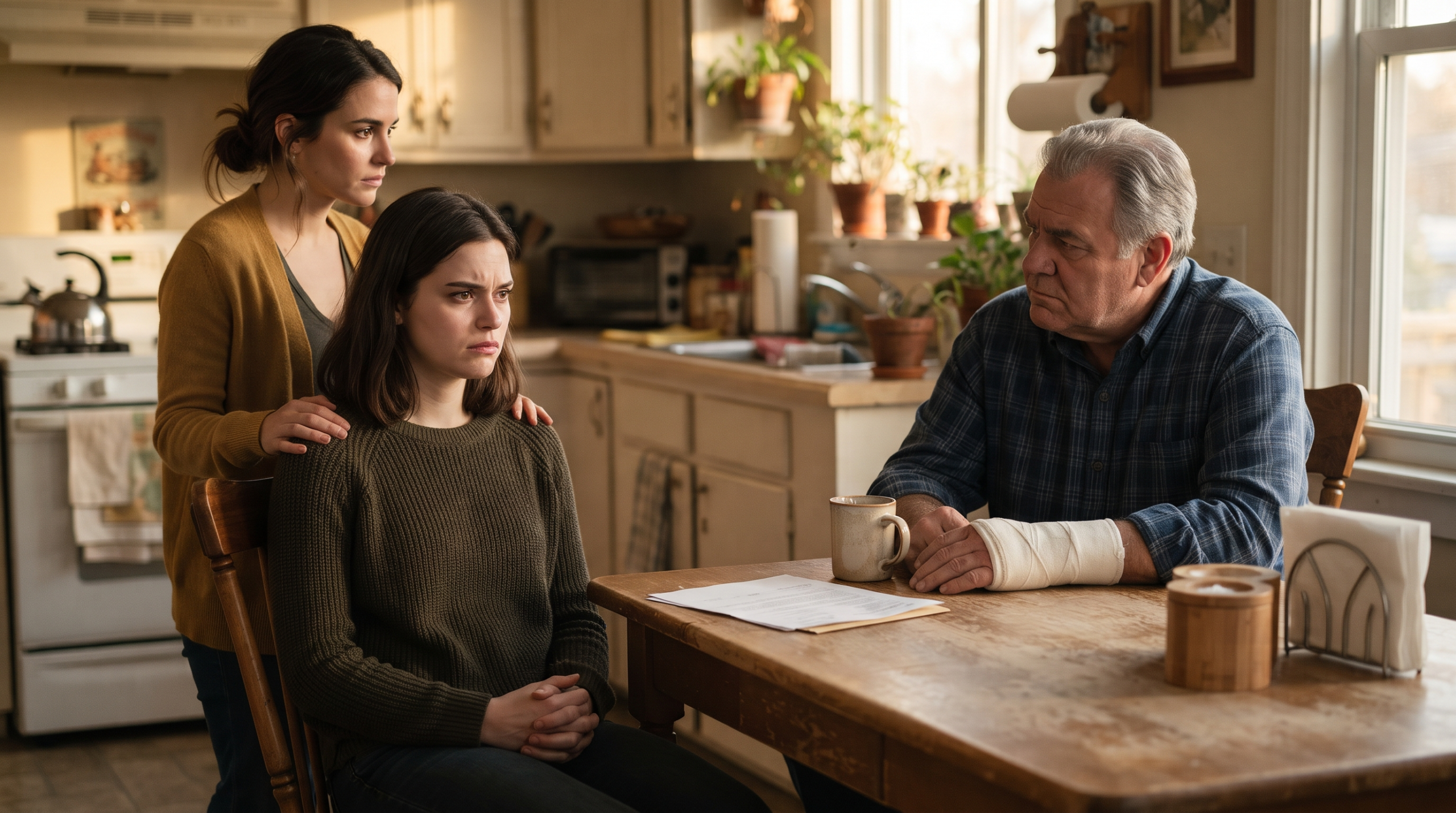
“Rosa assessed what you need,” I said. “She watched you. I was here.”
“She doesn’t live here.”
“Neither will I.”
Celia sat down then. She didn’t touch the cup either.
I laid her old approval beside the new assessment.
“You told me this didn’t exist.”
“I told you it wasn’t enough.”
“No. First you said it was imaginary. Then you said she didn’t want contact with me.”
He pushed the old paper away, but only a few inches.
“Your sister knew what she had to do.”
“To speak to June?” Celia asked.
“To be part of this family.”
There it was, still phrased as a rule we had broken.
“Did you stop her calls because she wouldn’t come back and care for you?” I asked.
“She could have come home.”
“Did you?”
“Yes,” he said. “I stopped them. I wasn’t going to let her walk away from everything and carry on as if nothing had happened.”
Celia pressed her palms together under the table. I could see her thumbs moving against each other.
“And the carers?” I asked. “Why refuse the six hours?”
“Because once they came, she’d have had no reason to stay.”
“She could have stayed because she wanted to.”
He gave me an irritated look. “I wanted you both here. Available. Not telling me when you could fit me in.”
I had wanted an admission. Hearing it didn’t feel like winning. I looked at the chair where Celia used to sit helping me with homework after she had finished everything for him.
“You made being our father conditional on working for you,” I said.
“You’re making it sound ugly.”
“It was ugly,” Celia said.
I turned to her. “And I left your letter shut. He didn’t make me do that.”
“I know,” she said quietly.
Dad began explaining what strangers wouldn’t understand. I let him finish. Then I told him the offer again: approved care, not my notice to my manager. Celia said she would not resume caring for him. Neither of us offered to cover the whole day if he refused.
Eventually he pulled the current assessment toward him.
“Fine. Arrange it.”
I called Rosa with him beside me. He confirmed that he would accept the service and admit the carers. We put the written schedule on his kitchen calendar. When I was there for the first visit, he complained about having to explain himself, but he let the carer in. I left for work while someone else helped him dress.
After his wrist healed, I attended the recovery reassessment. He demonstrated his personal-care routine with the aids. The temporary visits ended because that help was no longer needed, not because a daughter had agreed to replace it.
He still complained that the professionals had been impersonal.
“Then you should have been easier to talk to,” I said once. It was sharper than necessary. I didn’t apologize by offering to take over.
I kept my dispatch job. I visit him once a month. I sit with him, but I don’t provide routine hands-on care. Sometimes he dislikes the distinction. The visit still ends when I said it would.
Celia kept her own home and her work. We began seeing each other without stopping at Dad’s first. Some afternoons were awkward. I apologized again, without asking her to give me back seven years or tell me I had done my best.
I kept the opened letter. Not to produce whenever Dad tried to deny something. It also recorded what I had chosen not to hear.
One afternoon before Celia came over, I smoothed its creases and put it in my drawer. Then I set two cups on my own kitchen table and sat down beside her while the tea was still hot.