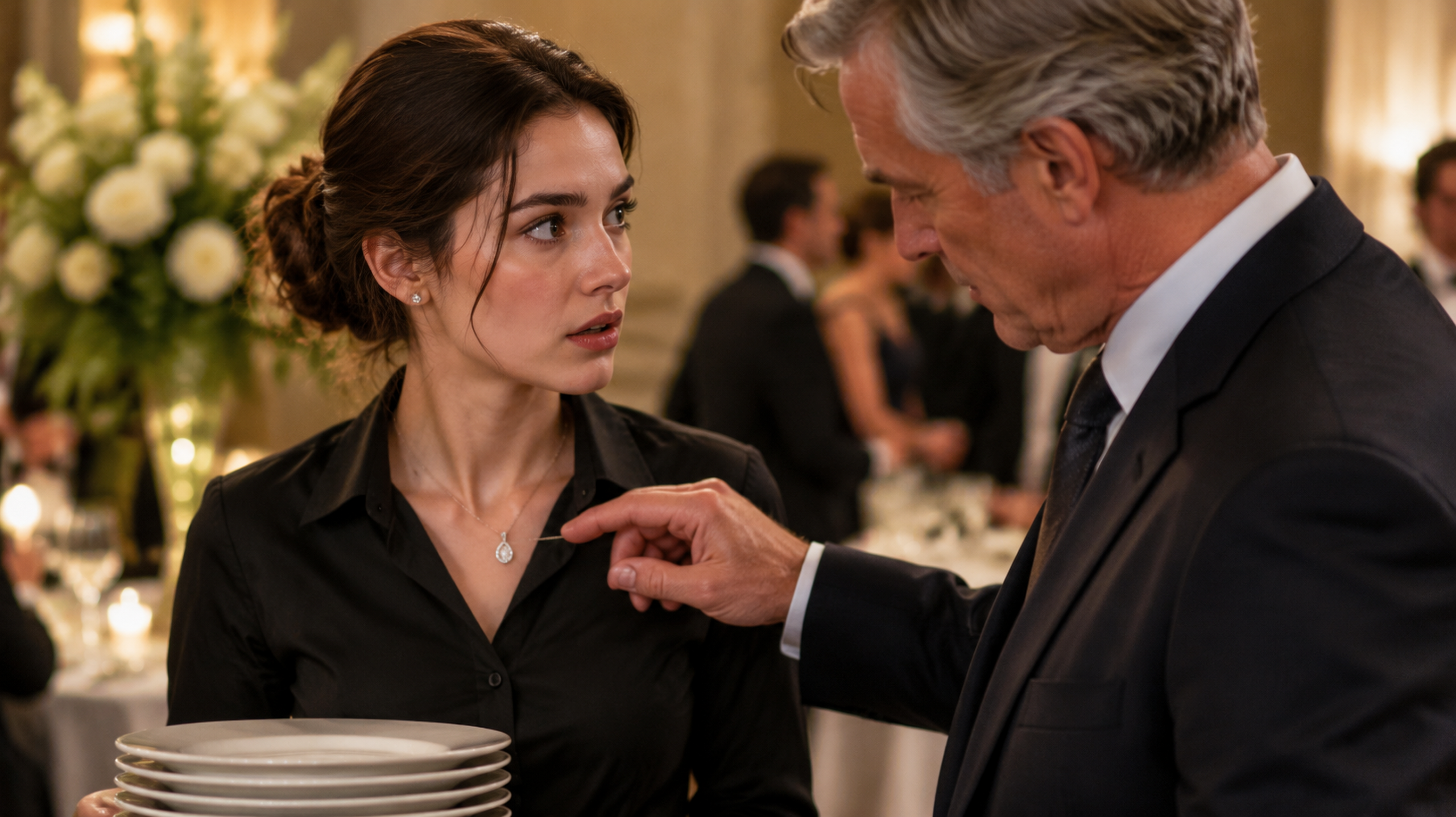
Graham stepped in front of my tray while I was clearing dessert plates and asked me to open my necklace.
I shifted the weight onto my other wrist. Behind him, the screen showed his name above the foster-youth charity he had founded. I was twenty-seven, wearing borrowed catering blacks, and trying not to drop a fork on a billionaire’s shoes.
“Why?” I asked.
“There’s a swallow inside. One wing sits higher than the other.”
My hand went to the pendant before I could stop it. Nobody could see that engraving while it was closed.
“Who was your mother?” he asked.
“Celia.”
He repeated her name quietly. Then he told me he had commissioned the silver necklace for her when they were together. The crooked bird had been intentional; she hadn’t wanted something that looked stamped out.
I opened it with my thumbnail. There was the bird I’d rubbed with my thumb through every foster placement since my mother died when I was six.
Graham looked at my face instead of the necklace.
“Come backstage. We should get a photograph.”
“No.”
He glanced toward the tables, then lowered his voice. “Just the two of us.”
“I’m working. And you haven’t told me why.”
I carried the plates into the kitchen. My hands shook when I scraped them, but I finished my shift. I’d never known who my father was. I wasn’t going to let a man with a photographer nearby decide it for me.
Before I left, Graham gave me his number. I kept it for three days before calling.
We agreed to testing through an independent accredited laboratory, with my result sent directly to me. At the appointment, I checked the delivery address twice. I needed something that belonged to me, not something his staff could explain on his behalf.
When the result arrived, I read the conclusion standing beside my kitchen sink: The tested man is confirmed as the biological father.
I sat down on the floor. There was a perfectly good chair a few feet away.
At our next meeting, Graham pushed a cup toward me and said he had searched after learning Celia had died.
“I kept being sent somewhere else,” he said. “By the time anyone answered, you’d been moved.”
I wanted dates. Names. I also wanted him to ask whether I took milk, and he did, and that small question nearly undid me.
“You really looked?” I asked.
“Yes.”
I let myself imagine calling him when something broke in my flat. That was how little I needed at first. Not a house or a holiday. Someone who might answer.
Then he brought up his upcoming televised charity address.
“We could announce the reunion there. You could stand beside me.”
“Already?”
“It would give people hope.”
I put the cup down without drinking. He was talking about an audience before we’d managed one ordinary afternoon.
“I want my care records first.”
His hand stopped halfway to the sugar bowl.
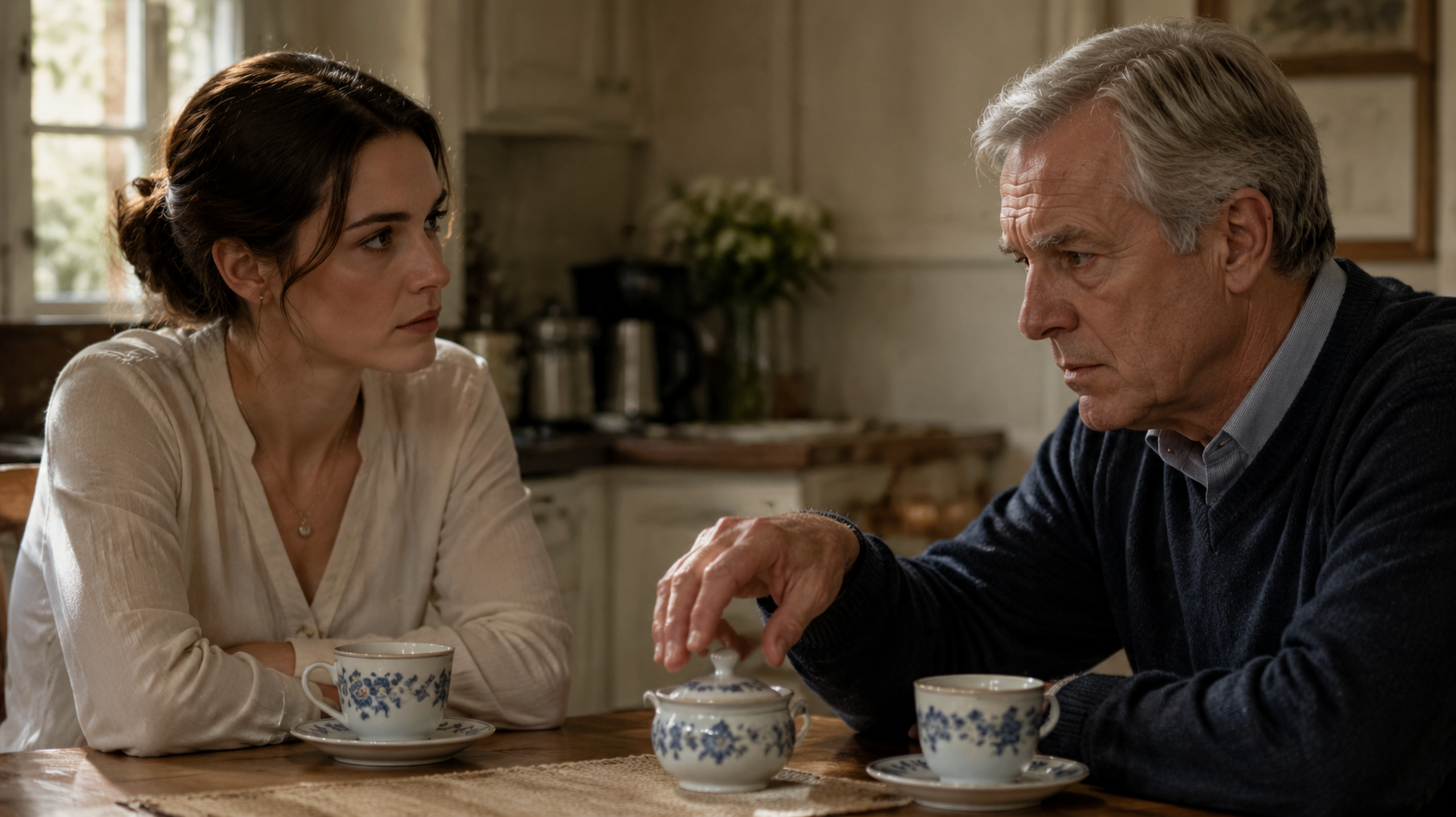
“Of course,” he said. “Whatever you need.”
I made the personal-records request myself. When the agency replied, its email identified Ruth as the worker who had handled my original intake. I read her name several times, trying to connect it to the adults I remembered crouching beside me and asking questions I couldn’t answer.