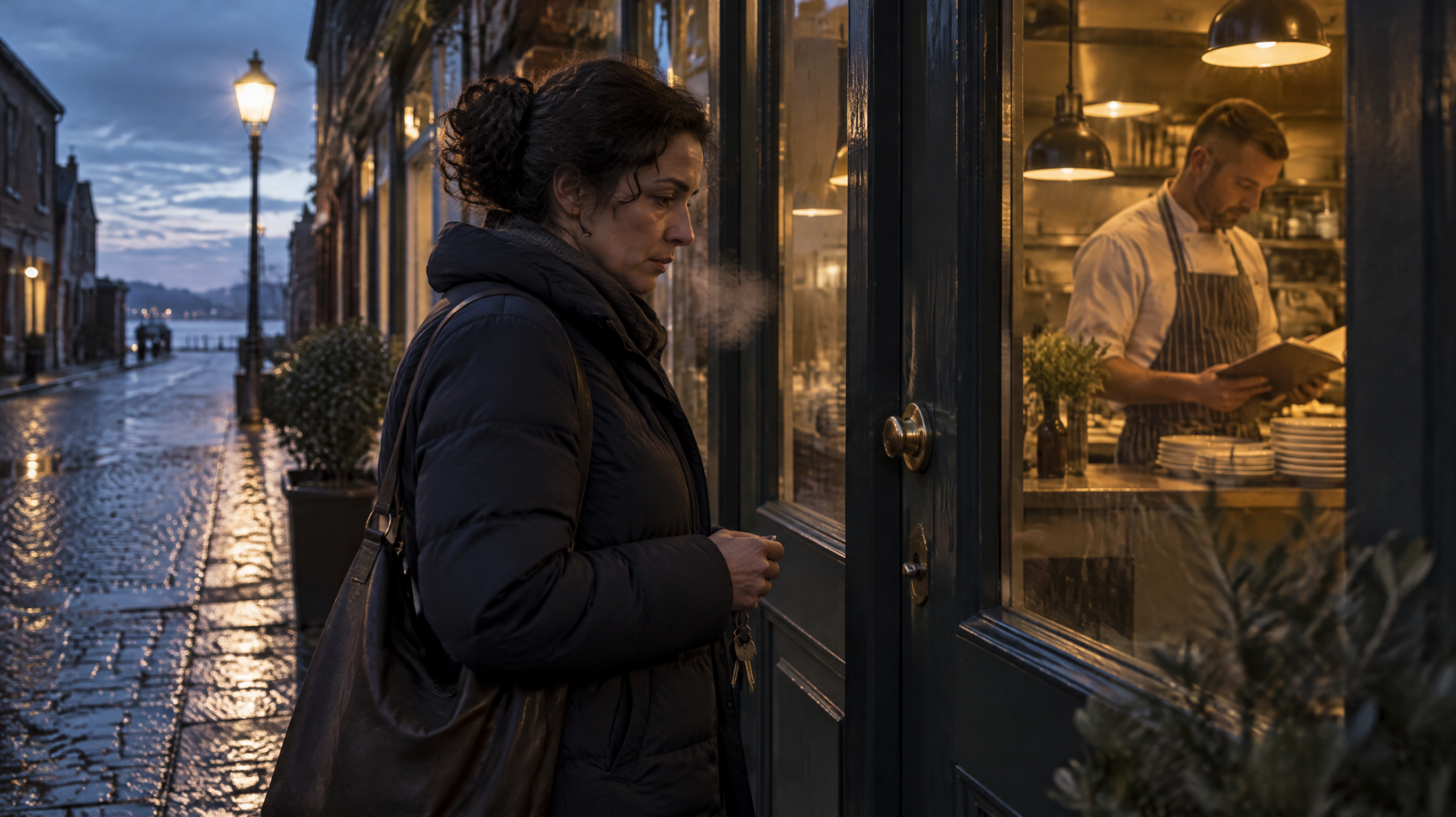
At 5:40 in the morning my key stopped halfway into the lock.
I had opened that door at 5:40 nearly every day for three years, and every morning since we buried my father, and the key had never once caught. I tried it again, slower, the way you coax a stuck drawer. Brass on brass. It would not turn.
That was when I looked up.
The old one was gone. My father’s lettering, cut copper on a green board, touched up every spring with a small brush and a pot of gold paint. In its place, black board and cream paint: Brannigan & Co., and under it, smaller, Kitchen and Bar.
A man on a ladder was finishing the last letter. Drop cloth on the pavement, a tin of paint by his shoe, the street smelling of turpentine.
“You’re early,” he said, without turning around.
“I’m the owner,” I said. “What is this?”
He came down two rungs and looked at me properly, and his face went careful.
“He told me you’d say that,” he said. “The owner. Paid cash Tuesday. Wanted it up before the weekend.”
I stood there with my key in my hand and could not make a sentence out of it. Tuesday. Tuesday was the produce drop. Tuesday was Sunil backing his truck up to the alley door at six and calling me girl like he had since I was nineteen.
Theo came around the corner at four minutes to six, carrying two coffees, wearing his good coat.
“You’re early,” he said, same as the painter, and smiled, and it was the smile he used on the dinner rush when the fish was late.
“The lock is changed.”
“The old one was sticking. I told you at Christmas it was sticking.” He held out a cup. “Double shot. You look like you slept in your car.”
“It wasn’t sticking for me.”
“You have a light hand.” He pulled a new key from his coat pocket and opened my father’s door in one movement, the way he did everything, and stood back for me to go in.
I went in because the ovens needed lighting. That is the whole truth of it. I went in because there were eighty covers on the book and a delivery to check in, and I told myself I would shout at him after the bread went in.
He followed me to the pass and put a folded page on the stainless.
“Read it before you start,” he said. “I’d rather you heard it from me than from Hal.”
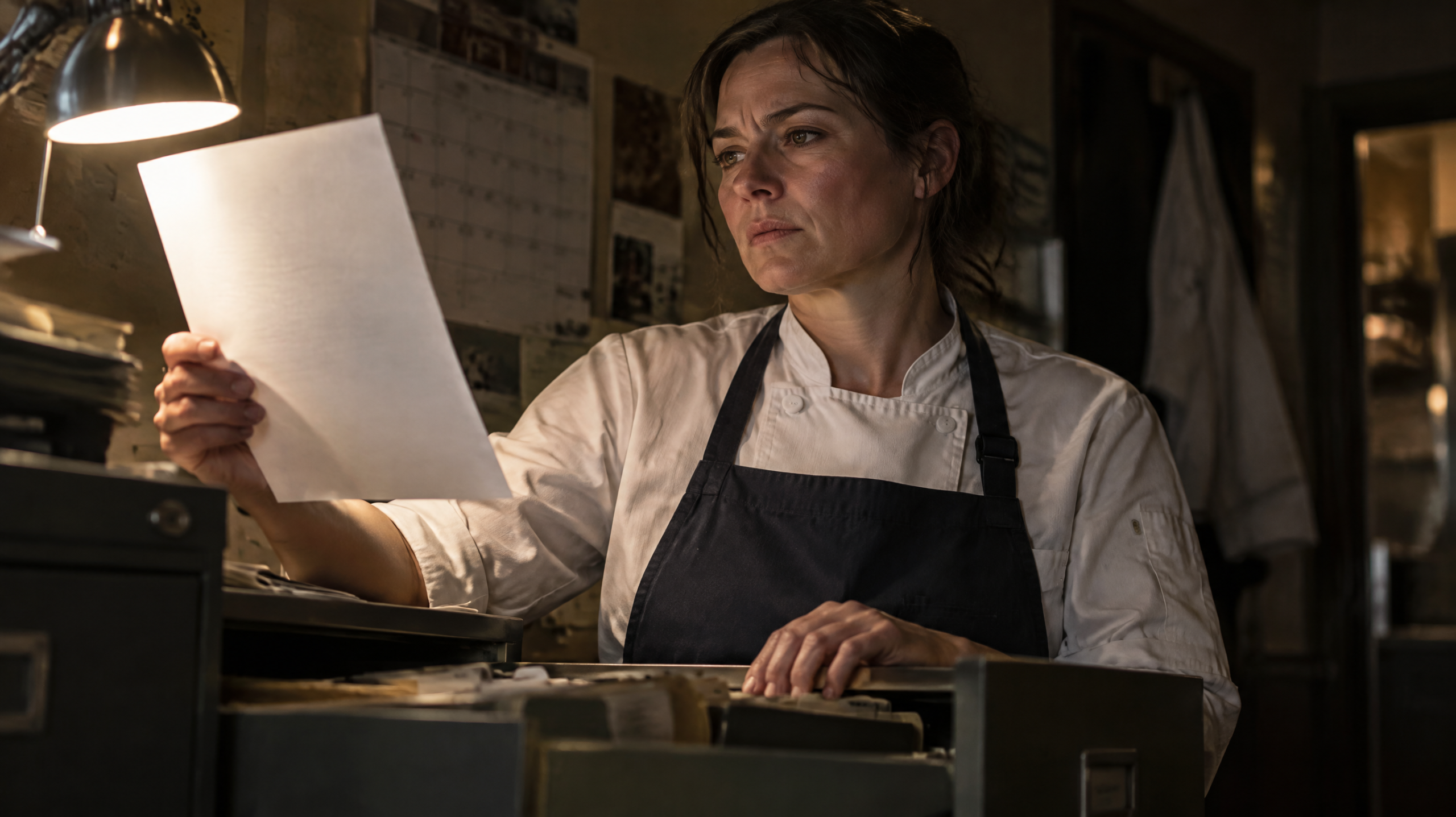
The paper had been folded into quarters and unfolded so many times that the creases were going soft. A county form, a stamp in the corner, a box for the name.
Business Registration. Trade name: Brannigan & Co. Sole proprietor: Theodore J. Brannigan.
I read it three times. There was no other name on it. Not my father’s. Not my mother’s. Not a line where a second owner might have been squeezed in.
“It’s temporary,” Theo said. “The lender won’t refinance a restaurant with four names on a partnership agreement and one of them dead. It’s paper. Paper doesn’t cook.”
“What lender?”
“The one who’s keeping us open, Del.” He said it gently, which was worse than if he had shouted. “You know what the gas bill looked like in January. You didn’t want to know, so I knew for you.”
“And my mother’s fifth? You can’t delete a shareholder.”
“Nothing is deleted. It’s a reorganization.” He picked up his coffee, put it down again without drinking. “You’re still family. You’ll always be family.”
Family. He proposed to me in the walk-in with a rack of short ribs at my back, because he said he liked that I smelled of onions and had no patience for a restaurant that closed at ten.
He went to unlock the front. I stood in the kitchen with the page in my hand and the pilot light clicking under the range, and the first thing I felt was embarrassment. Not fear. Embarrassment, that a painter on a ladder had to tell me who owned my own door.
By seven the dining room smelled of paint and the new menus were stacked by the till, stiff and expensive, with a little copper ladle drawn on the cover. Theo had moved the old licence frame. It used to hang by the coat hooks where my father could see it from the pass. Now it hung inside the door, where customers could.
I took it off the nail.
Liquor Licence. County of Alderman. Licensee: Brannigan & Co. Owner: Theodore J. Brannigan.