🎧 Listen to this story
Full narration — My Grandmother Left Me Everything in Her Will. My Aunt Fought Me for I
Narrated by Dramateller
My grandmother built that house with her own two hands. She framed the walls herself, laid every floorboard, and planted the apple tree in the backyard the day I was born. When she passed away last spring, she left it to me in her will. I thought that was the end of it. I was wrong.
Grandma Rosa came to this country with nothing but a sewing machine and a suitcase. She worked double shifts at a garment factory for twelve years before she saved enough to buy a small plot of land in Queens. She hired herself a contractor who laughed when she showed up with blueprints she’d drawn herself. Two years later, she sent him a photo of her standing in front of the finished two-story house with a hammer in her hand.
I spent every summer of my childhood in that house. She taught me how to bake bread in her tiny kitchen, how to stake tomatoes in her garden, and how to spot a liar from three blocks away. “The eyes always tell first, Michael,” she used to say. “Before the mouth even opens.”
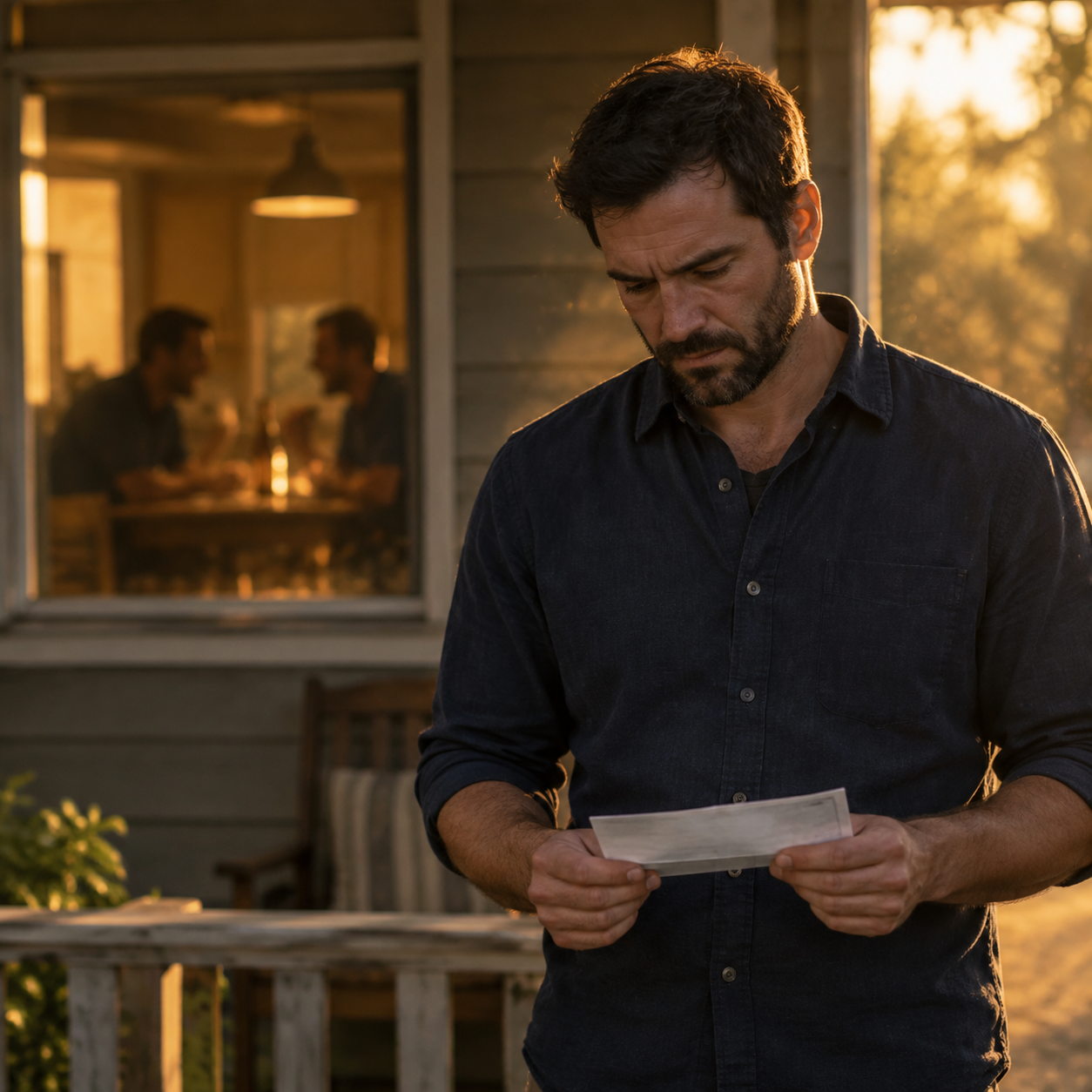
At the reading of the will, my aunt Linda sat perfectly still while the lawyer read the part about the house. Linda was Grandma’s only daughter, and everyone assumed she’d inherit the property. When the lawyer said my name instead, Linda’s face didn’t change. But I saw her eyes. They told me everything I needed to know.
“This has to be a mistake,” Linda said afterward. She was standing in the parking lot of the lawyer’s office, her arms crossed so tight her knuckles were white. “I’m her daughter. You’re her grandson. It doesn’t make sense.”
My mother tried to smooth things over. “Linda, you know how Mom was. She was sentimental about the house. Michael spent so much time there, and—”
“Sentimental?” Linda’s voice cut through the air like glass. “I visited her every week for the last three years. I drove her to every doctor’s appointment. I changed her bandages when she couldn’t do it herself. Where was Michael during all of that?”
I didn’t have an answer. I’d been two thousand miles away, building a career in Seattle. I called every Sunday, and I’d flown back for holidays and the last two weeks of her life. But Linda had been there every day. I couldn’t argue with that.
“Take the house,” I said. “If you want it, it’s yours.”
Linda stared at me like I’d just spoken a foreign language. “It doesn’t work that way. The will is the will. But we both know this isn’t what she meant.”
I thought about fighting it. I thought about letting her have the house and walking away. But something my grandmother said kept running through my head. “Don’t let anyone tell you what you’re worth, Michael. Not ever.”
So I kept the house.
For the next three months, Linda made my life impossible. She called my mother every night, crying about how unfair it was. She showed up at family gatherings and made passive-aggressive comments about “people who take what isn’t theirs.” She even started a group chat with my cousins, my aunts, and my grandmother’s old friends, framing the whole thing as me stealing from a grieving daughter.
I was ready to sell the house just to make the noise stop. I flew to New York to clean it out and list it with a realtor. That’s when I found the box.
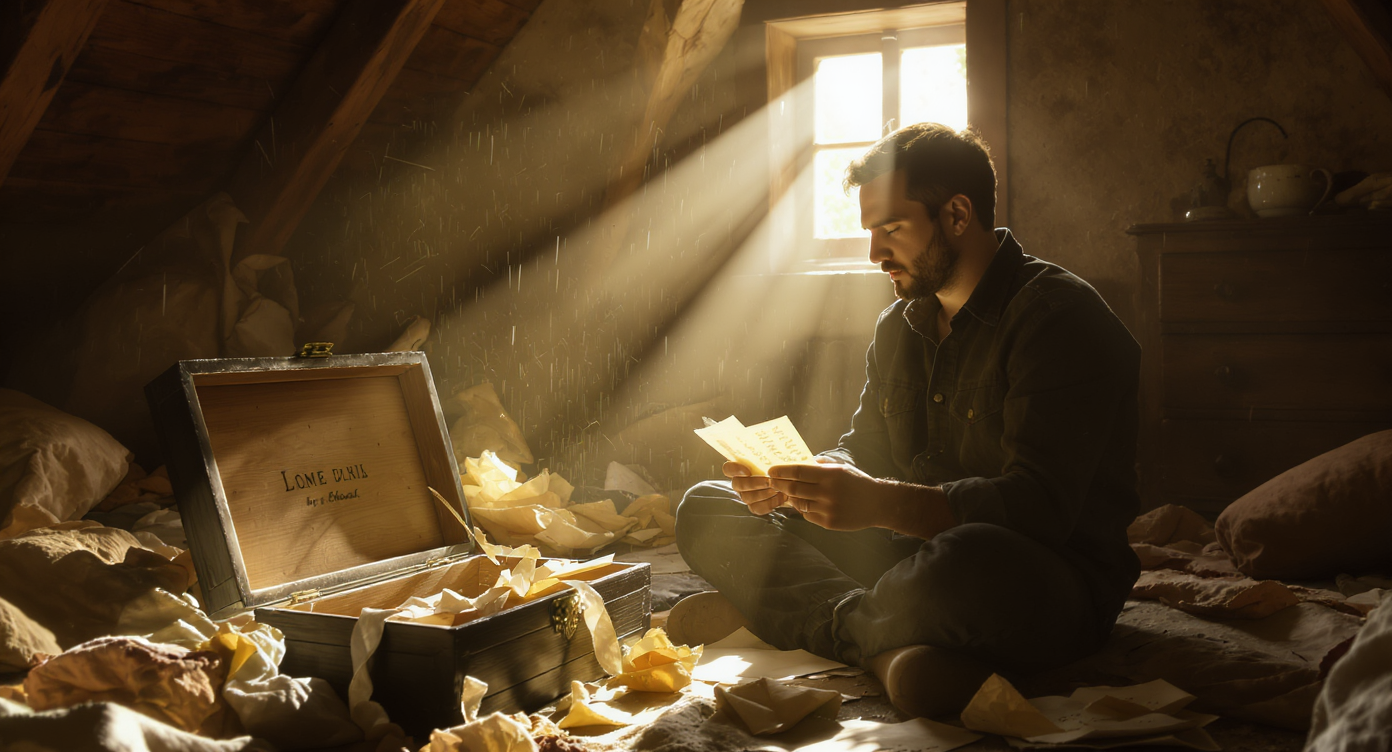
It was in the attic, tucked behind an old dresser my grandmother had refinished in the seventies. A small wooden box with her initials carved into the lid. Inside were letters — dozens of them, tied with a faded ribbon. They were addressed to my grandmother, postmarked from the same small town in Ohio, spanning nearly forty years.
I didn’t open them at first. But the return address caught my eye: a woman’s name I’d never heard before. I pulled out the first letter and started reading.
The words on the page made my hands go cold.
“Dearest Rosa, I know you said never to write again. But I need you to know that Linda came to see me last month. She’s twelve now, and she’s asking questions I can’t answer. She wants to know why she has two mothers when her friends only have one.”
I read every single letter that night.
My grandmother had a daughter before she got married. A daughter she gave up for adoption in 1968, when she was nineteen and unmarried in a Catholic family. That daughter grew up, got married, and had a child of her own — a little girl she named Linda.
My aunt Linda was the biological granddaughter of a woman who gave her child up for adoption fifty years before Linda was even born. My grandmother had spent four decades secretly watching Linda grow up through letters and photographs sent by the daughter she’d been forced to give away. When that daughter passed away in 2005, my grandmother legally adopted Linda — her own biological great-granddaughter — to give her a home.
And Linda never knew.
My grandmother never told her. She carried the secret to her grave, probably because she was terrified of what it would do to the family. But she left me the house. She left me the letters. She left me the truth.
I sat in that attic until the sun came up, holding the proof of a story my grandmother had spent half a century hiding. And I understood why she left the house to me. It wasn’t about who visited more or who deserved it more. It was about who she trusted to find the truth without using it as a weapon.
I called my mother the next morning. “I need you to come to the house. There’s something you need to see.”
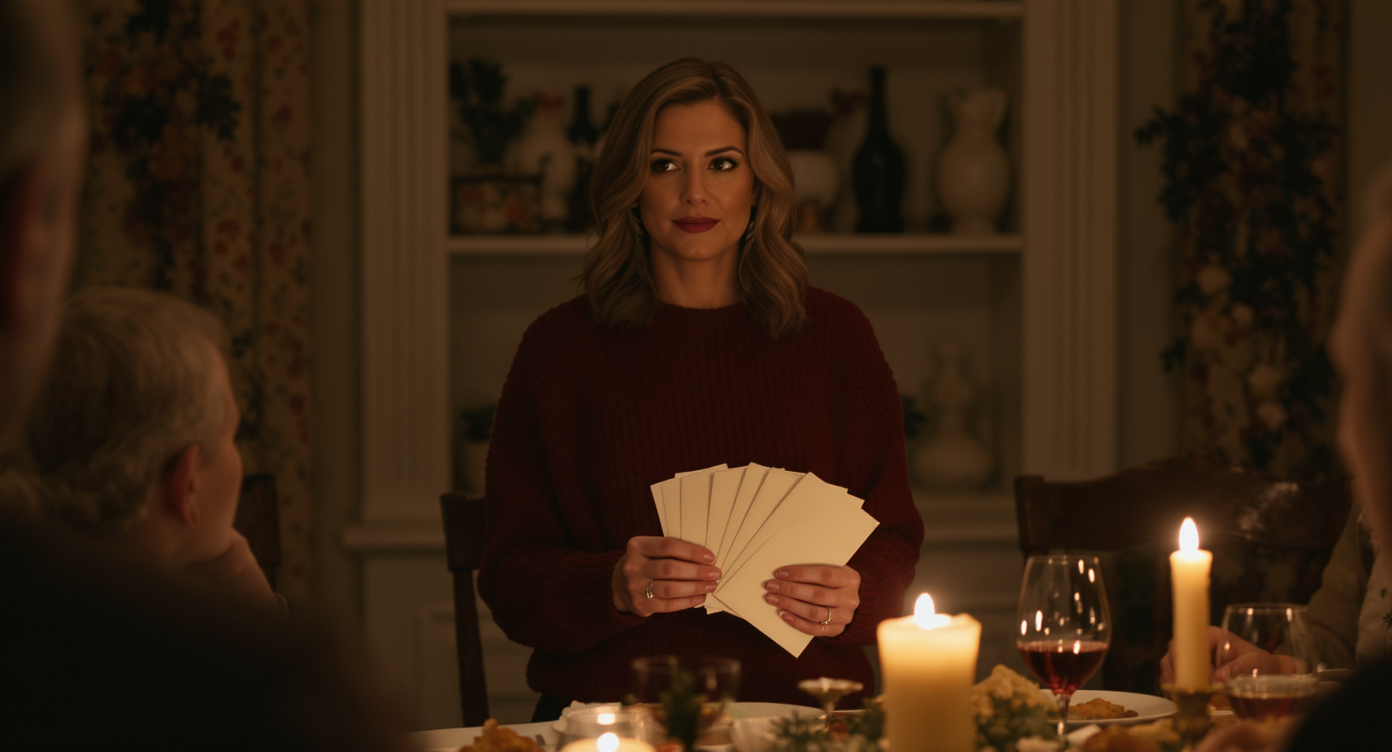
She arrived three hours later with Linda in tow. My aunt looked at me with the same cold expression she’d worn since the reading of the will. “If this is about the house again, I don’t want to hear it.”
“It’s not about the house.” I handed her the first letter. “It’s about Grandma.”
I watched my aunt’s face change as she read. The anger drained out of her, replaced by something I’d never seen in her eyes before. Confusion. Hurt. And then, slowly, understanding.
“She never told me,” Linda whispered. “All those years. She never told me I wasn’t really hers.”
“She was yours,” I said. “More than you know. She spent her whole life making sure you had a home.”
Linda looked at me with tears streaming down her face. “Why did she leave you the house?”
I didn’t have a good answer. Maybe my grandmother knew that Linda would have sold the house and buried the letters without ever reading them. Maybe she knew that the truth needed someone who would sit in the dark and let it change them.
The house is still mine. But Linda and I meet there every month now. We sit on the back porch and drink coffee under the apple tree my grandmother planted the day I was born. We don’t talk about the letters. We don’t talk about the secret. We just sit there, two people who both loved the same woman, trying to figure out what it means to carry a truth that heavy.
Maybe that makes me selfish for keeping the house. Maybe it means I finally understand why Grandma trusted me with it. But the one question I can’t stop asking myself is this: if she’d trusted you with a secret that could destroy your family, would you have the courage to share it — or would you carry it alone, the way she did for fifty years?