🎧 Listen to this story
Full narration — “My Husband Said He Was Holding Down the Fort While My Father Was in t
Narrated by Dramateller
The call came at 3:14 AM. A number I didn’t recognize, but I answered because something told me I had to.
“Mrs. Chen? This is St. Mary’s Hospital. Your father has been admitted. It’s a stroke. He’s stable, but you should come immediately.”
I was out of bed before the sentence finished. My husband Mark stirred beside me and said my name like a question.
“It’s my dad,” I said, already pulling on jeans. “He’s had a stroke.”
Mark sat up slowly. “Is it bad?”
“They said stable. I don’t know what that means.”
He looked at the clock and lay back down. “Text me when you know more. I have that 8 AM with the Chicago team, I can’t miss it.”
I should have heard it then. The way his voice didn’t carry any urgency. The way he chose a meeting over his wife running to her father’s bedside. But I was already thinking about my dad, about the three-hour drive through the dark, about whether I’d make it in time.
I didn’t have room to be angry yet.
My father survived that first night. The doctors said he’d been on the floor for almost twelve hours before a neighbor found him, and the left side of his body was permanently affected. He couldn’t speak, couldn’t swallow, could barely track movement with his eyes. The stroke had taken his words but not his awareness. I could see it in the way he looked at me — he knew exactly what was happening to him.
I stayed for nine days straight. I slept in a chair that folded into a thin vinyl mattress. I learned how to read his facial expressions because he couldn’t tell me if he was in pain. I held a cup to his lips and counted the seconds between sips.
And I called Mark every night.
“How’s work?” I’d ask.
“Crazy. I’m drowning here. The kitchen is a disaster, the laundry is piling up, I can’t keep up.”
“Can you come down for just one day? Even a few hours?”
“Babe, I can’t. I’m holding down the fort. You don’t need to worry about anything here. Just focus on your dad.”
He said holding down the fort so many times over those nine days that the phrase started to feel like a wall I kept walking into. I stopped asking after a while. I told myself he was handling things in his own way. Some people run toward a crisis, and some people freeze. He was a freezer. That was just who he was.
When my father was transferred to a rehabilitation facility closer to our city, I came home expecting to collapse into his arms. Instead, I walked into a house that looked exactly like I’d left it. The laundry basket was still full. The kitchen sink had a ring of dried coffee. A pile of mail sat unopened on the counter.
I stood in the entryway for a long moment, and I felt something shift in my chest. A door closing.
“I kept things going,” Mark said from the couch. He didn’t get up. “It’s been rough.”
“The laundry is exactly where I left it.”
“Well, I meant I kept myself going.”
I let it drop. I was exhausted, and my father still had months of therapy ahead, and I didn’t have the energy for a fight I already knew I’d lose. I unpacked my bag and went to sleep.
Over the next five weeks, I split my time between the rehab facility and our apartment. I was running on fumes, and Mark kept drifting further away. He worked late. He slept on the couch “because he didn’t want to wake me.” He stopped asking about my father. When I tried to talk about the physical therapy progress or the speech exercises, he’d nod and change the subject.
I told myself he was stressed. I told myself I was being sensitive. I told myself a lot of things that were easier than the truth.
The truth came on a Tuesday afternoon in an envelope from someone I barely knew.
Our building had a new doorman named Hector. He was in his sixties, soft-spoken, always held the door a second too long. I’d exchanged maybe thirty words with him over six months. When I came home from the rehab facility that day, he stepped out from behind the desk and handed me a business envelope.
“I’ve been meaning to give you this for a few weeks,” he said. He wouldn’t meet my eyes. “I didn’t know how to say it. So I wrote it down.”
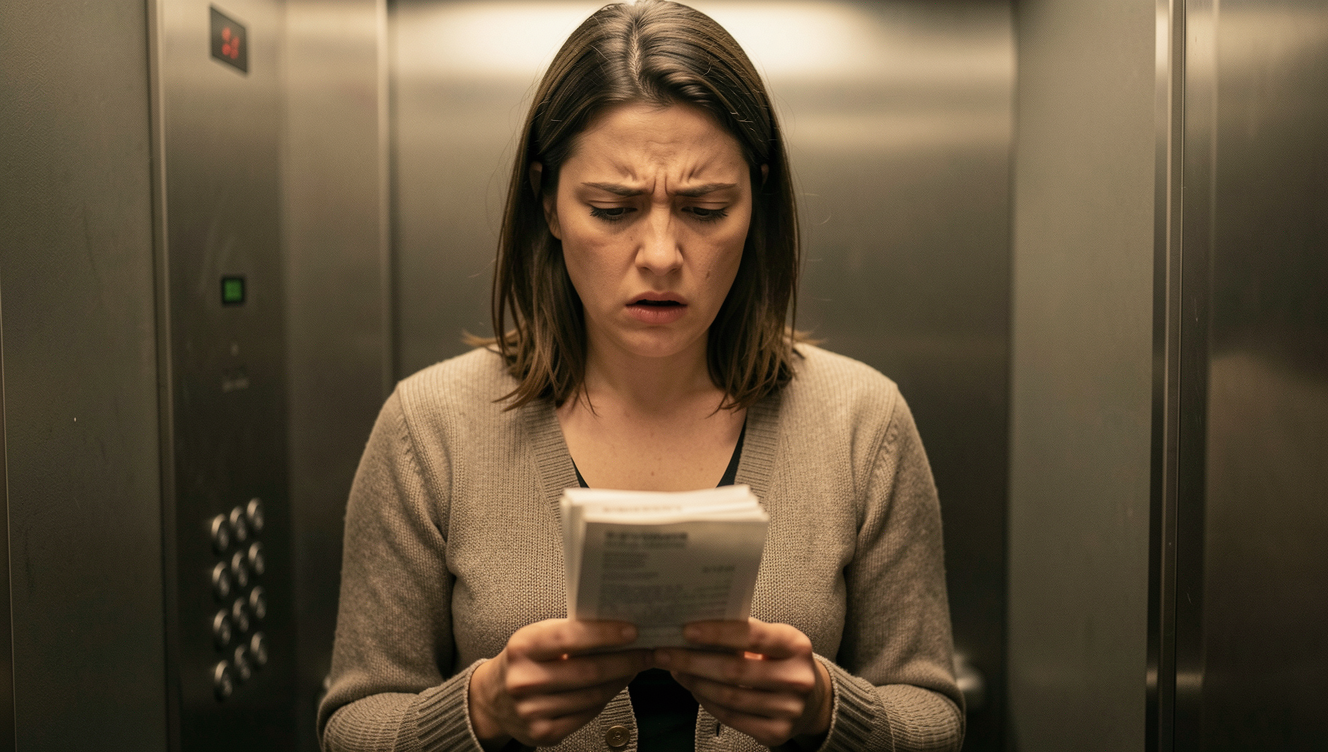
I opened the envelope in the elevator and pulled out a folded piece of stationery and a stack of receipts. The handwritten note said:
Mrs. Chen —
I’m sorry to be the one to tell you this. Your husband has been bringing a woman here during the day while you’re at the hospital. She comes at noon and leaves around three. He told the front desk she’s a client, but they kiss in the lobby. I’ve been keeping the parking receipts because I didn’t know what else to do. I thought you should have them.
— Hector
There were fourteen receipts. Fourteen afternoons. Each one timestamped and dated. The first was from the day after I’d left for the hospital. The most recent was from that morning.
I stood in the elevator with the receipts shaking in my hand, and I didn’t cry. I felt something much colder than sadness. I felt the entire architecture of my marriage crack open in a single moment.
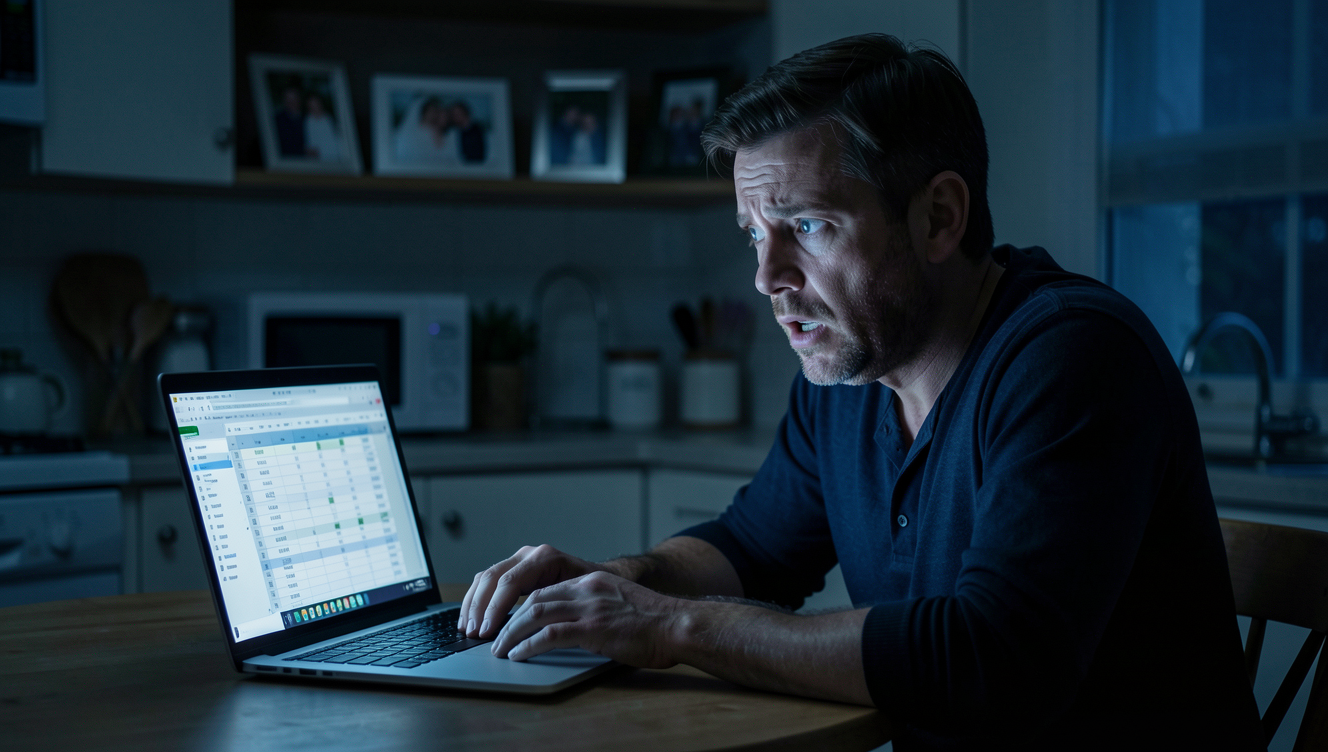
I walked into the apartment. Mark was on the couch, laptop open, a half-eaten sandwich on the coffee table. He looked up and smiled.
“Hey. How’s your dad?”
I held up the receipts.
He didn’t even try to lie. His face just went slack, and I watched him become a stranger in real time.
“She’s someone from work,” he said. “It’s not — it wasn’t supposed to — “
“You brought her to our home.”
“I’m sorry.”
“While my father was learning how to swallow again.”
“I didn’t know how to handle everything. You were gone, and I was alone, and — “
I laughed. I don’t know why, but I laughed. The sound was hollow and foreign and it scared him more than anything else I could have done.
“You were holding down the fort,” I said.
And I walked into the bedroom and closed the door.
That was six months ago. The divorce was finalized last week. My father is still in therapy, but he said my name yesterday. Just two syllables, slow and broken, but clear.
I moved into a small apartment across town. Hector helped me carry my boxes to the car. He didn’t say much, but he didn’t need to.
Sometimes I wonder if I should have seen the signs earlier. The distance, the excuses, the way he stopped looking at me like I mattered. But I was too busy holding onto someone who was already gone. And the whole time, I thought I was the one who needed saving.
Maybe the truth is that I was the one keeping everything standing. He was just living in the building.