At fourteen, I learned how to look full when I was hungry. You drink water before class. You say your stomach hurts at lunch. You tear food into tiny pieces when someone shares so it seems like you are just being polite. My mother was working nights, my stepfather was working on his temper, and our refrigerator had the kind of emptiness that hums. I got good at vanishing inside ordinary routines. The one person who noticed was my English teacher, Mrs. Alvarez.
She never asked the humiliating questions in front of other people. She simply started finding reasons to keep me after school. Sometimes it was to discuss an essay. Sometimes it was to reshelve books no one had touched. Every single time, there would be something on her desk that she acted as if she had no interest in finishing herself: half a sandwich, a banana, a thermos of soup, homemade rice in a plastic container. She made generosity look casual, which is the kindest form of it when you are fourteen and allergic to pity.
She also told me I wrote like someone who had already lived too long. At the time, I thought that was praise. As an adult, I hear the sadness hidden inside it. Mrs. Alvarez is the reason I applied for scholarships, the reason I believed community college was not code for failure, the reason I ended up transferring to a university and eventually building a life where my own son has never once had to pretend water was dinner. I told myself for years that I would go back and thank her properly when I had enough proof that her faith had not been wasted on me.
That is how gratitude gets delayed: first by survival, then by ambition, then by the superstition that the thank-you will mean more if you arrive carrying success in both hands. I became a father. I changed jobs twice. I moved cities. Every few months, Mrs. Alvarez would drift into my mind while I was driving or grocery shopping, and I would think, I need to find her. Then life would keep moving the way it always does when you mistake remembrance for action.
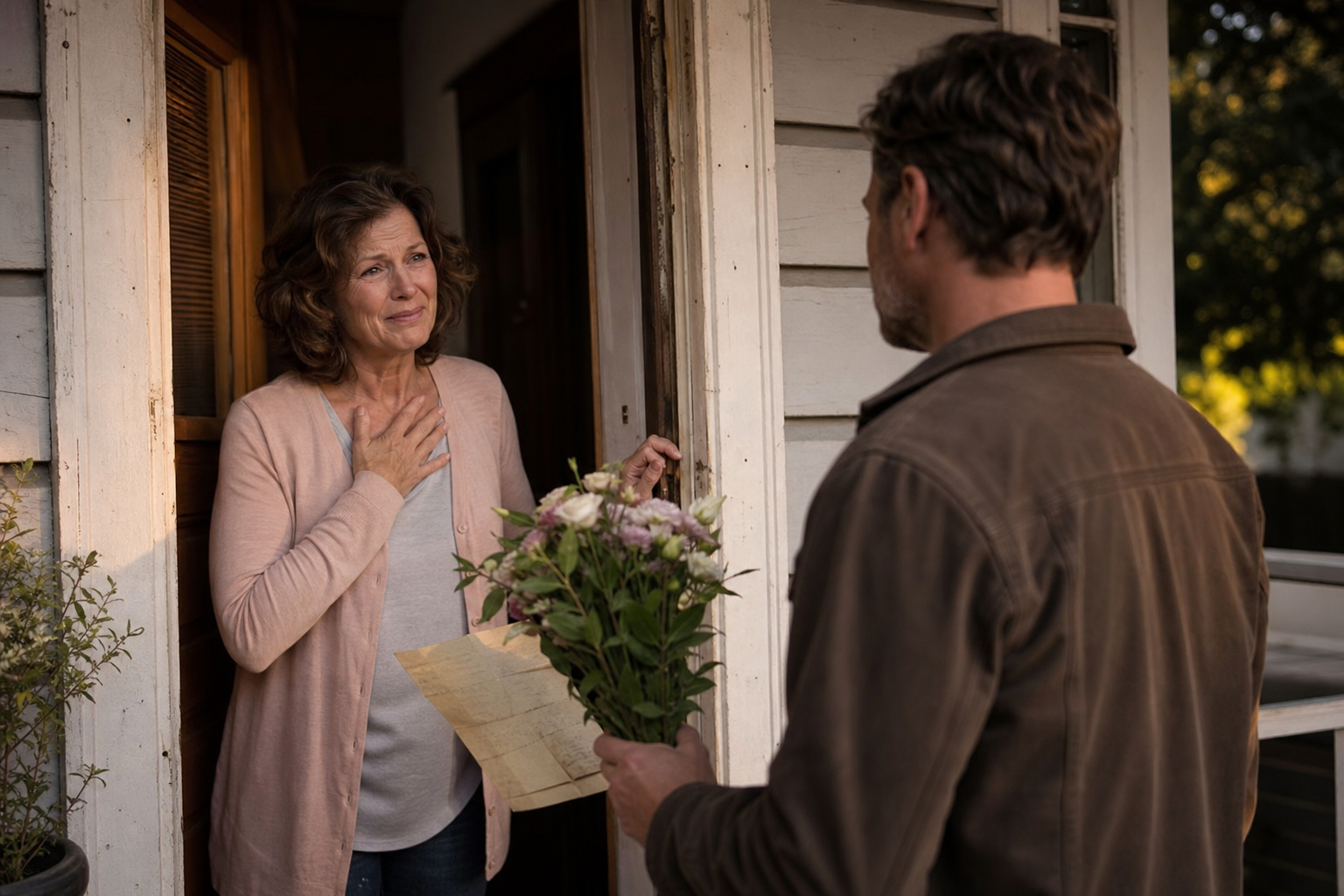
Last month, my son came home from school complaining about a teacher who made him rewrite a lazy paragraph three times. He was dramatic about it in the way twelve-year-olds are dramatic about anything that interrupts video games. I laughed, then heard myself saying, ‘One day you’ll understand the adults who refuse to let you become smaller than you could be.’ That sentence took me straight back to Mrs. Alvarez, to her desk, to the smell of tomato soup and dry-erase markers. The next morning, I found her address through an old district contact and drove two hours with flowers on the passenger seat and a thank-you letter I had rewritten five times.
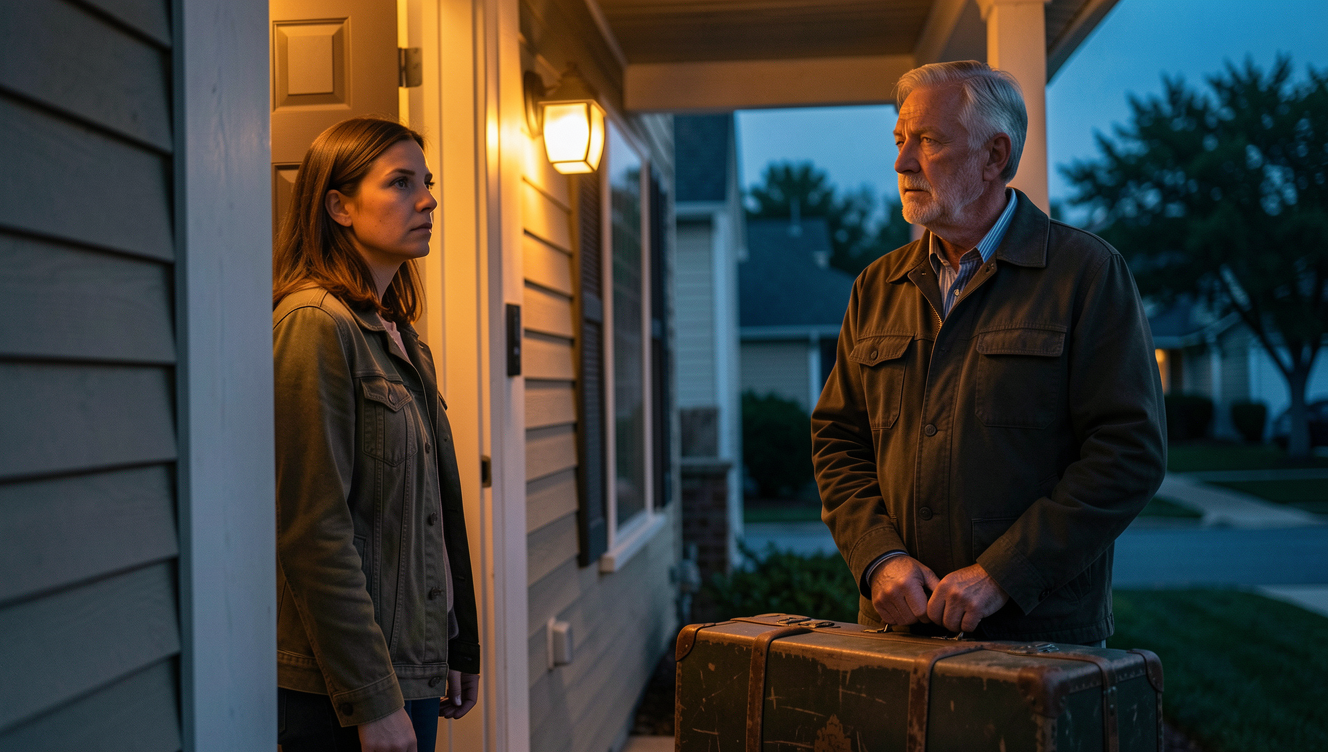
Her daughter opened the door. She was in her forties, maybe, with the same steady eyes Mrs. Alvarez used to level at unfinished homework. Before I could explain much, she looked at the flowers and softened in a way that told me she had seen this before. She invited me in and said her mother had died eight months earlier. The room behind her was full of careful mourning: framed photographs, sorted books, a folded cardigan over the couch as if absence could be kept tidy if arranged nicely enough. I felt foolish standing there with gratitude that had missed its address.
Then her daughter did something I still cannot think about without having to stop for a minute. She went to a cabinet and brought back a manila folder with my name on it in Mrs. Alvarez’s handwriting. Inside were copies of my school essays, a regional writing certificate I had forgotten existed, and a note Mrs. Alvarez had written years ago that simply said, ‘He thinks nobody can tell when he’s struggling. He is wrong. He is bright enough to survive this, but I hope he someday learns surviving is not the same as being seen.’ I sat at a stranger’s dining table and cried over paper that had outlived the woman who saved me without ever announcing that she was doing it.
I still wish I had gone sooner. There is no noble lesson that cancels that regret. But I left with the folder, the flowers in a vase beneath her photograph, and one thing I did not have when I arrived: evidence that the people who hold us together in quiet years may know their impact even when we fail to say it on time. That night I packed my son an absurdly generous lunch and wrote a note in it that said only, ‘Someone noticed me once. I notice you too.’ Maybe life stories are just chains of ordinary rescues, passed forward before we run out of days to say thank you.