🎧 Listen to this story
Full narration — “I Was the Invisible Daughter While My Mother Built My Sister’s Dreams
Narrated by Dramateller
My mother called on a Tuesday afternoon. I knew something was wrong because she never called during work hours.
“Sweetheart, I need to ask you something,” she said, and the hesitation in her voice told me this wasn’t a dinner invitation.
I was twenty-nine years old, sitting in my four-hundred-square-foot studio apartment, staring at the stack of bills on my counter. I’d been saving for a down payment on something bigger for three years. Every month, I added a little more to the account, knowing that my name alone would never be enough for a mortgage, but hoping that if I saved enough, it might be.
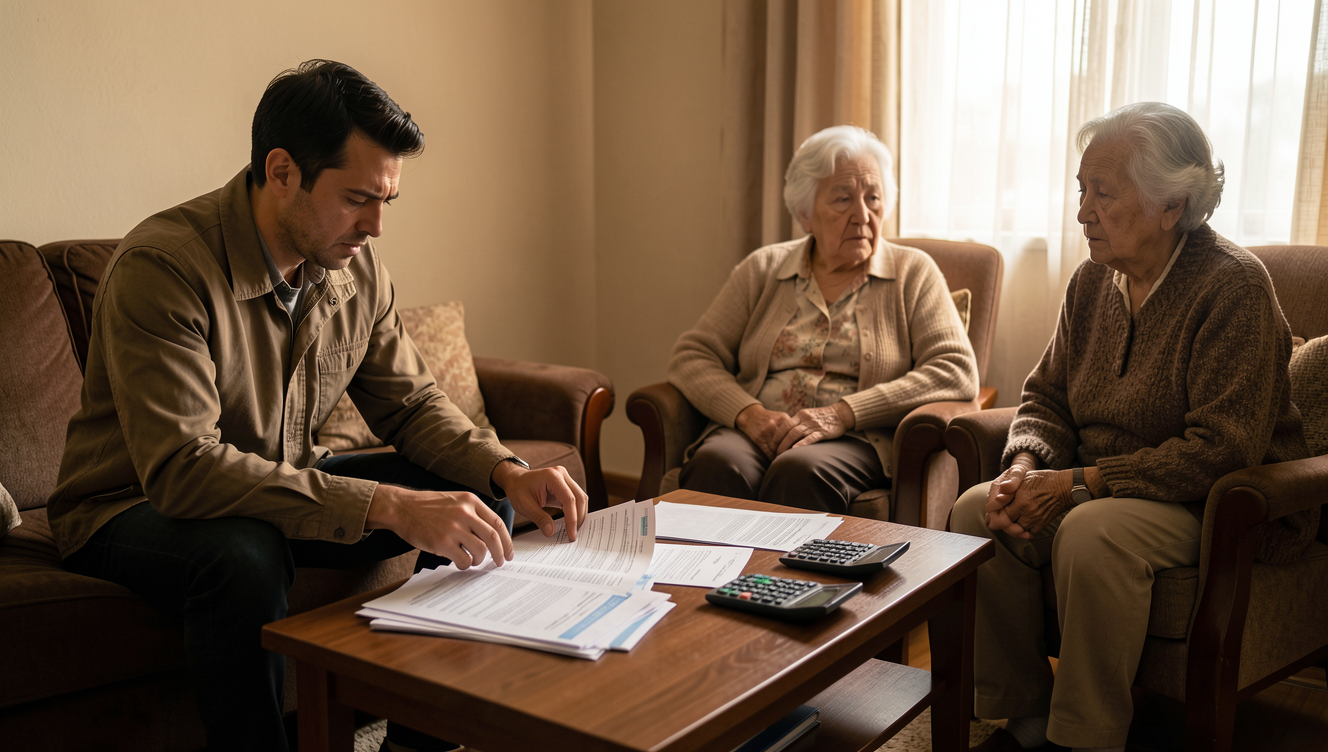
“I’m losing the house,” my mother said.
I didn’t say anything.
“Clara can’t help. She’s between projects, and her savings are gone.”
Of course Clara couldn’t help. Clara had never been able to help.
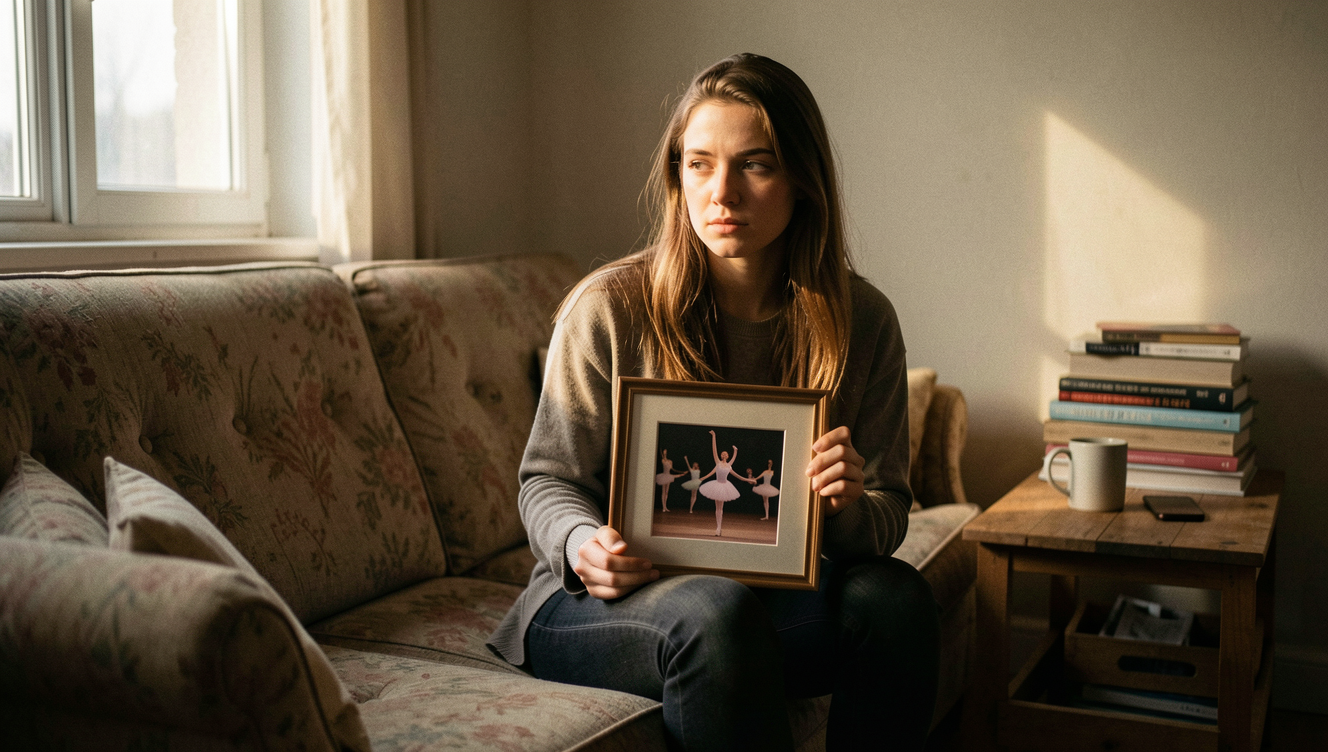
I grew up in a house where my sister’s dreams took up all the air. Clara was two years younger than me, and from the moment she put on her first pair of ballet slippers at age six, my mother decided she was destined for something extraordinary.
I remember the recitals. My mother would sit in the front row with her hands pressed together, tears streaming down her face, like she was watching a miracle unfold. She’d spend weeks sewing costumes, driving Clara to rehearsals, paying for private coaching sessions that cost more than our groceries.
I would sit in the audience and watch, too. Not because I was proud — I was, I guess, in the way you’re proud of a sibling who gets all the attention — but because I learned early that my job was to be invisible. To clap quietly. To not ask for anything that would cost money.
When I was fourteen, I asked my mother if I could join the school choir. There was no cost — it was a free after-school program. She looked at me like I’d said something ridiculous.
“You don’t have time for that,” she said. “I need you to help with dinner on choir nights.”
I didn’t argue. I’d learned that arguing meant being called selfish, and being called selfish meant a week of cold silence.
Clara got a car when she turned sixteen. A used Honda, but still — it was hers. She needed it, my mother explained, because her dance schedule made public transportation impossible. I got a bus pass and a reminder that I could walk to school if I left early enough.
When I graduated high school with a scholarship to the state university, my mother hugged me and said she was proud. Then she sat me down and explained that they couldn’t afford to help with my living expenses because Clara’s summer intensive program was non-negotiable.
“I’m sure you understand,” she said. “Clara has real potential. This could change her life.”
I worked two jobs through college. I graduated with decent grades and no debt, but also no car, no savings, and a deep, quiet certainty that I was not the child who mattered.
Clara’s big break never came. There were auditions and callbacks and near-misses. A showcase in Chicago that led nowhere. A year-long apprenticeship with a small company that folded. More summers of intensive training, each one costing more than the last. My mother never stopped believing, even when the evidence piled up like unpaid bills in a desk drawer.
I got a job in customer service after college. Then a promotion. Then another. I rented a room in a shared house, then a small studio when I could afford it. I packed my own lunches, bought my clothes from discount stores, and watched the number in my savings account inch up like a promise I was keeping to myself.
When my mother called to say she was losing the house, she didn’t mention any of that. She didn’t mention the car Clara had crashed, or the thousands of dollars she’d poured into dance schools that never produced a career. She didn’t mention that her retirement savings had been spent years ago, or that the reverse mortgage she’d taken out was coming due.
She just said she needed a place to stay.
I drove to her house that weekend. I don’t know why. Maybe I wanted to see it for myself. Maybe I wanted her to say she was sorry.
Clara was there, sitting at the kitchen table with a latte she’d clearly bought from somewhere that cost too much. She smiled when she saw me, but it didn’t reach her eyes.
“You look good,” she said, like she was surprised.
“Thanks.”
“Mom told me you’re going to let her stay with you.”
I hadn’t said that. I’d said I’d think about it.
“I’m not sure yet,” I said. “I have a studio apartment. There’s barely room for me.”
Clara set down her latte. “She’s our mother. We take care of family.”
The word “we” hung in the air like a question mark. I wanted to ask her where “we” had been for the last ten years. I wanted to ask what she’d contributed to the household that I’d been guilted out of. I wanted to remind her that she’d been the one who got everything, and I was the one being asked to pay the price.
But I didn’t. Because that’s what I’d been trained to do. Stay quiet. Don’t make a scene. Don’t be selfish.
My mother walked in, drying her hands on a dish towel. She looked older than I remembered. Tired.
“Thank you for coming,” she said. And then, after a pause, “I know I haven’t been the best mother. Not to you.”
I blinked. That was the closest thing to an apology I’d ever heard from her.
She moved in two weeks later. Her things fit in three suitcases and a small box of kitchen supplies. I gave her my bedroom and took the couch.
It’s been a month now. She makes tea in the mornings and sits quietly while I get ready for work. Sometimes she looks at my bookshelf or asks about my day.
Last week, she found my old photo album — the one I’d hidden in a box under the couch because I couldn’t bear to look at it. It was full of pictures from Clara’s recitals. My mother was in every single one, beaming. I wasn’t in any of them.
She closed the album and put it back without saying anything. But that night, she made dinner — the first time she’d cooked since she arrived — and she served me first.
It’s not an apology. It’s not even a conversation. But she’s trying, in her own small way, to be a mother to me now, when she doesn’t need anything except a place to sleep.
I don’t know if it’s enough. I don’t know if it changes what happened or if I’m supposed to just let it go because she’s old and tired and finally realizing that the daughter she ignored was the one who showed up.
But I do know that I let her stay not because she deserved it, and not because Clara guilted me into it. I let her stay because I’m not the kind of person who turns away family, even when family has turned away from me.
Maybe that makes me a fool. Maybe it makes me the better person. Maybe the truth is somewhere in the middle, and I’ll spend the rest of my life trying to figure out where I land.
What would you have done?