🎧 Listen to this story
Full narration — My Sister’s Gambling Addiction Was Our Family’s Darkest Secret — Until
Narrated by Dramateller
I was thirty-two years old and finally within reach of buying my first home when my mother called and asked me to come over for dinner on a Tuesday night. Not a birthday, not a holiday, just a Tuesday. I knew something was wrong before I even walked through the door.
My parents’ house looked the same as it always had — the same floral sofa, the same framed photo of Rachel and me from high school graduation, the same ceramic rooster on the windowsill that my mother refused to throw away. But the energy in the room was different. My father was standing at the kitchen counter with a cup of coffee he wasn’t drinking. My mother was sitting at the table with a folder in front of her, her hands folded on top of it like she was guarding something fragile.
“Where’s Rachel?” I asked.
“She doesn’t know you’re here,” my mother said.
That was the first red flag. Normally, Rachel was the center of every family gathering. She was two years younger than me, always louder, always funnier, always the one who filled the silence. But tonight the kitchen was quiet, and my mother’s hands were trembling.
My father sat down and pushed the folder toward me. “Your sister has a problem.”
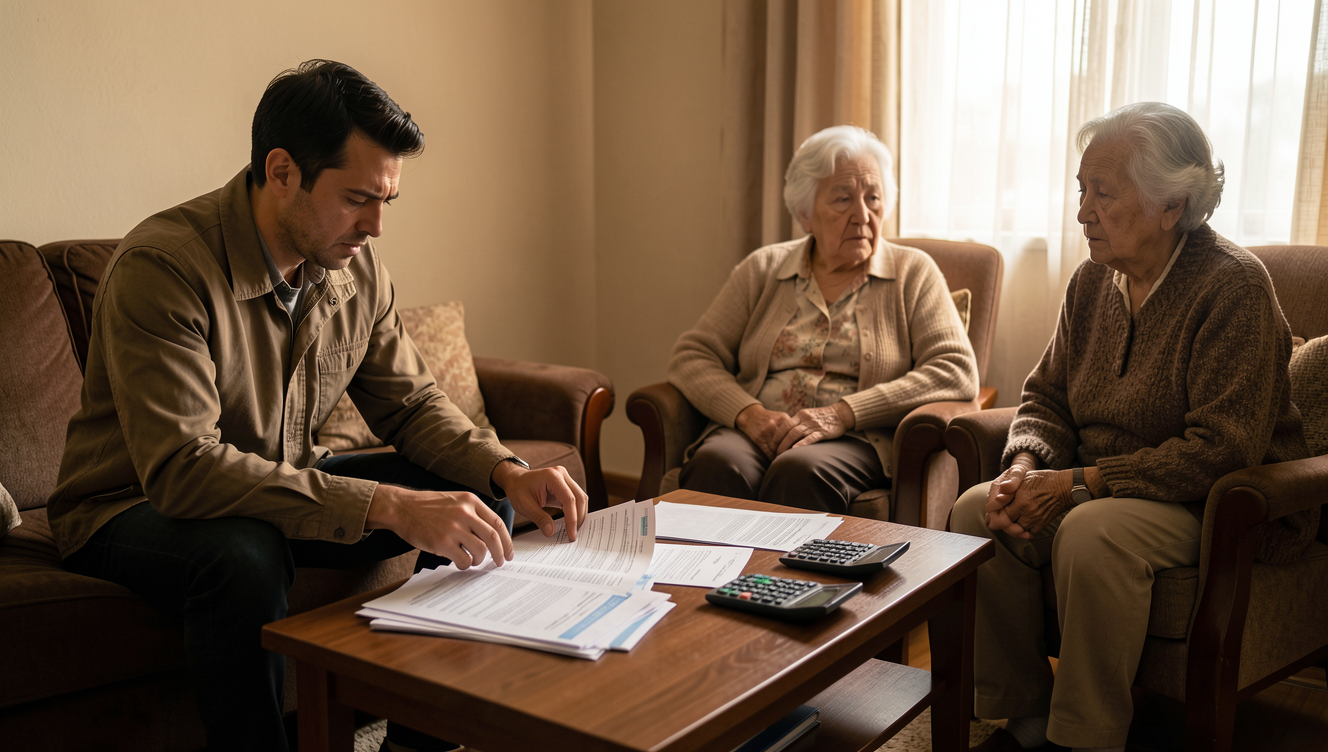
I opened the folder. Inside were credit card statements from three different banks, all in Rachel’s name. There were personal loan agreements from two online lenders. There was a letter from a debt collection agency threatening legal action. At the bottom of the pile was a handwritten list in my mother’s neat cursive, totaling every number. Sixty-two thousand, four hundred dollars.
I had known Rachel had a gambling problem for years. We all had. It started during the pandemic — online poker with friends that turned into daily tournaments, then sports betting apps, then the kind of websites that send you notifications every hour with a new way to lose money.
I remembered a wedding we attended three years ago. Rachel disappeared for forty-five minutes and came back saying she’d been in the bathroom. I found her in the hotel lobby on her phone, placing bets on a basketball game. She laughed it off when I asked. “It’s just twenty bucks,” she said. “Relax.”
I didn’t relax. I told my parents about it the next week. My mother said Rachel was an adult and I shouldn’t spy on her. My father said he’d talk to her. Neither of them did anything.
And now the folder on the table had brought it all back.
“She’s been hiding this for two years,” my mother said. “The calls started coming to the house last month. Collection agencies. They said they’d garnish her wages.”
My father cleared his throat. He looked older than I remembered. “We’ve been paying the minimums out of our savings, but it’s not sustainable. We don’t have that kind of money.”
He paused. Then he asked me to cosign a home equity loan on their house. Sixty thousand dollars to pay off Rachel’s debt. The house would be collateral.
I felt the air leave the room.
“You want me to cosign a loan against your house,” I repeated slowly, “so you can pay for Rachel’s gambling losses.”
“She’s your sister,” my mother said. “She’s our daughter. We can’t just let her drown.”
I thought about my savings account. I had been working as a systems analyst for seven years. I drove a 2012 Honda with a cracked dashboard. I didn’t take vacations. I packed my lunch every day. I had saved eighty-seven thousand dollars, and I was planning to use it as a down payment on my first home.
If I cosigned that loan, I would be legally responsible if my parents couldn’t pay. And if Rachel was still gambling — which I suspected she was — the debt would only grow.
“Where is Rachel now?” I asked.
“She’s at her apartment,” my father said. “She doesn’t know we’re meeting with you. We wanted to have a plan before we talked to her.”
I asked to look through the folder more carefully. That’s when I found the payday loan. It was dated twenty-three days ago. Thirty-six percent interest. Two thousand dollars.
Rachel had taken out a new loan three weeks ago.
“She’s still gambling,” I said. “She took out a payday loan last month. She didn’t stop.”
My mother started crying. My father stared at the table.
“We can’t control her,” my mother said. “But we can control how we respond. We can help her.”
“No,” I said. “You can’t help someone who’s still in the fire. You can only burn with them.”
I left without giving them an answer. I drove around for an hour, past the neighborhood where I grew up, past the high school where Rachel and I shared a locker in my senior year. I remembered the way she used to make me laugh on the walk home, imitating our teachers and doing impressions of the mailman. She was the funny one, the charming one, the one everyone loved. And somewhere along the way, that charm turned into manipulation.
I called her that night. She answered on the second ring.
“Mom and Dad called you,” she said.
“They did. They showed me the debt.”
“It’s not that bad. I have a plan.”
“Rachel, it’s sixty-two thousand dollars.”
She was quiet. Then she said, “It’s forty-seven. The rest is old credit card debt from before the gambling. Don’t exaggerate.”
“Your payday loan from three weeks ago isn’t old credit card debt.”
She hung up.
I called back. She didn’t answer. I texted her: “I’m not signing anything. But I found a treatment program. Six weeks, inpatient. I’ll pay for it. Just say yes.”
Her reply came five minutes later: “I don’t need a program. I need my family to stop treating me like a problem.”
I went to see my parents the next weekend. I told them I wouldn’t cosign the loan, but I would pay for Rachel to get professional help. I had researched options. The Gamblers Anonymous hotline. A reputable inpatient program in the next state. A therapist who specialized in addiction. I had printed out brochures.
My mother didn’t look at them. “She’s not going to go.”
“Then that’s her choice,” I said. “But I’m not going to fund the thing that’s destroying her.”
My father stood up and walked out of the room. My mother sat in silence.
“That’s it?” she said finally. “You’re just going to abandon her?”
“I’m not abandoning her. I’m offering her a way out. She has to take the first step.”
“You’ve never struggled,” my mother said. “You’ve never needed help. You don’t understand what it’s like to feel desperate.”
I didn’t have an answer for that. Maybe she was right. Maybe I didn’t understand. But I understood one thing: if I cosigned that loan and my sister gambled away my parents’ house, everyone would blame me for not stopping it sooner. No one thanks the person who says no. They just resent them for not crossing the line.
I didn’t cosign the loan. My parents found a way to do it without me. They took out the home equity loan against their house — sixty thousand dollars at eight percent interest. My father said he’d rather lose the house than lose his daughter. I told him he was choosing the thing that was hurting her, but he didn’t want to hear it.
Rachel did not stop gambling. I know because one of my cousins told me she saw Rachel at a casino three hours from our city two months ago. She was at the blackjack tables with a man none of us had ever met. My parents don’t know I know this. They don’t ask anymore. They call me less often now, and when they do, the conversation is polite and empty.
I bought the house last month. Three bedrooms, one bathroom, a backyard with a maple tree that turns red in October. It’s not the house I dreamed about, but it’s mine. No one else’s name is on the deed. No one can take it from me.
My parents haven’t seen it yet. Rachel and I haven’t spoken in three months. I still have the brochures for the treatment program on my kitchen counter. I haven’t thrown them away. I don’t know why.
Maybe I’m waiting for her to call and say she’s ready. Maybe I’m waiting to prove to myself that I did everything I could. Maybe I’m waiting to see if my mother was right — if I am the one who walked away instead of the one who stayed and helped.
Would you have cosigned the loan for your sister — or held the line knowing it might cost you your family?