🎧 Listen to this story
Full narration — My Husband’s Side of the Family Said I Was Just the Stepmother — Then
Narrated by Dramateller
The morning it happened was completely ordinary. I was packing lunches — turkey and cheese for Maya, ham with the crust cut off for Leo. My husband David was in the shower. The kids were arguing over who got the good juice box.
Then I heard the thud.
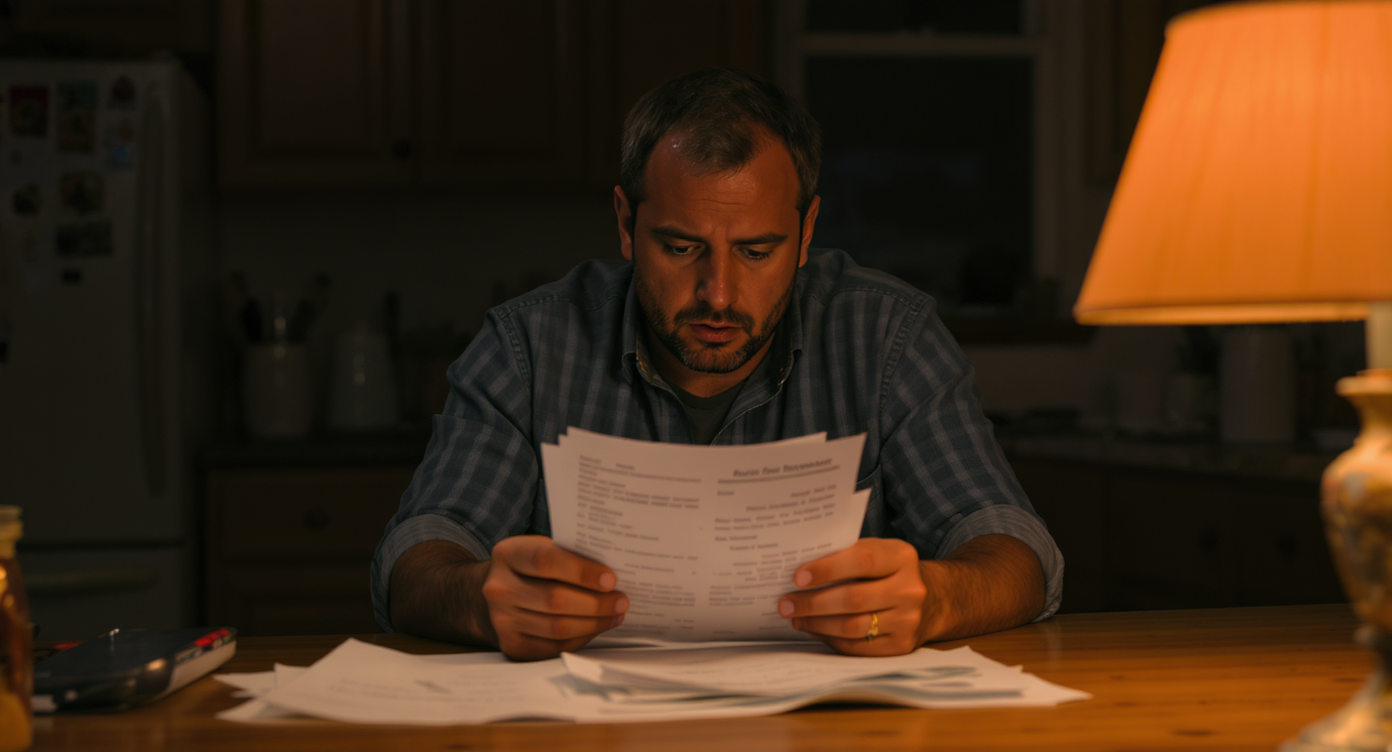
By the time I got to the bathroom door, David was on the floor. His face was gray. He was conscious but he couldn’t catch his breath, and every time he tried to speak, his chest made this sound I still hear when I close my eyes at night.
I called 911. I called my mother to come get the kids from school pickup. I rode in the ambulance holding his hand, and I told him the kids were fine and he was fine and everything was fine, even though none of it was fine.
At the hospital they said pulmonary embolism. They said it was serious but he was stable. They said I should wait.
So I waited. I called the school to make sure Maya and Leo knew their grandmother would be picking them up. I called my boss and said I wouldn’t be in for a few days. I found the vending machine and bought a bottle of water I didn’t drink.
I was still holding it when the grandparents walked in.
I had met Patricia and Frank exactly four times in three years. David’s late wife’s parents. They had never approved of me — not because of anything I did, but because I wasn’t their daughter. I understood that. Grief is complicated. I had always tried to be gracious at birthdays and school plays, even when Patricia’s hello was colder than the parking lot in December.
But that night in the ICU waiting room, Patricia didn’t even pretend.
“Where are the children?” she asked, before she sat down.
“They’re with my mother. They’re fine.”
“Your mother.” She said it like it was a diagnosis.
I let it go. I was too tired not to.
Then a social worker came out and asked who was the legal next of kin for David Morrison. I started to say I was his wife. Patricia spoke over me.
“The patient’s children are minors, and their maternal grandparents are present.” She pulled a folded paper from her purse. “We have a notarized letter from their late mother expressing her wishes about who should raise them if anything happened to David.”
Frank put his hand on Patricia’s arm. She shook it off.
The social worker looked at the paper. She looked at me. She asked me to step into the hallway.
For a moment — I admit it — I thought about leaving. Walking out. Letting them have the waiting room and the paperwork and the argument. I had been David’s wife for three years, but Patricia had been Maya and Leo’s grandmother for eleven. What was I going to prove by standing there?
Then I thought about the school supply list I had filled out in August. The dentist appointments I had scheduled. The permission slips I had signed for the fifth-grade field trip. The night Maya had a fever of 103 and I was the one sitting on the bathroom floor with a wet washcloth while David was on a business trip.
“I’ll wait,” I said.
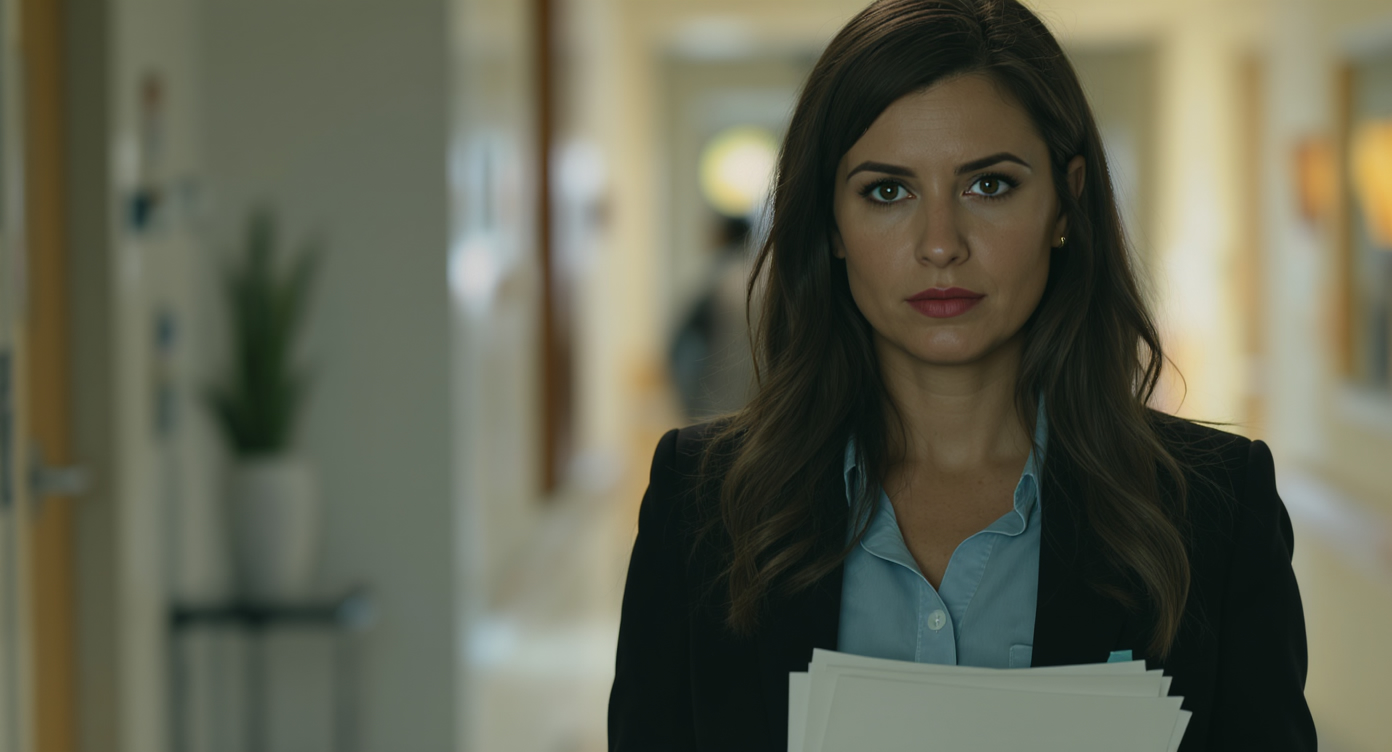
The social worker — her name was Denise, I saw it on her badge — asked me for my full name and my relationship to the children. I gave her both. She typed something into her tablet.
Then she looked up at me.
“Could you wait here for just one moment, Mrs. Morrison?”
She walked back into the waiting room. I heard her say something to Patricia in a low voice. I heard Patricia’s voice rise. Then the door closed.
Three minutes later, Denise came back out. She was holding a tablet with something on the screen.
“Mrs. Morrison, I pulled up the children’s school records, medical authorizations, and emergency contact history for the past three years.”
She turned the screen toward me.
“These signatures are yours?”
I looked at the screen. Field trip permission slips. Immunization consent forms. Emergency contact cards. Enrollment paperwork. Year after year. Dozens of entries.
“Yes,” I said. “Those are mine.”
Denise nodded. She scrolled down.
“And these — parent-teacher conference attendance records. You attended every single one for both children?”
“Yes.”
“You’re listed as the primary emergency contact for both children at their school. You’re the authorized pickup for both. You’re the contact on their pediatrician’s file.” She paused. “And you’re the one who signed Leo’s IEP last spring.”
I had forgotten about the IEP. Leo had a speech delay — mild, but it needed documentation. David had been in back-to-back meetings that week. I was the one who sat in the fluorescent-lit conference room with three specialists and signed the paperwork.
“Mrs. Morrison,” Denise said, “do you have any documentation of a legal relationship to these children?”
“I’m their stepmother.”
“Have you pursued any formal guardianship or adoption proceedings?”
“No. David — my husband — we talked about it. We just hadn’t gotten there yet.”
She nodded again, and I couldn’t tell if that was good or bad.
“Based on what I’m seeing in the records,” she said carefully, “you have been functioning as the primary custodial parent for these children for years. The documented evidence of your caregiving role is extensive.”
She looked back toward the waiting room.
“The grandparents have a notarized letter expressing their late daughter’s wishes. But wishes are not the same as a custody order, and they are not the same as an established caregiving record.”
I understood what she was saying, but I also understood what she wasn’t saying. This wasn’t a court. This wasn’t a ruling. This was a social worker in a hallway, trying to figure out what was best for two kids whose father was in the ICU.
“What happens now?” I asked.
“For tonight, the children stay where they are safe and comfortable. I’ll note in the file that you are their primary caregiver and that removal from your home would be disruptive without a court order. The grandparents can pursue legal action if they choose. But based on what I see here, they would have an uphill climb.”
She held my gaze.
“Three years of consistent caregiving matters, Mrs. Morrison. The system doesn’t always recognize stepmothers, but it recognizes patterns.”
I went back into the waiting room. Patricia was sitting with her arms crossed, staring at the door. Frank was looking at the floor.
“You had no right to do that,” Patricia said. “Those are not your children.”
I sat down across from her. I didn’t raise my voice. I didn’t have the energy.
“I know I’m not their biological mother, Patricia. I know I wasn’t there for their first steps or their first words. But I have been there for three years of homework, three years of sick days, three years of school plays and doctor’s appointments and bedtime stories. And I’m not going to stop being there just because you showed up with a letter.”
Frank said something quiet to Patricia that I couldn’t hear. She didn’t respond. She just sat there with her arms crossed, looking at the door to the ICU like she could will it open.
David was in the hospital for six days. I spent every night at the kids’ house — our house — making sure they did their homework and ate dinner and brushed their teeth. Patricia called twice. I answered both times. The second time, she asked if she could see the children on Saturday. I said yes.
I’m not sure if that makes me a pushover or a person who understands that grandparents who just lost their daughter are also grieving.
Maybe both.
David came home on a Tuesday. He’s fine now — mostly. He takes blood thinners and he has a follow-up in three months. The first thing he did when he walked through the door was hug Maya. Then Leo. Then me.
“Denise told me what happened,” he said, when the kids were in bed. “She said you handled it.”
“I handled what I could handle.”
He was quiet for a moment. Then he said, “I want to start the adoption paperwork.”
I looked at him.
“I mean it,” he said. “I should have done it years ago. I just — I thought we had time. I thought nothing would happen.”
I sat down on the couch. The same couch where I had sat with Maya when she was crying about a mean girl at school. The same couch where Leo had fallen asleep during a movie three Saturdays in a row.
“Okay,” I said. “Let’s do it.”
We filed the initial paperwork last week. Patricia hasn’t contested it. Maybe she won’t. Maybe she’s decided that having her grandchildren in a stable home with someone who loves them is more important than winning a fight she can’t really win anyway.
Or maybe she’s just waiting.
Either way, I’m not going anywhere.
A piece of paper doesn’t make you a mother. But I’ll take the paper too, just to make sure nobody can ever ask me to step into the hallway again.