“I know what I said.”
“That isn’t a correction,” I told her. “Tell him I didn’t know. Then call the housing office and take the flat.”
She stopped rubbing the strap.
“No. I’m not being ordered around in somebody else’s kitchen. We’ll discuss where I live at home.”
“You already have somewhere to live.”
“I have a son who offered me a room.” She looked at Owen, then back at me. “You’re abandoning your own family over someone you hadn’t seen since school.”
For a moment I nearly offered to drive her home. That was what I usually did when she made a scene somewhere: get her out, calm her down, sort it out privately. Owen would have been left sitting with the same lie.
“I offered you the room when I trusted you,” I said. “I’m withdrawing the invitation. You won’t be living with me.”
Her mouth tightened. “You don’t mean that.”
“I do. And correcting what you told Owen won’t buy the room back.”
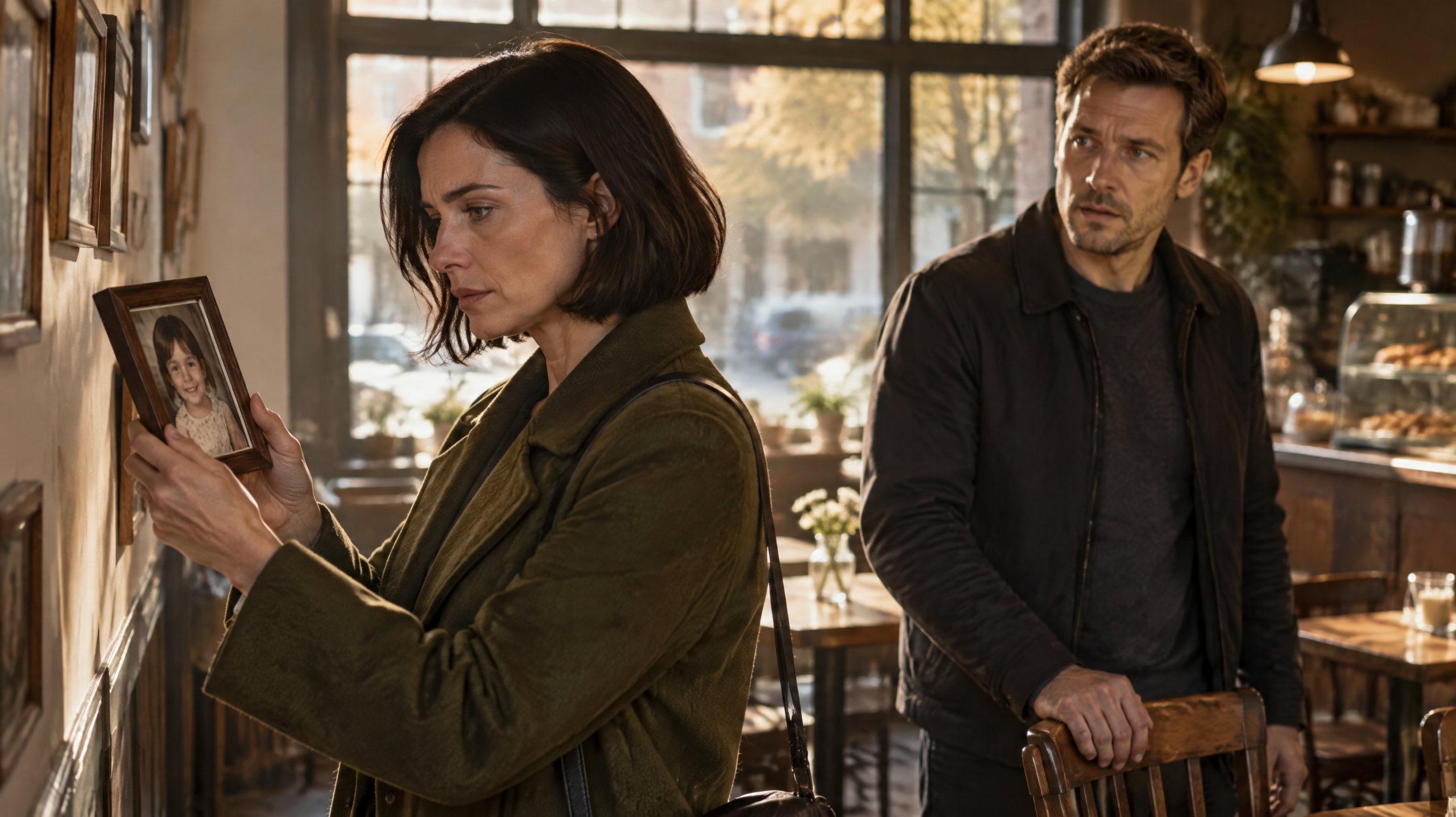
She looked at the photograph again. I waited. I hated waiting, hated that some part of me still wanted to make this easier for her.
Finally she turned toward him.
“Daniel didn’t know Clara had died,” she said. “He never told me he wanted no contact. I told you that so you wouldn’t call him.”
Owen nodded slowly. “He should have been able to come.”
“Yes,” she said.
He put the photograph into its envelope. The guestbook stayed beside his elbow. I didn’t ask to take either one.
Mom found the housing-office number on her phone. At my request she put the call on speaker. I heard her give her name, confirm the reserved senior flat and accept the tenancy. When the person on the line explained the next steps, she wrote them on the back of an envelope from her bag.
Afterward she held the pen without replacing its cap.
“So that’s decided.”
“Yes,” I said.
There was nothing left to check. The digitized obituary had finally connected the two surnames my searches had kept apart. The death entry belonged to Clara. Mom’s name in the guestbook was hers, and the woman beside the coffin was her. Owen had stayed away because she had told him to.
I thanked him before we left. Outside, Mom asked whether I wanted a lift. I said I would walk for a while.
Three weeks later, I helped carry her kitchen boxes into the senior flat. It was affordable on her own income, just as it had been when she first reserved it. By late afternoon her bed was assembled and her kettle was working. I paid the removal bill. I wasn’t taking over her rent or household expenses.
She stood beside a box of plates while I put on my coat.
“Will you come on Sunday?”
“No. I need six months without direct contact. No visits or calls or messages.”
“Six months, and then we start again?”
“I’m not promising that.”
She pressed the flaps of the box flat with both hands. I wanted to hug her. I also wanted to get outside before I agreed to something I couldn’t bear. I left without hugging her.
The following Saturday, Owen took me to Clara’s grave. I carried flowers in damp paper. He showed me where she was buried, then waited a few steps away while I crouched beside the stone.
Her dates were there under the surname I hadn’t known to search. Nineteen years old. I was thirty-seven, with sore knees from carrying my mother’s boxes.
I had imagined finding Clara in so many ordinary places. Behind a shop counter. Across a café table. Standing in a doorway, deciding whether to invite me in. Sometimes she was pleased to see me. Sometimes she wasn’t.
None of those meetings had happened. Even if she had lived, we might never have become anything to each other again. She could have heard my name and declined the call. I knew that. It still hurt to give up the imagined conversation.
“I wish I’d known,” I said.
Owen came closer. “Me too.”
I cried with him standing beside me. I was mourning Clara, and I was mourning the years when I could have known where to put the flowers. I should have been allowed to come here at nineteen.
I unwrapped the stems and lowered them into the grave’s flower holder. One caught against the rim. I lifted the bunch, eased it in again, and turned the flowers toward her name.