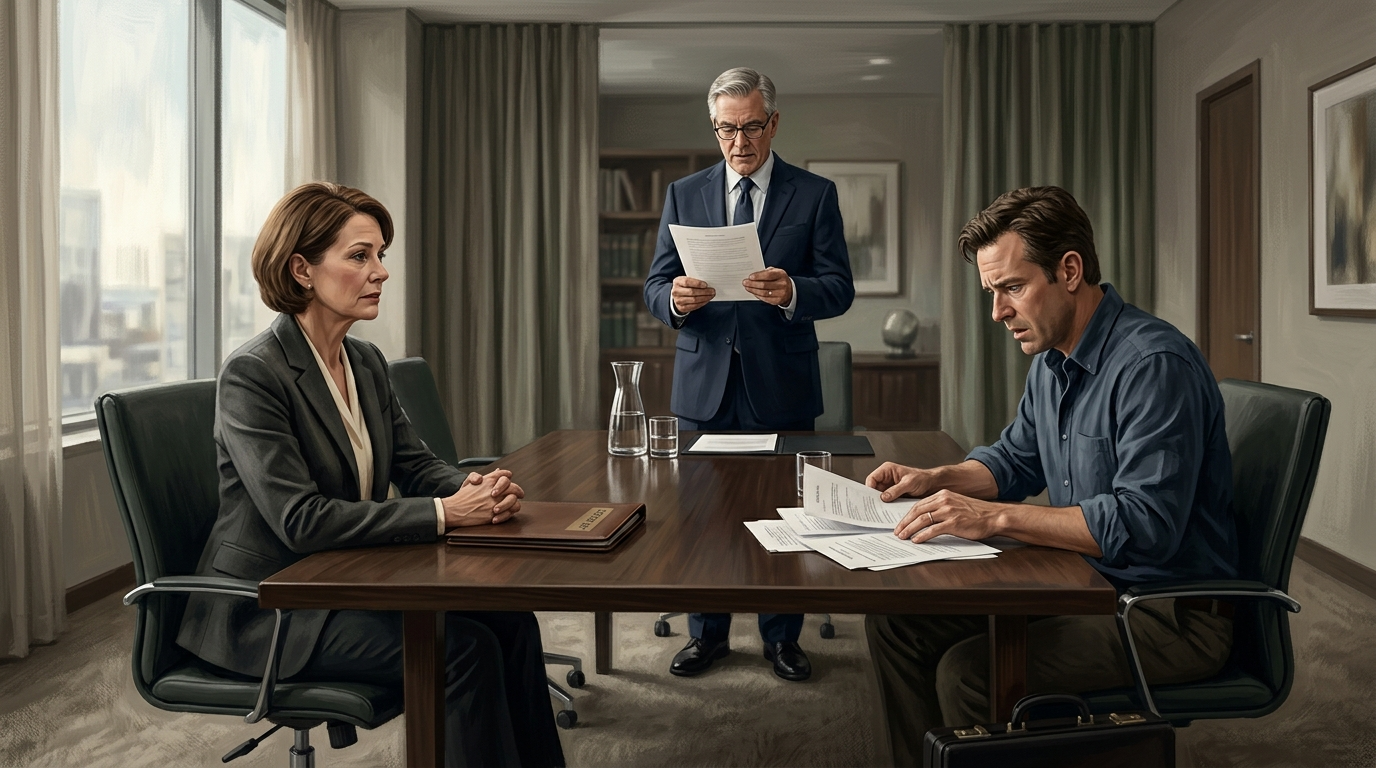

At the rehearsal dinner, my future mother-in-law moved my name card to the overflow table, and nobody said a word about it for the first hour.
That was the part that got to me. Not the card itself — the fact that forty people watched her swap it and decided it was normal.
My name was on the tag at table nine, wedged between the DJ’s equipment and a stack of gift bags. Kara was at the head table, one empty seat to her left, where Barbara had placed a calligraphy card that read Reserved — Bridal Party.
Three weeks before our wedding, and I wasn’t part of the bridal party. I was the groom. I was also, as it turned out, the only one paying for the room we were all standing in.
My name is Evan Hale. I grew up in a two-bedroom house on the edge of town where my father taught me three things: how to change a tire, how to keep a promise, and how to read a contract before you sign it. Dad died eighteen months ago. He left me his truck, a few tools, and a life insurance payout I told myself I’d never touch except for something that mattered.
Kara was something that mattered. So when we got engaged, I put that money toward the wedding. Venue, catering, the bar, the flowers, the string quartet Barbara insisted on because “her daughter deserved real music.” I paid every deposit. I signed every contract. My name was on every line, and Barbara knew it — she just preferred to pretend otherwise.
“Evan, don’t make this a thing,” Kara whispered when I showed her the card at the head table. She was wearing the soft pink dress she’d picked for the dinner, and she looked exhausted in the way that had nothing to do with sleep. “It’s one dinner. One table. Please. She’s just nervous about the big day.”
“This is the fifth time this month she’s erased me,” I said. “She changed the guest list. She moved our first dance to after the cake. She told the florist I wasn’t allowed to have input on the flowers.”
“And I told her to stop,” Kara said. “I told her, Evan. Every time.”
“And every time, she does it again.”
Kara looked at the floor. “What do you want me to do? Uninvite my mother from my own wedding?”
I wanted to say yes. I wanted to say your mother is treating me like a guest at my own wedding, and you keep letting her. But I’d learned that saying it out loud turned me into the bad guy, so I said nothing and sat down at table nine with the DJ’s spare cables.
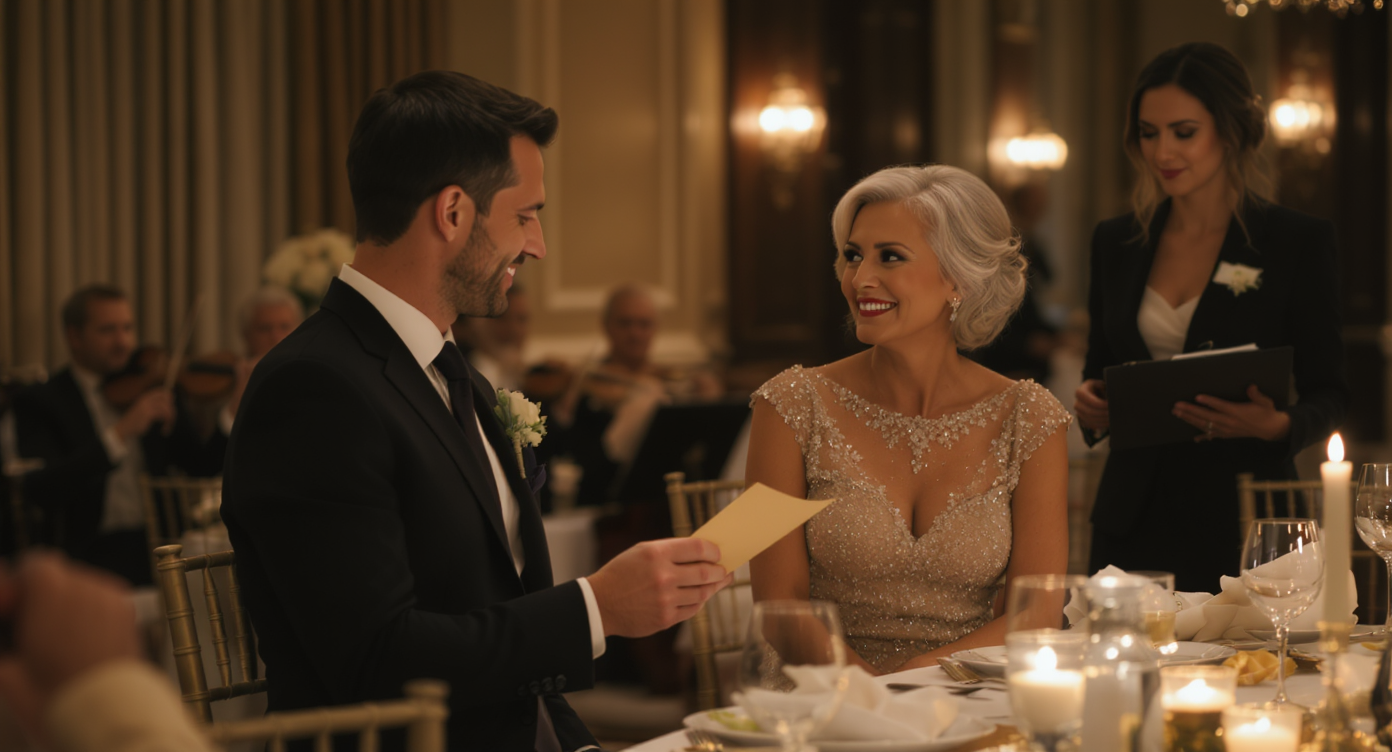
Barbara gave her toast at eight. She stood at the microphone in a champagne-colored dress, glass raised, and thanked “everyone who made this night possible.” Then she looked straight at me and said, “And of course, to my family, who has always been there for my daughter. Some people only show up when there’s something to gain. Real family shows up before anyone asks.”
The room clapped. Kara clapped. I sat at table nine and watched my future mother-in-law accept credit for a wedding she hadn’t paid a cent toward.
I didn’t say anything. That was the thing — I never said anything. I was raised to be polite, to keep the peace, to let the other person have the last word if it cost less than fighting. And for a year, that had cost me a lot more than I wanted to admit.
The venue manager found me during dessert. Her name was Rina, and she’d been the one to hand me the contract six months ago, back when I’d sat in her office and asked if it was possible to book a wedding on a construction worker’s schedule. She held out a manila envelope.
“Mr. Hale, you left this at check-in,” she said. “The final invoice, with your receipt. And the coordinator wants to confirm the bar tab is still on the same card for tomorrow.”
I took the envelope. “Same card. Paid in full.”
Barbara materialized at my elbow before I could put it away. Her smile didn’t reach her eyes. “Well, we can take care of that from here, Rina. My family handles the wedding finances. Evan doesn’t need to worry about any of that.”
Rina looked between us. She was a professional, so she chose her words carefully. “It’s already taken care of, ma’am. Mr. Hale paid the venue, catering, and bar in full three weeks ago. I’ve got the receipt right here.”
The room went quiet. Not the polite kind of quiet. The kind where fifty forks stop moving at the same time.
Barbara’s smile didn’t break — it just froze. “I’m sorry?”
“Mr. Hale,” Rina said again, patient as a teacher, “paid everything. He signed every contract. He’s the account holder on file.”
I stood up. I didn’t raise my voice, because I’d learned from a man who never had to yell to be heard.
“The seating chart says I’m at table nine,” I said. “The invoice says I’m the one who paid for the room. One of those things is a fact.”
I set the envelope on the head table, right next to the calligraphy card that said Reserved — Bridal Party.
“I guess I just want to know which one you trust,” I said to Barbara. “Because I trust the one with my name on it.”
Kara was looking at me like she’d never seen me before. Barbara was turning the color of the centerpiece. Someone at table two laughed, too loud, and tried to cover it with a cough.
“That was not appropriate,” Barbara said, her voice thin. “This is a family dinner. This is my daughter’s dinner.”
“No,” I said. “It’s mine. I paid for it. And tomorrow, I’m the one marrying your daughter. You can either treat me like the groom, or you can keep pretending I’m a guest — but you don’t get to do both.”
I didn’t slam anything. I didn’t storm out. I picked up my jacket, nodded at Rina, and walked out to the parking lot, where I stood by my father’s truck and waited for Kara to decide who she was marrying.
It took her eleven minutes.
She came out without her mother, sat down on the tailgate next to me, and said, “She’s been paying for my whole life. I thought… I thought I owed her. I didn’t realize she was making you pay for it too.”
“I didn’t want to make you choose,” I said. “I just wanted to stop being the one who disappears.”
We got married the next day, at the venue I’d paid for, with the string quartet Barbara had insisted on. She sat in the front row and didn’t speak to me for the entire reception. I considered that a win.
It’s been two years now. Barbara still tells people I “humiliated her in front of the whole family.” Maybe I did. Maybe she deserved it, or maybe I should have pulled her aside and done it privately, like a man who knows how to read a room instead of a contract.
But here’s what I know: I never asked anyone to choose between me and their family. I asked one woman to choose between her mother’s version of me and the man who actually showed up. She chose right.
Some people say a wedding is about the bride. Some say it’s about the families. I think it’s about the two people standing at the front, and everyone else is just furniture until they learn otherwise.
Would you have let the toast stand, or spoken up the way I did?