I knew the exact moment Julian stopped pretending our house was ours.
He stood at the kitchen island with one hand wrapped around a coffee mug, staring at me as if he had rehearsed the sentence and was waiting for the right place to insert it.
“I’m selling the house,” he said.
For a few seconds, I heard only the refrigerator humming behind me.
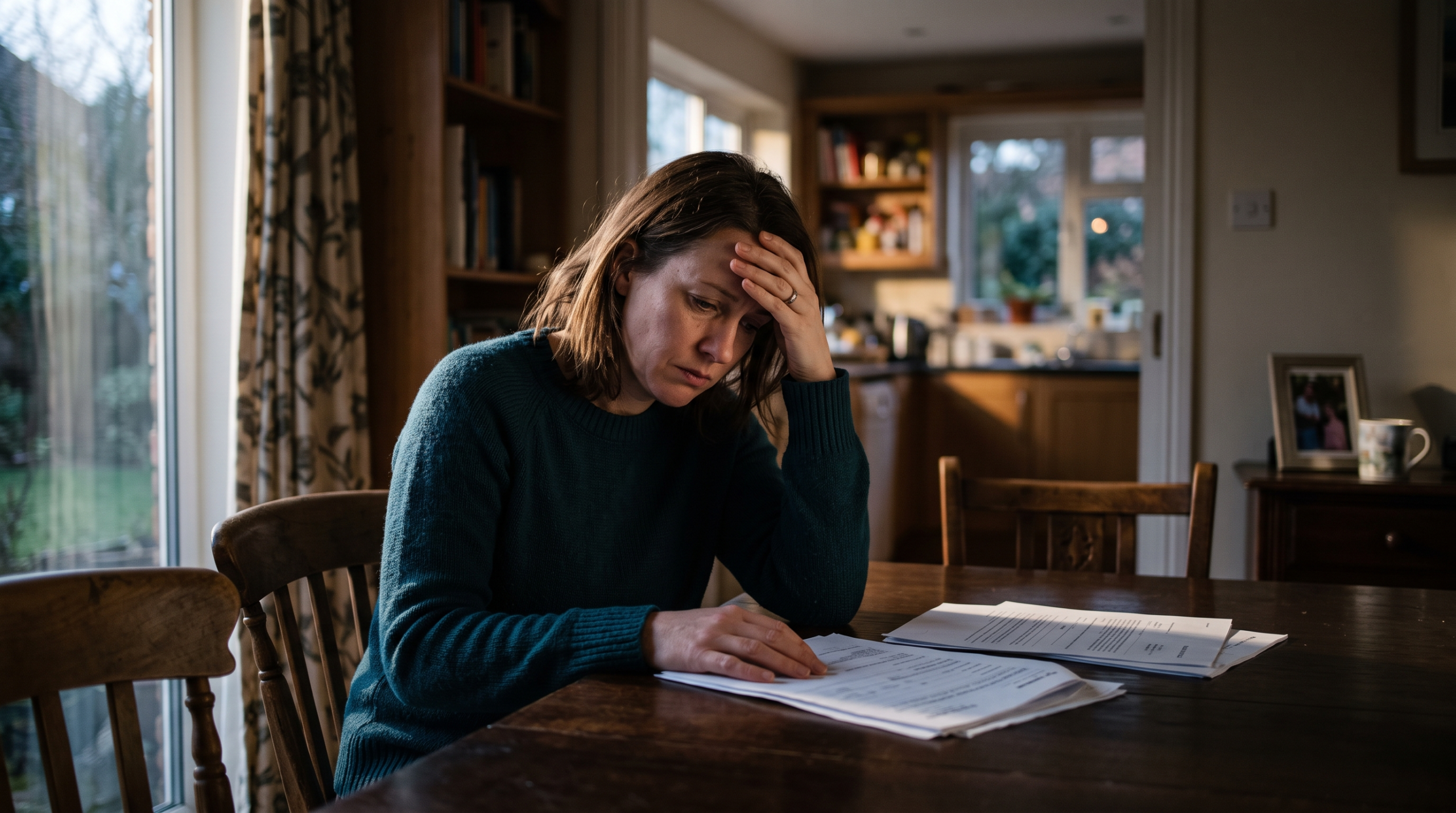
The house had been quiet that morning. Rain tapped against the windows, and the gray light made the kitchen look unfinished, like a room in a listing photograph before the furniture arrived. I had been sorting the mail into piles when Julian walked in wearing his work shirt, though it was barely past eight.
I looked down at the envelope in my hand, then back at him.
“What do you mean, selling the house?”
He set his mug down carefully. Too carefully.
“I mean I found a private buyer. He’s ready to move quickly.”
The word privately lodged in my mind. I had heard Julian talk about selling before, usually during arguments about money or repairs, but always in the vague, exhausted way people mention moving to another city or starting over. Never with a buyer. Never with a timeline.
“We haven’t listed it,” I said.
“We don’t need to list it.”
“Since when?”
Julian pulled out a chair and sat. He looked composed, almost bored, while my fingers tightened around the envelope until the paper creased.
“Since a buyer made an offer I can’t ignore.”
I laughed once, because the alternative was to believe him. “An offer on a house nobody knows is for sale?”
“He knows.”
“Who?”
“A private buyer.”
“That isn’t a name.”
Julian’s jaw shifted. It was a small movement, but I had been married to him for five years. I knew the signs that meant he was irritated, and the ones that meant he had already decided the conversation was over.
“His name is Marcus,” he said. “He’s seen the house before. He wants it as-is, and he doesn’t want to go through a real estate agent.”
I looked around the kitchen. At the pendant lights we had argued over. At the small scratch in the hardwood beside the island, left by the moving company when we first came here. At the blue ceramic bowl on the counter, the one I had bought with money from my first bonus after we married.
Four years earlier, I had transferred fifty thousand dollars into the down payment account. I still remembered the bank teller sliding the receipt toward me and saying I should keep it somewhere safe. I had kept the receipt in the home safe, along with the original closing papers Julian had handled alone.
At the time, I had thought his taking charge was a kindness.
He had told me there were too many forms, too many signatures, too many chances for a mistake. I had been working late and grateful not to spend another weekend buried in paperwork. He had promised he would bring everything home after closing.
I had believed him.
Now he leaned toward me across the island.
“We need to pack,” he said.
I blinked. “We?”
“Yes, we.”
“You said you’re selling the house. You didn’t say we were leaving this morning.”
“The buyer wants possession soon.”
“How soon?”
“Within a few days.”
The envelope slipped from my hand and landed on the counter. “A few days?”
“Clara, don’t make this harder than it has to be.”
I pushed back from the island. “You’re telling me a stranger is buying our home, and I’m supposed to clear out in a few days because you already promised him possession?”
“Our home,” he repeated, but without warmth. “That’s exactly why I’m telling you now.”
“No. You’re telling me now because you’ve already made the decision.”
“I’m handling a difficult situation.”
“What difficult situation?”
His eyes flicked away.
That was the first thing that frightened me—not the sale, not the rush, but the pause before his answer.
“There are financial reasons,” he said.
“What financial reasons?”
“I don’t want to discuss them in the kitchen.”
“We are in the kitchen because you chose to tell me here.”
Julian stood and took his mug to the sink. He rinsed it, though there was barely any coffee left. Water ran over the ceramic while I watched his shoulders rise and fall.
“I’ll explain everything after Marcus comes by,” he said.
I felt a cold line form beneath my ribs. “He’s coming here?”
“To see the house.”
“When?”
“Today.”
The water stopped. Julian placed the mug upside down beside the sink.
“Be civil,” he said.
I stared at him. “You’re bringing a stranger into our house to inspect it, and your instruction is for me to be civil?”
“He’s not a stranger. He’s the buyer.”
Then Julian walked upstairs, leaving me alone with the rain and the envelope I had crushed in my hand.
I wanted to follow him. I wanted to demand bank statements, contracts, names, dates—anything solid enough to hold on to. Instead, I stood there listening to his footsteps cross the ceiling above me.
A few minutes later, my phone buzzed.
The message was from Julian.
Please start with the spare room. Marcus will be here at eleven.
I read it twice.
Then I looked toward the staircase and realized he had not asked me to pack.
He had ordered me to disappear.
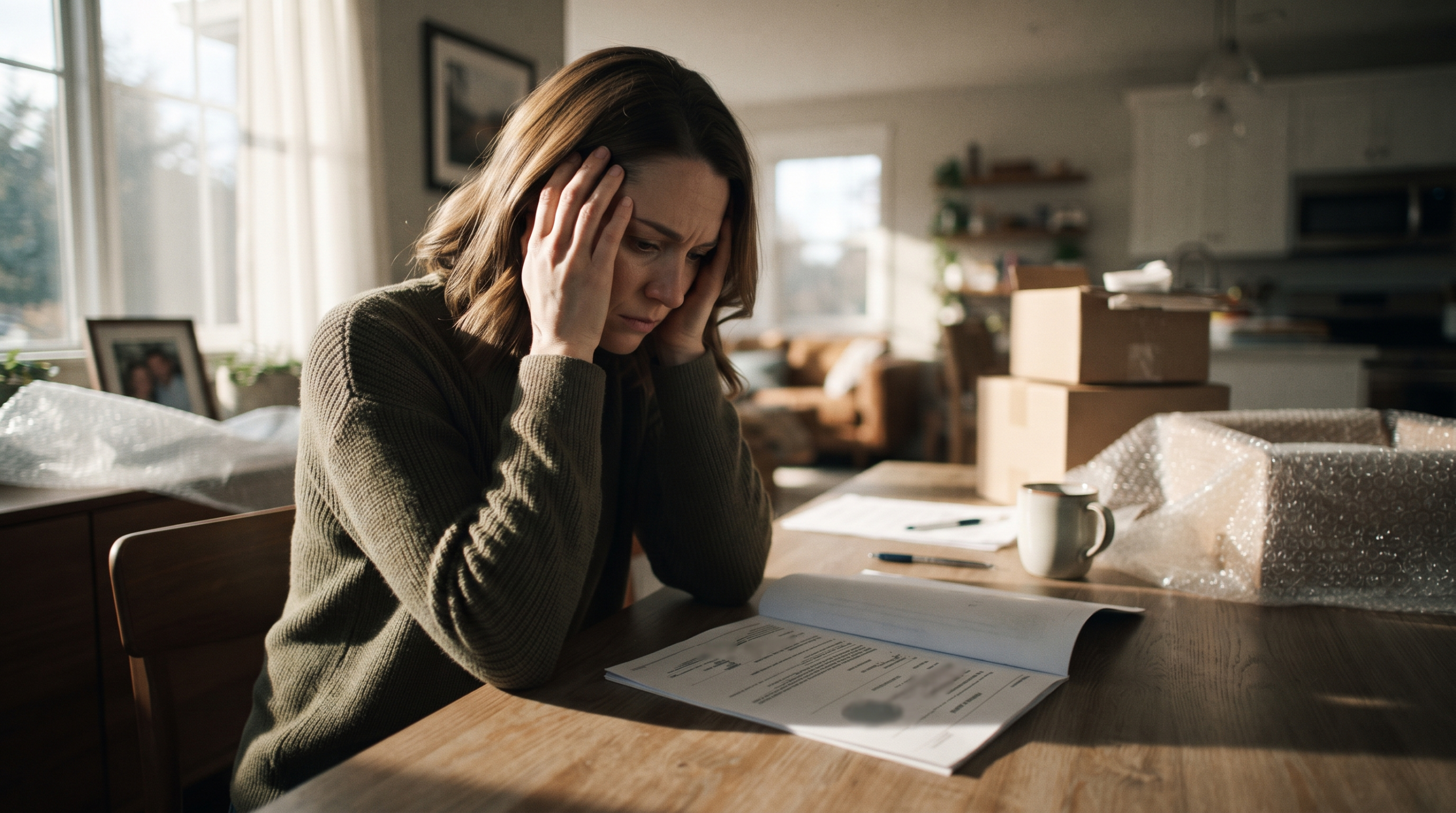
By eleven, the spare room was stacked with boxes.
I had no idea what to take because Julian had given me no destination. He had not said where we would live, whether we were buying another place, or even whether this sale involved both of us. I put books into one box, opened it again, and took half of them out. I folded winter sweaters into a suitcase, then pulled them back out because the act of packing made the sale feel real.
When the doorbell rang, I was standing in the hallway with a roll of tape in one hand.
Julian came down the stairs quickly.
“That’ll be Marcus,” he said.
He smoothed the front of his shirt, checked his reflection in the dark glass of the entryway cabinet, and opened the door before the bell could ring again.
The man standing outside was taller than Julian, broad through the shoulders, and dressed in a charcoal coat that looked expensive without being flashy. Rain glistened on his hair. He held no folder, no measuring tape, no conventional buyer’s packet.
He looked past Julian into the house.
His gaze landed on me.
Julian stepped aside. “Marcus, this is my wife, Clara.”
Marcus’s expression changed almost imperceptibly. He extended his hand.
“Nice to meet you,” he said.
I shook it. His palm was dry and firm.
“Likewise.”
Julian closed the door behind him and moved between us with an eagerness that made the hallway feel narrower.
“Clara can show you around,” he said. “I have to take a call.”
I turned toward him. “You’re leaving?”
“It’ll only take a minute.”
“You said you’d explain the sale.”
“I will.”
He pulled his phone from his pocket and walked toward the living room. It did not ring. He merely held it to his ear as though someone had called.
Marcus watched him go.
I folded my arms. “Would you like to start upstairs?”
“That’s fine.”
I led him through the house while Julian spoke silently into his phone behind us.
The tour felt obscene. I showed Marcus the living room with its high windows and the fireplace we had never managed to use properly. I pointed out the pantry, the laundry room, the guest bathroom with the loose faucet Julian had promised to fix. Marcus looked carefully at everything, but he did not behave like a man discovering a potential home.
He checked the walls.
He checked the doors.
He checked the locks.
At the bottom of the staircase, he stopped and glanced toward the living room.
“Does Julian usually handle the property matters?” he asked.
The question was mild enough that I almost missed its weight.
“He handled the closing,” I said. “We both paid for the house, but he took care of the paperwork.”
Marcus nodded once.
“Do you have a copy of the deed?”
“I assume so.”
I heard Julian’s voice from the living room, low and urgent. I couldn’t make out the words.
Marcus looked back at me. “You assume so?”
I felt defensive, though I couldn’t have said why. “The original documents are in the safe.”
“That’s good.”
“Why?”
He turned toward the front windows. “It’s easier when everyone named on the property is available to sign.”
I followed his gaze. Rain crawled down the glass in thin, crooked lines.
“What do you mean?”
Marcus seemed to realize he had said something he had not intended to say. His mouth tightened briefly.
“I mean the closing should be straightforward.”
“Should be?”
Behind us, Julian ended his pretend call.
“Everything all right?” he asked.
Marcus turned. “I was just asking Clara about the deed.”
Julian’s face hardened for less than a second, then smoothed itself.
“What about it?”
Marcus looked at me, not Julian.
“Why isn’t Clara’s name on the deed?”
The hallway went silent.
I heard a drop of water fall from Marcus’s coat onto the tile.
I looked at Julian. He had stopped three steps away, his phone still in his hand.
“What did you say?” I asked.
Marcus frowned. “I asked why your name isn’t on the deed.”
My heart began beating so hard that the sound seemed to fill the house.
I had been there when we bought the property. I had signed the loan documents Julian put in front of me. I had watched the closing agent slide papers across the table. I had given Julian the down payment money. I had trusted him when he said he would take care of the rest.
But I had never seen the deed.
Julian moved first.
He gave a short, dismissive laugh and waved one hand.
“It’s a clerical error,” he said.
Marcus did not laugh.
I turned fully toward my husband. “What is?”
“My name is on the deed,” Julian said. “Yours was left off by mistake.”
“By whose mistake?”
“The title company’s.”
“Why didn’t you tell me?”
“I didn’t know until recently.”
Marcus’s eyes narrowed. “You didn’t know?”
Julian shot him a warning look. “It’s harmless. I’ll have it corrected.”
The words entered me slowly, one by one.
Harmless.
Corrected.
As if my name had been misplaced on a shipping label. As if four years of believing I owned the walls around me could be repaired with a form and a pen.
I looked at Marcus. “You knew my name wasn’t on it before today?”
He glanced at Julian.
That glance lasted only a moment, but I saw it.
“I was reviewing the preliminary paperwork,” Marcus said. “I assumed you were aware.”
“I wasn’t.”
Julian stepped closer. “Clara, stop making a scene.”
“A scene?” I repeated.
“Marcus is here to look at the house.”
“He just told me I’m not on the deed.”
“And I told you it’s an error.”
“You said you didn’t know about it until recently.”
“Recently is not the same as secretly.”
Marcus cleared his throat. “Perhaps I should give you both a minute.”
“No,” I said.
Julian’s eyes flashed. “Clara.”
I ignored him. I could not stop looking at Marcus.
“What happens if it isn’t corrected?”
Marcus’s expression became guarded. “That’s a legal question.”
“Then why are you buying a house with a legal question attached to it?”
Julian moved between us again. “There is no question. I’ll handle the correction before closing.”
Marcus looked down at his watch.
“I need the revised documents before I proceed,” he said.
“Of course,” Julian replied.
The speed of his answer made me turn toward him.
He had not asked Marcus to wait. He had not asked what documents were needed. He had simply agreed, as if this problem already had a solution prepared.
Marcus walked toward the door.
At the threshold, he paused and looked at me.
“I’m sorry,” he said.
“For what?”
He hesitated. “For assuming.”
Then he left.
Julian shut the door with more force than necessary.
For several seconds, neither of us spoke.
The house seemed altered by the question. The walls were the same, the rain still fell, and the boxes remained open on the floor upstairs. But something invisible had shifted beneath everything I knew.
Julian turned toward me.
“You embarrassed me.”
I stared at him. “You lied to me.”
“I didn’t lie.”
“You let me believe I owned this house.”
“You contributed to the purchase. That doesn’t mean you understand title paperwork.”
The sentence struck harder than shouting would have.
“I gave you fifty thousand dollars.”
“And you got a home to live in.”
“I got a home I thought belonged to me.”
Julian rubbed his forehead. “This is exactly why I handled the closing. You panic when you don’t understand something.”
“I understand that my name is missing.”
“It’s a clerical error.”
“You keep saying that.”
“Because it’s true.”
“Then show me the deed.”
He went still.
That was the second pause that frightened me.
“What?”
“The deed,” I said. “Show it to me.”
“It’s with the closing documents.”
“Where are they?”
“In the safe.”
“Then open the safe.”
Julian’s expression closed. “Not right now.”
“Why not?”
“Because I have a buyer waiting and a sale to organize.”
“You have a buyer who says my name is missing from the deed.”
“I told you I’ll fix it.”
“Open the safe.”
He stepped close enough that I could smell coffee on his breath.
“You’re acting irrationally.”
“I’m asking to see a document concerning the house I paid for.”
“You don’t get to interrogate me because some buyer made an uninformed comment.”
“Was he uninformed?”
Julian’s mouth tightened.
I felt the question hang between us.
Then he walked past me toward the stairs.
“I’m going to call the title company,” he said. “Pack your things.”
“Julian.”
He kept walking.
“Pack your things,” he repeated without turning around. “We don’t have time for this.”
I stood in the entryway until I heard the bedroom door close upstairs.
Only then did I realize my hands were shaking.
The safe was hidden behind a framed photograph in the study, beneath a picture of Julian and me standing in front of the house on the day we moved in. I had taken that photograph. Julian was smiling at the camera, one arm around my shoulders, while I held the keys in both hands.
I remembered how proud I had felt.
I remembered telling him, “We did this.”
Now I lifted the frame from the wall and set it face down on the desk.
The safe was built into the wall behind it. I entered the combination I had always used, the anniversary of the day Julian proposed. The keypad flashed green.
The lock clicked.
I pulled the door open.
The safe was empty.
Not untidy. Not partially cleared.
Empty.
The shelf where the closing folder should have been held nothing but a thin film of dust. I ran my fingers across it and came away with a gray line on my skin.
I checked the bottom. Then the back. Then the narrow space around the hinges, as if the documents might have slipped into some hidden compartment.
There was no folder.
No deed.
No closing statement.
No copies of the papers I had signed.
My breathing became shallow.
I crouched in front of the safe and pressed my palm against the cold metal. Somewhere upstairs, Julian moved across the bedroom. A drawer opened. Something heavy struck the floor.
I looked at the empty shelf again.
Then I heard his footsteps stop directly above me.
Then I heard his footsteps stop directly above me.
For several seconds, neither of us moved.
I stayed crouched in front of the open safe, one hand braced against the floor, while the ceiling creaked beneath his weight. He knew where I was. He knew what I had found.
The footsteps began again.
They crossed the bedroom. A drawer slammed. Then another.
I closed the safe and replaced the framed photograph, but I did not put it back straight. I left one corner tilted, a small marker that the room had been disturbed. If Julian had removed the papers, I wanted to know whether he returned for anything else.
When I reached the hallway, he was coming down the stairs with a garment bag over one arm.
His eyes went immediately to the crooked photograph behind me.
“What were you doing in the study?” he asked.
“I was looking for the closing documents.”
“I told you they’re with the title company.”
“You said they were in the safe.”
Julian stopped on the last step. “I said they should be in the safe.”
“No. You said they were.”
He set the garment bag over the banister. “Clara, this is exactly what I’m talking about. You’re turning a simple sale into a confrontation.”
“A simple sale that you announced without warning.”
“A private buyer. A quick closing. Those things happen.”
“Not when the owner’s wife doesn’t know her name is missing from the deed.”
His face hardened at the word wife, as though I had used it to corner him.
“I already explained that.”
“You called it a clerical error.”
“And I’ll have it corrected.”
“By whom?”
“The title company.”
“Which title company?”
Julian looked toward the front window. Outside, the afternoon light had faded to a dull blue, and the house across the street had already switched on its porch lamp.
“I don’t have time to stand here answering questions.”
“You have time to tell me where the documents are.”
He snatched the garment bag from the banister. “You need to pack.”
“I’m not packing until I understand what you’ve done.”
His expression changed then. Not guilt. Not surprise.
Anger.
“You contributed money,” he said. “You didn’t buy the entire house.”
“I contributed fifty thousand dollars to the down payment.”
“And I handled the closing.”
“You handled it alone.”
“Because you were working.”
“Because you told me I didn’t need to be there.”
“That was five years ago.”
“So show me the paperwork.”
His jaw flexed. “I’m not having this argument again.”
“You’re not having any argument. You’re refusing to answer.”
He came down the last step and moved toward me. I held my ground, though every instinct told me to step aside.
“I am trying to protect both of us,” he said.
“From what?”
“From a bad financial decision.”
“Selling our home is your idea.”
“It’s a necessary decision.”
“Why?”
He glanced at the front door, as if the answer might be standing on the other side of it.
“Because the buyer is ready now.”
“That isn’t a reason.”
“It’s the reason you need.”
He picked up his car keys from the console. The metal ring rattled in his fist.
“I’ll send you the title company’s contact information,” he said. “Stop digging through things you don’t understand.”
Then he opened the door and left.
I waited until his car disappeared at the end of the street. After that, I took the photograph off the wall again and looked at the safe.
The dust on the shelf was undisturbed except for the line my finger had made.
The next morning, I called Sarah.
She answered on the fourth ring, her voice rough with sleep. “Please tell me this is not about Julian asking you to move furniture again.”
“He says my name is missing from the deed.”
The silence on the other end sharpened.
“What exactly did the buyer say?”
“That he was surprised. He asked why my name wasn’t on the property deed.”
“And what did Julian say?”
“That it was a clerical error.”
“Did you see the deed?”
“No. I looked in the safe for the closing documents, and the folder was gone.”
Sarah’s voice changed completely. The sleep disappeared.
“Don’t ask Julian for anything else,” she said.
“I already did.”
“Then don’t tell him what you’re going to do next.”
“What should I do?”
“Go to the county clerk’s office. Take identification. Ask for the recorded deed and every recorded lien or mortgage attached to the property.”
My fingers tightened around the phone. “Would they give that to me if my name isn’t on the deed?”
“The records are public. You don’t need to be an owner to request them.”
That answer frightened me more than it reassured me.
Sarah continued, “Take pictures of everything. Don’t rely on memory. Don’t sign anything Julian gives you. Not even if he says it’s routine.”
“He hasn’t asked me to sign anything.”
“Yet.”
I looked toward the front hall. Julian’s shoes were still beside the door, though he had left before sunrise.
“Can you come with me?”
“I have a hearing this morning. I’ll meet you afterward. Go now, Clara.”
The county clerk’s office occupied an old stone building downtown, with narrow windows and brass lettering above the entrance. I had passed it hundreds of times without once wondering what was stored inside.
At the records counter, a clerk with silver-framed glasses asked for the property address.
I gave it to her.
She typed slowly, then looked at the screen.
“Are you the owner?”
“I’m married to the owner.”
“That wasn’t my question.”
My throat tightened. “I need a copy of the recorded deed.”
She turned the monitor slightly away from me. “You can request the document. There’s a copying fee.”
I handed over my card.
While she processed the payment, I watched a printer on the counter spit out several pages. The machine made a soft mechanical chirp with each sheet, almost cheerful.
The clerk assembled the papers and slid them beneath the glass.
“Here you are.”
I carried them to a table near the wall. The first page bore the property address. Beneath it were the names of the grantor and grantee.
I read the grantee line once.
Then again.
Only Julian’s name appeared.
Not mine.
I flipped through the remaining pages, searching for an attached schedule, an omitted spouse, a second page correcting the first. There was nothing.
The clerk had followed me with her eyes. When I looked up, she was standing behind the counter with her hands folded.
“Is this the complete deed?” I asked.
“Yes.”
“My name isn’t anywhere on it.”
“No.”
“Could that be an error?”
She glanced at the document. “The recorded deed is the official ownership record.”
“That doesn’t answer my question.”
“It means the record lists the owner.”
“Julian is my husband.”
“I understand.”
“We bought the house together.”
“I can only tell you what was recorded.”
The words landed with a dull finality.
I returned to the counter. “Can I see everything recorded against the property?”
The clerk asked me to wait while she searched again.
This time, her fingers moved faster.
She printed a second set of pages and placed them beside the deed. At first, I thought the papers were duplicates. Then I saw the date.
Three months earlier.
The clerk pointed to the entry without touching it. “This is a mortgage instrument.”
I stared at the amount listed in the margin.
It was massive. Large enough to swallow the savings account, the money I had contributed to the down payment, and every comfortable assumption I had made about our life together.
“What is this?” I whispered.
“A second mortgage,” the clerk said.
I looked from the paper to her face. “There was already a mortgage when we bought the house.”
“This is recorded as an additional lien.”
“Who authorized it?”
“The recorded owner.”
“Julian.”
She nodded once.
My vision blurred around the edges. I placed both hands flat on the counter.
“Would I have had to sign this?”
“That depends on the lender and the circumstances.”
“Can you tell me whether I signed it?”
She checked the attached pages. “Your name does not appear as a borrower.”
I heard the sentence, but my mind refused to make room for it.
Julian had borrowed against the house without telling me.
He had done it three months ago, while eating breakfast across from me, while asking whether I wanted to repaint the spare room, while kissing me goodnight as though nothing in our life had changed.
I asked for copies of every page.
The clerk stapled them together and slid them across the counter. The packet felt too thin to carry that much damage.
Outside, I sat on a bench beneath the stone steps and called Sarah.
She answered immediately. “What did you find?”
“The deed lists only Julian.”
Sarah exhaled slowly. “All right.”
“There’s also a second mortgage.”
“How recent?”
“Three months ago.”
“How much?”
I looked down at the copy in my lap. “I don’t know how to say it.”
“Say it anyway.”
I told her.
For several seconds, I heard only the traffic moving along the street.
“Did you sign anything?” she asked.
“No.”
“Are you sure?”
“I would remember signing a mortgage.”
“You need to bring those documents to me.”
“I’m coming now.”
“And Clara?”
“Yes?”
“Do not go home alone if you think he may react badly.”
I looked through the glass doors of the building. My reflection stared back at me, pale and rigid, holding proof that my marriage had been altered without my knowledge.
“I don’t think I know how he’ll react.”
“That is exactly why I’m telling you not to underestimate him.”
When I arrived at Sarah’s office, she was waiting in a conference room with the blinds drawn. She read every page while I sat across from her, watching the muscles move in her jaw.
At last, she placed the documents on the table.
“This mortgage was recorded three months ago,” she said. “The lender’s information is here, but the disbursement details aren’t part of the public filing.”
“So we don’t know where the money went.”
“Not yet.”
“Julian said the house needed to be sold because of a financial decision.”
Sarah looked at me. “He didn’t say the house was already carrying another massive debt?”
“No.”
“Did he tell you he borrowed against it?”
“No.”
She leaned back in her chair and rubbed her forehead.
“What?” I asked.
“I need to investigate the lender and the transfer records. I can’t tell you what this means until I see more.”
“I need to go home.”
“Why?”
“Because he’ll know I’ve been gone.”
“Let him know you went to the county clerk. You are not doing anything illegal by looking at public records.”
“That won’t stop him from saying I am.”
Sarah gathered the papers and placed them in a folder. “Leave these with me.”
“I need copies.”
“You’ll have them.”
“Sarah.”
She met my eyes.
“I don’t want him to know you have the originals,” she said. “If he asks what you found, tell him only that you’re getting legal advice.”
“I don’t want to lie.”
“You are not obligated to make yourself vulnerable just to keep him comfortable.”
When I returned home, Julian was waiting in the kitchen.
His suit jacket was draped over a chair, and a white envelope lay beside his coffee cup.
He looked at my empty hands.
“Where have you been?”
“Out.”
“With whom?”
“I had errands.”
His eyes narrowed. “What kind of errands?”
“County records.”
The change in him was immediate. He did not raise his voice. He did not move.
He simply stopped pretending to be calm.
“Why were you at the county clerk’s office?”
“To get a copy of the deed.”
“You could have asked me.”
“I did ask you.”
“No, you accused me.”
“Your name is the only name on the deed.”
Julian’s hand closed around the coffee cup.
“I told you that was a clerical issue.”
“And there’s a second mortgage.”
The cup struck the counter hard enough to splash coffee over the rim.
“You went looking for that?”
“It was recorded.”
“You had no right to go behind my back.”
“It concerns our home.”
“It concerns an asset in my name.”
The distinction cut deeper than I expected.
I looked at the envelope beside his hand. “What is that?”
He picked it up.
“Something you need to sign.”
“I’m not signing anything until Sarah reviews it.”
His eyes sharpened. “Sarah is not part of this marriage.”
“She’s my lawyer.”
“She’s your friend.”
“She’s both.”
Julian crossed the kitchen and placed the envelope in front of me. “This is a spousal consent form. The title company needs it before closing.”
I did not touch it.
“Why didn’t you mention it before?”
“Because I only received it this morning.”
“Why is it physical?”
“Because that’s how these things are done.”
“What does it consent to?”
“The sale.”
“What else?”
He let out a bitter laugh. “You’re consenting to the transfer of the property. That’s all.”
I picked up the envelope but did not open it. “If my name isn’t on the deed, why do I need to consent?”
“Because we’re married.”
“Then why wasn’t my name included when we bought the house?”
“Clara.”
“Why do you need my signature now?”
His palm struck the counter.
“Because the buyer is ready to close, and you are making this impossible.”
The sound seemed to remain in the kitchen after his hand lifted.
I placed the envelope back on the counter.
“I’m not signing it today.”
“You don’t have a choice.”
“I do.”
“You think refusing to sign gives you control?”
“I think refusing to sign a document I haven’t had reviewed is reasonable.”
He stepped toward me.
“Sign it.”
“No.”
His face reddened. “You are going to cost us this sale.”
“You arranged this sale without telling me.”
“I am trying to save us.”
“From the mortgage you took out?”
His expression flickered.
Only for an instant, but I saw it.
“What mortgage?” he asked.
“The second one.”
“You don’t understand what you’re reading.”
“Then explain it.”
“There is nothing to explain.”
“You borrowed against the house.”
“I handled a temporary financial matter.”
“With what authorization?”
Julian reached for the envelope and shoved it toward me again. “Sign the consent form, and I will deal with everything else.”
“No.”
He grabbed the back of the chair beside me and pulled it aside, making it scrape across the floor.
“Do you want us to lose the house?”
“I want to know why you’re rushing to sell it.”
“Because I said so.”
“That is not an answer.”
His phone began vibrating on the counter.
Julian looked at the screen.
The color drained from his face.
He turned the phone facedown without answering. A moment later, it vibrated again.
I glanced at the envelope between us.
The printed words on the front were plain and cold: Spousal Consent to Sale.
Julian snatched it up.
“You will sign this before the buyer comes back,” he said.
“Who is the buyer?”
He did not answer.
“Julian.”
He shoved the envelope into his jacket pocket.
“I’m going to my mother’s.”
The moment he said it, I felt something shift.
Not in the room.
Inside him.
He had been furious when I mentioned the county records. Now he was afraid of a phone call, and he was running to his mother with a document he wanted me to sign.
As soon as the door closed behind him, I called Sarah.
She answered on the first ring.
“He brought me a spousal consent form,” I said.
“Did you sign it?”
“No.”
“Good. Keep it if you can.”
“He took it.”
“Then write down exactly what it said and everything he told you.”
I told her about the conversation, including the phone call he refused to answer.
When I finished, Sarah was quiet.
“I found the mortgage lender,” she said.
My grip tightened around the phone. “Already?”
“I had a contact pull the recorded transfer history. The funds did not go into a home renovation account or a joint account.”
“Where did they go?”
“First to an account connected to Julian.”
My stomach dropped.
“Then?”
“Then the money was transferred out.”
“To where?”
Sarah hesitated.
“Clara, I need you to stay calm.”
“I am calm.”
“You are not going home alone tonight.”
“Where did the money go?”
“To an account held by Evelyn.”
Julian’s mother.
I sat down slowly at the kitchen table.
“His mother?”
“Yes.”
“Are you sure?”
“I’m looking at the transfer records now. The mortgage proceeds moved directly from Julian’s account to an account in Evelyn’s name.”
The kitchen seemed to contract around me. The unopened envelope was gone, but I could still see the bold lettering as if it were printed across the table.
Spousal Consent to Sale.
Sarah’s voice softened. “I’m going to keep investigating. Don’t confront Evelyn until we know more.”
“She may know why he borrowed the money.”
“She may. That does not mean you should walk into her house without a plan.”
“I need to ask her.”
“Clara—”
“I need to hear what she says.”
Sarah fell silent.
Then she said, “If you speak to her, record the facts in writing immediately afterward. Do not threaten her. Do not tell her what I found. Ask open questions and let her talk.”
I looked toward the window.
At the end of the street, Julian’s car had not returned.
“I’ll be careful,” I said.
But even as I said it, I knew I was going to Evelyn’s house.
I drove to Evelyn’s house with Sarah’s instructions repeating in my head.
Ask open questions.
Do not threaten her.
Let her talk.
The porch light was already on when I pulled up. Julian’s car sat crooked in the driveway, one tire nearly touching the flower bed. I left my keys in my purse and walked to the front door.
Evelyn opened it before I knocked.
Her face changed when she saw me.
“Clara,” she said. “What are you doing here?”
“I need to speak with you.”
She glanced over my shoulder toward the street. “Is Julian with you?”
“No.”
For one second, relief crossed her face.
That frightened me more than anger would have.
She stepped aside, and I entered the house. The smell of coffee and furniture polish surrounded me, familiar from holidays and Sunday dinners. Julian had grown up in this room. His childhood photographs lined the mantel, his smile frozen in every frame as if he had never learned to lie.
Evelyn closed the door.
“Is something wrong?” she asked.
“I came to ask about the second mortgage on our house.”
Her hands tightened around the edge of her cardigan.
“What second mortgage?”
“Sarah found the transfer records.”
I had not told Evelyn what Sarah had found. I watched the words land between us.
Evelyn looked toward the hallway.
“What transfer records?”
“The mortgage money.”
“I don’t know anything about mortgage money.”
“The funds went from Julian’s account to an account in your name.”
The silence that followed had weight.
Evelyn’s mouth opened, then closed.
I waited.
She moved to the sitting room and lowered herself onto the sofa. Her fingers began working at a loose thread near her sleeve.
“Julian said it was temporary,” she murmured.
I remained standing. “What was temporary?”
She looked up at me, startled by the sound of her own answer.
“I thought he told you.”
“What did he tell you?”
“That he would replace it after the sale.”
The house seemed to tilt beneath me.
“Replace what?”
Evelyn’s eyes filled with sudden panic. “I shouldn’t have said that.”
“Please answer me.”
“I can’t get involved.”
“You are already involved. Money borrowed against my home was sent to you.”
“He said you knew.”
“Did he?”
She looked down.
“No,” she whispered.
I felt my hands begin to shake, so I folded them across my stomach.
“Why did he need the money?”
Evelyn rose abruptly and crossed to the window. Outside, the street was empty except for my car. She pulled the curtain aside, then let it fall.
“He promised it was the last time.”
“The last time for what?”
“He has been under pressure.”
“What kind of pressure?”
She pressed both palms against the glass.
“Julian has always been impulsive.”
“That is not an answer.”
“He thought he could win it back.”
The words were so quiet I almost missed them.
I stared at her back.
“Win what back?”
Evelyn turned around.
“Money.”
“What money?”
She shook her head. “I don’t know all the details.”
“But you know he was trying to win it back.”
“He said he had a system.”
A cold sensation spread across my shoulders.
“Where was he gambling?”
“I never saw him gamble.”
“Then how do you know?”
“Because of the calls. Because of the envelopes. Because every time he came here, he asked me for money and swore it was the final debt.”
My breath caught.
“Debt?”
Evelyn covered her mouth.
It was the way she did it that made the confession complete. Not denial. Not confusion. Regret.
“How much does he owe?” I asked.
“I don’t know.”
“You said he was under pressure.”
“I said I don’t know.”
“Evelyn.”
“He told me the house would settle everything.”
The words struck harder than anything else.
I stepped closer. “The house?”
“He said the private buyer would pay quickly. No bank delays. No questions. He said after the closing, everything would be finished.”
“Everything?”
She sank back onto the sofa.
“He said people were threatening him.”
My skin went cold.
“Who was threatening him?”
“I don’t know their names.”
“You must know something.”
“He called them men. He said they were done waiting.”
I thought of Marcus standing in my kitchen, studying me with a patient, almost amused expression. I thought of Julian rushing me toward a sale no one had advertised, no appraisal had supported, no ordinary buyer had requested.
“Did Julian tell you how much he owed?”
Evelyn’s eyes moved to the photographs on the mantel.
“He said it was more than he could ever earn.”
The room blurred.
“How much?”
“He never gave me one number.”
“But you knew it was massive.”
She began to cry then, quietly, as if she had been holding the tears back for months.
“He borrowed from me first. Then he borrowed against the house. I told him to stop. I told him you would find out.”
“Why did you accept the mortgage money?”
“Because he said they would hurt him.”
“Who?”
“I don’t know!”
Her voice cracked through the room.
Then she pressed a hand to her chest and whispered, “He said if he didn’t pay, they would come after the family.”
I looked at the front door.
For the first time, I wondered whether Julian had gone there because Evelyn was helping him—or because he had run out of places to hide.
“What did you do with the money?” I asked.
“It’s still there.”
“Every dollar?”
“I didn’t spend it.”
“Then you need to give it back.”
“I can’t. Julian said the account was already promised.”
“To whom?”
She stared at me.
That hesitation gave me the answer before she spoke.
“I don’t know,” she said.
But she did know enough to be afraid.
I pulled out my phone and typed notes while the conversation was still clear in my head. Evelyn watched my fingers move.
When I finished, I looked at her.
“Where is Julian?”
“He left earlier.”
“Did he take anything?”
“His golf bag.”
The answer felt strangely specific.
“Why?”
“He said he needed clothes from the trunk. I didn’t see what he took.”
I thanked her because I could not think of anything else to say.
At the door, Evelyn caught my wrist.
“Clara, you have to understand. He said he loved you.”
I looked at the hand gripping me.
“Love does not mortgage a home behind someone’s back.”
Her fingers loosened.
I walked out without waiting for her reply.
Julian’s car was gone by the time I reached the street.
I drove home with the doors locked.
Inside the house, every room seemed altered. The furniture was the same. The framed wedding photograph still stood on the entry table. His shoes were still beside the stairs. But the home no longer felt like a shared place. It felt like evidence.
Sarah called before I had removed my coat.
“What happened?” she asked.
I told her everything Evelyn had said.
Sarah listened without interrupting.
When I finished, she exhaled slowly.
“That is important.”
“She said he was drowning in gambling debts.”
“You need to write down her exact words.”
“I already did.”
“Send me the notes.”
I opened the message thread and attached the document I had made.
A moment later, Sarah replied.
Do not confront Julian tonight. Do not sign anything. Preserve every document and every object that may relate to the money.
I read the message twice.
“Sarah,” I said, “what kind of object?”
“Anything unusual. Notes. Receipts. Account information. Password records. Do not search electronically if you might alter anything. Start with his personal belongings.”
I looked toward the staircase.
Julian had taken his golf bag when he left Evelyn’s house.
That detail stayed with me.
I went upstairs.
His closet door was half open. Shirts hung in uneven rows, and the empty space where his golf bag usually rested showed a faint gray outline on the carpet.
The bag was not there.
I opened drawers, checked the hall closet, and searched the garage. I found two old golf gloves, a box of balls, and a receipt from a driving range, but no bag.
Then I remembered the storage room beneath the stairs.
Julian rarely used it. He had complained about the low ceiling and the dust, so I kept holiday decorations there myself. I pulled the door open and switched on the bare bulb.
The golf bag stood behind a stack of artificial wreaths.
I froze.
Why would he leave it there after taking it from his mother’s house?
Maybe he had brought it back while I was speaking to Evelyn. Maybe he had forgotten it. Maybe I was trying to turn an ordinary object into a warning because I needed the world to make sense.
I dragged the bag into the hallway.
It was heavier than I expected.
The clubs rattled when I lifted it. Beneath them, something struck the side of the bag with a dense metallic knock.
I unzipped the long compartment.
A small metal lockbox was wedged deep beneath a folded towel.
It was rectangular, dark gray, and secured with a key lock. No label marked it. No combination dial. Just a narrow keyhole and a shallow dent across the lid.
I placed it on the floor.
My heart beat so hard I could feel it in my throat.
For several minutes, I did nothing.
Then I called Sarah.
“I found something in Julian’s golf bag,” I said.
“What kind of something?”
“A locked metal box.”
“Do not open it yet.”
“I haven’t.”
“Where is Julian?”
“I don’t know.”
“Take photographs of it exactly where you found it.”
I photographed the bag, the compartment, and the box from every angle. The images looked absurdly ordinary on my screen. A golf bag. A box. A strip of carpet.
“Now put it somewhere safe,” Sarah said.
“I want to know what is inside.”
“I understand.”
“No, you don’t. He has been taking money from our accounts, borrowing against the house, and telling his mother men are threatening him. There is something in this box.”
“That may be true. It may also be personal information that could become unusable if you damage it.”
I stared at the lock.
“Can you get someone here tonight?”
“Not quickly enough.”
The house gave a soft settling creak behind me.
I turned toward the stairs.
Nothing moved.
Sarah heard my silence. “Clara?”
“I’m still here.”
“Do not do anything reckless.”
“I won’t.”
I ended the call and carried the lockbox into the kitchen.
I tried the keys from Julian’s desk drawer first. None fit. I tried the spare keys from the ceramic bowl near the back door. Nothing.
I searched the junk drawer and found a tiny screwdriver, two bent paper clips, and an old hammer.
The hammer lay across my palm.
I set it down.
Then I picked it up again.
I told myself I was not trying to destroy evidence. I was trying to stop the destruction Julian had already started. The distinction felt thin, but it was the only one I had.
I placed the lockbox on a folded towel.
The first strike dented the lid.
The second split the corner.
By the third, my hand had gone numb.
I stopped and listened.
No footsteps. No car pulling into the driveway. No voice calling my name.
I struck the box again.
The metal gave way with a sharp pop.
Inside was a black notebook wrapped in a clear plastic sleeve. Beneath it sat several folded sheets and a small bundle of bank slips held together with a rubber band.
My breathing turned shallow.
I lifted the notebook out.
The cover was worn smooth at the corners. Julian’s handwriting appeared on the first page, slanted and cramped.
At the top, he had written:
Private. Do not copy.
I sat at the kitchen table.
For a long moment, I could not turn the page.
Then I did.
The entries were arranged by date. Each line had an amount, an account abbreviation, and a short notation. Some were crossed out. Others were circled. Several had arrows leading from one page to another.
I recognized the first account number.
It was the number of our joint savings account.
My mouth went dry.
The entry beneath it read:
Transfer — twenty thousand — reserve account.
Another line followed.
Transfer — fifteen thousand — reserve account.
Then:
Transfer — ten thousand — reserve account.
The amounts were written in words, but the pattern was unmistakable. The account had been emptied in pieces, each withdrawal small enough to disappear beneath the noise of ordinary household spending.
I turned another page.
The same account appeared again.
So did my name.
Not in the ownership section of the house deed. Not beside Julian’s on any legal document.
In his private ledger.
The next pages showed months of transfers. Our savings. My paychecks deposited into the joint account. Money I had set aside for repairs, emergencies, and the future I thought we were building together.
Julian had marked each withdrawal with a destination.
Some were labeled with initials. Some with strings of numbers. Others had short words I did not understand.
Then I saw the repeated notation:
Overseas reserve.
I read it once.
Then again.
The transfers did not end there. They moved through one account, then another, and finally into accounts held outside the country.
Hidden offshore accounts.
The words formed in my mind before I could say them aloud.
I turned the pages faster.
There were columns for dates, amounts, account names, and balances. Julian had recorded everything with the care of a bookkeeper. He had tracked the money he took from us more carefully than he had ever tracked our bills.
At the bottom of one page, beneath a series of transfers, he had written:
Clara cannot know until the house closes.
My fingers went cold.
I stared at the sentence until the ink blurred.
The house sale was not a sudden decision. It was the final step in a plan he had been documenting for months.
I kept reading.
Another entry listed a transfer from our joint savings account followed by a destination marked only with three letters. A later page showed the same amount reappearing under a foreign account reference. The pattern continued over and over—money leaving our accounts, passing through intermediary accounts, and disappearing into hidden accounts beyond my reach.
There were totals at the bottoms of several pages.
I added them with the calculator on my phone.
The number made me stop breathing.
I checked it once more.
Then I put the calculator down and pressed both hands against my face.
He had not merely gambled with money I knew about.
He had systematically funneled our savings away while I paid the mortgage, bought groceries, and believed his explanations about delayed deposits and temporary cash shortages.
The lockbox sat open beside me.
The broken metal edge glinted beneath the kitchen light.
My phone began ringing.
Sarah’s name appeared on the screen.
I answered but could not speak.
“Clara?” she asked. “Did you open it?”
I looked down at the ledger.
“Yes.”
“What did you find?”
I turned to the first page again, to the account number I knew by heart.
“Sarah,” I said, “he kept a record.”
“Of what?”
“Everything he took.”
The line went quiet.
I pushed the notebook away, then pulled it back before it could slide off the table.
“He moved our savings through different accounts,” I continued. “He sent it outside the country.”
Sarah’s voice became careful. “Do you have the ledger with you?”
“Yes.”
“Do not let Julian know you found it.”
I looked toward the dark window over the sink. My reflection stared back at me, pale and hollow-eyed, the ledger open beneath my hands.
“I won’t,” I said.
But somewhere outside, a car slowed near the house.
I stopped breathing again.
The car stopped outside.
I expected Julian to come through the front door, demanding to know what I had found. Instead, headlights swept across the kitchen wall and vanished. A moment later, the car pulled away.
Sarah was still on the phone.
“Clara, listen to me,” she said. “I ran Marcus’s name through the records I could access.”
I gripped the ledger so hard the cover bent beneath my fingers. “And?”
“He doesn’t have a real estate business. No brokerage license, no recorded purchases, no company registered under that name.”
My mouth went dry. “Then why was he here?”
Sarah exhaled. “Because he isn’t a buyer.”
The room seemed to narrow around me.
“Who is he?”
“Julian’s bookie.”
I looked at the line I had read in Julian’s handwriting. Clara cannot know until the house closes.
“Say that again.”
“Marcus has been collecting Julian’s gambling debts. I found references to him in records connected to a private betting operation. He uses property transactions and cash businesses to keep his name out of things. The private sale was never a normal sale.”
I stood so quickly that the chair scraped backward.
“The house,” I said.
“Is being transferred to settle Julian’s debt,” Sarah replied. “Or that’s what Julian hopes will happen. Marcus gets the property, Julian gets more time, and you lose your down payment along with everything else.”
The truth moved through me in pieces, each one locking into place.
Marcus had not looked at the kitchen as if he were imagining his life there. He had examined the walls, the windows, the distance to the road. He had asked about the deed because he already knew my name was absent and wanted to know whether I understood what that meant.
Julian’s sudden urgency. The private buyer. The missing closing folder. The second mortgage. The consent form he had shoved at me.
Every part of it had led to the same result: get my signature, sell the house, and put the money in Marcus’s hands before I understood what was happening.
“He needed my consent because he knew I would never agree to the sale,” I said.
“He needed your signature to make the transaction look clean,” Sarah answered. “And because you aren’t on the deed, he thought he could pressure you into approving everything without telling you the truth.”
I looked at the ledger again.
“He put the house in his own name when we bought it.”
“Yes.”
“So he could mortgage it without me knowing.”
Sarah was silent for half a second. “That is what the deed allowed him to do. It didn’t make the mortgage lawful in every respect, but it gave him the opportunity to conceal it from you. And he used that opportunity.”
The first closing documents had disappeared because Julian had removed them. The official deed had confirmed the lie he had built our marriage around. He had taken my fifty thousand dollars for the down payment, let me help pay the mortgage, and kept the legal ownership for himself.
I felt something inside me break—not the soft, grieving part that had loved him, but the part that had kept trying to make his behavior reasonable.
“When is the closing?” Sarah asked.
“Tomorrow morning.”
“Do not sign anything.”
“I won’t.”
“Bring the ledger. Bring every bank statement, every message, and the county records. I’ll meet you there.”
I looked toward the hallway, where Julian’s coat hung beside mine.
“What if he knows I have it?”
“Then he will try to make you afraid before tomorrow,” Sarah said. “Do not meet with him alone. Do not give him the ledger. If he asks where you are going, tell him nothing.”
The lockbox lay open on the table, its jagged edge catching the light. I wrapped the ledger in a dish towel and placed it inside my bag.
“I’m done protecting him,” I said.
Sarah’s voice softened. “Then tomorrow, protect yourself.”
Julian came home just before midnight.
I heard his key turn in the lock. I took my bag into the bedroom and closed the door, leaving the ledger beneath a stack of folded clothes. He walked through the house without calling for me. A cabinet opened in the kitchen. A glass touched the counter.
Then he stopped outside the bedroom.
“Clara?”
I said nothing.
The handle moved once.
“You’re awake,” he said.
I sat on the edge of the bed with my phone in my hand. “What do you want?”
“We need to go over the closing details.”
“There are no details for me to go over.”
His tone changed. The false patience disappeared. “The meeting is tomorrow. You need to sign the consent form.”
“I’m not signing it.”
For several seconds, there was no sound.
Then Julian laughed, but there was no humor in it. “You’re being dramatic about a standard form.”
“You said the form was required. You never said why.”
“I’ve explained this.”
“No. You’ve told me what you wanted me to believe.”
His breathing grew heavier on the other side of the door.
“You don’t understand the situation,” he said. “If this sale falls through, we lose everything.”
“We?”
“You live in this house too.”
“You made sure I didn’t own it.”
The silence that followed was so complete I could hear the refrigerator motor begin in the kitchen.
Julian lowered his voice. “If you refuse to cooperate, you’ll be responsible for what happens next.”
I stood and moved farther from the door.
“What happens next?”
“You don’t want to find out.”
I wanted him to hear the fear in my voice. I wanted him to know he had finally reached the place where fear no longer controlled me.
Instead, I said, “Leave me alone.”
He struck the door with his palm.
I flinched, but I did not open it.
“Clara, open this door.”
I called Sarah and kept the phone connected. Julian continued talking, but I did not answer him again. After a while, his footsteps moved away. A drawer slammed. The front door opened and closed.
Sarah heard everything.
“Are you safe?” she asked.
“Yes.”
“Stay somewhere else tonight if you can.”
I looked at the clothes I had packed into a small suitcase. I had been preparing to leave before I understood that leaving was not the same as surrendering.
“I’ll stay with you,” I said.
By morning, I was sitting in the conference room of the title company with Sarah beside me.
The room smelled of coffee and printer paper. A folder sat in front of each chair. Julian occupied the seat across from me, dressed in the dark suit he wore whenever he wanted to look trustworthy. Marcus sat at the end of the table, one hand resting on a leather portfolio.
He looked at me without surprise.
“You came,” Marcus said.
I set my bag on the floor. “You knew I would.”
Julian turned sharply toward him. “Don’t speak to her.”
Marcus ignored him. His eyes remained on me. “This would be easier if you signed the consent and let the transfer proceed.”
“There is no legitimate transfer,” I said.
The title representative, a middle-aged woman named Patricia, glanced from me to Julian. “Mr. Hart told us you had agreed to the sale.”
“I agreed to nothing.”
Julian leaned toward me. “Clara, stop this.”
Sarah placed her hand flat on the folder in front of me. “My client will not sign any document until the title and mortgage issues have been addressed.”
Marcus’s expression tightened. “There are no issues that cannot be resolved with the proceeds.”
“The proceeds are meant to pay you,” I said.
His face changed.
Julian stood. “We’re leaving.”
I took the ledger from my bag and placed it on the table.
“No,” I said. “You’re going to see why this sale is not happening.”
Julian stared at the notebook. The color drained from his face so quickly that I knew he recognized it before I opened it.
“Where did you get that?” he asked.
I turned the ledger toward Patricia and Sarah, then opened it to the first page.
“From the lockbox in your golf bag.”
Marcus rose halfway from his chair. “What is that?”
“Your debtor’s record of the money he stole from our accounts,” I said.
Julian reached across the table.
Sarah caught his wrist before he could touch the ledger.
“Do not touch my client or her documents,” she said.
I turned pages slowly. Dates. Transfers. Account references. Amounts removed from our joint savings. The hidden accounts. The entries that showed money being moved offshore and then returned through other channels. I stopped at the page where Julian had written about waiting for the house to close.
I pointed to it.
“This is why you rushed the sale.”
Julian pulled against Sarah’s grip. “That is private property.”
“It is evidence,” Sarah said.
Marcus looked at the ledger, then at Julian. “You told me the money was ready.”
“It is,” Julian said.
“No,” I replied. “It isn’t. You used the second mortgage to send money to your mother, and she used it to cover part of your gambling debts. You were trying to sell the house to pay the rest.”
Marcus’s gaze shifted to Julian.
“You said the property was clean,” he said.
Julian’s voice became frantic. “It is clean. The mortgage is being handled.”
“The mortgage you took out without telling me?” I asked. “The one made possible because you kept my name off the deed?”
Patricia picked up the county records Sarah had brought. Her eyes moved over the pages.
“Mr. Hart,” she said, “there is a recorded second mortgage on the property. The title company cannot insure this transfer without resolving it.”
Julian looked at me as if I had personally created the debt.
“You’ve ruined everything,” he said.
“No,” I answered. “You did that when you took my money and gambled it away.”
Marcus put both hands on the table. “You told me this closing would settle the account.”
Julian stepped back. “Give me time.”
“You have had time.”
“I can get the money.”
“From where?”
Julian looked at the house file, the ledger, the mortgage records, and finally me. There was nowhere left for him to direct the lie.
Marcus’s anger was no longer hidden behind the pleasant manner he had used during the tour.
“You brought me into a fraudulent transfer,” he said. “You told me your wife would sign.”
“She was supposed to.”
“I told you what would happen if you missed another payment.”
Patricia stood and gathered the unsigned documents. “This closing is terminated. No transfer will occur today.”
The words landed harder than a slammed door.
Marcus turned to Julian. “You have nothing.”
Julian’s jaw tightened. “Get out.”
Marcus gave a short, bitter laugh. “You don’t give orders anymore.”
Sarah slid the ledger toward herself.
“I’m taking this into my possession,” she said. “We will be filing notices regarding the fraudulent mortgage, the attempted transfer, and the concealed marital assets.”
Julian looked at me. “You would do this to me?”
I thought of the fifty thousand dollars I had placed into the house. I thought of the bills I had paid while he moved our savings out of reach. I thought of him standing outside the bedroom door, warning me that I would regret protecting myself.
“You did it to both of us,” I said. “I’m only refusing to carry it for you.”
Julian left first.
Marcus followed him into the corridor, still demanding to know where the money had gone. Their voices faded toward the lobby. I stayed seated until my hands stopped shaking.
Sarah closed the ledger and placed it in her briefcase.
“You did exactly what you needed to do,” she said.
I looked through the glass wall at the street outside. Julian stood beside his car, facing Marcus. For once, he was the one being pressed for answers. The house behind me was no longer a secret he controlled. The deed, the mortgage, the ledger—all of it had come into the light.
“What happens now?” I asked.
“Now we move quickly,” Sarah said. “We file for divorce and emergency financial relief. We ask the court to freeze the remaining accounts and prevent him from transferring anything else. Then we force a lawful sale of the property under court supervision.”
“And my down payment?”
“We pursue it as part of the marital accounting, along with the money he diverted.”
I looked at the briefcase containing the ledger.
“And the offshore accounts?”
“We disclose them. The court can order him to account for every asset he concealed.”
For the first time since Marcus had asked why my name was missing from the deed, the future did not feel like a wall rushing toward me.
It felt like work.
Difficult, humiliating, expensive work—but work I could do.
I filed for divorce that week.
Julian fought the filings at first. He claimed the money transfers had been business expenses. He called the gambling debts private matters. He insisted I had known the house was in his name because I had trusted him to handle the closing.
The ledger answered him.
So did the bank records Sarah obtained, the county documents, the second mortgage, and the messages Julian had sent when he demanded my signature. Each piece of evidence narrowed the space in which he could pretend.
The court issued an order freezing the accounts and preventing either of us from selling or hiding marital property. Julian was required to disclose his financial records. The offshore accounts were included in the investigation, and Evelyn was ordered to account for the mortgage funds transferred to her.
When Sarah told me that part, I sat across from her desk with both hands around a cup of coffee.
“Will she have to return the money?” I asked.
“She will have to answer for where it went,” Sarah said. “Whether the court orders repayment will depend on what the records establish. But the transfer is no longer hidden.”
That mattered more than I expected.
Evelyn never apologized. She said Julian had promised to repay everything. She said she had been trying to save her son. But when Sarah showed her the ledger entries and the mortgage transfer, Evelyn stopped defending his choices.
The house was eventually sold through a court-approved process.
Not to Marcus. Not in a private room, with missing names and hurried signatures. A licensed agent handled the sale. The mortgage was paid from the proceeds. The court accounted for my contribution, the payments I had made, and the assets Julian had concealed. After the debts and costs were addressed, I received the portion ordered for me, including the recovery of my down payment.
It was not a victory that erased anything.
The house still held the echo of our marriage. I remembered choosing the paint in the kitchen. I remembered standing in the unfinished living room with Julian, laughing because we had bought more space than we knew how to fill.
But those memories no longer owned me.
On the day I moved into my new apartment, I carried the last box from my car by myself. The box was light. Inside were my clothes, two framed photographs, and the small ceramic bowl I had kept on the kitchen counter.
I set it on the windowsill.
The afternoon sun touched the empty room, turning the glass in the photographs gold. There was no shared mortgage waiting behind a wall, no folder Julian could remove from a safe, no signature I had to give to preserve a life he had already sold in pieces.
I took my phone from my pocket and deleted Julian’s number.
Then I placed the phone facedown in the bowl, opened the window, and began unpacking.