
When my younger sister said she wanted to borrow my wedding dress for a courthouse photo shoot, I thought it was a strange but sentimental request. Three days later she returned it in a dry-cleaning bag—with legal papers hidden in the pocket and my husband’s name typed across the top page.
My sister returned my wedding dress with divorce papers in the pocket.
If that sounds too theatrical to be true, you have never met Bianca. My younger sister has always treated life like a room full of objects arranged for her emotional convenience. When we were children, she borrowed my sweaters without asking and cried if I demanded them back because she said sharing was what loving sisters did. As adults, she graduated to bigger things—money, favors, attention, and eventually, it turns out, parts of my marriage.
I was thirty-nine when she called asking about the dress. It had been hanging in a garment bag at the back of my closet for eleven years, preserved less out of sentiment than inertia. My husband, Adrian, and I had been drifting for a while by then. Not openly broken, not honestly solid. We inhabited the same house with the efficiency of polite coworkers who happened to know each other’s coffee orders. I knew something was wrong. I just had not figured out the shape yet.
Bianca was getting married at the courthouse in six weeks to a man she had known eight months and described as ‘calm in a way I deserve.’ That phrase alone should have warned me she was either lying to herself or preparing to lie to someone else. She said she did not want my actual dress for the ceremony, just for a playful photo shoot with her maid of honor because she loved the idea of wearing something romantic and vintage for an afternoon. She called it sisterly history. She said she wanted part of me with her. I laughed and told her she could borrow the dress as long as she stayed away from red wine and unpaved roads.
Adrian was in the room when I zipped the bag and set it by the front door for her. He looked up from his laptop and said, too quickly, ‘That’s nice of you.’ I remember the sentence because it landed oddly. Not wrong, exactly. Just overmanaged. Like someone stepping carefully across a floor they know creaks.
Bianca came by the next morning wearing oversized sunglasses and kissing the air near my cheek because she never risks actual lipstick transfer if she can help it. She carried the dress out like a prize. I asked where they were shooting. She said maybe the old courthouse steps downtown, maybe the garden behind the museum. Adrian appeared in the hallway and asked when she would be back. She told him Saturday. The glance they exchanged was quick enough to deny and long enough to survive in my memory forever.
You would think I noticed everything immediately after that. I didn’t. That is the humiliation people never include when they tell stories about betrayal: how often the evidence first appears disguised as atmosphere. Adrian was suddenly more helpful around the house, which I mistook for guilt about something ordinary. Bianca texted me two mirror selfies in the dress with captions about waist alterations and my ‘insane taste level.’ I sent back heart emojis like an employee of my own ignorance.
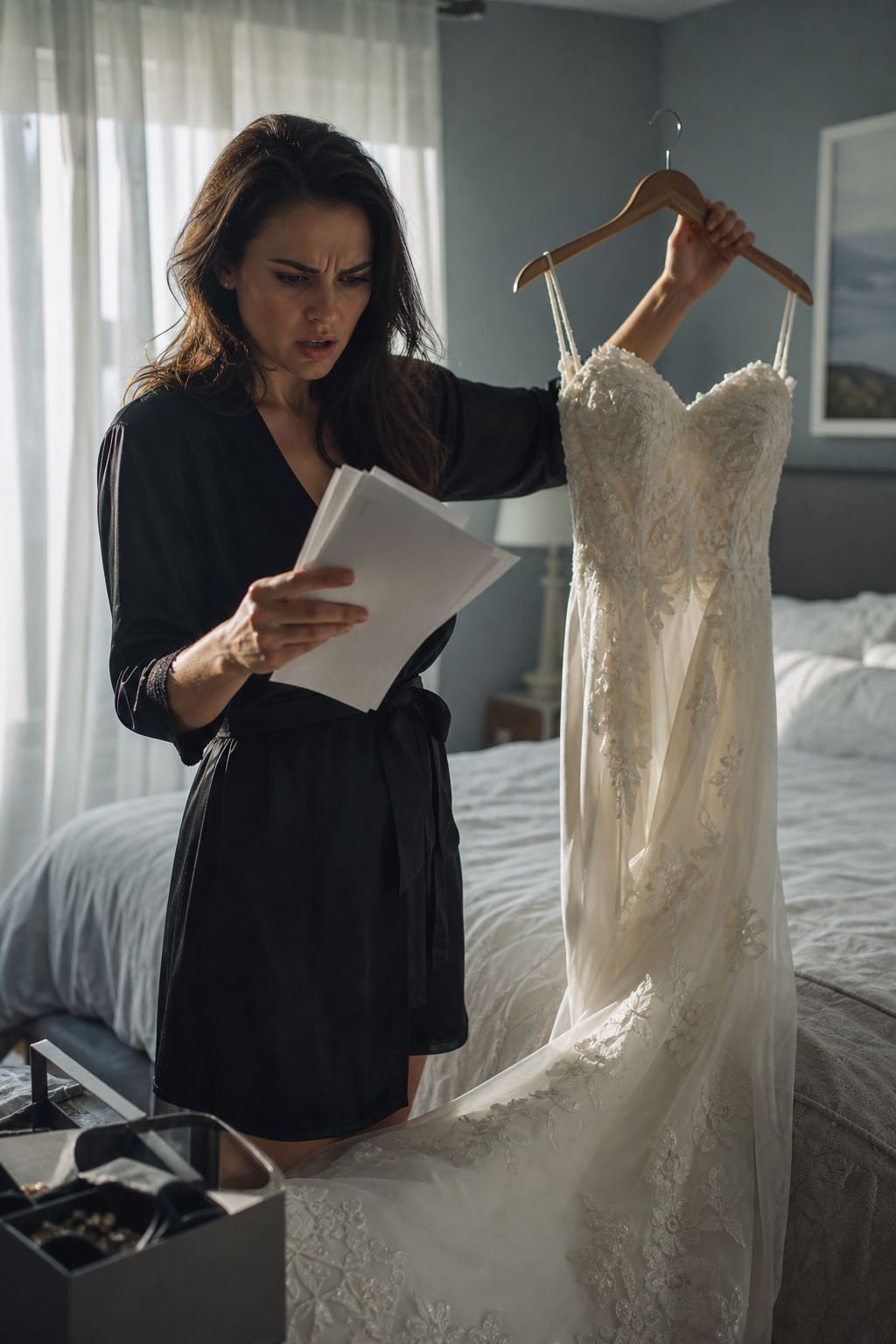
She returned the dress three days later in a fresh dry-cleaning bag. I thanked her, hung it back in the closet, and probably would have left it there for another decade if the seamstress down the street had not called me that evening about the hem of a work dress I had dropped off. I went to my closet to compare a measurement from an old alteration slip, reached into the side pocket of my wedding gown, and felt paper.
At first I thought it was tissue from storage. Instead, it was a folded packet clipped together at the corner.
The top page had Adrian’s full legal name on it.
Not ours. His.
It was a draft petition from a family law office outlining proposed divorce terms. Temporary occupancy. Asset disclosure. Suggested custody schedule for our son, Noah. I sat down on the bedroom floor so hard the hanger banged against the closet rod. My hands were shaking by page two. It was not filed yet. There were handwritten notes in the margin—Bianca’s handwriting, impossible to mistake—circling a paragraph about separate property and writing, ‘Make sure he doesn’t leave with less than he deserves.’ He. Not her sister. Him.
I called Adrian immediately. He did not answer. I called Bianca. She answered on the second ring with a bright ‘Hey, bride lender!’ so careless I almost admired it. I asked why legal papers with my husband’s name were in my wedding dress pocket. Silence. Then she said the most insulting thing a liar can say to a person holding proof: ‘I can explain.’
Explanation, it turned out, was another word for insult with footnotes.
Bianca arrived twenty minutes later, no sunglasses this time, just naked panic. Adrian got home ten minutes after that, which told me more than either of them intended. He walked into the bedroom, saw both of us, saw the papers in my hand, and closed his eyes briefly like a man who had been hoping two disasters might continue in separate rooms.
The affair had been going on six months. Not passionate, according to them. Not planned. Those are the phrases cowards use when they want credit for lacking imagination. Adrian said it started while helping Bianca move apartments. Bianca cried and said she never meant for anyone to get hurt. I looked at my wedding dress draped over a chair like a witness called to the stand and thought hurt had clearly not required much discouragement.
The cruelest detail was the papers. They had gone to a lawyer together to understand Adrian’s options before he ‘had the hard conversation’ with me. Bianca insisted she only took the documents because Adrian did not want me finding them at the house. I asked why they were hidden in my dress. She actually said she must have slipped them into the pocket by accident while changing after the photo shoot. I laughed until I frightened myself. There are accidents, and then there are symbolic acts too perfect to bear their own honesty.
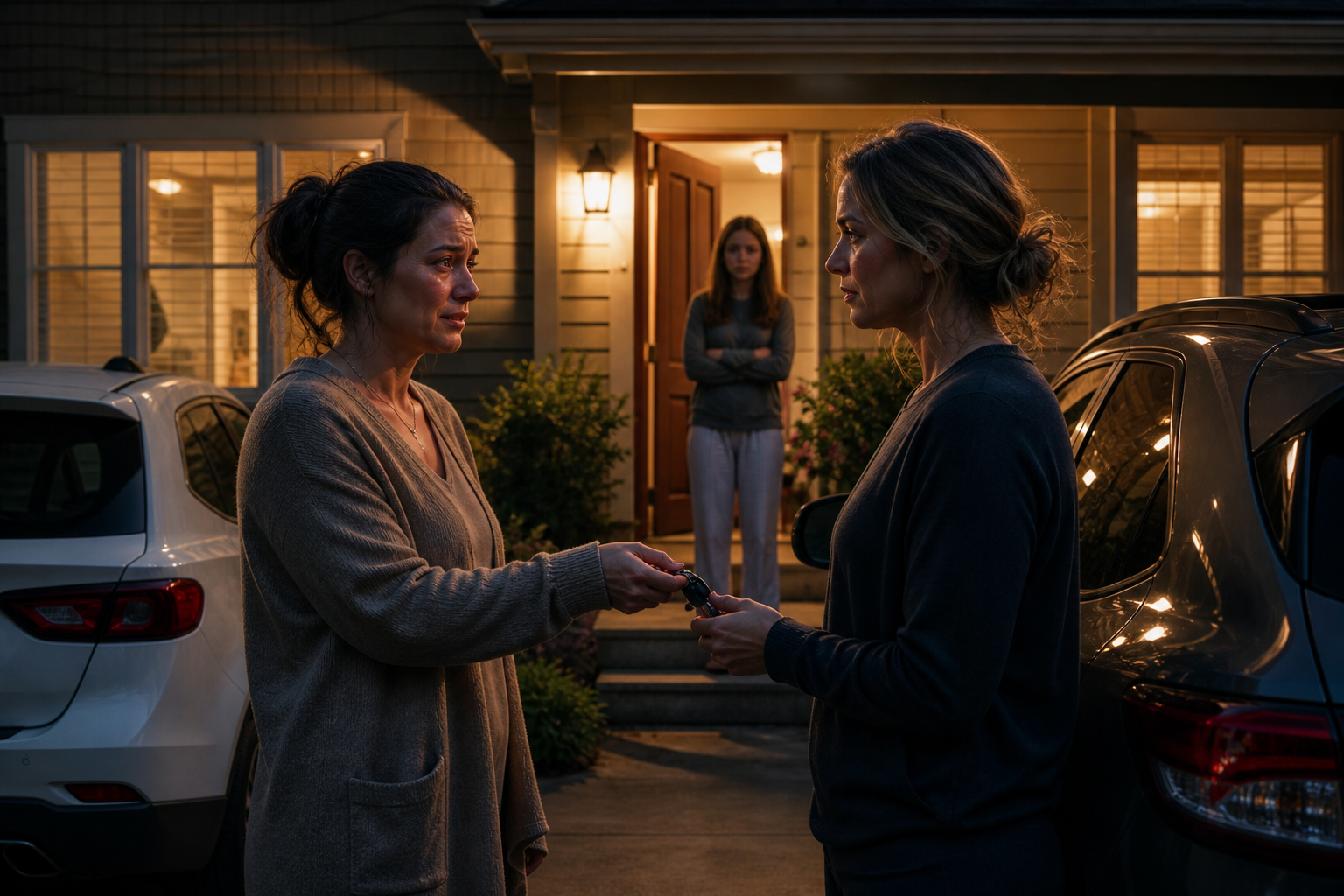
Noah came home from basketball practice in the middle of this mess, sweaty and hungry and still young enough to assume adults will lower their voices before changing the shape of his life. We did lower them. For him, if for nobody else. Adrian left that night. Bianca tried to hug me before she went. I stepped back so fast she looked slapped.
The next few weeks were ugly in all the administrative ways heartbreak likes best. Lawyers. Accounts. Separate bedrooms becoming separate addresses. My mother begged me not to tell extended family the full truth because Bianca’s wedding was coming up and she did not want ‘permanent damage.’ That phrase cured me of more filial softness than therapy ever could. Permanent damage had apparently occurred only once the wrong daughter’s event decor was threatened.
So I waited.
Not forever. Just long enough.
Bianca still had the courthouse wedding because of course she did. She still wore white because irony is free. She still invited half the family expecting me to stay home and look tragic from a respectable distance. Instead, I went. I wore navy. I smiled. I brought a box wrapped beautifully enough to attract immediate attention. During the small reception lunch afterward, while Bianca was busy performing radiance for phone cameras, I asked for everyone’s attention and said I wanted to give the bride a little piece of family history she had accidentally left behind.
Inside the box was the clipped stack of draft divorce papers, tied with the ribbon she had used on my wedding dress bag.
I did not need a speech. The room handled the rest. Her new husband looked confused first, then gray. My mother said my name in the voice reserved for women who stop being manageable in public. Bianca stood up so quickly her chair tipped. Adrian, who had apparently been invited because nobody in my family understands shame as a scheduling conflict, stared at the tablecloth like it might open and take him home.
I said only this: ‘If you’re going to borrow sacred things from my life, try not to return them stuffed with evidence.’ Then I sat down and finished my coffee.
People still ask whether that was cruel. Maybe it was. But here is what I know: Bianca and Adrian had planned to stage my future for me while hiding the paperwork in the same dress I once wore promising forever to a man who was already rehearsing how to leave. They wanted symbolism when it suited them and discretion when it protected them. I gave them the opposite.
The marriage to Bianca’s calm man lasted less than a year. Mine to Adrian ended more slowly, because courts and mortgages are boringly committed to process. Noah is older now, and I am careful about what version of events he carries. But I kept the dress. Not because it represents innocence. God, no. Because one day I want to remember that the moment everything collapsed was also the moment I stopped volunteering to be the only person in the family expected to absorb humiliation quietly.
Some women burn the dress. Some donate it. Mine hangs in the closet with one empty pocket and a lesson sewn into every fold: if betrayal wants to be theatrical, let it. Curtains help everyone see where the stage ends.