
When my father died, everyone kept telling me how strong I was.
I handled the hospital calls. I chose the suit he was buried in. I stood next to my mother, Elaine, while people I barely knew pressed her hands and promised to “check in soon,” as if grief were a casserole they could drop off and be done with. My younger brother, Darren, cried loudly at the service, clung to everyone in sight, and somehow still managed to leave before the bill for the luncheon arrived.
That was Darren. He was always the emergency in the room, always the person everyone else adjusted around.
I was thirty-six, married, and finally living in the small house my husband Nick and I had spent nine years saving for. Nothing glamorous. Three bedrooms, old cabinets, creaky floors, and a backyard just big enough for a cheap grill and two tomato plants. But it was ours. I loved that house in the fierce, grateful way you love something you had to build piece by piece.
Three months after Dad’s funeral, Mom called and asked if she could come by. Her voice had that tired, papery sound grief gives people, so I said yes without hesitation.
She arrived carrying a manila folder.
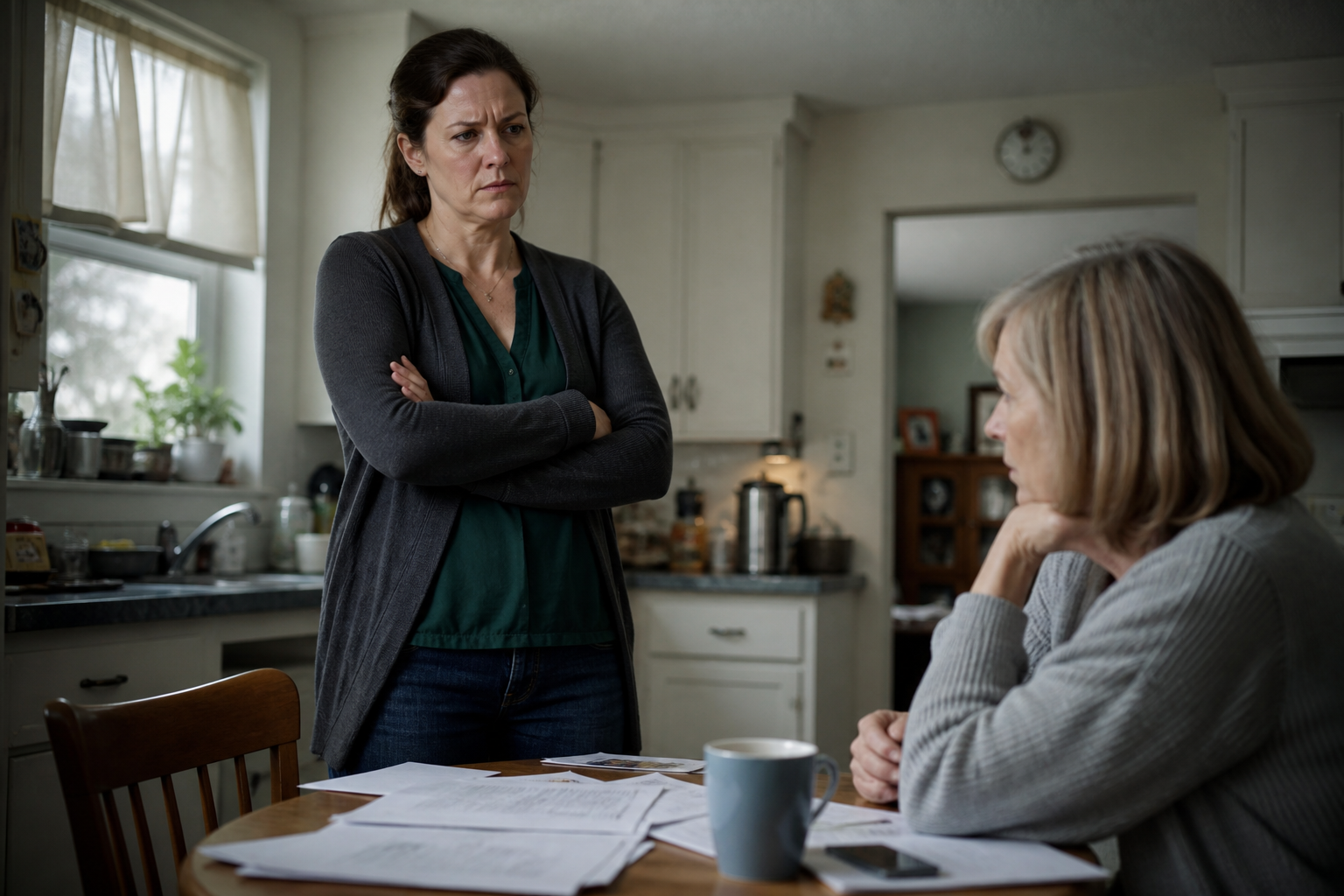
I made coffee. She sat at my kitchen table and stared at the steam rising from her mug like she was practicing a speech. I remember the light that day—gray and flat, pressing against the window over the sink. Nick was still at work. The house was quiet except for the hum of the refrigerator.
Finally, she slid the folder toward me.
“Darren is in trouble,” she said.
I didn’t even open it. “What kind of trouble?”
She sighed. “Mortgage trouble. He fell behind.”
I looked at her. “Again?”
Her eyes sharpened for a second, the way they always did when I spoke about my brother as if his problems were a pattern instead of a surprise. “He’s had a hard year.”
Darren was forty-one years old. His hard years always seemed to come after new trucks, gambling weekends, or business ideas that required other people’s money.
I opened the folder. Notices. Late payment letters. A printout from his lender. More red than black.
“What does this have to do with me?” I asked.
Mom folded her hands. “Your father left me enough to help, but not enough to fix all of it. Darren says if he loses the house, the boys will have nowhere stable to stay when he has them.”
I waited.
Then she said it.
“You and Nick have equity. You could sell this place, buy something smaller, and use the difference to help Darren catch up.”
For a second, I honestly thought I had heard her wrong.
“Sell my house,” I repeated.
“Temporarily sacrifice,” she corrected, like language could make it smaller.
I laughed once, a short stunned sound that didn’t feel like mine. “Mom, we spent almost a decade saving for this house.”
“And Darren has children.”
“So do consequences,” I said.
Her face changed then. Not grief. Offense.
She sat up straighter and pointed one finger at the paperwork between us. “Your brother needs family right now.”
I felt something old and sore wake up in me. Not just anger. Recognition.
I was twelve when Darren crashed Dad’s car and I was told not to mention it because “your father’s blood pressure is already high.” I was sixteen when my college fund quietly became the money that got Darren out of his first big debt. I was twenty-three when Mom missed my apartment-warming because Darren had “another crisis.” Every milestone in my life had learned to stand politely in the corner while my brother took center stage.
I pushed the folder back across the table.
“No.”
She blinked. “Don’t answer in anger.”
“I’m answering in clarity.”
She stared at me as if I had become someone vulgar. “You would really let your brother lose everything?”
I stood up because sitting made me feel trapped. “I’m not making Darren lose anything. Darren did that.”
The room went very still.
Then Mom said the sentence that finally snapped whatever had been holding me together.
“After everything we did for you, I thought you’d be less selfish.”
For a second I couldn’t breathe.
Everything they did for me?
I thought about my student loans. The second job I worked after graduation. The way Nick and I skipped vacations and drove a car with a broken air conditioner for three summers to save for this place. I thought about how easily sacrifice is renamed generosity when the wrong child is asked to carry it.
When Nick came home, he found me standing at the sink with my hands flat against the counter. Mom was gone. The coffee had gone cold.
“What happened?” he asked.
I told him.
He got that dangerous calm he wears when he’s furious on my behalf. “She asked you to sell our house?”
I nodded.
He pulled me into him and said, very quietly, “Absolutely not.”
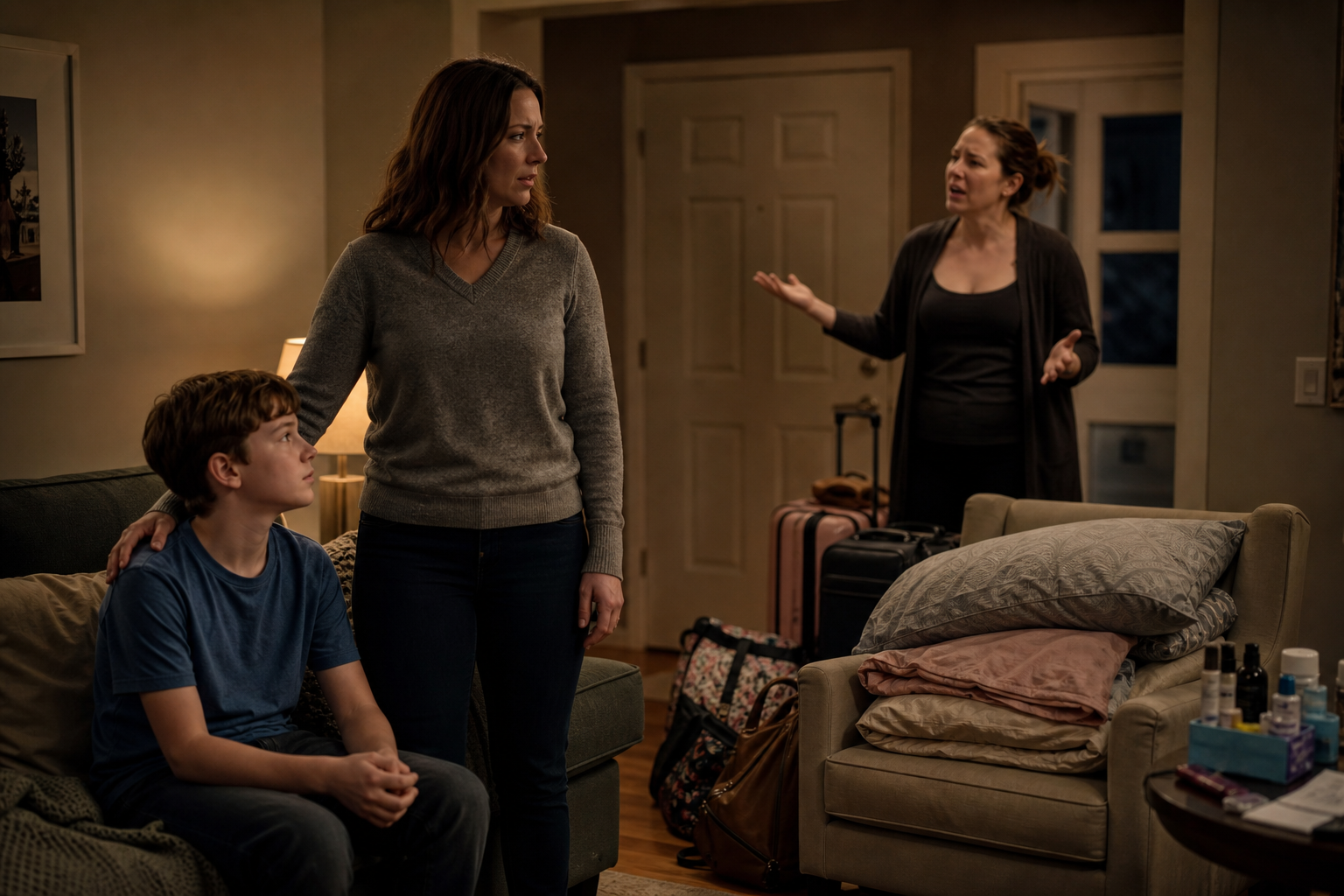
That night Darren called me six times. I didn’t answer. Then the texts started.
**So Mom told me you’re refusing to help.**
**Must be nice to sit in your big house and judge everybody.**
**Dad would be ashamed of you.**
That one hurt, because grief makes lies sound possible.
Two days later, my aunt phoned to say I should reconsider because “family has to pull together.” A cousin messaged me that I was being cold. No one offered to sell their own house. No one opened their own savings. It was amazing how generous people became with my life.
For a week, I barely slept.
Then Mom showed up again.
This time I didn’t invite her to sit.
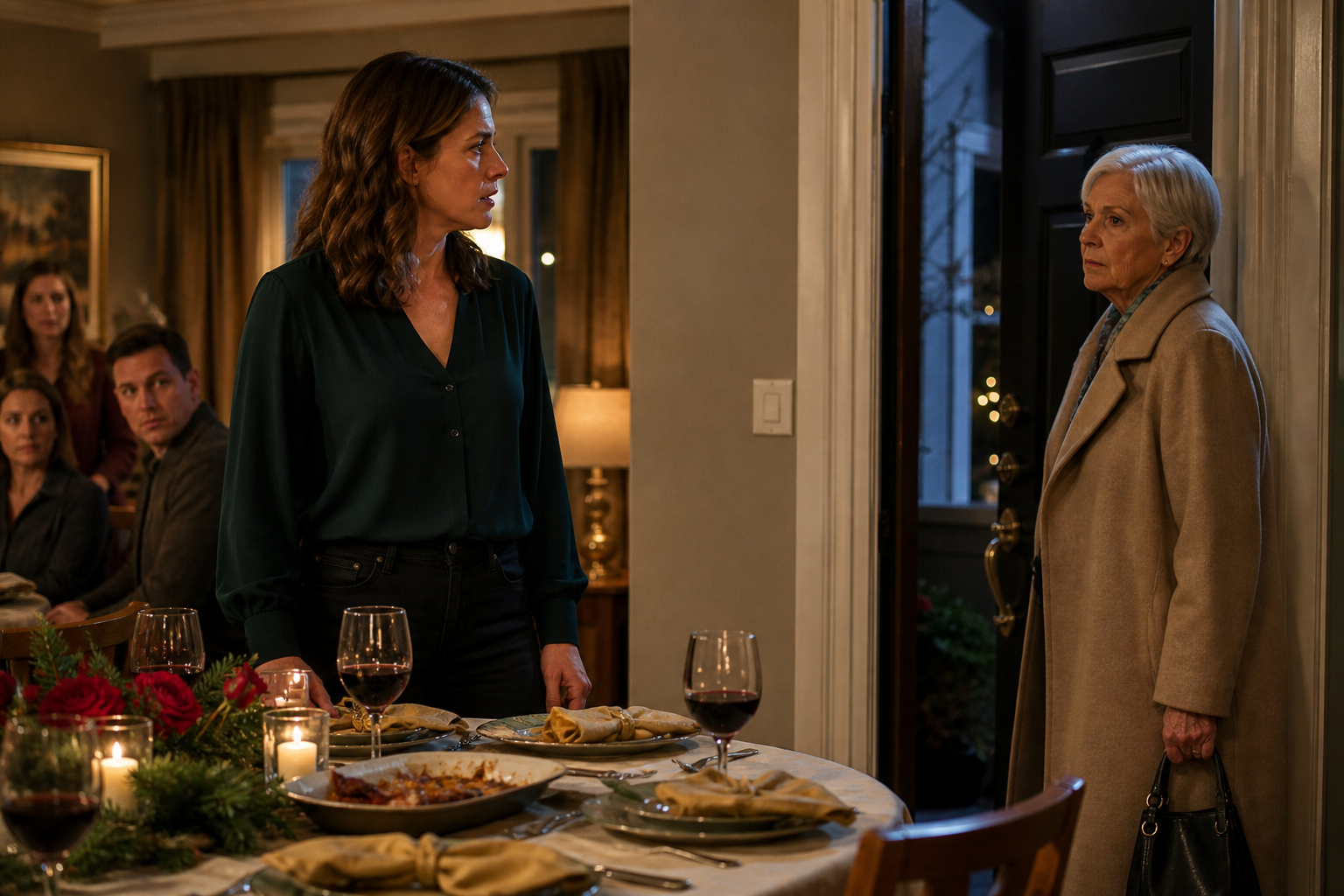
She stood on the porch with her coat buttoned wrong, jaw tight, as if she had come prepared to win.
“I’m asking you one last time,” she said. “Are you really willing to let this destroy your relationship with your brother?”
I looked past her at the street, at the quiet row of houses, at the life Nick and I had built without rescue from anyone.
Then I looked back at my mother.
“No,” I said. “Darren destroyed this relationship the day he decided my future was part of his backup plan. You’re destroying yours with me by asking.”
Her face crumpled—but not in the way I had always feared. Not heartbreak. Anger denied an audience.
“You’ve changed,” she said.
“Yes,” I told her. “I finally did.”
She left without another word.
I cried after she drove away. Not because I thought I was wrong, but because some losses arrive long before the funeral. Sometimes you only recognize them when you stop volunteering to be their solution.
Darren eventually sold his house anyway. Not because I refused to save him, but because the math had been broken long before my mother sat at my table pretending otherwise. He moved into a rental. The earth kept turning. His children still had beds. The apocalypse my family predicted never came.
What did come was distance.
Mom and I speak less now. When we do, every conversation feels like we are stepping around a crater with my name at the bottom. Darren still tells people I chose money over blood.
Maybe that’s the story they need.
But here’s mine: I chose the home my husband and I built with years we will never get back. I chose not to hand my life to the same fire that had already burned through everyone else’s patience. I chose to stop calling surrender love.
And if that makes me selfish in my family’s eyes, then maybe selfish was just the name they gave me when obedience expired.