🎧 Listen to this story
Full narration — My Sisters Called Me Selfless for Taking Mom In. They Don’t Know the R
Narrated by Dramateller
My sisters still think I’m the selfless one.
They said it at Thanksgiving, raising their glasses across the table while Mom sat beside me in her cardigan, nodding along. “To Rachel,” Claire announced, “the saint who gave up everything for Mom.” I smiled. I said something humble. I let them believe it.
I needed them to believe it.
The truth is too ugly to say out loud. It sits in my chest every morning when I help Mom out of bed and every night when I sort her medications into the weekly pill organizer. It was there when I transferred her Social Security deposit into my account last week, same as I’ve done for the past eighteen months.
I didn’t volunteer to move my mother into my home because I loved her more than my sisters did. I did it because I lost my job six months before she fell and broke her hip, and I didn’t tell anyone.
Not my husband. Not my sisters. No one.
The layoff came in an email on a Tuesday morning. “Organizational restructuring.” Fifteen people, including me, let go with two weeks of severance and a promise to outsource our department to a firm in Manila. I sat in my car in the office parking lot for an hour, staring at the windshield, trying to figure out how to tell Mark that half our income had just disappeared.
I never did tell him.
I updated my resume. I applied to forty-seven jobs. I got three interviews and zero offers. Every rejection email made the hole in my stomach grow a little wider. Our mortgage was twenty-three hundred dollars a month. My car payment was four fifty. We had credit card debt from the year Mark’s appendix burst and his insurance fought us on everything.
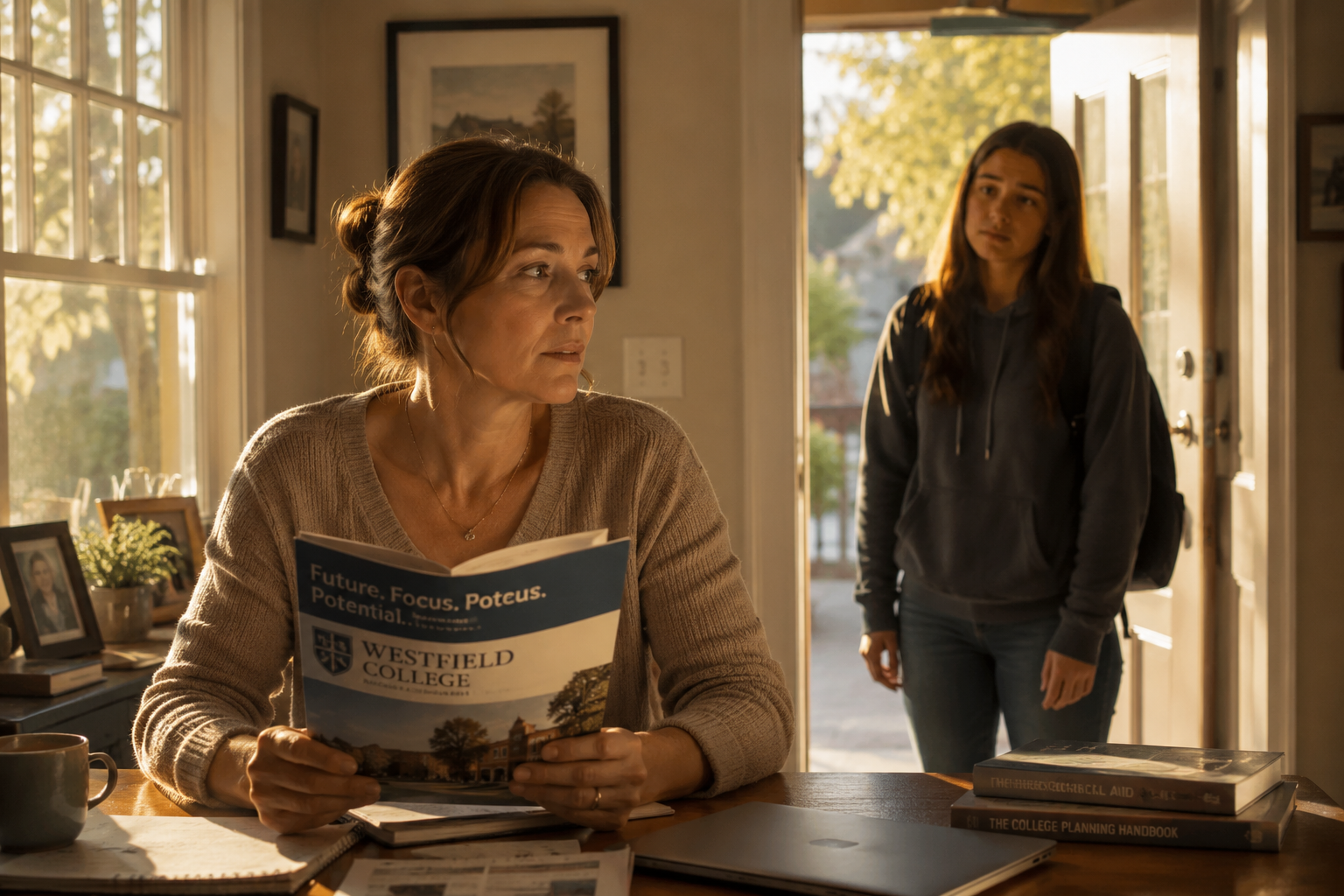
Then Mom fell.
My sister Claire called me from Phoenix, her voice tight with the kind of stress she’d never actually have to manage. “I can’t just drop everything and fly out there, Rachel. The kids have soccer. Derek’s work is insane. Can you handle the hospital stuff until we figure something out?”
I said yes. Of course I said yes. I was the one with “flexible hours” — that’s what they all called my unemployment. I was the one who lived in the same city as Mom. I was the one who could pick up the phone at two in the afternoon on a Tuesday because I had nowhere to be and nothing that paid.
When Mom got out of rehab, Claire and my other sister Andrea flew in for a weekend to “make a plan.” We sat around my kitchen table — the same table where I’d been hiding bills I couldn’t pay — and discussed assisted living. The cheapest place we found was forty-five hundred a month. Mom’s Social Security and my father’s pension together came to thirty-two hundred.
“We’d each have to kick in,” Claire said, frowning at the numbers on her phone. “Like, four hundred a month. Each. That’s tight for us right now.”
Andrea nodded. “Same. We just put a deposit on a new minivan.”
I sat there listening to my sisters talk about how hard it would be for them to afford four hundred dollars a month to keep our mother out of a state-run facility. And I did the math in my head. Thirty-two hundred dollars a month. Direct deposit. Into my account, if I set it up right. That would cover our mortgage. It would buy me time to find a job before Mark realized how bad things had gotten.
That’s when I said it.
“I’ll take her.”
Both of them stared at me like I’d offered them a winning lottery ticket.
“Seriously?” Andrea said. “You’d have to quit your job.”
“I was thinking of leaving anyway,” I said. The lie came out smooth and easy, like I’d been rehearsing it my whole life. “The corporate world is burning me out. I could use a break. And Mom would be so much happier here than in some facility.”
Claire started crying. Andrea grabbed my hand across the table. They told me I was the best sister in the world. They told me I was made of something they weren’t. They flew home that Sunday feeling like the weight of our mother had been lifted off their shoulders and placed onto mine — and I let them think they owed me gratitude for it.
I set up the direct deposit the next week.
Mom moved in on a rainy Saturday in March. I gave her the guest room with the big window that looks out at the garden. She cried when she saw it. She said I was her angel. I hugged her and felt the shape of the lie pressing against my ribs like a second skeleton.
The first few months were fine. I made her scrambled eggs every morning. I drove her to physical therapy twice a week. I sat with her through Matlock reruns and pretended not to be counting down the minutes until she went to sleep so I could work on my resume in the dark.
Mom’s money paid the mortgage. Mark never asked questions because I told him I’d picked up some freelance consulting work. He was just relieved I seemed happy again. He didn’t know I was running a shell game with our finances, shuffling Mom’s pension checks to cover gaps while my severance ran out and our savings account turned into a dry well.
Then Mom started getting better.
Her hip healed. Her energy came back. She started asking questions I couldn’t answer.
“Rachel, honey, I was looking at my bank statements. The automatic deposit from your father’s pension — it’s been going into a different account than usual?”
I told her the bank changed the routing numbers. She trusted me.
Then the letter came.
It arrived in a plain envelope, addressed to my mother, from the pension administrator. Mom was in the kitchen when I found it in the mail. I slid it under a stack of magazines and told myself I’d intercept it later. But she found it that night after I’d gone to bed.
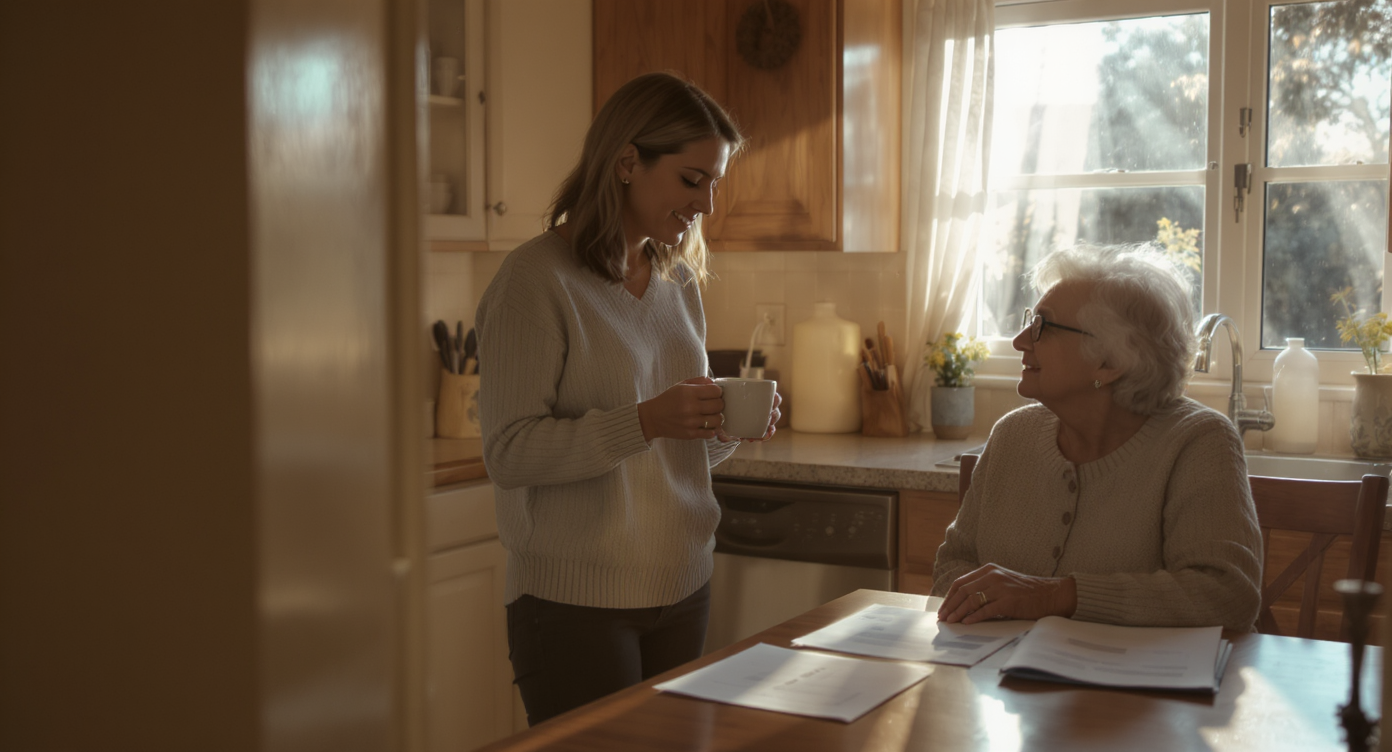
She was sitting at the kitchen table when I came down for coffee the next morning. The letter was open in front of her. Her reading glasses were on. She looked up at me with an expression I’d never seen on her face before — not anger, but something quieter. Something worse.
“Rachel,” she said, her voice very small. “It says here that someone called the office last month, pretending to be me, and changed the direct deposit instructions back into my name. Can you explain why someone would do that?”
I stood in the doorway of my own kitchen, holding a coffee mug I didn’t remember pouring, and realized I had seventeen months of lies stacked behind me like a tower of blocks in a room full of earthquakes.
“Mom,” I said. “I can explain.”
But I couldn’t. There was no explanation that ended with me still being her angel.
She waited. The kettle ticked as it cooled. The clock above the stove showed 7:14 in the morning.
And I told her the truth.
I told her about the layoff. I told her about the mortgage, the credit card debt, the forty-seven applications that went nowhere. I told her I’d been pretending to be employed for almost two years and that her pension checks were the only reason we hadn’t lost the house. I told her I was sorry. I told her I hated myself for it. I told her everything.
When I finished, she sat very still for a long time. Then she reached across the table and took my hand.
“You should have told me,” she said. “Not because I would have been angry. Because you shouldn’t have carried that alone.”
I started crying. I hadn’t cried once in eighteen months — not after the layoff, not after the rejections, not after any of it. But I cried at my mother’s kitchen table while she held my hand and told me I was still her daughter.
“We’ll figure it out,” she said. “That’s what families do.”
She didn’t move out. She still lives with me. Her pension goes into her own account now, and every month she hands me a check for eight hundred dollars — less than the mortgage, more than I deserve. She says it’s rent. She says she likes having someone to watch Matlock with.
My sisters still call me the saint. They still raise their glasses at Thanksgiving. Mom and I haven’t told them the truth, and I don’t know if we ever will. Some confessions are only meant for the people who need to hear them.
Maybe that makes me a coward. Or maybe it means I finally understand what my mother meant when she said families figure it out — not by being perfect, but by being honest about the parts of ourselves we’re least proud of.
Have you ever kept a secret that you knew would change how your family saw you — and chosen to carry it alone anyway?