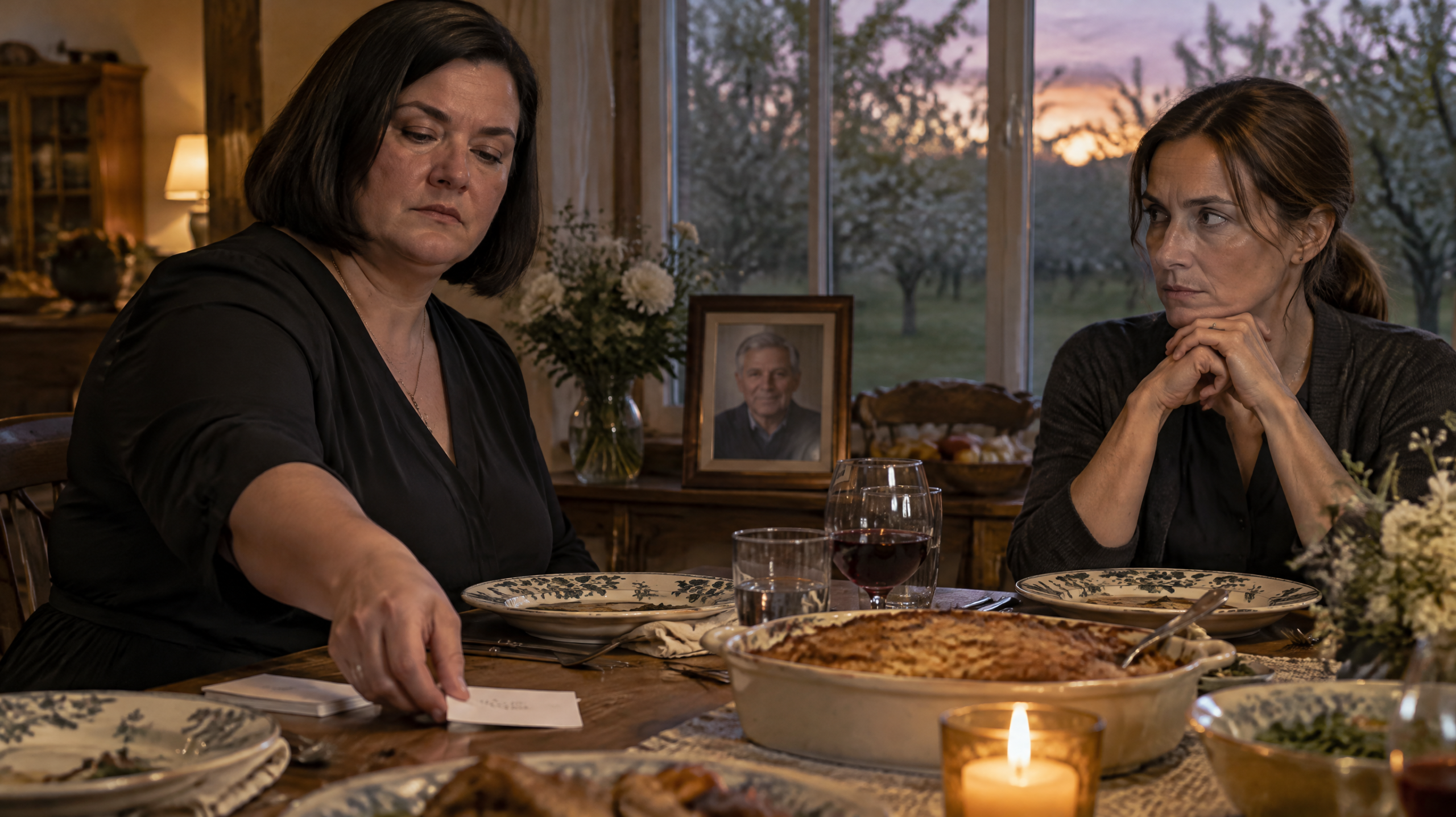
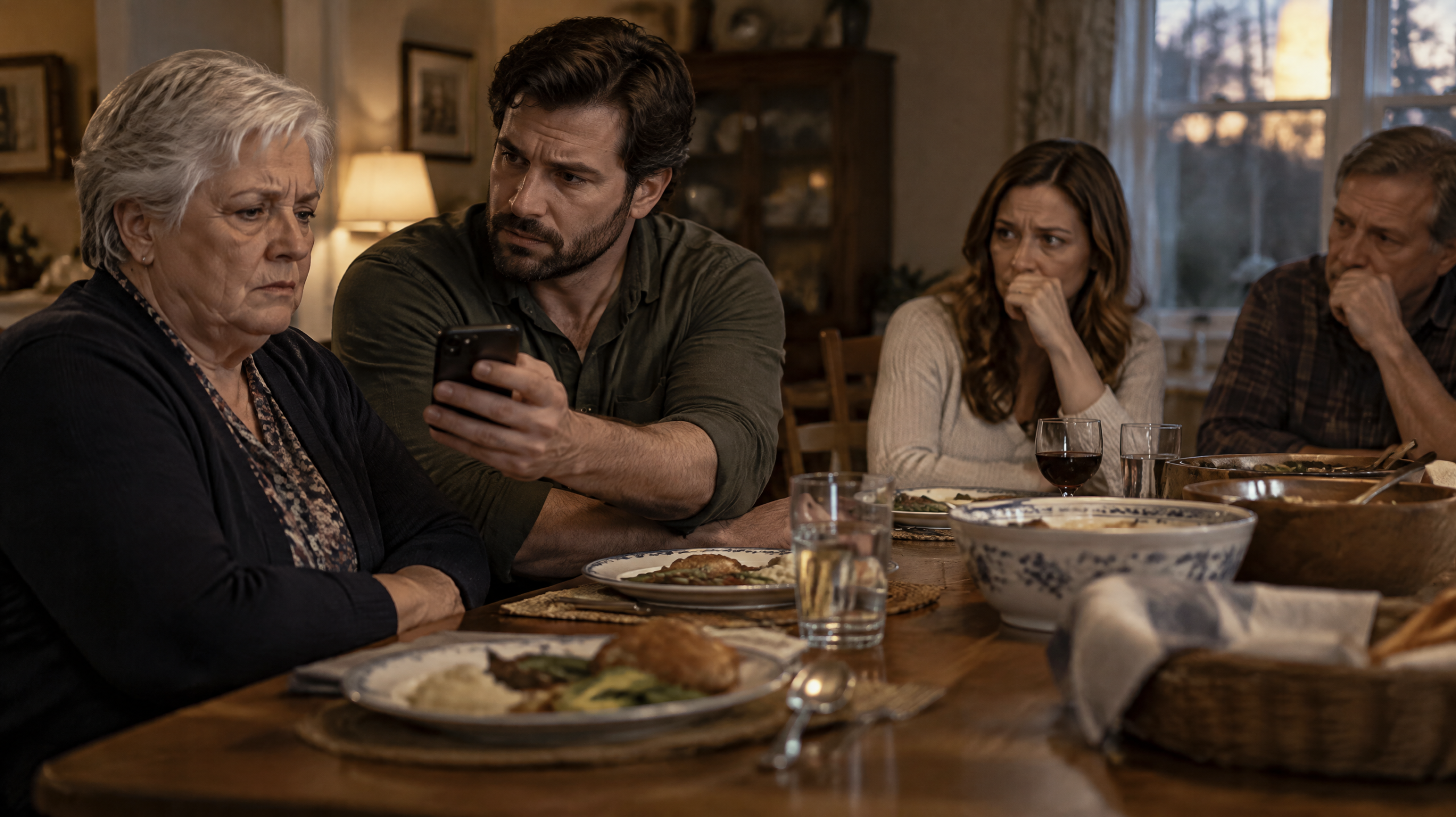
Owen set his phone on my good tablecloth the way a man sets down a summons. No “hello, Mom.” No kiss. He laid it face up and waited until Corinne had finished hanging her coat.
“Before anybody eats,” he said, “I want you to hear something.”
Juniper was asleep in her carrier by the radiator, the monitor clip on her toe under the blanket. I kept looking at that clip instead of at my son. Eighteen months old and her heart already had a rhythm that could stop on an ordinary Tuesday.
He pressed his thumb to the screen. My own voice came out of the little speaker, bright and easy. “There’s nothing to find, honey. There were never any papers at all.” Eight months old, that message. I had left it on his phone in March, after the third time he asked about his birth family, and I had felt clever doing it.
The refrigerator hummed. “Say it to my face,” Owen said.
Corinne said his name, softly, the way she used to when he was nine and had broken something he could not fix. “No,” he said, not turning. “She says it in front of the people who have been covering for her.” He tipped his chin at Hollis Reyes, who sat at the end of my table with his coat across his knees and his water untouched. I had not seen Hollis since Gideon’s funeral. He handled the placement in 1991, and he had come in tonight with Corinne without ringing first, which I should have found strange and did not.
“Hollis told me you signed an affidavit,” Owen said. “In 1991. Under oath. Sealing my file so nobody could ever open it.”
I looked down the table. “Is that true?”
Hollis turned his glass a quarter turn. “It’s in my notes from the time.”
“That is not an answer.”
“I told him what the file shows,” he said, and looked at the salt cellar.
He is lying, I thought, and I cannot prove it, and my son is watching my hands shake. So I said the one true thing that was also a confession.
“I never signed an affidavit,” I said. “But there are papers. I have them.”
Owen’s jaw worked. He is thirty-five and built like his father, and for a moment he looked eleven.
“Where.”
“A box at the credit union on Market. Since 1995.”
“Since 1995. I was four.”
“I know how old you were.”
“The geneticist asked me for three generations.” His voice cracked on the last word. “I sat in that office and told her my mother says there is nothing.”
“I’m sorry.”
“Don’t.” He stood so fast his chair scraped. “Why?”
“Because when that envelope came, I understood what I had done. I did not want one more person in this world understanding it with me.”
He lifted Juniper out of the carrier and held her against his shoulder. Corinne reached to help with the straps and he stepped away from her hand. At my front door he said, “Don’t call me until you have papers in your hand. All of them. Not a story.”
Then the door, and the porch light on the empty step.
“He’ll calm down,” Corinne said in the hallway, her coat half on.
“Don’t.”
Hollis was last. At the threshold he said, “For what it’s worth, I advised against this.”
“Against what?”
He put his hat on and went down the walk without answering.
I washed the plates that night because my hands needed work. The hatbox was still on my closet shelf, empty since 1995, the cardboard soft at the corners. At two in the morning I decided not to wait to be asked again. I would request the file myself and hand my son whatever came out of it.
The surrogate’s court opened at eight thirty on Monday. The clerk’s window smelled of toner and cold coffee. The woman behind it had a nameplate that said Ruth Okafor and reading glasses pushed up into gray hair.
“Adoptive parent,” she said, when I explained. “You can have the non-identifying summary. The sealed placement file takes a petition and a judge.”
“Then show me anything in that file that already has my name on it.”
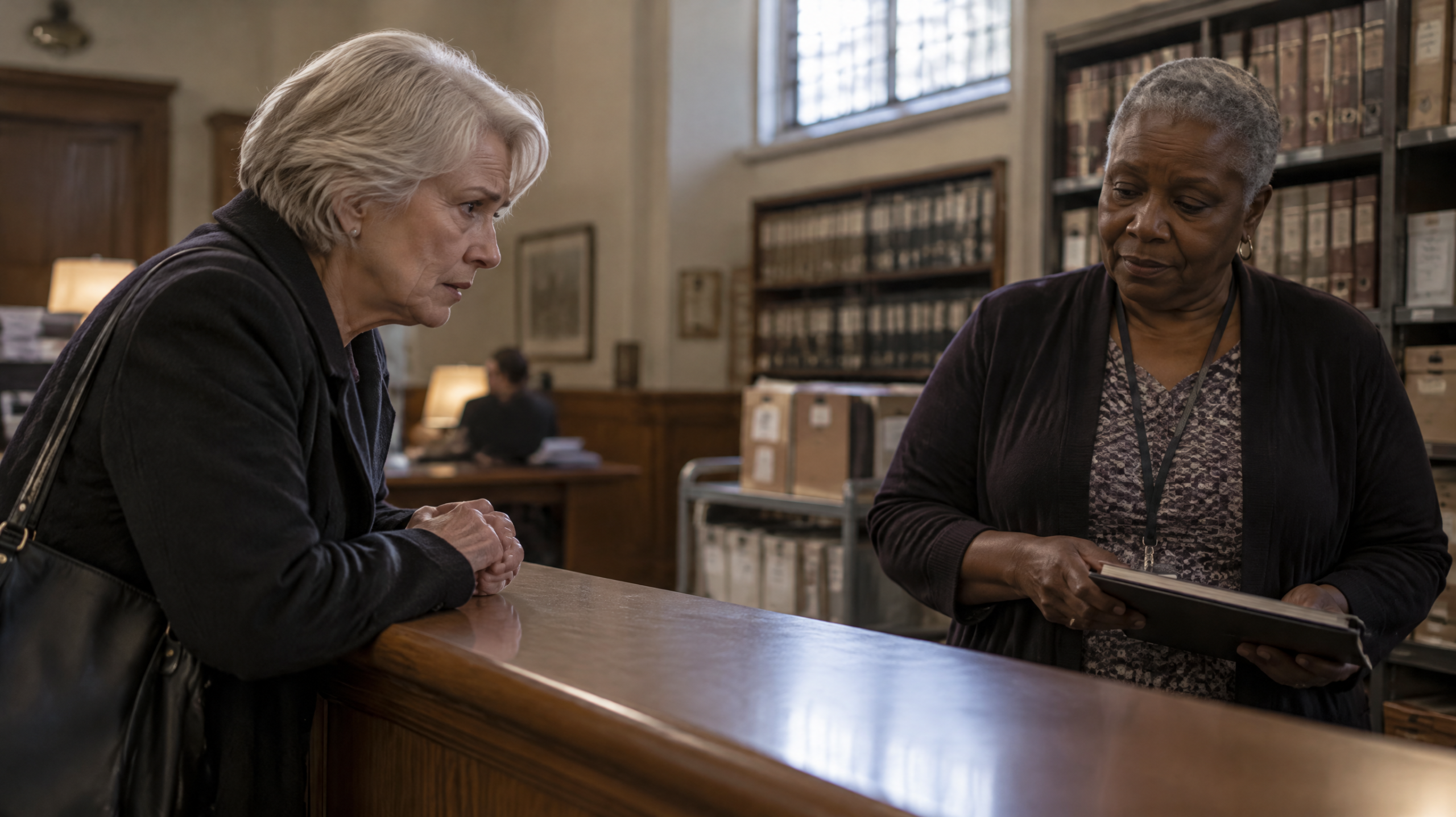
She was gone a long while, and when she came back she did not put the papers on the counter right away.
“Mrs. Vance. Did your husband ever tell you he petitioned for these records?”