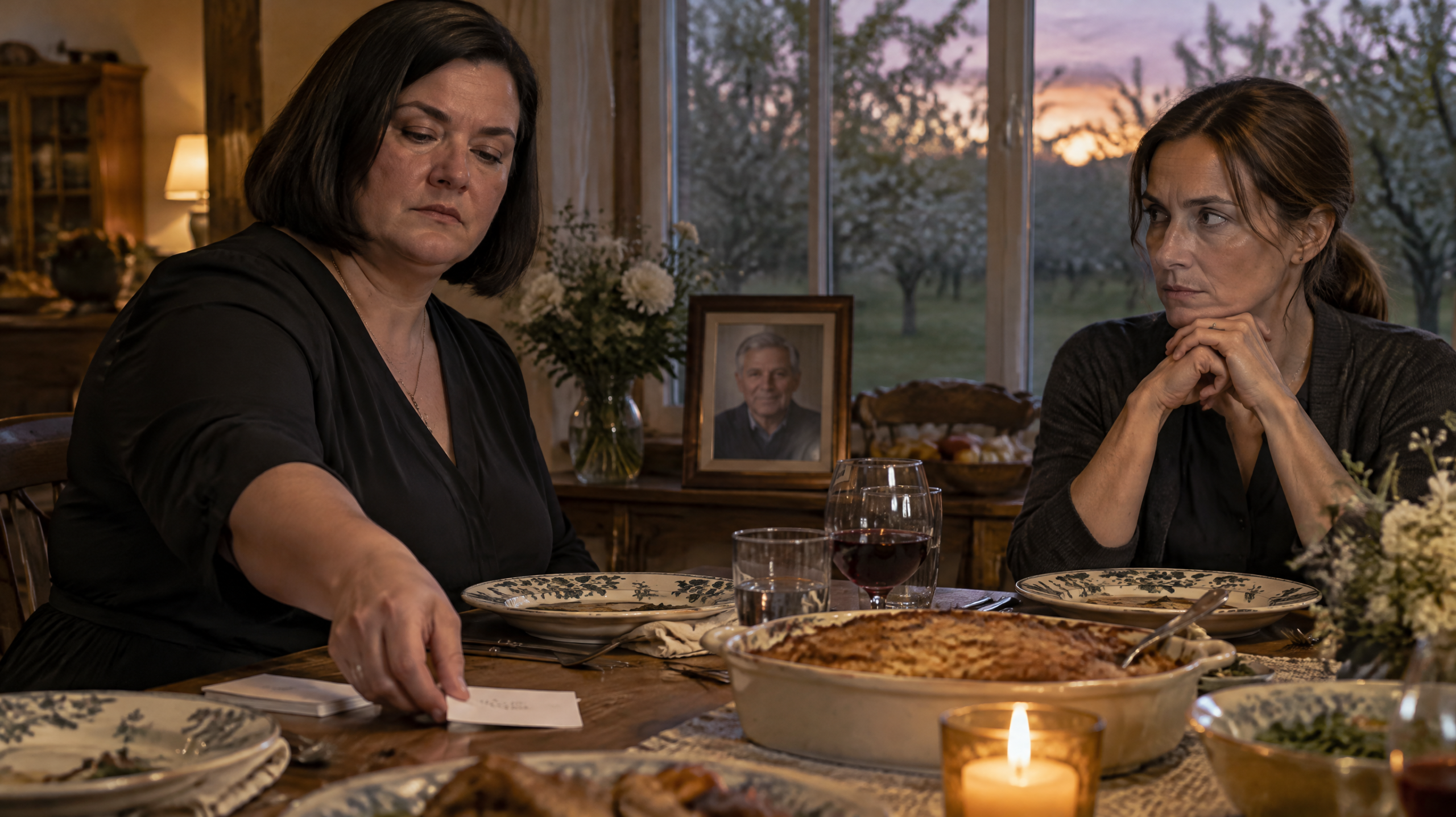
Delia set the ballot on my plate while I still had a fork in my hand. She laid it face down, but the paper was thin and the buyer’s logo came through it, a blue grid, and I could read the word backwards.
“Two boxes,” she said. “The one on the right says sell.”
The packing shed holds sixty people if you count the ones standing in the door. My father built the long tables out of apple crates, and the string lights he hung the year the cider press came are still up, one bulb dead over the scale. Four pies sat out on the tailgate of Grant’s truck. The whole place smelled like cinnamon and cold storage, and I had spent the evening telling neighbors that no, he did not suffer.
Delia stood up with a clipboard. She is five years older than me and she has a way of starting to talk before a room agrees to listen.
“I know what tonight is,” she said. “I’m not doing this to be cruel. But the orchard is three years behind on its taxes, the county has threatened a lien, and I have a buyer who will not wait.”
She came around the table and set the contract next to the ballot.
Blue Ridge Compute LLC. Purchase and Sale Agreement. All eighty-four acres, including improvements and water rights. One million four hundred twenty thousand dollars. Earnest deposit due Friday.
Friday. I had a funeral Saturday and a deposit due Friday.
“We are not voting on the orchard two nights before his funeral,” I said. My voice came out lower than I meant it to.
“We are voting,” Delia said. “That’s what a trust does. That’s what he set up.”
The trust needed both of us. I knew the clause because I had signed the acceptance letter in June and because the lawyer had read it out loud twice: no land goes, not one acre, without the signature of both co-trustees. Delia keeps the books. She has kept them since 2019, in the office off the cooler, in a green lockbox she does not leave sitting out.
“Three years behind,” I said. “Show me the lien notice.”
“It’s at the house.”
“They send those certified. I’d have signed for it. I’m on the trust.”
A chair scraped behind me. Grant came in from the truck with a pie in each hand and set them down carefully, the way a man sets down something he wants to be seen doing.
“Nora,” Delia said, and she smiled, which was worse than the clipboard. “Sign it tonight and we’re done before the funeral. Sign it and your mother’s room gets paid without anybody borrowing.”
I picked up the ballot and put it under my plate, face down, and put my fork on top of it.
“I’ll sign nothing before pie,” I said.
Two of my cousins laughed, because they thought I was joking.
In the kitchen, with the sink running, Delia followed me in and shut the door with her hip.
“You want to see the ledgers,” she said.
“I want to see the ledgers.”
“After the funeral.”
“They’re in the office. It’s thirty feet from here.”
“They’re locked, and they stay locked.” She set a stack of plates down hard enough that the top one cracked. “You’ve been over in Loudoun County counting bugs on other people’s trees since before he got sick. I’ve been here.”
“Then show me where the money went.”
“Before anything splits, I get repaid.” She said it fast, like she had the number ready in her mouth. “Thirty-four thousand. Fuel, repairs, the seasons I carried this place.”
“Carried it how?”
“It’s all in the book.”
“Which is locked.”
Grant came through the door with the last of the plates and said, without looking at either of us, “Ask her about the beekeeper.”
Delia told him to go start the truck.
I found Amos Pike at the lower gate at full dark, with a flatbed trailer backed up to the fence and forty hives strapped down in two rows. He has kept bees on the north slope since 1998, back when my father still mowed that hill himself. Amos is seventy-four and moves like a man carrying a full cup.
“You’re moving them at night?”
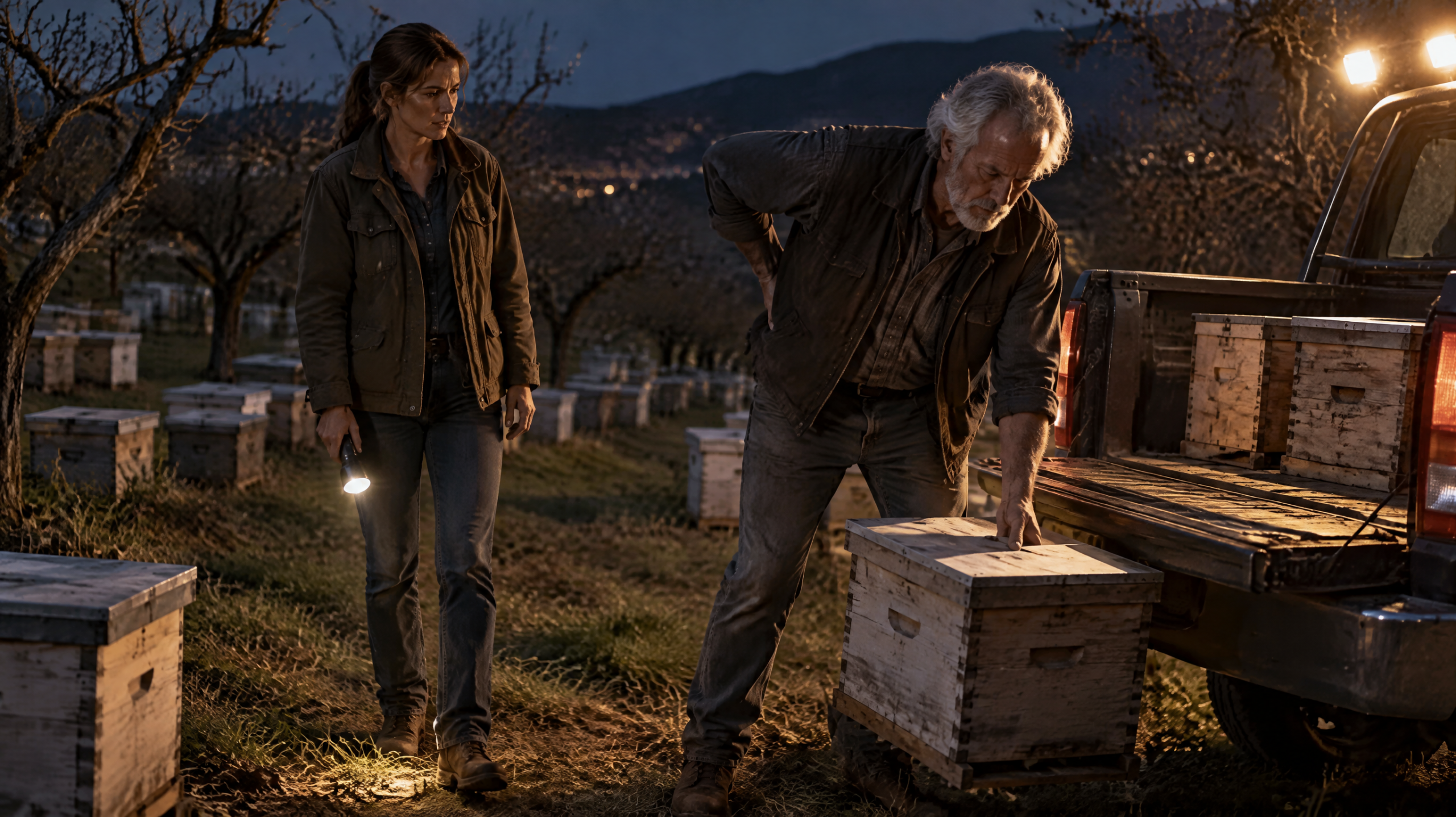
“Your sister says be off the north slope before spring.” He set a hive down and straightened, one hand on his back. “I’m old. I don’t move forty hives twice.”