🎧 Listen to this story
Full narration — My Stepdaughter Said I Wasn’t Her Real Mother — Then the Financial Aid
Narrated by Dramateller
The words hit me like cold water.
“You’re not my real mother.”
My stepdaughter, Mia, stood at the top of the stairs with her phone in her hand, her face flushed with teenage fury. I had asked her to put it away during dinner for the third time that week. It was a small thing. But the words she threw at me weren’t small.
I felt my throat tighten. My husband, Daniel, opened his mouth to say something, but I shook my head. I knew Mia didn’t mean it. Not really. She was seventeen, stressed about college applications, and her biological mother had been filling her head with poison all week.
Still. It stung.
I became Mia’s stepmother when she was ten years old. Her mother, Elena, had moved to another state after the divorce, citing a job opportunity that never quite materialized. At first, visitation was every other weekend. Then once a month. Then whenever Elena felt like making the drive.
I was the one who learned how to braid Mia’s hair before school pictures. I was the one who stayed up past midnight helping her with algebra, who drove her to soccer practice and sat through her choir recitals and took her shopping for prom dresses and talked her through her first heartbreak.
I was the one who showed up.
And now, two weeks before the FAFSA deadline, Elena was making it impossible to finish Mia’s college financial aid application.
“We need your tax information,” I had explained over the phone, keeping my voice measured. “For the FAFSA. The form requires both parents’ financial data if Mia is going to qualify for need-based aid.”
“I don’t have to give you anything,” Elena had said. “I’m not paying for her college. That’s your problem.”
“It’s not about paying. It’s about reporting accurate income so Mia can get grants and scholarships.”
“I said no.”
And she hung up.
I spent the next week calling Elena’s lawyer, leaving messages, trying to explain the situation. Nothing. Meanwhile, the deadline crept closer. Mia was stressed. Daniel was frustrated. And I was running out of options.
Finally, I filed the FAFSA using only my financial information — mine and Daniel’s. We were the household Mia lived in. We were the ones who would support her through college. It wasn’t ideal, but it was honest.
A week later, the phone rang.
“Hi, this is Carol from the financial aid office at State University. I’m calling about Mia Vasquez’s FAFSA application.”
My heart was suddenly pounding. “Yes?”
“We noticed some discrepancies between the information submitted and the tax records we have on file for the biological mother. There seems to be a significant financial contribution from an entity that wasn’t declared on the FAFSA. Can you confirm that Mia’s mother did not provide her financial data?”
I explained the situation — that Elena had refused to cooperate, that I had filed based on our household information.
“I see,” Carol said. “Well, there’s something else I need to discuss with you. According to the tax records, there’s been a trust established in Mia’s name. A substantial one. It was set up several years ago and the custodian is listed as—” she paused, “—you.”
I nearly dropped the phone. “I never set up a trust.”
“It’s under your name as custodian, from an account opened at First Heritage Bank. Ma’am, this trust has enough to cover Mia’s entire tuition. But there’s an issue — the biological mother appears to have made recent attempts to access these funds without authorization.”
I sat down heavily. I had no idea what she was talking about. But as the conversation continued, pieces started falling into place.
Years ago, before Elena left, my grandfather — who had always adored Mia — had set aside money for her education. He’d passed away when Mia was twelve, and I’d assumed whatever he’d left had been absorbed into the general estate. But apparently, he had created a specific trust with me as custodian, and the paperwork had been sent to our old address. I never saw it.
Now Elena had somehow discovered its existence and was trying to claim control.
“Mrs. Mitchell,” Carol said gently, “I’m going to need you to come in with identification and the trust documents. You’re the legal custodian. If you can confirm that, we can proceed with Mia’s financial aid package based on the trust’s resources.”
That afternoon, I went to the bank, found the documents, and drove to the university financial aid office. Carol reviewed everything, nodded, and said the aid package would be processed.
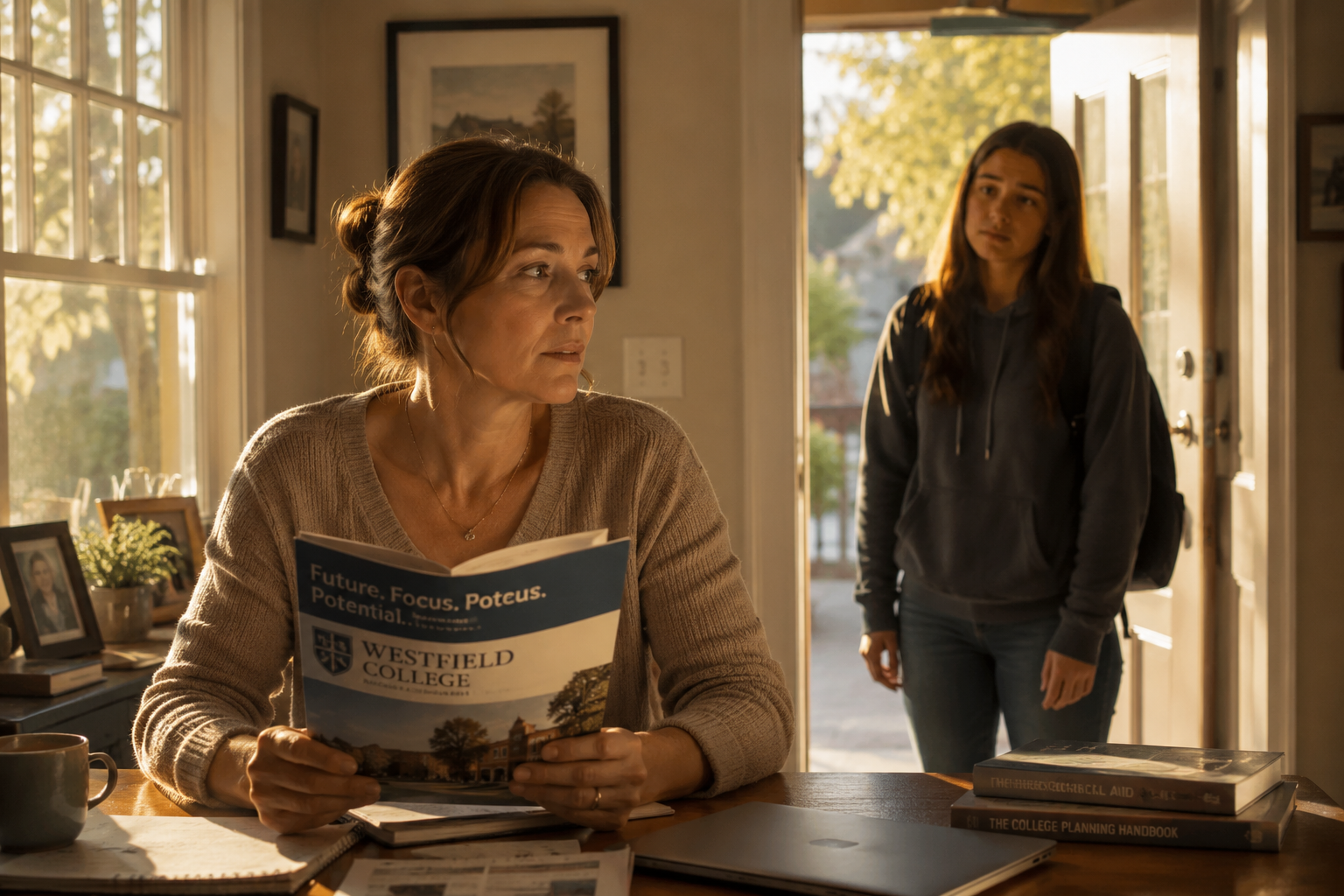
When I came home, Mia was sitting at the kitchen table, her eyes red.
“Mom called,” she said quietly. “She said you were trying to steal my college money.”
I sat down across from her. “Mia, I didn’t know about the trust. Your great-grandfather set it up. He wanted to make sure you could go to college, no matter what.”
Mia was silent for a long moment. Then she said, “Mom was going to take it, wasn’t she?”
I didn’t want to answer. But Mia was old enough to know the truth.
“Yes,” I said. “She tried.”
Tears rolled down Mia’s cheeks. She didn’t say she was sorry for telling me I wasn’t her real mother. But she didn’t have to. She reached across the table and took my hand.
“You’re the one who showed up,” she whispered.
And that was enough.
Maybe being a real mother isn’t about biology. Maybe it’s about who answers the phone when the financial aid office calls. Who stays up late filling out forms. Who learns to braid hair and sit through choir recitals and never, ever gives up.
Who shows up.