
The first time my neighbor complained about my mother’s wheelchair ramp, she did it with a plate of cookies in her hands and a smile that never reached her eyes.
My mother had moved in with me three weeks earlier, after a stroke left her unable to manage the steep stairs at her apartment. I had converted the dining room into a bedroom, rented a hospital bed for the first month, and spent most nights learning how to help her from the wheelchair to the bathroom without making her feel like a patient instead of a person.
By the time the contractor started building the ramp to our front porch, I was too tired to care what the neighbors thought. I cared about whether my mother could get outside without me and whether my fourteen-year-old daughter, Lily, would stop looking so scared every time Grandma tried to stand up on her own.
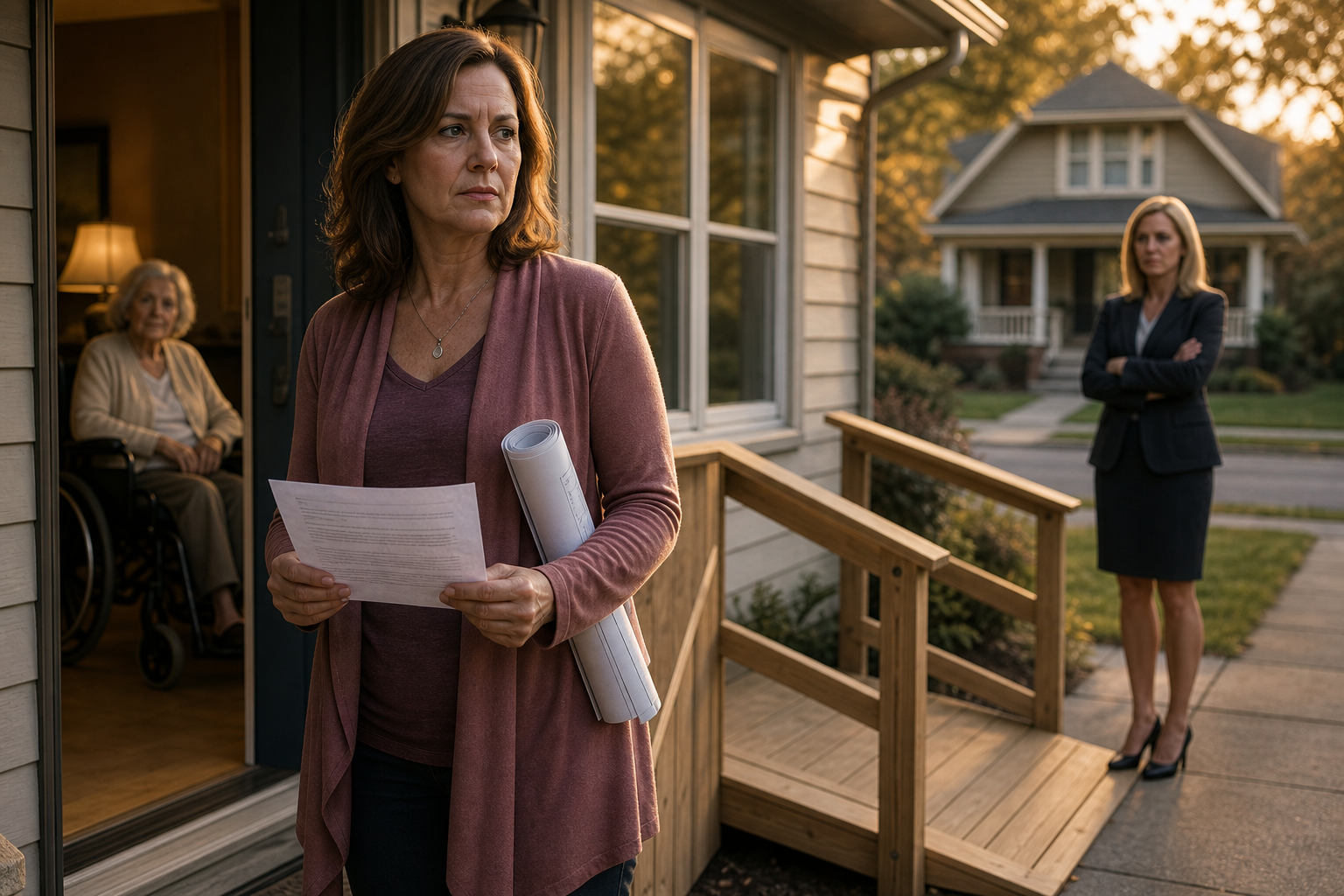
Carla from two houses down arrived just as the first railing went up. She wore white capri pants and carried oatmeal raisin cookies like she was auditioning to be named nicest woman on the street.
“I just wanted to check on your mom,” she said, glancing past me at the unfinished ramp. “And I thought I should mention that some people are a little concerned about how… permanent this looks.”
I looked at the wood framing, the permit tag in the front window, and then back at her. “Permanent is sort of the point.”
She gave a soft laugh, the kind people use when they are trying to make cruelty sound practical. “Of course. It’s just that once one house changes the look of the block, it affects everyone’s property values.”
I should have shut the conversation down right there. Instead, because my mother had raised me to be polite long past the point of comfort, I thanked her for the cookies and told her everything was approved.
She left them on my counter anyway. No one in my house touched them.
After that, Carla turned up everywhere. She stopped me while I was bringing groceries inside to ask how long my mother would be staying. She asked the home health nurse whether their van had to park in front of my house “every single week.” She told Lily she hoped all the extra traffic wasn’t disrupting her school year, which made my daughter come inside red-eyed and furious.
Meanwhile, my mother noticed all of it.
“Maybe I should just go to assisted living,” she said one night when I was helping her settle into bed. “I don’t want your whole neighborhood hating you because of me.”
That made me so angry I had to sit down.
“They do not get to make you feel like a problem in my house,” I told her. “And this is your house too, as long as you want it.”
She nodded, but her mouth trembled the way it had since the stroke. My mother had always been proud. Needing help was already hard enough. Watching someone else treat that need like an inconvenience was another kind of humiliation.
Three days later, I got a letter from the HOA.
It said a formal complaint had been filed regarding an unauthorized structure that negatively affected neighborhood aesthetics. I was required to attend the next board meeting to address the violation.
I read it twice in my kitchen while the kettle screamed behind me.
My first stupid, immediate thought was that Carla was actually going to win.
I called the contractor, who reminded me that he had pulled the permit, submitted the drawings, and built the ramp to code. Then I called the city, which confirmed the permit was active. After that, I sat at my kitchen table under the letter and cried anyway, because sometimes being right does not stop you from feeling cornered.
Lily found me there after school.
“Was that woman from down the street?” she asked.
I nodded.
My daughter’s face changed in a way I am still not used to seeing. Fourteen is old enough to understand cruelty and young enough to have no patience for adults who hide it behind manners.
“Then don’t go there to be nice,” she said. “Go there to end it.”
I almost laughed. Instead, I folded the letter and put it in my bag with the permit paperwork, the contractor invoice, and a short note from my mother’s physical therapist explaining why the ramp was medically necessary.
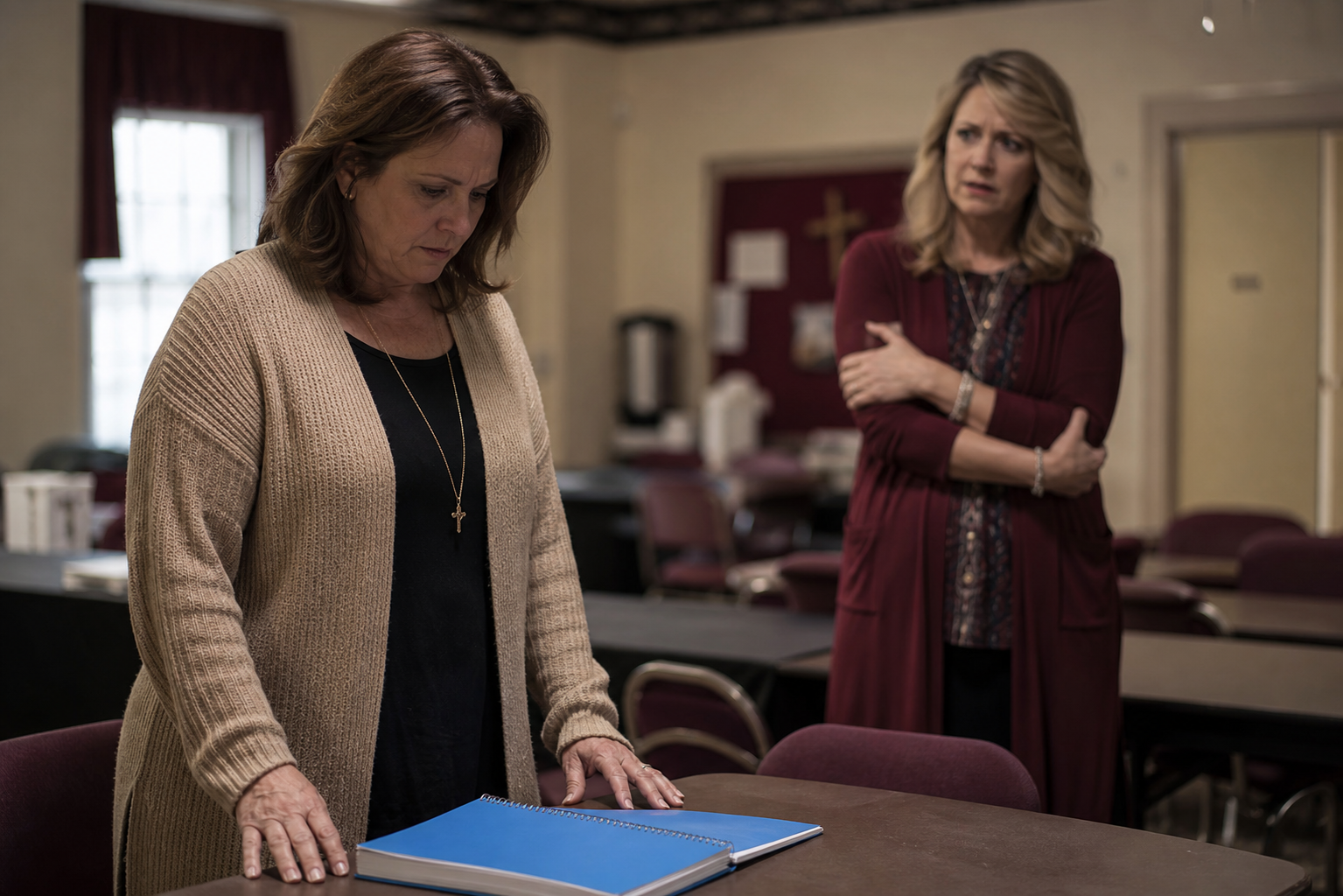
The board meeting was held in the clubhouse on Monday night. Carla was already there when I walked in, sitting in the second row with her ankles crossed and a leather folder on her lap. She smiled at me the way people smile when they think they are about to watch you be corrected.
What I had not expected was for half the room to turn and look at me too.
That was the part that stung. It wasn’t just a complaint. She had made me into an example.
The board president, Mr. Donnelly, called my address and asked me to come forward. Carla lifted her hand before I even sat down.
“I’d like it noted,” she said, “that this isn’t personal. We all feel for her family. But rules exist for a reason, and if exceptions are made for one homeowner, the entire character of the neighborhood changes.”
She said character like she was protecting a historic landmark instead of trying to shame my mother for being in a wheelchair where someone else might have to see her.
I opened my folder. My hands were shaking, which only made me angrier.
“The ramp is permitted,” I said. “It was professionally built, inspected, and approved. My mother lives with me after a stroke. This is not a decorative project. It’s access to our home.”
I handed the documents to the woman on the board beside me. She scanned them, then passed them to Mr. Donnelly.
Carla shifted in her chair. “Even if the city approved it, the HOA still has standards.”
“Yes,” Mr. Donnelly said calmly. “It does.”
Then he looked down at another folder already on the table.
“Which is why,” he continued, “when your complaint requested a broader compliance review of visible exterior violations on the block, management followed standard procedure.”
The room went quiet.
I turned toward Carla. For the first time that night, her expression changed.
Mr. Donnelly opened the file. “The ramp at Ms. Mercer’s home is compliant. However, the review identified an unapproved fence extension at your property, a shed installed without architectural approval, and a retaining wall that appears to encroach on the common drainage easement. We also have two prior notices that were never answered.”
Someone behind Carla made a sound that was half cough, half laugh.
Carla went rigid. “That has nothing to do with this.”
“It has to do with the compliance sweep you requested,” he said. “You specifically asked the board to enforce neighborhood standards consistently.”
Her voice sharpened. “My backyard is private.”
Mr. Donnelly didn’t even blink. “The fence extension is visible from the sidewalk, the shed is visible from the alley, and the easement issue came from the survey attached to your own patio application last year.”
I had not known whether I wanted vindication or relief. In that moment, I realized I wanted both.
Carla started talking faster, tripping over her own explanations. The shed was temporary. The fence contractor had handled the paperwork. The retaining wall was only a few inches. She had meant to respond. She had been busy.
I sat there listening to the same woman who had tried to frame my mother’s mobility as a threat to neighborhood standards suddenly argue that rules should allow for nuance.
Mr. Donnelly finished by stating, for the record, that accessibility modifications approved by the city and installed to code would not be treated as aesthetic violations. Then he moved Carla’s property into formal review.
The meeting should have ended there, but Lily’s words kept ringing in my ears: Don’t go there to be nice. Go there to end it.
So I spoke one more time.
“I know everyone likes to call this a property values issue,” I said, turning so the room could hear me. “But my mother being able to enter my house safely is not a decline in neighborhood standards. The decline is treating disability like something that has to be hidden so the block still looks expensive.”
No one interrupted me.
“If the ramp bothered you because it changed your view, say that with your chest,” I said, looking directly at Carla now. “But don’t pretend this was about fairness.”
Her face went bright red. She stared down at her folder and said nothing.
When I got home, my mother was still awake in the living room pretending she had not been waiting up.
“How bad was it?” she asked.
I set my bag down and told her, very calmly, “Bad for the wrong person.”
For the first time in days, she laughed.
The next morning, Carla’s cookies were still in the freezer where Lily had shoved them after the first visit. I threw them in the trash.
Over the next two weeks, the neighborhood found out what had happened, because of course it did. Carla had to remove the shed, submit new plans for the retaining wall, and deal with a surveyor marking the back edge of her yard with little orange flags that were visible from half the street.
She never apologized. She did, however, stop taking walks past my house when my mother was outside on the porch.
And my mother started going outside again.
That was the part I held onto. Not Carla getting embarrassed. Not the gossip. Not even the relief of knowing I didn’t have to rip out a ramp we could not function without.
It was the morning I found my mother sitting in the sun with a blanket over her knees and Lily beside her doing homework, both of them using the ramp like it had always belonged there.
Maybe that is what bothered Carla most from the beginning. Not the wood, not the railing, not the permit in the window.
Just the fact that my mother’s need had become visible, and I had refused to hide it for someone else’s comfort.
If stories about housing pressure and people using paperwork as leverage pull you in, you might also want to read My Husband Said the Eviction Notice Was a Mistake — Then the Landlord Asked Why I Had ‘Moved Out’ and My Best Friend Said I Was Only Her Emergency Contact — Then the Property Manager Read My Name Off the Lease.
Maybe that makes me difficult. Maybe it just means I finally learned that keeping the peace and protecting someone are not always the same thing.