🎧 Listen to this story
Full narration — My Wife Said the Credit Card Debt Was ‘Managing Stress.’ Then the Bank
Narrated by Dramateller
The call came on a Tuesday afternoon. I was at my desk, halfway through a spreadsheet, when the bank’s fraud department asked if I’d recently authorized a home equity line of credit.
I said no. I’d never applied for one. We already had a mortgage on the house, a fixed rate I’d been paying down for seven years.
Sir, a HELOC was opened on this property twelve months ago. The total drawn so far is eighty-two thousand dollars. We’re calling because two payments have been missed.
I remember the pause. The way the room went quiet. Eighty-two thousand dollars I had never seen, never signed for, never agreed to.
I asked whose name was on the application. Your wife’s, the agent said. And yours as co-borrower.
The signature, she explained, appeared to be an electronic authorization from our joint email account.
I hung up and sat there for a long time.
Sarah and I had been married for eleven years. We met in our twenties, bought a modest three-bedroom just before the market climbed, and built what I thought was a solid life. Two kids. Two cars. One mortgage. Normal debt, car loans, some credit card balances we paid down together.
Or so I believed.
Looking back, I think I trained myself not to look too closely. Sarah handled the household finances, groceries, utilities, the kids’ activities. I handled the big stuff: mortgage, insurance, investments. It was a division that felt fair. She never complained about my work travel. I never questioned the credit card statements she paid from her account.
Then I started to look.
That evening, I logged into our joint credit monitoring account. The first thing I saw was a balance of $27,000 on a card I’d never seen before. Then another: $14,000. Then a store card: $6,000.
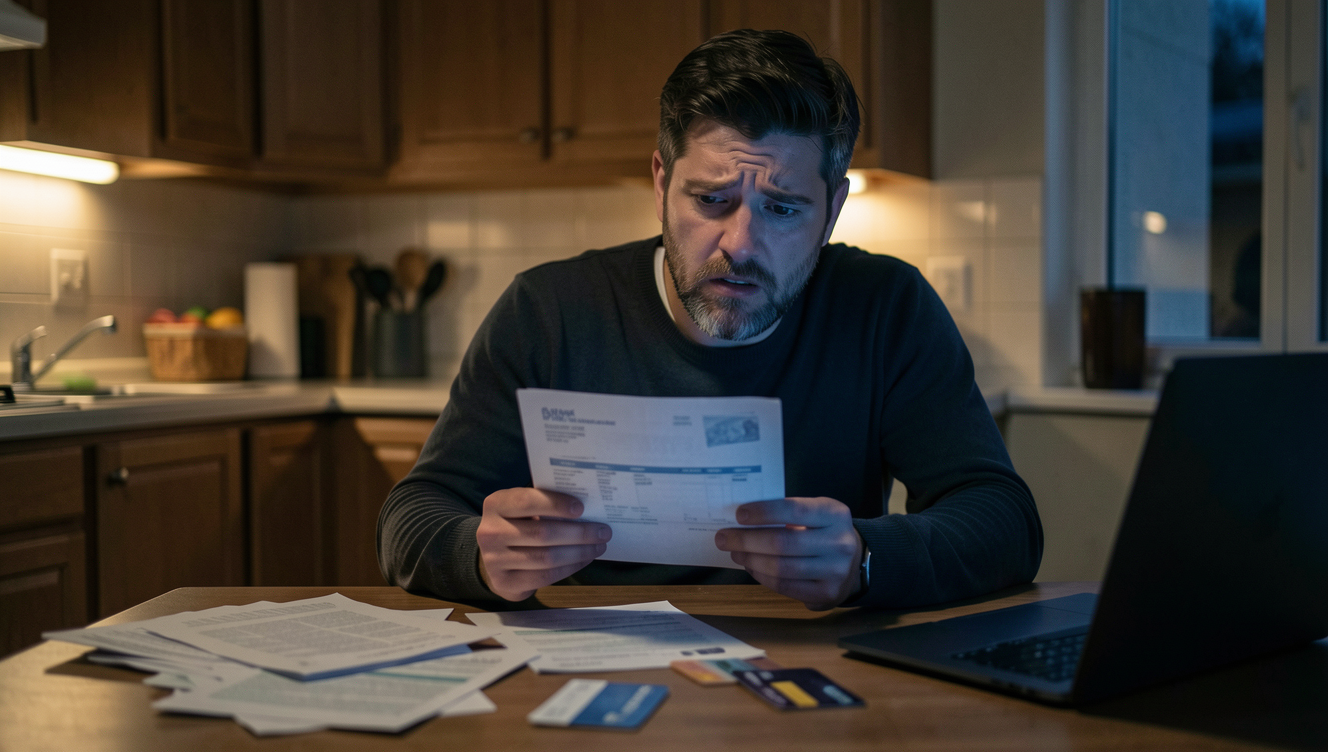
I printed the statements. Clothing boutiques, home decor websites, a vacation resort we’d never visited together, three hotel bookings in the city an hour away. All over the past eighteen months.
Sarah walked in as I was spreading the papers across the kitchen table. She saw my face and stopped.
I can explain, she said.
Did you forge my signature on a loan?
She didn’t say no. She walked to the counter, poured a glass of water, and told me the story in a flat voice. It had started small, shopping trips with friends, a few treat-yourself purchases after stressful weeks. Then the minimum payments grew. She opened new cards for balance transfers. The interest swallowed everything. The HELOC was supposed to fix it. She said she planned to tell me once she had it under control.
I asked where the money had gone. She couldn’t tell me, not really. There was no single crisis, no medical emergency, no job loss. Just years of buying things to feel better about things she didn’t want to talk about.
I told her she needed to call her parents. She refused. So I did.
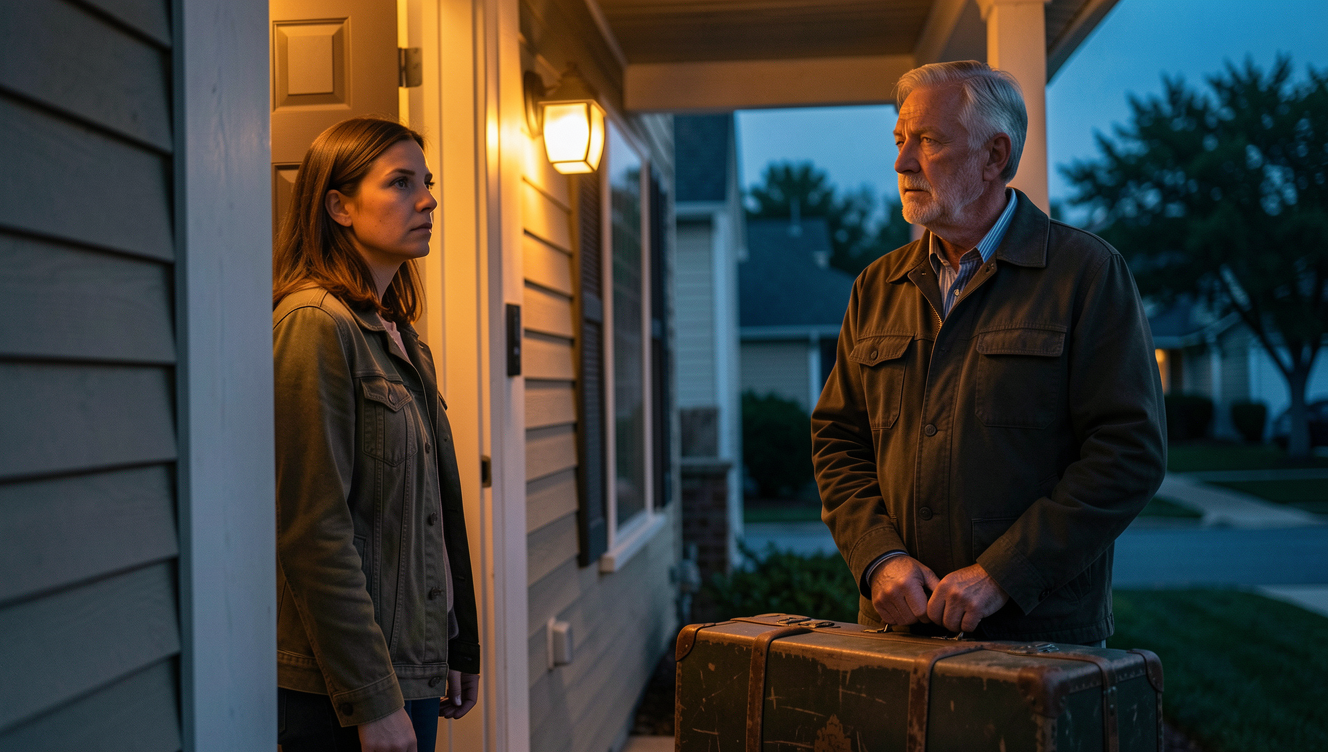
Her mother showed up the next morning. She didn’t look at the statements. She sat across from me at the same kitchen table and said, You’re blowing this out of proportion. It’s just debt. People have debt.
She took out a loan in my name.
Because she knew you’d say no. That doesn’t make her a criminal. It makes her scared.
Her brother Mark called that afternoon. He offered to lend us the money to pay off the HELOC. But there was a condition. We want you to put the house in both names properly, not just technically. A legal co-ownership agreement. So if anything happens, Sarah’s protected.
The house was already in both our names. We’d bought it together. What Mark meant was that he wanted me to sign something giving Sarah controlling interest if we ever split. He was building a safety net for his sister, a net paid for with the very debt she’d hidden from me.
I asked Mark if he’d known about the debt before the HELOC. There was a pause. Then he said, She told me she was struggling. I helped her with a couple of payments.
So they’d all known. Her mother, her brother, probably others. They’d helped her hide it from me. And now they were here to negotiate terms for my forgiveness.
I told Mark I didn’t want his money. I told Sarah I needed space. She moved to her parents’ house that weekend. The kids stayed with me because she said she needed a break.
For three weeks, I sat in that house alone at night after the kids were asleep. I looked at the numbers over and over. Eighty-two thousand dollars. Eleven years of marriage. A signature that wasn’t mine.
I met with a lawyer. She told me I had options: report the loan as fraudulent, pursue a separation that protected my credit, or agree to a financial settlement that split the debt and the house equally. None of them were easy. None of them let us go back to the way things were.
Sarah texted me every few days. First angry, then sad, then desperate. She wanted to come home. She said she’d start therapy. She said she’d give me full control of the finances. But she never said she was sorry for forging my name. She said she was sorry she got caught.
Maybe that’s the part that broke me the most. Not the debt. Not the lies. The fact that she spent a year looking at that HELOC statement every month and never once thought, I should tell my husband.
I told her I wanted a separation. I’d sell the house, split the equity evenly, and we’d each handle our own debts from the proceeds. The kids would stay with me during the school week and with her on weekends. It was the fairest thing I could think of that didn’t involve me staying in a marriage where trust had been hollowed out from the inside.
Her mother called me a monster for destroying the family over money. Her brother said I was using the debt as an excuse to leave because I’d never been good enough for her anyway.
But my therapist asked me a question I keep coming back to: If she had told you about the debt honestly, would you have left?
The answer is no. I would have been angry. I would have made a plan. I would have worked with her. I would have done what I thought marriage meant, face the hard thing together.
She never gave me that chance. She signed my name to a legal document instead.
I still love her. That’s the part I can’t reconcile. I love her and I cannot trust her, and I do not know if trust is something you can rebuild when someone proves they’ll hide a burning building from you until the smoke reaches your side of the house.
Maybe that makes me cruel. Maybe it makes me smart. Maybe it just makes me tired.
Would you have stayed, or would the signature be the line you couldn’t uncross?