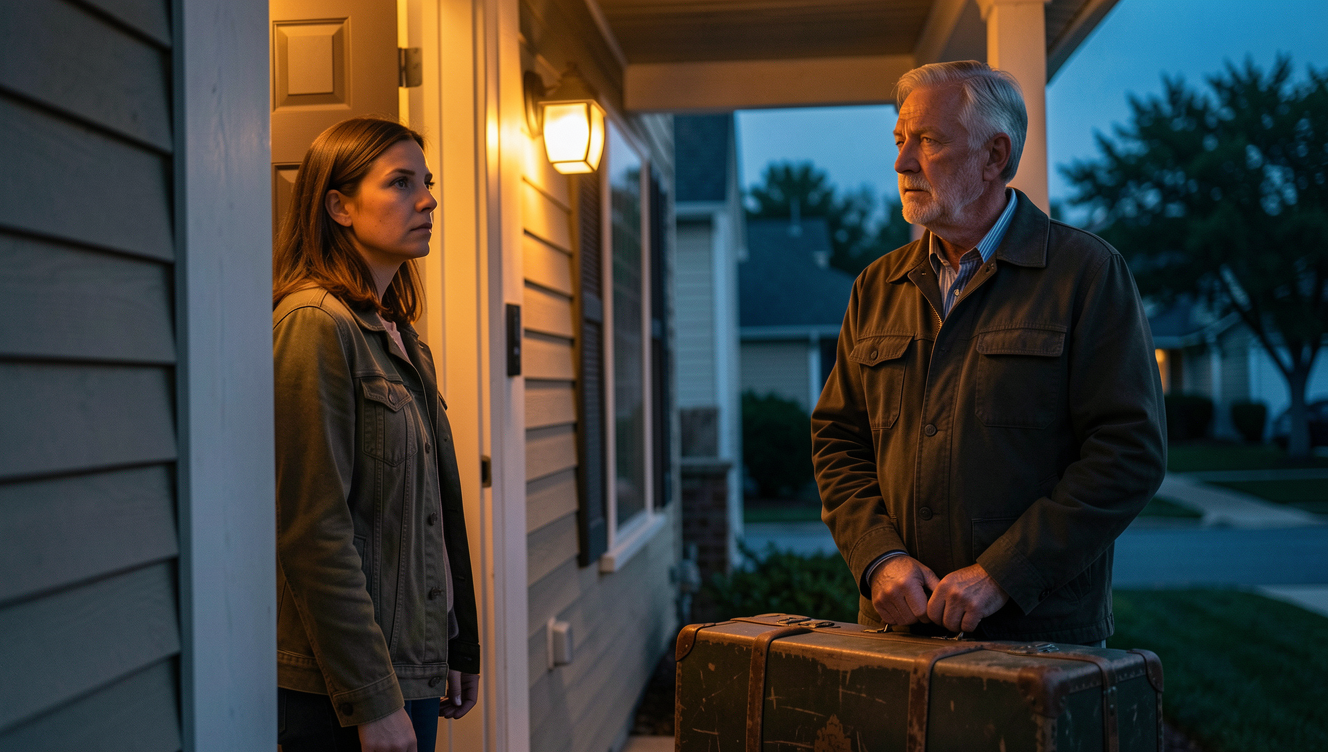
The week after my divorce was finalized, I moved back into my childhood home with two suitcases, one exhausted ten-year-old daughter, and the kind of pride that feels bruised to the touch. My father met us at the door, hugged my daughter first, then took one look at the legal envelope under my arm and said, ‘You’re safe here until you get your feet under you again.’ I believed him. At thirty-six, you want to believe your parents still mean shelter when they open the door.
The house had not changed much since I was a teenager. Same narrow hallway. Same grandfather clock that ran two minutes slow. Same kitchen table with the burn mark from when my brother Dylan dropped a hot pan and laughed while I got blamed for not using a coaster. I noticed those old details because moving home has a way of making your body remember old hierarchies before your mind catches up. Dylan had always been the son with potential. I had always been the reliable one. He got forgiven. I got assigned responsibility.
At first, my father was gentle. He drove my daughter to school when I had meetings. He told relatives to leave me alone when they called fishing for gossip about the divorce. Then Dylan started showing up every other evening with grand plans and empty hands. He had just announced that he and his girlfriend wanted to ‘build something of their own,’ which usually meant he needed money from someone else. He walked around my father’s backyard like a man surveying future property, talking about adding a workshop, extending the fence, maybe turning the detached garage into a rental. He said all of this while borrowing my phone charger and forgetting to return it.
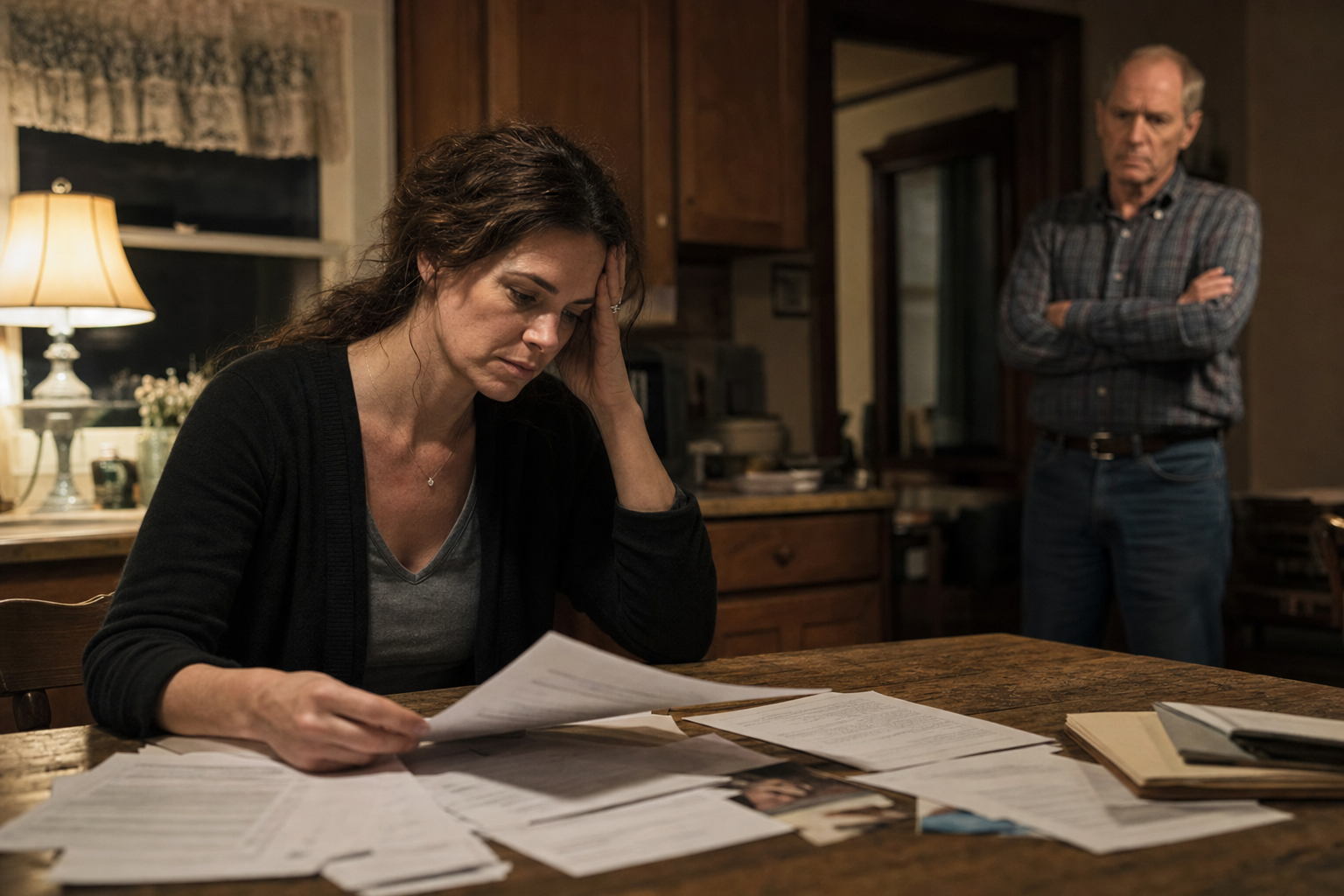
The conversation turned ugly on a Thursday night after dinner. My daughter was upstairs in the spare room doing homework, and I was rinsing plates when my father sat down with a folder and tapped it twice like he was calling a meeting to order. He said he had been thinking about ‘long-term fairness.’ Then he pushed the folder toward me. Inside were property papers and a handwritten note with Dylan’s name on it. My father cleared his throat and said, ‘You can sign it over to your brother. He’ll do more with it than you will, and you’ll probably remarry anyway.’ For a second I honestly thought I had misheard him. I had just ended a marriage, moved my child into a bedroom that still smelled faintly like old wallpaper, and my father was already telling me my future security belonged to my brother’s next scheme.
I asked him whether he understood what he was saying. He said yes, perfectly. He reminded me that Dylan had ‘a family to think about now,’ as if my daughter and I were a temporary weather system passing over the roof. When I said Dylan had never kept a payment plan, a lease, or a promise for more than six months, my father’s face hardened. He told me I was bitter from the divorce and making everything personal. That sentence did something to me. Women are always told we are making things personal the moment we refuse to donate our stability to someone else’s comfort.
Dylan arrived halfway through the argument and immediately chose smugness over shame. He leaned against the doorway and said Dad was only trying to keep the property ‘in the family.’ I asked what exactly he thought I was. A tenant? A placeholder? He shrugged and said I had options. That was the moment my daughter came downstairs because she had heard my voice change. She stood on the bottom step holding her math notebook and asked, very quietly, ‘Grandpa, are we losing this house too?’ No courtroom, no legal letter, no betrayal from my ex-husband had hit me as hard as that sentence. My child had barely unpacked and was already bracing to be displaced again.
I did not sign anything. I packed our things the next morning and moved into a short-term rental my friend offered at a discount. My father called it impulsive. My aunt called it disrespectful. Dylan texted that I was punishing the whole family over a misunderstanding. But distance has a way of clarifying language. It was not a misunderstanding. My father understood exactly what he was asking me to surrender: the little bit of breathing room I had left. Two weeks later, he transferred the property to Dylan anyway. Six months after that, Dylan borrowed against it and fell behind.
My father still tells people he doesn’t know why I became cold. I am not cold. I am simply no longer willing to confuse access with love. Some families only make room for you when they think you are too tired to defend yourself. The divorce taught me one kind of ending. My father taught me another. And if choosing my daughter’s sense of safety over my family’s approval makes me the villain in their version, then at least this time I got to write my own signature somewhere that mattered.