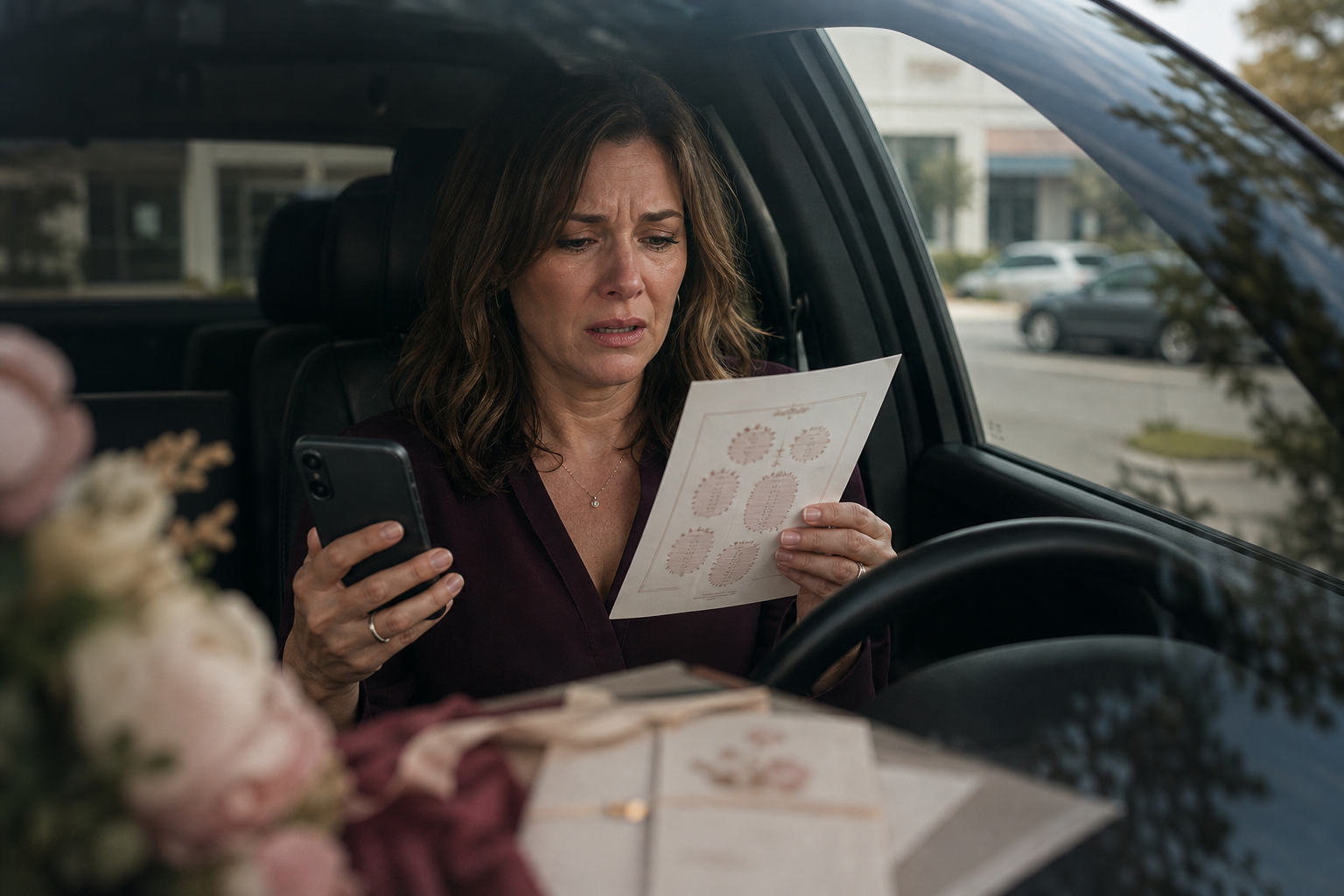

The tow yard called me at 10:14 on a Tuesday morning and asked whether I still wanted to be responsible for the truck.
I was standing in the copy room at work, waiting for a jammed printer to finish spitting out forty-two pages of insurance forms, when a man with a flat, bored voice said, “Ma’am, we’ve got a silver F-150 registered in your name. It was impounded overnight. Storage fees start today.”
For a second, I honestly thought he had the wrong person.
Then he read me the plate number.
My stomach dropped so hard I had to grab the edge of the counter.
The truck was my brother’s, but legally, at least on paper, it was mine too.
Or that was the lie I had been telling myself all spring. That it was temporary. That it was a bridge. That I was helping him get back to work, not quietly tying our household to one more problem he might not survive in a straight line.
My younger brother, Ryan, had been out of rehab for six months when my mother first came to my house with the paperwork.
She arrived on a Sunday afternoon carrying a grocery-store folder stuffed with forms and speaking in that too-careful tone she uses when she has already decided what the right answer is and only needs me to catch up to it.
“He has a chance at a union job,” she said before she even sat down. “But he needs reliable transportation, and no bank is going to approve him alone right now.”
I remember looking from the folder to her face and then across the room to my husband, David, who was replacing the batteries in the hallway smoke detector and had gone completely still on the ladder.
Ryan was thirty-six years old. He had two DUIs from years earlier, one unfinished community-college semester, a string of jobs that always ended because of a boss, a girlfriend, bad luck, or the universe, and exactly one talent so consistent it might as well have been a trade: making every emergency feel like the last emergency before he finally changed.
My mother said this time was different.
That phrase should be embroidered on a pillow in families like mine.
Different had meant the roofing job after the pills. Different had meant the landscaping business after the gambling. Different had meant moving in with my mother “just until he had cash flow.” Different had meant rehab, then sober living, then church, then a men’s group, then a sponsor whose name changed every few months.
By then, I had a private rule: I would help with groceries, work boots, copays, or a motel room in weather that could kill someone. I would not sign my name to debt.
My mother knew that rule, which was why she did not argue with it directly. She went around it.
She said the truck was the one missing piece between Ryan and stability. She said if he lost this job offer, he would spiral. She said a man trying to rebuild his life should not be punished forever for what he did when he was sick.
Then she said the line she always saves for last.
“If your father were alive, he would do this without hesitating.”
That was unfair, and she knew it. My father had been dead eight years, but she still used him like a closing argument whenever she ran out of better ones.
David came down off the ladder and asked one practical question after another. What was the payment? How much down? Who was carrying the insurance? What happened if Ryan missed even one month? My mother answered none of them cleanly. She kept circling back to grace, family, recovery, second chances.
Ryan showed up an hour later in steel-toed boots and his only decent flannel shirt, the one he wore to court, funerals, and job interviews. He looked healthier than I had seen him in years. Clear eyes. Ten pounds back on him. No restless shaking in his knee. He sat at my kitchen table and said, quietly, “I know I haven’t earned this. I’m asking anyway.”
That was what got me.
Not my mother. Not guilt. Not Dad. It was the fact that for once he was not performing outrage or self-pity. He just looked ashamed and tired and almost young again, like the brother who used to walk me home from the pool with my towel draped over both our shoulders because he knew I hated the boys who yelled from passing cars.
I signed.
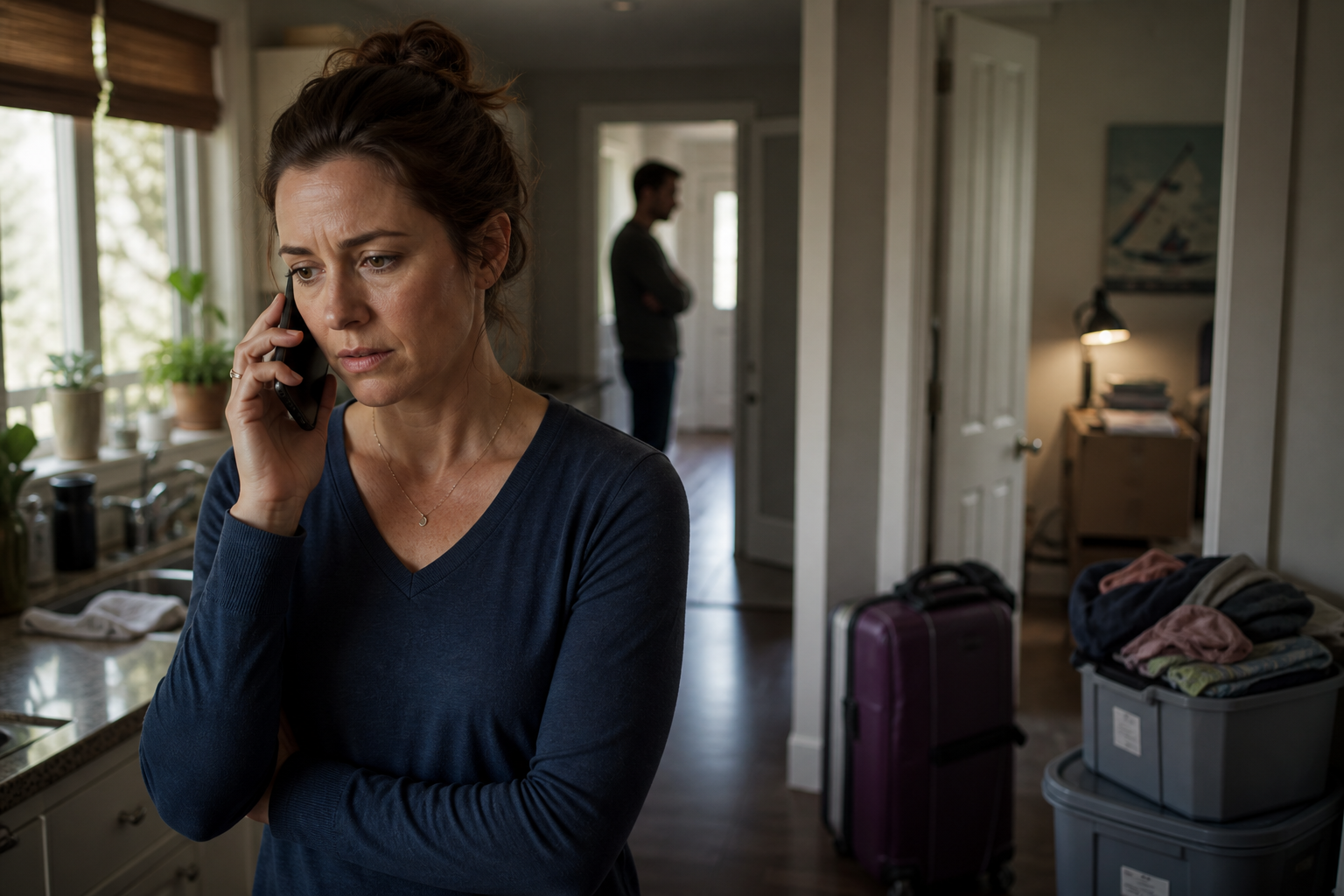
David did not fight me in front of them. He waited until the door closed, then said, “You didn’t co-sign a truck, Mara. You co-signed his next crisis.”
I told him he was being harsh because I needed that to be true.
For the first six weeks, Ryan made every payment on time. He texted pictures from job sites. He sent my mother home with supermarket flowers for me one Friday because he had gotten his first full paycheck. When I saw him at Easter, he brought my daughter a sketchbook because he remembered she liked to draw. Even David admitted, carefully, that Ryan seemed steadier.
Then the small things started.
My mother called one Wednesday asking if I could cover his insurance “just this month” because his hours had been short after rain delays. Ryan called the next week saying the union had not finalized his benefits yet and he needed help with a copay. By June, I was getting late-night texts that began with phrases like Can I ask you something without you telling David?
That was the point where I should have stopped answering.
I did not.
I moved money from my freelance editing account so the missing truck payment would not hit our joint checking. I told myself it was technically my money, even though that is the kind of distinction people make when they already know the truth would sound bad out loud. I told Ryan he needed to stop putting me in the middle. He promised he would. Then he did it again two weeks later.
David noticed, of course. Marriage teaches people the shape of each other’s silences.
One night, while I was pretending to read on the couch, he asked, “How far into this are we?”
I said, “I handled it.”
He did not raise his voice. That would have been easier to fight.
He just looked at me and said, “That wasn’t what I asked.”
I hated him a little for sounding calm when I already felt guilty. I said Ryan had been short one payment and I covered it. David asked if it was really one. I said yes.
That was my lie.
By the time the tow yard called, I had covered two partial payments, one insurance lapse, and a registration fee Ryan swore he would repay as soon as overtime picked up.
The man on the phone told me the truck had been found after midnight in a casino parking structure forty miles from Ryan’s apartment.
I closed my eyes.
Not because casinos were new. Because they were old.
Ryan had always rotated his disasters. Pills, then sports betting, then payday loans, then sudden spiritual awakenings, then promises to pay everyone back once the next thing clicked. Gambling had been the problem right before rehab. Not the only problem, but the one that hollowed out what was left after the rest.
“Has the driver contacted you?” the tow yard man asked.
“No,” I said.
“Well, somebody needs to. Registration makes you responsible if it sits.”
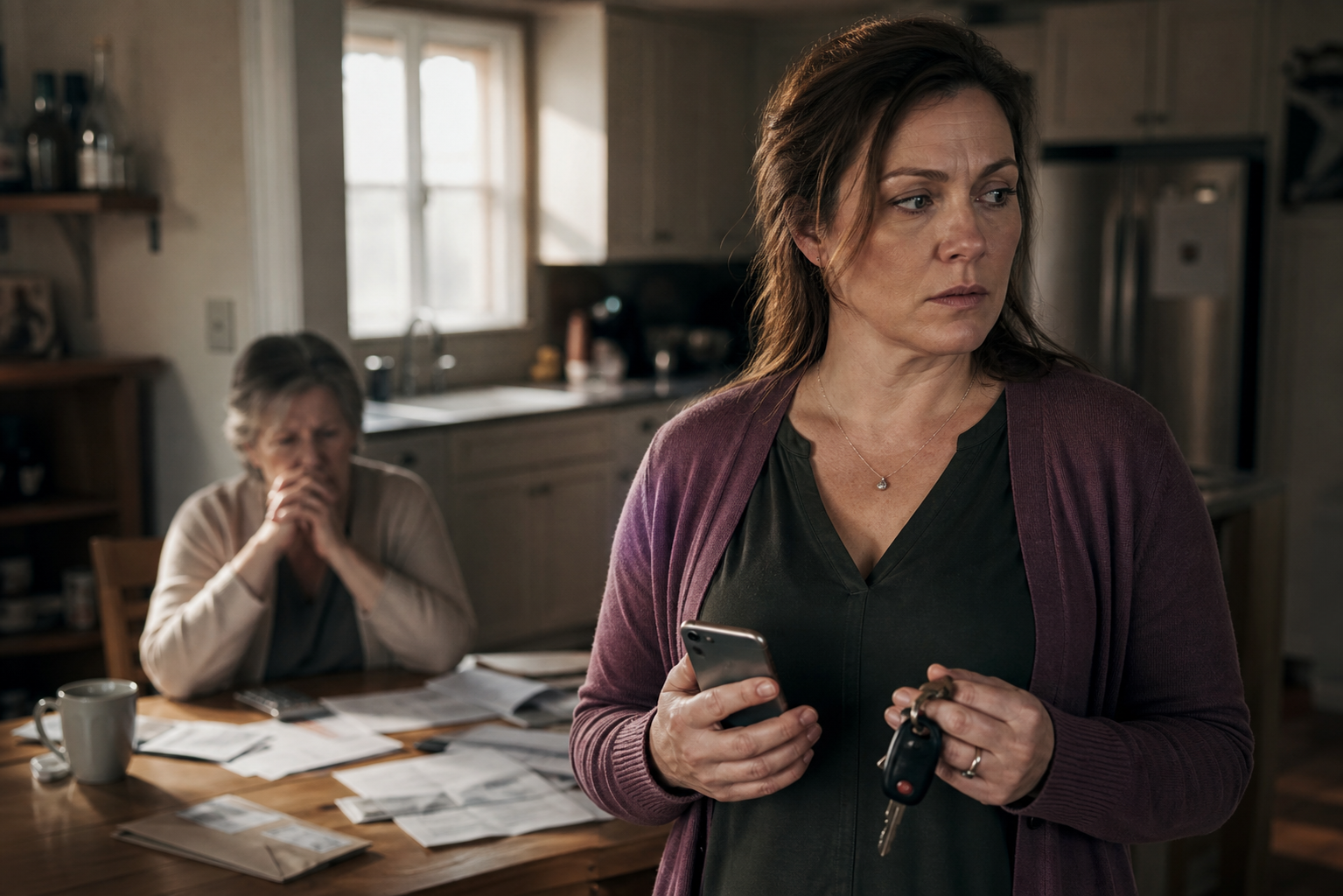
I drove to my mother’s house at lunch because I already knew where Ryan would not be.
She opened the door in her house slippers, took one look at my face, and said, “What happened?”
I did not answer. I just held up the paper where I had scribbled the impound address.
Something in her expression collapsed, but not into surprise. Into recognition.
“How long?” I asked.
She started crying immediately, which in our family has often functioned less like grief and more like weather—sudden, total, and impossible to argue with.
“He was doing so well,” she said. “It was only a few slips.”
Few slips.
There are phrases that should disqualify people from managing anyone else’s crisis.
I asked again, “How long?”
She said she had found casino ATM receipts in his jeans two weeks earlier. She said he swore it was one bad night. She said he begged her not to tell me because I would overreact and David would make everything about money.
Everything already was about money.
The truck payment was money. The insurance was money. The registration was money. My daughter’s orthodontist bill sitting on my counter at home was money. David staying late at a job he hated because our mortgage had jumped with property taxes was money.
But when women in families like mine mention money, we get accused of missing the human part.
I sat down at my mother’s kitchen table because my legs suddenly felt unreliable. “Did you know he missed last month’s payment?”
She looked away.
That answer was worse than yes.
“Mom.”
“I sent what I could.”
“From where?”
She did not speak.
“From Dad’s insurance money?”
Her chin trembled. “He’s my son.”
And there it was. The sentence beneath every sentence. Not he’s in recovery. Not he needs structure. Not let’s get him help. Just the oldest permission slip in the world.
I found Ryan three hours later because he finally answered when I texted that the truck would be released only to the registered owner.
He was sitting outside a coffee shop near the impound lot, wearing sunglasses even though the sky had turned gray. He looked wrecked. Not cinematic wrecked. Just dull, puffy, embarrassed, and older than thirty-six.
He started with, “I was going to tell you.”
“When? After the lender called? After they came for my credit? After David found out from someone else?”
He rubbed both hands over his face. “I messed up.”
I laughed once because I did not trust myself to do anything kinder. “You always say it like you spilled coffee. You didn’t mess up, Ryan. You dragged me into it. Again.”
He told me he had gone to the casino with guys from the job after getting laid off three weeks earlier. That he had not wanted to admit he lost the job. That one bad night turned into chasing the money, and chasing the money turned into missing payments, and missing payments turned into lying because by then the truth would have sounded worse.
That last part was at least honest.
He asked if I could just get the truck out and give him two weeks. Two weeks to catch up. Two weeks to fix it. Two weeks, the most dangerous phrase in my family.
I said no.
He actually looked stunned, as if after all these years of watching me bend, he had mistaken it for permanent shape.
“Mara, if they take it, I can’t get another job.”
“You already lost the job you had.”
“So that’s it?”
I thought about my mother using Dad like leverage. About David asking how far into this we were. About my own daughter at the dining table two nights earlier, sketching shoes she wanted to design someday, while I silently moved money around to cover a truck payment for a man old enough to know exactly what he was risking.
“No,” I said. “That’s not it. This is it: I’ll pay the fee to release the truck because my name is on it. Then I’m selling it back to the dealer or surrendering it, whatever hurts us least. After that, I’m done signing, covering, hiding, and translating your crises into language other people can live with.”
He stood up so fast his chair scraped the sidewalk. “You’d ruin me over one relapse?”
I stood too. “No. I’m refusing to let you ruin us over another one.”
If family money lies are your kind of read, you might also like I Told My Daughter Her Brother Was ‘Back on His Feet’ — Then the Repo Man Pulled Into Her Driveway.
Ryan called me cruel. My mother called me exhausted, which was true but not the criticism she meant. David, when I finally told him everything that evening at our kitchen table, was quiet for so long I almost preferred anger.
Then he asked, “Do you want me to be mad at you, or do you want help fixing it?”
I started crying so hard I had to press both palms over my eyes.
That was the worst part of the whole week—not Ryan, not the tow yard, not even my mother. It was realizing how much energy I had spent managing a grown man’s collapse while hiding it from the person actually helping me build a stable life.
We got the truck released the next morning. David drove because I did not trust myself not to shake. Ryan did not come. He texted once to ask if I had really gone through with it. I did not answer.
The dealer bought the truck back for less than the loan balance, which left us with a gap that made me physically ill to look at. We paid it from savings. Not because Ryan deserved rescue, but because interest is real even when family stories pretend it is not.
My mother did not speak to me for eleven days.
When she finally did, it was to say Ryan had checked himself back into treatment and that maybe I could have handled things with more compassion. I said compassion is not the same thing as permanent financial access.
She cried again. This time I let her.
It has been four months now. Ryan is in outpatient, working part-time at a supply warehouse, taking the bus, and furious that I still will not co-sign a cheaper used car. My mother thinks I am punishing him for being sick. Maybe some relatives think that too. People love simple morals when they are spending other people’s money.
I know what I did looks hard from the outside.
But I also know this: loving someone in recovery is not supposed to mean making your own household a soft place for every landing. Sometimes the most honest thing you can do for a person you love is stop confusing access with help.