
I kept my mother’s last voicemail from my sister for three days, and by the time she finally heard it, she had already measured the living room for a realtor’s video walkthrough.
That is the sentence that makes me sound cruel when I say it too quickly.
So I have learned to say the rest of it too.
My mother died on a Thursday night at 11:18, in the hospice room she had sworn she never wanted to see and then, at the end, admitted was quieter than being afraid at home.
I was the one sitting beside her when her breathing changed. I was the one who signed the last forms. I was the one who rode behind the van when they took her body out through the service entrance because she had once joked that she never wanted to make a dramatic exit through the front door.
My sister, Dana, got there twenty-two minutes later, still in her gym clothes, crying hard enough that the nurse hugged her before she even made it into the room.
I remember feeling something ugly and immediate when that happened.
Not because Dana was grieving. She was. But because people are always kindest to the person who arrives looking most shattered, not the one who has been quietly carrying the weight for months.
Our mother, Elaine, had congestive heart failure that turned mean in the spring. By June she could not climb the stairs to her own bedroom without stopping halfway. By July I was bringing groceries, sorting medications, and driving across town after work whenever her oxygen machine started beeping in a way she did not trust. Dana lived thirty minutes farther away than I did and had two college-age sons and a husband who always seemed to need help with something the second our mother did.
There was always a reason.
Some of them were even real.
But when one daughter becomes the default daughter long enough, the family starts treating her exhaustion like background furniture.
I am forty-two, divorced, and the sort of woman people describe as reliable when they mean they have gotten comfortable letting me absorb inconvenience without complaint. I handled my mother’s pharmacy calls on my lunch breaks. I knew which cardigan she liked in cold exam rooms. I knew that she hated applesauce but would eat it if you told her it was peach. I knew the difference between the sound of her being tired and the sound of her trying not to scare me.
Dana knew how to arrive with lilies and a loud voice and say, “Mom, you should have called me,” as if not being called were the same thing as not being needed.
The night before our mother died, I missed a call from her at 9:07 while I was in the hospital lobby arguing with billing about a duplicate hospice charge.
She left a voicemail.
I did not listen to it right away.
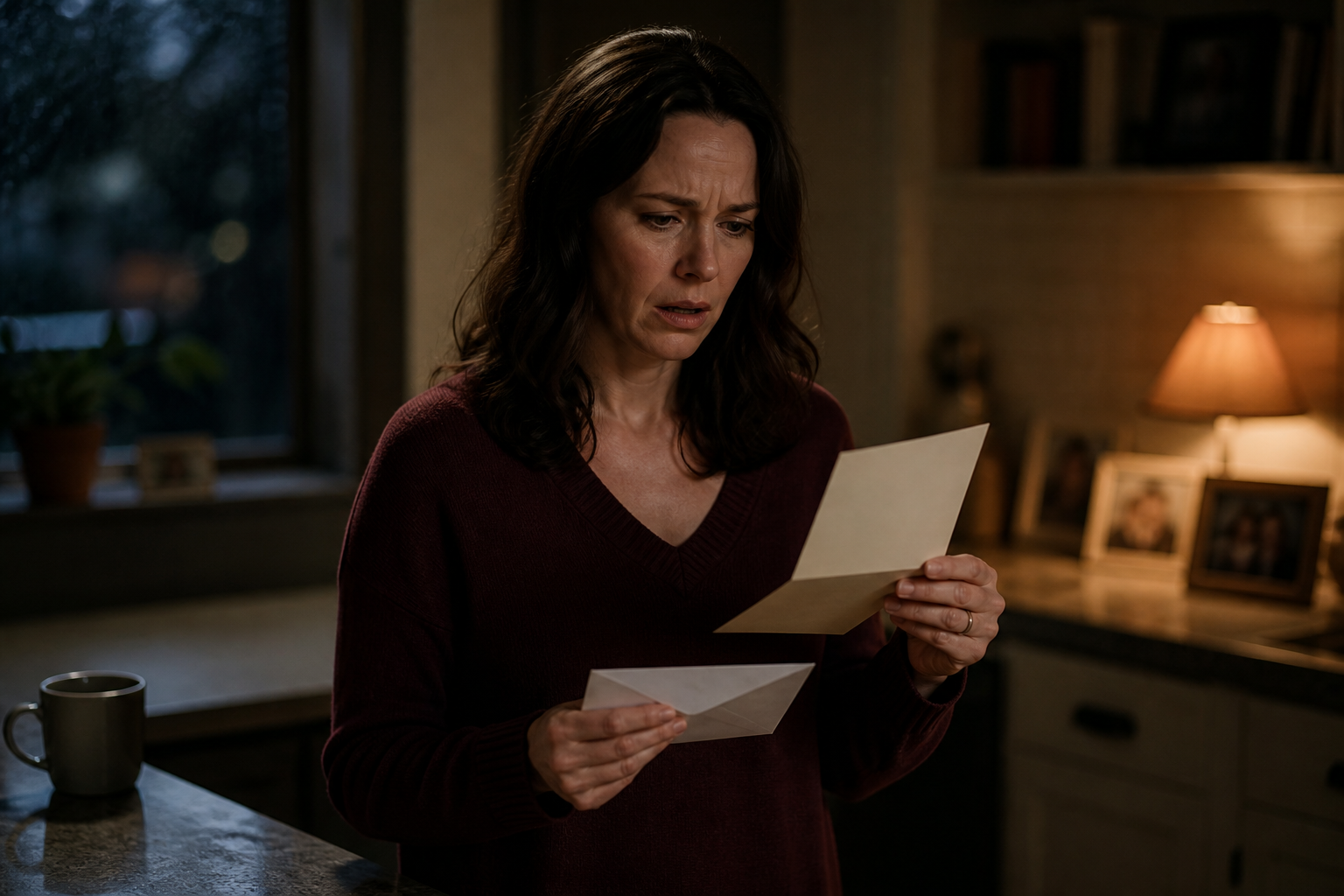
When I finally did, I was sitting in my car with both hands on the steering wheel, too tired to drive. Her voice was thin and breathy, but fully hers.
“Nora, it’s me,” she said. “You were probably downstairs fixing something again. I just wanted to tell you not to fight with your sister after I’m gone. She gets scared and turns it into talking. You know that.”
Then she coughed for so long I thought the message had ended.
When she spoke again, her voice was lower.
“And don’t let anyone push you out of the condo before you’re ready. I meant what I said. You’ll know what papers to find.”
There was a soft scrape, maybe the oxygen line against the blanket.
Then: “I’m tired, honey. I love you.”
I sat there listening to it three times in a row, crying so hard I had to press my forehead against the wheel to keep from making noise.
The condo sentence lodged somewhere sharp inside me.
Because our mother had not said that to Dana.
She had said it to me.
And I knew exactly what papers she meant.
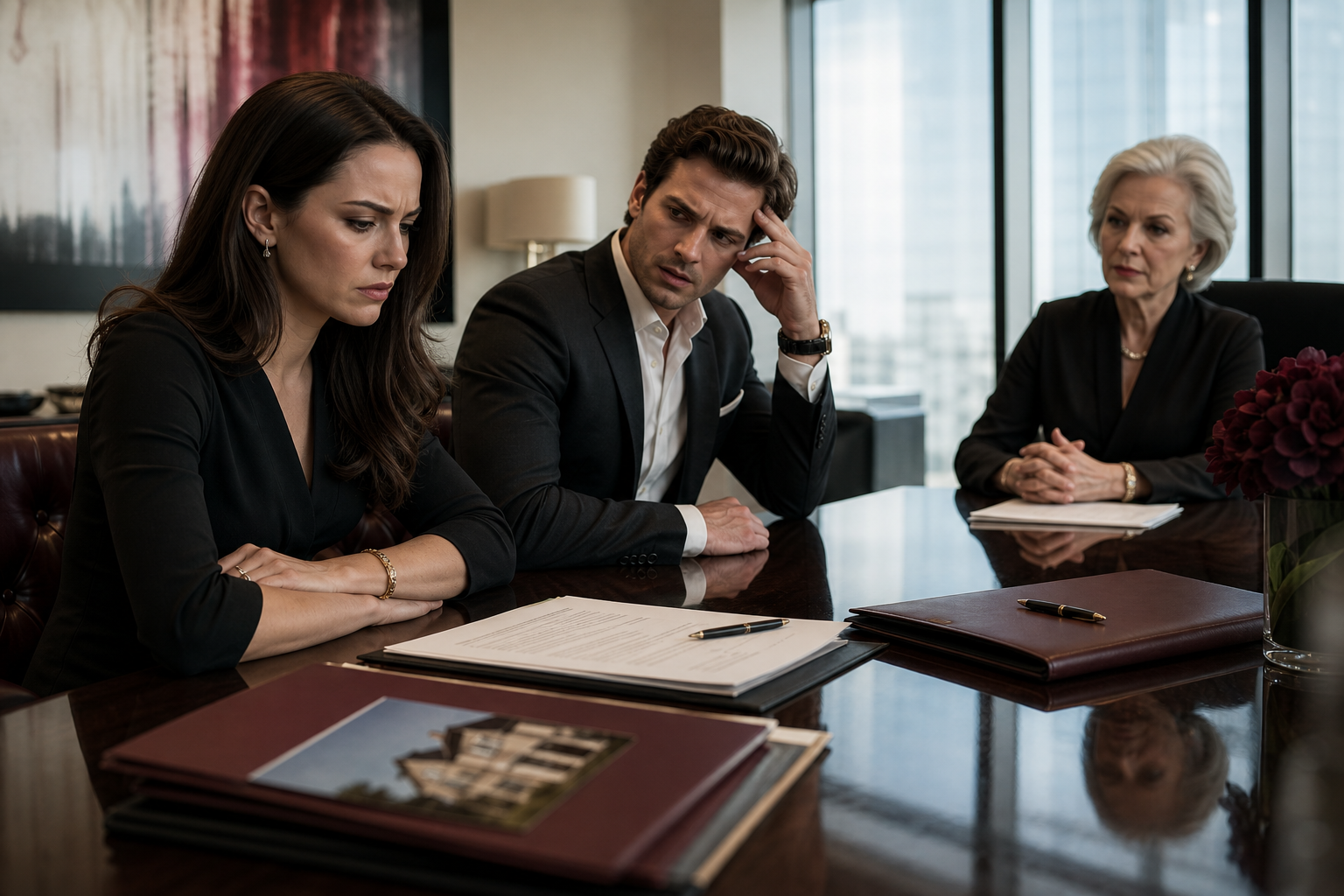
Two months earlier, after Dana had spent an entire Saturday open-housing a townhouse she could not afford but desperately wanted, she had come to our mother’s condo and started talking in that falsely practical tone people use when they want to dress greed up as efficiency.
“If anything happens,” she said, standing in Mom’s kitchen with one hand on the granite counter like she was already assessing resale value, “we should probably sell fast. The market’s still decent, and empty places just bleed money.”
Our mother was in the living room recliner, wrapped in the blue blanket from hospice intake, and she looked straight at me before she answered Dana.
“Nothing is being sold while I’m still paying the electric bill,” she said.
Dana laughed, kissed her forehead, and said, “You know what I mean.”
But I did know what she meant. So did Mom.
A week after that, while I was helping her sort old mail, Mom had me open the metal file box in her hall closet. Inside were the condo deed, the insurance information, and a short notarized letter stating that if she became too ill to remain alone, she wanted me to stay in the condo temporarily until the estate was settled because I had been her primary caregiver and would need time to sort the contents and expenses. It was not a dramatic legal instrument. It did not rewrite her will. But it made her wishes plain.
“Dana will say I’m making things uneven,” Mom told me then.
“Are you?” I asked.
She gave me the look mothers save for daughters who ask questions they already know the answer to.
“I’m making things honest,” she said.
After she died, honesty left the room faster than the flowers arrived.
By Friday afternoon Dana was in full motion. Funeral home, prayer cards, guest list, casseroles, who should speak, whether we should “keep the condo tidy in case people stop by afterward.” Her husband, Mitch, kept wandering through rooms opening cabinets, which I hated on sight but was too tired to challenge in that moment.
I had still not told Dana about the voicemail.
Part of that was grief. Part of it was instinct. And part of it was that I wanted, for once, to see what my sister would say before she knew there was evidence against her.
That makes me sound calculating. Maybe I was.
On Saturday morning I arrived at the condo to find Dana standing in our mother’s bedroom with a legal pad and a tape measure.
“What are you doing?” I asked.
She did not even flinch.
“Mitch knows a realtor who does estate sales and videos,” she said. “I’m just getting rough dimensions so we know what needs to come out first.”
I actually laughed because for one hopeful second I thought she had to be joking.
She was not.
“The funeral is on Monday,” I said. “Mom died forty hours ago.”
Dana put the tape measure on the dresser and crossed her arms. “Exactly. Which means we need a plan. I can’t carry this with you forever, Nora.”
Carry this.
I looked around the bedroom I had spent the last six weeks helping our mother shuffle through in slippers and oxygen tubing, and I thought: you have not carried this for six days.
She kept going. She said property values were slipping. She said condo fees would add up. She said her younger son needed help with tuition and maybe this was the one thing our mother could still do for the grandkids “in a practical sense.” She said if I wanted a few keepsakes, I should start making a list before emotions got in the way later.
That was when I knew I was not wrong for keeping the voicemail to myself yet.
Dana was not grieving in that room. She was advancing.
I told her to put the tape measure away and leave the bedroom. She said I was being territorial. Mitch appeared in the doorway and did that infuriating open-palmed man gesture that suggests he is above the conflict he has already benefited from.
“Nobody’s attacking you,” he said.
I said, “Then nobody should be measuring anything.”
Dana’s face hardened into the expression she has worn since childhood whenever someone refuses to let her turn confidence into truth.
“You think because you were here more, you get to decide everything,” she said.
I wanted to say, Being here more is exactly why I know what Mom wanted.
But I did not say it yet.
Instead, I told them both to leave.
Dana cried as she walked out, which would have bothered me more if she had not paused in the hallway to remind me to bring the insurance paperwork to her house that evening.
I did not go.
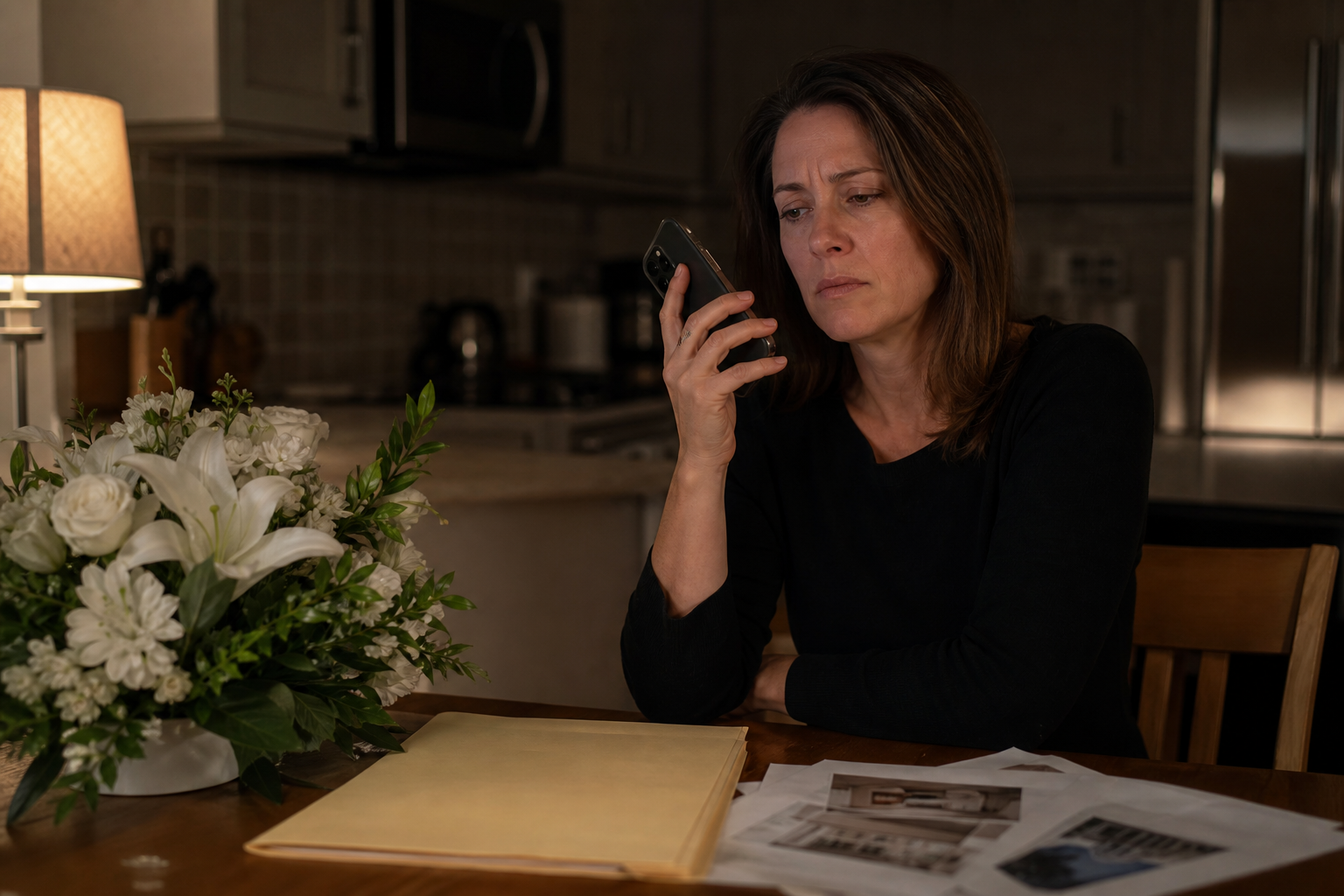
I sat on the condo floor beside the file box and listened to the voicemail again.
Then I found the notarized letter exactly where Mom said it would be.
On Sunday, Dana came to my apartment with a tray of baked ziti and the determined softness she uses when she wants reconciliation on terms that still leave her in charge.
She said we had both been emotional. She said she knew I was tired. She said she had only been trying to get ahead of the paperwork because somebody had to. Then she asked, almost casually, whether I had found “anything useful” in Mom’s files.
That was the moment I played the voicemail.
I did not announce it dramatically. I just opened my phone, pressed play, and set it on the table between us.
Dana sat perfectly still through the first half.
When our mother’s voice reached the line about not letting anyone push me out of the condo, my sister’s mouth opened slightly like her body had understood the meaning before her pride had.
The message ended.
For a few seconds the only sound in the room was my refrigerator humming.
Then Dana said, very quietly, “You had that since Thursday?”
I said yes.
“And you didn’t let me hear it?”
“Not while you were measuring Mom’s bedroom.”
She looked at me like I had slapped her.
“That is unbelievably cruel.”
I had expected anger. I had expected tears. What I had not expected was how calm I felt once the truth was finally in the room.
“Cruel,” I said, “is trying to turn Mom’s home into a listing before we buried her.”
Dana started crying then, real crying, which complicated everything the way real grief always does. She said she had been panicking about money. She said Mitch had been pushing because tuition was due. She said she thought if we sold quickly, at least one part of this awful situation would feel controlled. She said she had not realized how it looked.
That last part was the only lie left in the conversation, and we both knew it.
I handed her the notarized letter after that. She read it twice. Her shoulders dropped more with each line.
Mom had not disinherited her. The estate would still be split evenly. But the letter made it impossible to pretend the condo was just a neutral asset waiting for the loudest person in the room to assign its purpose.
Dana asked if I had planned to keep the voicemail forever.
I told her no. I had planned to keep it until I understood whether she was still my sister in that moment or just another person trying to stand where I had been standing and call it burden.
She did not speak to me for most of the funeral reception the next day.
But she also did not mention the realtor again.
It has been eight months now. I stayed in the condo through probate, cleared out closets one drawer at a time, and cried over more coffee mugs and coupon envelopes than I would have thought possible. Dana and I are speaking again, though carefully. She has apologized twice in the soft way people apologize when they know the facts are against them but still resent what the facts cost.
I do not feel proud that I kept the voicemail from her.
That is the confession part.
I know exactly how lonely those three days were for both of us, and I know I used our mother’s last words as a wall until I felt strong enough to choose whether to open the gate.
But I also know this: grief does not make people into strangers. It reveals which parts of them were only waiting for witnesses to leave.
Maybe I should have played the voicemail the first night. Maybe a kinder sister would have.
Or maybe kindness without timing is just another way women hand over the only proof they have before the room is ready to hear it.
If you like grounded family-conflict stories with money and loyalty at stake, you might also read “You’re Not in the Will” — What My Aunt Said Before She Asked Me to Pay the Funeral Bill.