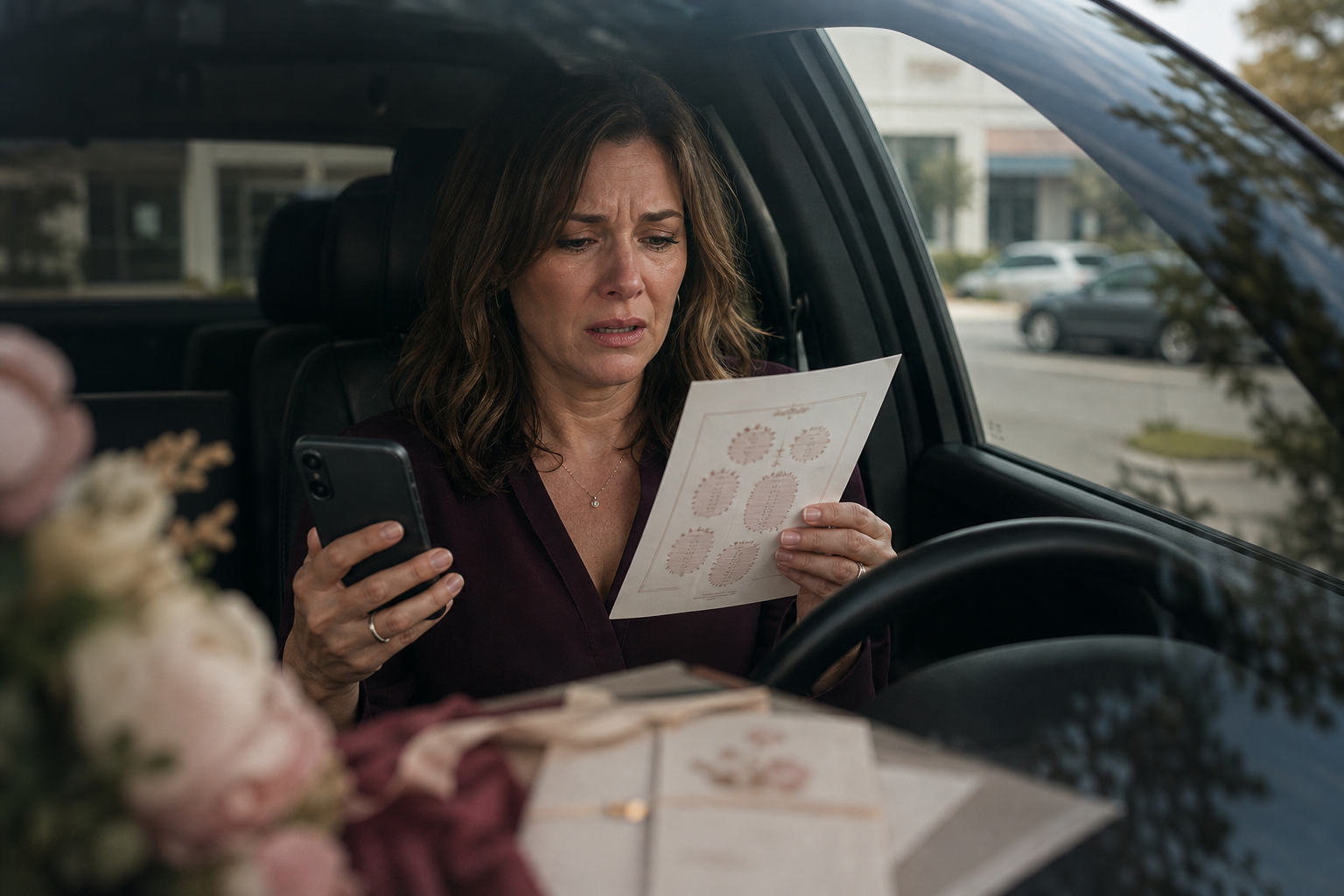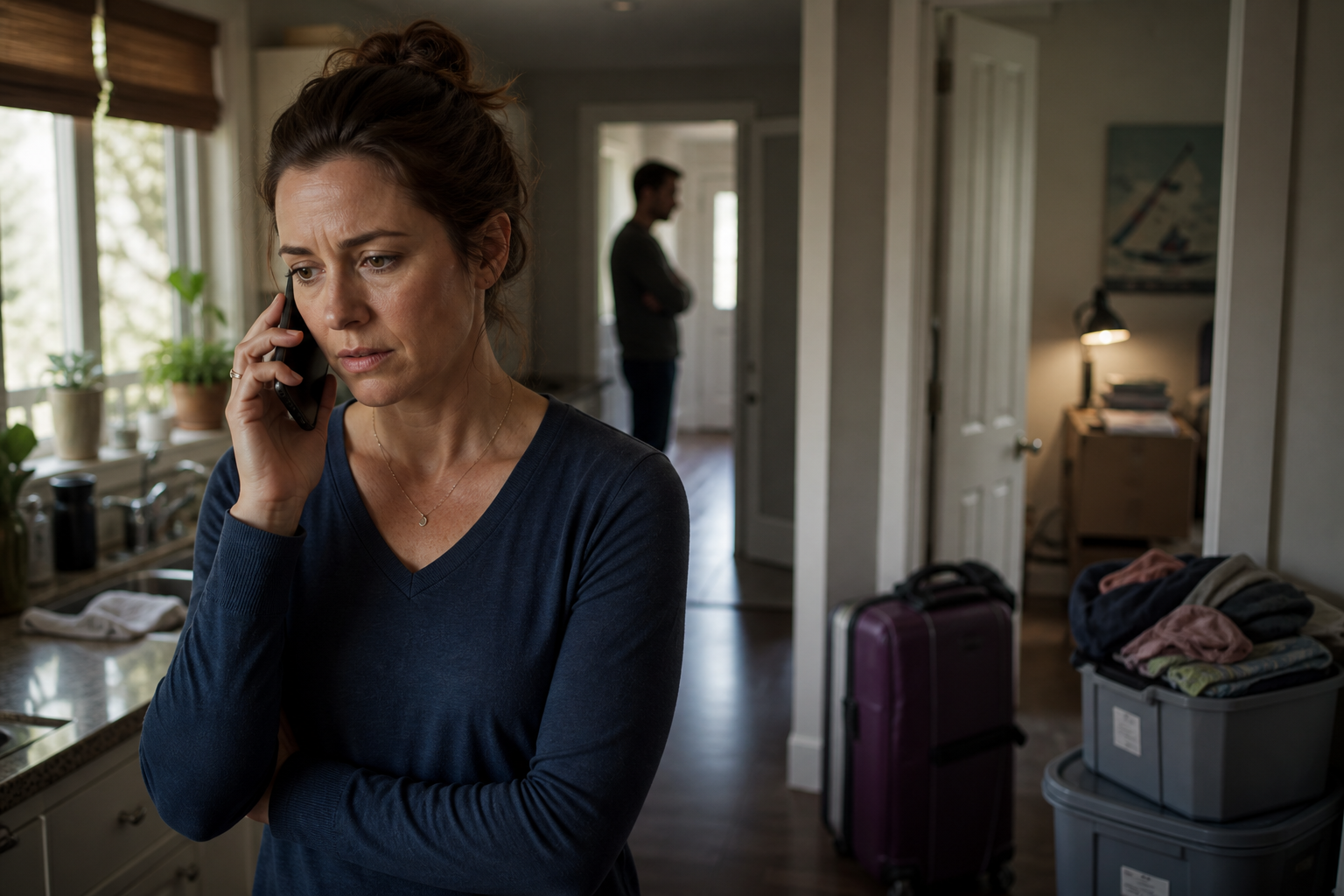


The pharmacist said my mother’s refill dates out loud because my brother would not lower his voice.
It was a Tuesday afternoon, the line was four people deep behind us, and Eric was doing that thing he has done since childhood where he mistakes volume for authority. My mother, Lorraine, was leaning on the counter with one hand pressed to her purse, pale from the heat and the short walk from the parking lot. I had brought her in because her cardiologist wanted her medication list confirmed before her follow-up appointment the next morning.
Eric had only come because he wanted to prove I was making a fuss over nothing.
“She doesn’t need a second parent,” he said to me, right there between the greeting-card rack and a display of reading glasses. “You act like if you don’t touch every bottle in the house, she’ll fall apart.”
I should have stepped outside with him. I know that now. But if you have ever spent months being called controlling for asking basic questions, you know how easy it is to reach the point where you stop protecting everybody else from the truth.
“I’m asking because she got dizzy twice this week,” I said. “And because half the pill organizer was wrong when I checked it on Sunday.”
Eric gave a short laugh like I had just proved his point. “You checked it because you can’t help yourself.”
The pharmacist, a tired man with silver at his temples and the kind of calm voice people use in waiting rooms, turned back to his screen. He asked for my mother’s date of birth. She gave it to him softly. Then he frowned.
“Mrs. Cardenas,” he said, “before I fill anything new, I need to ask who has been managing your refills.”
My mother looked from him to me to Eric. “My son mostly,” she said. “Why?”
Eric folded his arms. “Because she’s had surgery and she gets confused by the app. I’ve been handling it.”
The pharmacist clicked twice, then looked back up. “Your lisinopril was last picked up forty-six days ago. The furosemide was thirty-nine days ago. And the blood thinner refill was returned to stock last week because no one picked it up.”
He did not mean to humiliate anyone. That almost made it worse.
Eric’s face changed first. Not guilt exactly. More like annoyance at being caught in a place where charm could not help him.
My mother stared at him. “That can’t be right,” she said. “I gave you money for those.”
The woman behind us shifted her basket to the other arm. Somewhere near the front door a child started asking for gum. The whole world kept moving while my family finally stood still.
Eric said the store had mixed up the accounts. He said the app had glitched. He said I had probably confused her by moving bottles around during one of my inspections.
The pharmacist turned the screen slightly and pointed, not rudely, just clearly. “These are the pickup dates on file.”
That was the moment I stopped doubting myself.
Up until then, I had still been entertaining all the softer explanations. That my mother had skipped doses because they made her nauseated. That Eric had missed one refill because he was tired. That I was, maybe, hovering too much because I could not stand watching our mother get older.
But I knew what I had seen on Sunday.
My mother had been discharged from the hospital six weeks earlier after a minor heart procedure. The plan had been simple enough on paper: no stairs for two weeks, no driving until cleared, low-salt meals, and a careful schedule for the blood thinner, blood-pressure pills, and water pill that kept the swelling down in her ankles. I live twenty minutes away, work full-time at a dental office, and have a seventeen-year-old daughter finishing high school applications. Eric lives twelve minutes away, works freelance construction when he feels like it, and had recently become very attached to the phrase flexible schedule.
So naturally, my mother decided Eric was the more convenient child.
“He can swing by during the day,” she told me the week she came home. “You already do too much.”
What she meant was that Eric arrives with jokes and takeout and leaves before the hard parts start. I arrive with grocery bags, a notepad, and questions no one wants to answer.
For the first two weeks, I tried to keep the peace. I stocked her freezer with soups. I labeled the pill organizer. I called after work every evening and listened to Eric describe himself like a war-zone nurse because he had taken out her trash and sat with her through one cable-company service window.
Then the small things started to feel wrong.
Her ankles looked more swollen one Sunday than they had on Wednesday. She said she was taking everything exactly as prescribed, but the water-pill compartment in her organizer still had three tablets sitting there. Eric said she must have forgotten which day it was when she filled it. My mother laughed it off.
The next week, she told me the blood thinner made her bruise too easily, and Eric jumped in before I could answer. “I told her it was fine to skip one if she was just sitting home.”
I actually felt my stomach turn cold.
“You told her what?” I asked.
He rolled his eyes and said, “Don’t do the lecture voice.”
I did it anyway.
My mother accused me of speaking to him like he was twelve. Eric accused me of trying to take over her house. By the time I left that night, I had somehow become the villain for saying that medication instructions were not a group project.
After that, every visit turned into a performance. If I asked whether she had eaten, Eric would smirk and say, “See? Control.” If I asked whether the doctor’s office had called back, he would tell my mother I needed a hobby. When my aunt Rosa stopped by with banana bread and heard me asking about the pill organizer, she patted my arm and said, kindly but not kindly enough, “Mija, sometimes helping can look a lot like bossing.”
That line followed me for days.
I started wondering whether everyone saw something ugly in me that I couldn’t see myself.
Then, on Sunday, I opened the kitchen cabinet above the microwave to put away tea and found three sealed pharmacy bags shoved behind the cereal boxes.
Two were empty except for crumpled receipts. One still had my mother’s name on it and a stapled slip saying the prescription had been reversed after not being collected in time.
I put the bags on the table and asked my mother what they were.
She looked genuinely confused.
Eric came in from the porch, saw the bags, and said, “I was dealing with it.”
That was all. No explanation. Just the tone of a man offended that a woman had opened the wrong drawer in a house he did not pay for.
My mother said I was upsetting her. Eric said the medication had all been handled and that if one refill got delayed, it wasn’t a federal case. I told them I was taking her to the pharmacy myself before her cardiology appointment. Eric laughed and said, “Fine. Maybe they can tell you you’re not in charge there either.”
So he came along. He was that sure of himself.
After the pharmacist read the dates, my mother’s hand started shaking against the counter. I reached for her elbow, but she pulled back just enough to look at Eric directly.
“Did you pick these up or not?” she asked.
His jaw tightened. “Mom, you don’t need to do this here.”
“Did you?”
He muttered something about being short on cash one week and meaning to fix it before I turned it into a courtroom.
The pharmacist stepped away to give us privacy he couldn’t really give. There is only so much dignity available in aisle seven.
My mother closed her eyes for a second. “I gave you money every Friday,” she said.
Eric looked at me then, not her. That told me everything.
“I borrowed some,” he said. “I was going to put it back.”
Borrowed. That word has done a lot of damage in my family.
It turned out he had been behind on the payment for a truck he never should have financed. He used the money our mother handed him for prescriptions twice, then missed the pickup window on the blood thinner because he was waiting to get paid from a drywall job that fell through. He kept telling himself he could catch up before anyone noticed.
Anyone, apparently, except the woman who kept being told she was noticing too much.
If family caregiving fights are your kind of read, you might also like “You’re Putting Her Away for Your Convenience” — What My Brother Said Before the Fire Department Knocked.
My mother did not cry at the counter. That would have been easier. She just looked old in a new way, as if betrayal uses up a different kind of energy than illness.
“We’re leaving,” I said.
Eric immediately puffed up again. “You’re not taking her anywhere like I’m some criminal.”
My mother answered before I could.
“She’s taking me home with her.”
It was the first clean sentence she had spoken all afternoon.
In the parking lot, Eric followed us to my car and kept insisting I was blowing this up because I had always resented how close he and our mother were. That part almost made me laugh. There is a special kind of closeness men like him mistake for love. It looks a lot like being protected from consequences by whoever is most tired.
I opened the passenger door for my mother. She sat down slowly, then looked past me and said, “Give me my house key.”
Eric blinked. “What?”
“The spare key. The debit card. And the pill bottles from the hall cabinet.”
“Mom, come on.”
“Now.”
He handed over the key first because it was easiest. The debit card took longer. He kept saying he had done everything for her while I just criticized. My mother listened without defending him once.
I wish I could say that was the moment everything changed neatly and forever. It wasn’t.
That evening, my daughter cleared a space in our downstairs guest room and helped her grandmother settle in with fresh sheets and a glass of water. I sat at the kitchen table with a notebook, every prescription bottle, the discharge paperwork, and a pharmacy printout while my mother told me, in a voice made thin by embarrassment, how much cash she had been giving Eric each week and how often he said the co-pays had gone up.
By nine o’clock, I was angrier at myself than at him. Not because I had trusted him. Because I had spent so much energy doubting my own judgment just because being right made everyone uncomfortable.
Eric called six times that night. I answered once.
He said I was humiliating him over a few bad weeks. He said Mom was just scared and I was taking advantage of it. He said families should handle things privately.
“You had privacy,” I told him. “You used it to take medication money from a woman recovering from heart surgery.”
He said I always know how to make him sound worse than he is.
Maybe. Or maybe some facts do that by themselves.
My mother stayed with me for almost two months. Her numbers improved once the medication schedule stopped depending on whoever had the louder opinion that day. My aunt Rosa came by the second week with a casserole and a face full of apology. She said she hadn’t understood how bad it was. I told her most people don’t, as long as someone easy to blame is standing nearby.
Eric eventually paid my mother back in pieces. Not because he wanted to. Because she made him.
He still says I turned one mistake into a family crisis. Maybe he believes that. People rarely call it neglect when the person being neglected is their mother and the money helped cover their own bills.
What I know is simpler.
I was not trying to control my mother.
I was trying to keep her alive long enough to have an argument about it.
And if that made me the difficult daughter in the room, I can live with that a lot more easily than I could have lived with staying quiet.