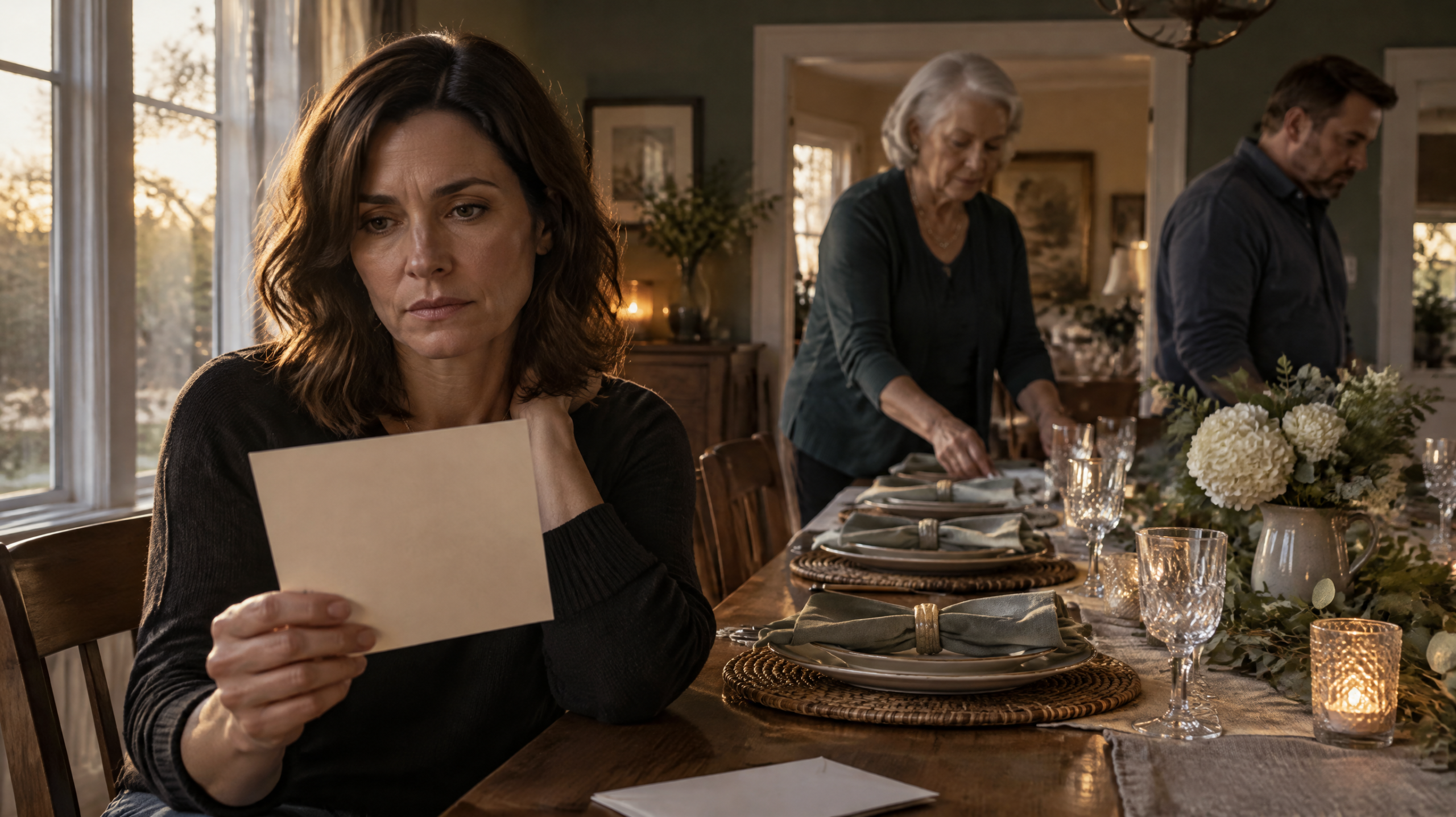
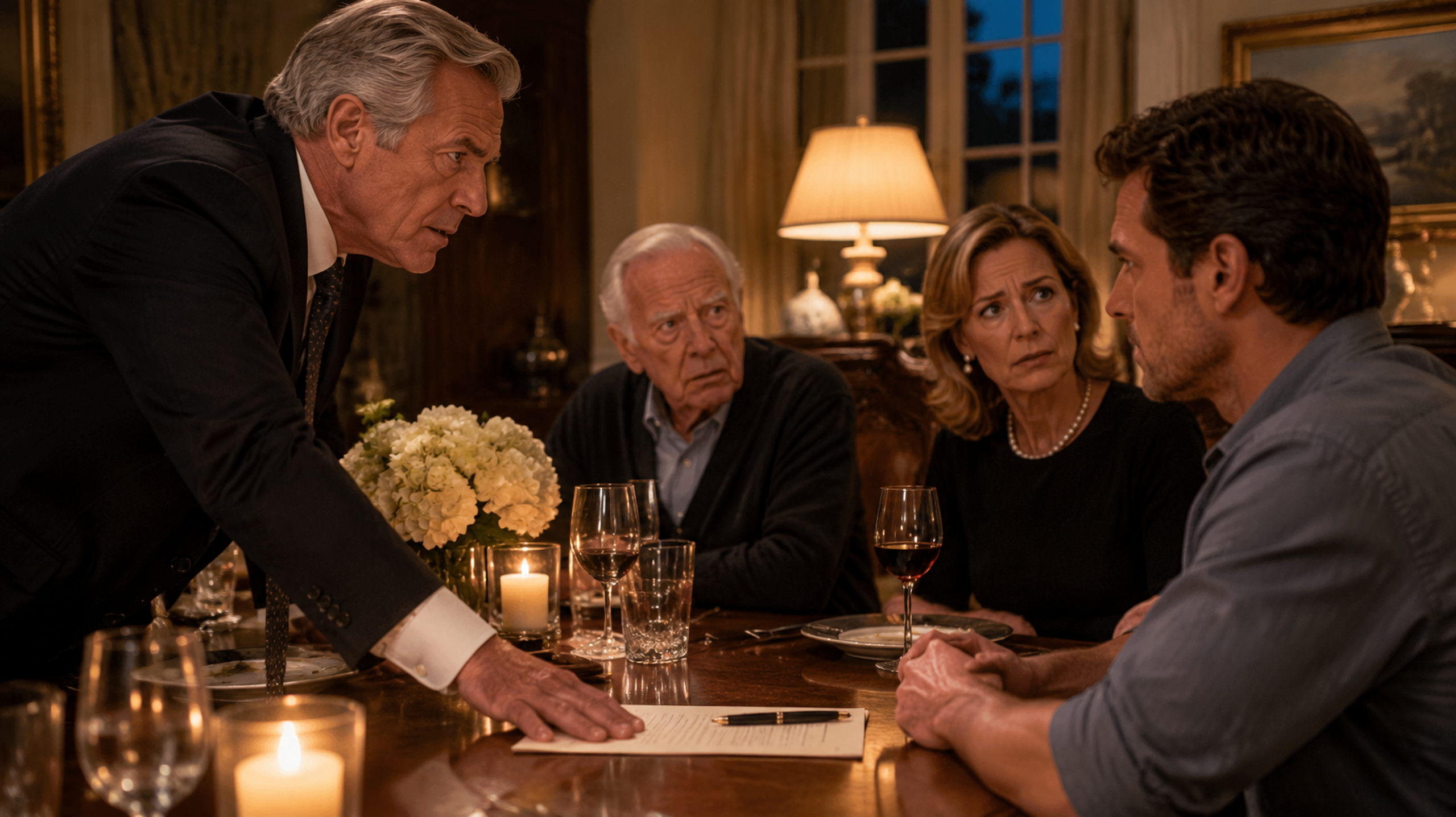
“I was forty-one. Your father was building the yard up and you were at school.” Rosalind’s chin was up. “What was I going to do, Delia? Take it to the police and put your grandfather in a cell at sixty?”
“You could have been decent to the man’s grandson,” I said, and my voice came out lower than I meant it to.
She looked at me then, and for a second there was something in her face that was not contempt. “Yes,” she said. “I could have.”
Bernard signed both pages. The carer witnessed one and Delia signed the other, and he watched her do it and said, “Tell Tomas I’m sorry. He won’t hear it from me.” Then his eyes went soft and he asked her who she was, and she said she was Delia, and he said that was a lovely name.
I sent the disclosure at twenty past eleven that night, from the kitchen table, with the account and the log and the initials attached. The delivery receipt came back in under a minute. I looked at it for a while, and then I went to bed and lay beside Delia and did not tell her.
The probity officer came the next morning, three hours before the lease was due to be signed, a woman in a grey coat with my email printed out and stapled. Victor arrived while she was still reading, with the lease in a green folder and the deed of declaration clipped to the front of it.
“This is a commercial matter between the yard and a former subcontractor,” he said. “The application is clean.”
“The application is suspended,” she said. “Pending inquiry into the 1979 claim.” She turned to Bernard. “Mr Harrower, I’d like you to tell me in your own words what you told your granddaughter.”
He told her. He was lucid that morning, and he said it without being led, and she wrote it down. Victor did not sit. He stood by the door with the folder against his chest and watched his father name himself, and when Bernard finished, Victor said, “He’s eighty-eight. He doesn’t know what he’s saying.”
“He knew yesterday,” Delia said.
Victor turned to me. “Forty thousand. To your grandfather’s estate, for the family, if you withdraw it today and we settle this quietly.”
“No,” I said.
“There isn’t a number.” I was surprised at how steady it came out. “You offered me eight to sign, and now you’re offering forty to unsay. It’s the same offer.”
Delia was looking at the printed email in the officer’s hand. She read the time on it. “You sent this last night,” she said. “Before you told me.”
“Yes.”
“I asked you to wait.”
“I know.”
She nodded slowly, folded her arms, and looked at the window for a long time. “The wedding’s off,” she said. “Not the engagement. The date. I need to not be looking at you for a while.”
A week later the letters were read aloud in the yard office with the door shut: the authority’s decision, the lease replaced by a five-year licence, the insurer’s demand for £64,000, the board’s resolution removing Bernard’s name from the centenary plaque and issuing a correction naming Tomas Vane as wrongly blamed. Victor resigned as managing director before the board met. Rosalind came off the centenary committee and stopped coming into the office. Delia resigned her post and kept her shares in trust, and nobody argued with that.
I was paid for the pontoons already built and nothing else. I put the £4,420 back by transfer in September, in one payment, with the reference T. Vane estate overpayment, and watched it clear on the Thursday.
We married in November at the registry office with two witnesses and a lunch in the pub, and her mother sent a card and did not come. Delia had moved the date four months and never once said she had forgiven me for the timing. I stopped asking her to. She married me with her eyes open, which is a different thing from forgiveness and, most days, a better one.
The workshop kept going on contracts from two other yards, small work, gates and handrails and one pontoon repair up the coast. The deed box is still under the bench. The lid stays open now. It holds the transfer receipt and the authority’s letter, and on the mornings I am first in, I put my hand flat on the cold steel the way he made me do, and then I put my gloves on and get to work.