
The first time I heard my best friend tell people I had abandoned her mother, I was standing three feet away with a casserole dish still warm in my hands.
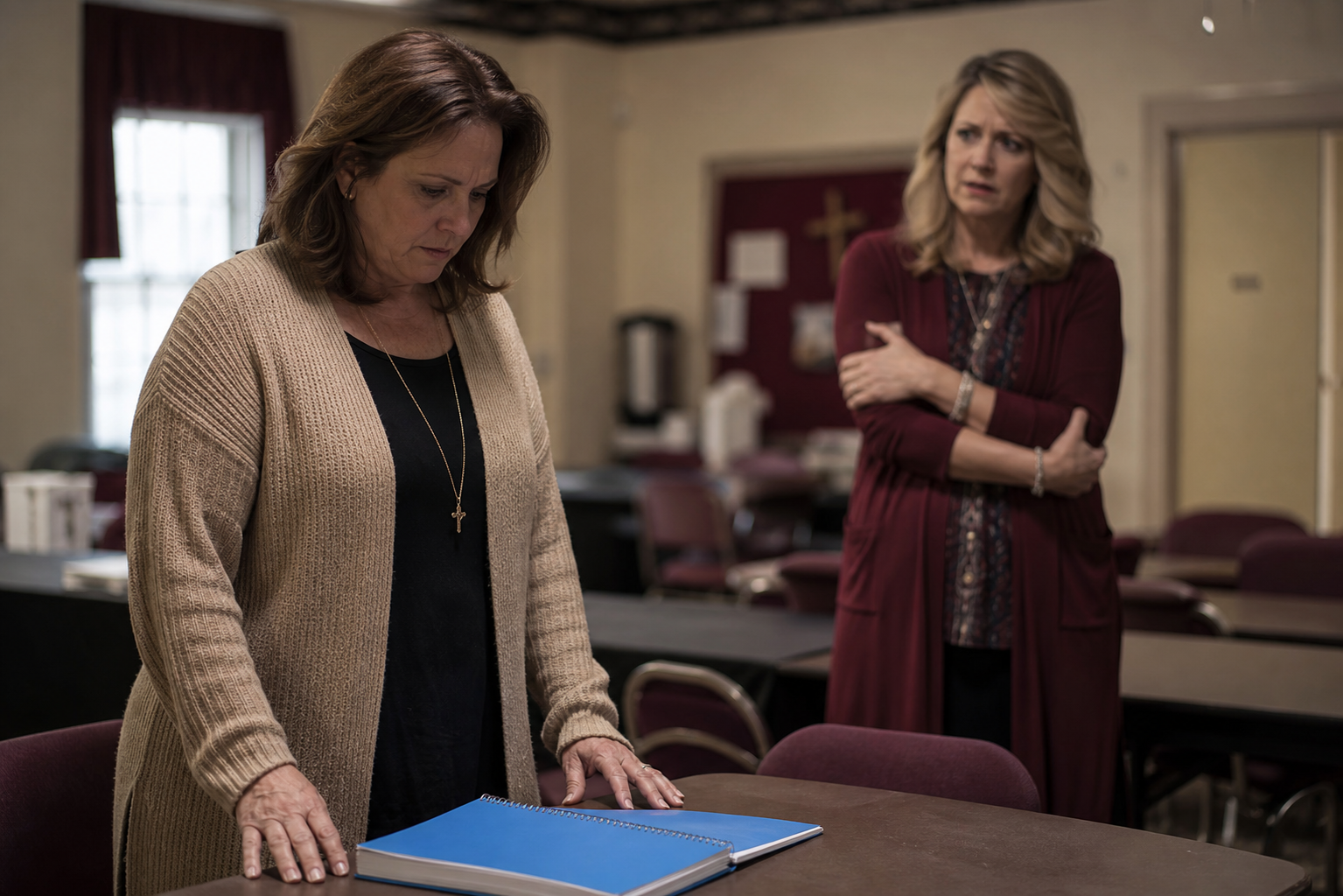
She said it in the fellowship hall after church, in that soft injured voice people use when they want sympathy without looking like they asked for it. A circle of women from Gloria’s Bible study had gathered around Celeste, and I had just walked in from the parking lot after dropping off a fresh set of towels at Gloria’s house.
Celeste pressed a napkin to the corner of her eye and said, “I really thought Nora was going to help me through this. Then she just disappeared, and my mother was the one who paid for it.”
I stood there so long someone had to move around me to reach the coffee table.
Gloria wasn’t just Celeste’s mother to me. She had known me since I was nineteen, when I spent more weekends at their house than in my own apartment because my mother and I were barely speaking. Gloria fed me leftovers, loaned me winter coats, and once sat with me on her back steps for two hours after my first engagement ended. When Celeste and I called each other best friends, Gloria was part of what that word meant.
So when Gloria broke her hip in May and came home from the hospital with a walker, medication instructions, and a list of follow-up appointments pinned to her discharge papers, I didn’t hesitate.
Celeste called me from the hospital parking garage and said she was overwhelmed. Her teenage son had final exams. Her sales job had her driving between three counties. Her ex-husband had stopped sending support on time again. Could I please cover “just a few things” for two weeks while she got organized?
Just a few things turned out to be breakfast, medication checks, grocery runs, wound-care supply pickups, and sitting with Gloria during the home care nurse’s visits because Celeste was always “ten minutes away” and somehow never arrived before the nurse left.
I work from home doing payroll for a plumbing company, so I told myself I could manage it. I brought my laptop to Gloria’s dining room. I answered emails while soup simmered on her stove. I filled the seven-day pill organizer every Sunday night and wrote everything down in the blue spiral logbook the nurse left on the counter.
8:15 a.m. — blood pressure taken.
12:30 p.m. — lunch, appetite good.
4:00 p.m. — dressing changed, no redness.
The logbook became my witness before I even knew I would need one.
At first, Celeste thanked me constantly. She sent heart emojis. She said things like, “I don’t know what I’d do without you,” and “You’re more like a sister than a friend.”
Then little things started shifting.
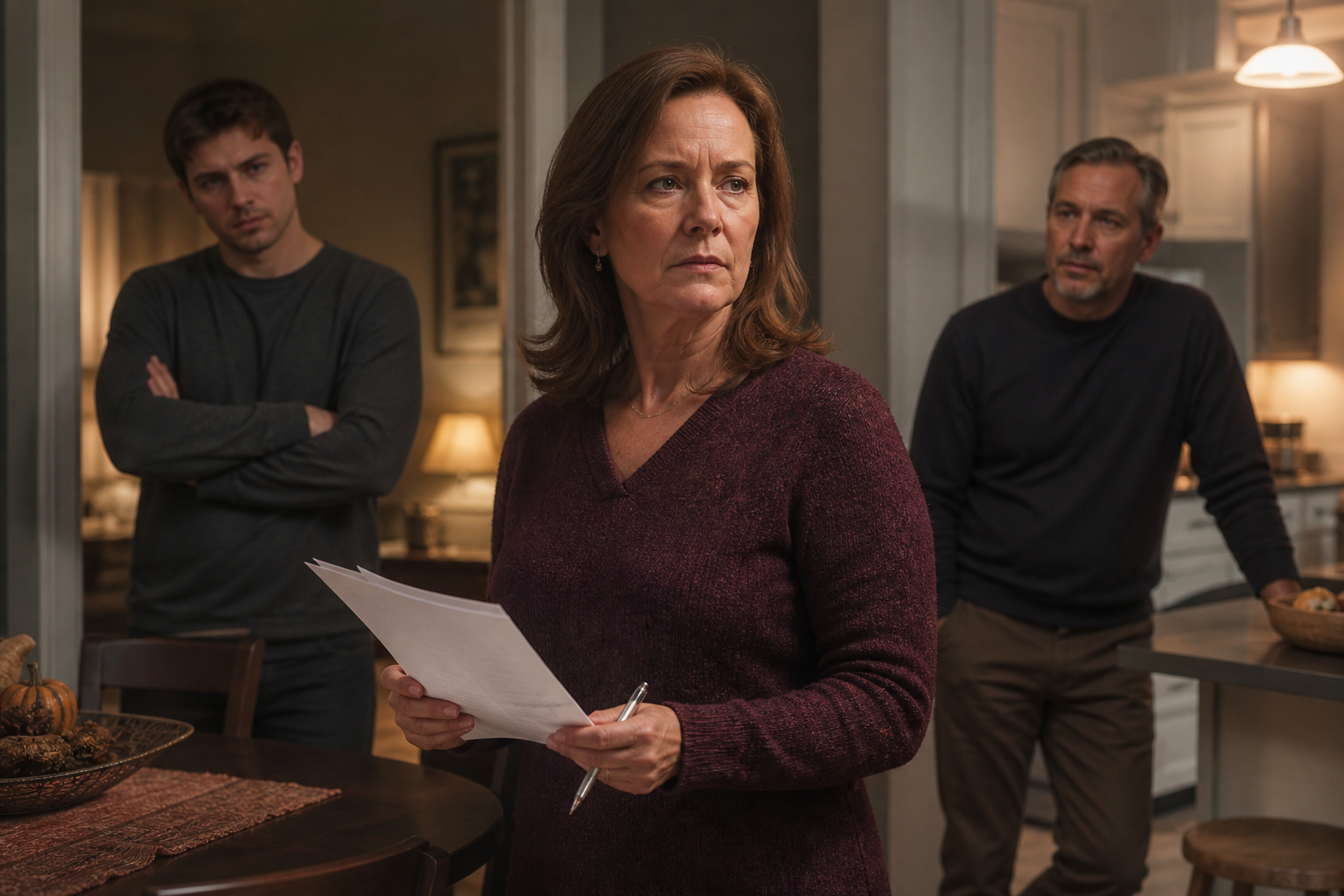
She stopped coming inside when she picked up her son from Gloria’s house. She would stand in the driveway, engine running, and text, Can you bring Mom out to the porch for a minute? When the home care agency called about an unpaid balance, Celeste asked me to tell them she was in a meeting. When Gloria’s orthopedic follow-up got moved to a Friday morning, Celeste said she absolutely couldn’t miss a regional presentation and asked if I could “just pretend to be family at the desk if they ask questions.”
I remember staring at that text while my own husband, Ben, loaded our dishwasher behind me.
“You know she’s not asking for help anymore,” he said quietly. “She’s assigning you a shift.”
I defended her anyway. I said caregiving made everyone ugly for a while. I said pressure could make decent people selfish. I said Celeste would straighten out once Gloria was stronger.
Ben didn’t argue. He just kissed the top of my head and asked whether I planned to keep missing our own life until Celeste noticed.
That question stayed with me, mostly because I didn’t want to answer it.
By June, Gloria was walking better, but the emotional atmosphere in that house had turned strange. Gloria began apologizing to me for things that weren’t her fault.
“You don’t have to come every day,” she would say, folding and unfolding the edge of her blanket. “Celeste says you’ve got enough on your plate.”
But when I skipped even one afternoon, I would find unopened meal containers in the fridge and the pill organizer still full for that block of time.
One Wednesday, I arrived to find Gloria alone in the den wearing the same nightgown she had on two days earlier. Her walker was on the wrong side of the room, and she had been too afraid to try getting up by herself. Celeste had posted photos from a hotel bar in Nashville the night before, smiling beside a woman I didn’t know with a caption about “finally getting one night to breathe.”
I didn’t begrudge her one night out. I begrudged the lie that someone else was covering for her when no one was.
That evening I called Celeste and told her we needed a schedule in writing. I said I was happy to help, but I was not the default daughter, and I would no longer be the person agencies called when bills went unpaid or appointments got missed.
There was a long silence on the phone.
Then Celeste laughed once, short and sharp. “Wow,” she said. “I didn’t realize keeping my mother out of a nursing home had become such an inconvenience for you.”
I should have pushed back harder right then. Instead, I got careful. People get careful when they still want to save the relationship.
I told her that wasn’t what I meant.
She told me she was under more pressure than I could understand.
I told her I knew she was stressed.
She said, “Good, because the last thing I need is another person making me feel like I’m failing.”
After that call, the temperature changed completely. She stopped thanking me. She started speaking to me like I worked for her. If I texted that Gloria needed more bandages, Celeste replied, Handle it if you’re already out. If I asked whether she could take Saturday’s shift because Ben and I had dinner plans for our anniversary, she answered three hours later with, I guess I’ll cancel something again.
So I started stepping back.
I gave her a written list of Gloria’s medication times, the home care phone numbers, the next two appointments, and the grocery staples Gloria was running low on. I told Gloria directly that I loved her, that I would still visit, but that Celeste needed to take over her own mother’s care plan.
Gloria looked at me for a long time and said, very softly, “She’s angrier at herself than she is at you.”
I think that was the kindest possible version of the truth.
For ten days, I limited myself to short check-ins. Then the church women started calling.
Not all at once. One asked whether Gloria had really been left alone after physical therapy. Another said she was “sorry things got awkward.” A third told me Celeste was exhausted and maybe I should reach out first, since “sometimes pride gets in the way on both sides.”
That is how I learned the story Celeste had been telling: that I had promised to help, gotten offended over “small misunderstandings,” and walked away while Gloria was still fragile.
I wanted to confront her immediately, but Gloria had a care conference with the home health nurse the following Monday, and I decided to keep my mouth shut until after that. I did not want Gloria caught in the middle of one more argument.
Then came the church luncheon.
I had agreed weeks earlier to bring the green bean casserole, and by the time I realized Celeste had been working the room with her version of events, I was already there, already hearing my name used like a cautionary tale.
When she said I had disappeared and her mother had paid for it, every face around her turned toward me.
I asked only one question.
“Do you want to say that again with Nurse Denise in the room?”
Celeste blinked, surprised I had answered at all. “I don’t need an audience,” she said.
“No,” I said, setting the casserole dish down on the table hard enough to rattle the spoon. “But apparently you wanted one.”
What Celeste didn’t know was that Denise had just walked into the hall from the kitchen carrying the blue spiral logbook. Gloria had asked her to bring it because they were heading to the care conference straight from church.
Denise looked from me to Celeste and understood enough to stop walking.
One of the Bible study women said, “Maybe this isn’t the place.”
Denise answered before I could. “Actually, if someone is claiming neglect, I’d rather clear that up now.”
She opened the logbook right there beside the dessert table.
Then she began reading.
She read my initials beside morning medications. My notes about Gloria’s dizziness after the dosage change. The days I waited through physical therapy sessions. The reminder that I had picked up the refill Celeste forgot to authorize. The entry showing I stayed until nearly midnight the night Gloria had a fever because no family member answered the first four calls.
Finally, Denise turned to the back page, where every missed caregiver-training session had been documented.
Celeste had missed three.
Two agency invoices had gone unpaid for more than a month.
And the request to transfer Gloria temporarily to short-term rehab had not come from me, as Celeste had implied to people later. It had come from Denise after she found Gloria alone too often for safe recovery at home.
No one in that circle said a word while Denise read.
Celeste’s face went red, then gray.
She started crying and said she had been overwhelmed, embarrassed, and tired of being judged. For a second I almost folded, because that part, at least, was probably true.
But being overwhelmed had never been the part I couldn’t forgive.
It was the lie.
It was using my help while rewriting me as the villain so she wouldn’t have to sit alone inside her own guilt.
So I said the thing I had been swallowing for weeks.
“You were allowed to need help,” I told her. “You were not allowed to turn me into the story that made you feel better about taking it.”
She looked at me like I had humiliated her. Maybe I had. But she had chosen the room first.
The care conference ended up being quieter than expected. Gloria was moved into a short-term rehab program for two weeks, mostly because she needed consistency more than promises. I visited her there twice, then three times, then enough that the receptionist started waving me through without asking my name.
Celeste and I have not repaired things. We exchange polite texts when Gloria has a setback or a good week. That’s it.
Gloria still calls me sweetheart. She still asks whether Ben’s tomato plants survived the heat. On hard days, I bring her lemon cookies and sit by the window while she tells me who from church is wearing too much perfume this season.
I loved her before this mess, and I love her after it. But I no longer confuse loving someone with volunteering to be misused by the people around them.
Maybe friendship means showing up when life gets ugly. Maybe it also means telling the truth when someone tries to bury you under their version of it. I’m still not sure which part hurt Celeste more.
If caregiving conflict stories pull you in, you might also want to read My Brother Said He Moved In to Help Our Mother Recover — Then the Power Company Left a Red Tag on Her Door and “You’re Putting Her Away for Your Convenience” — What My Brother Said Before the Fire Department Knocked.