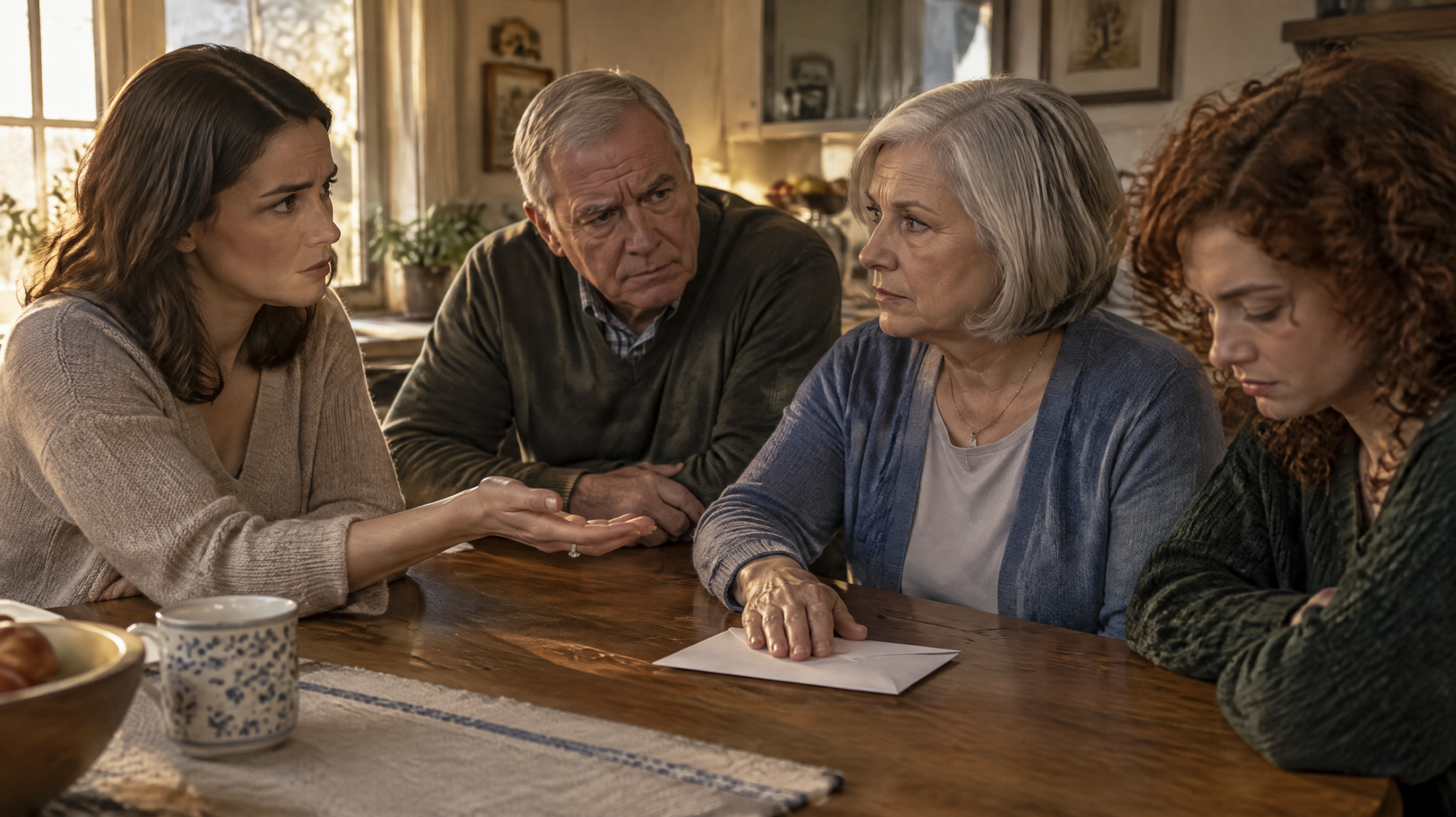
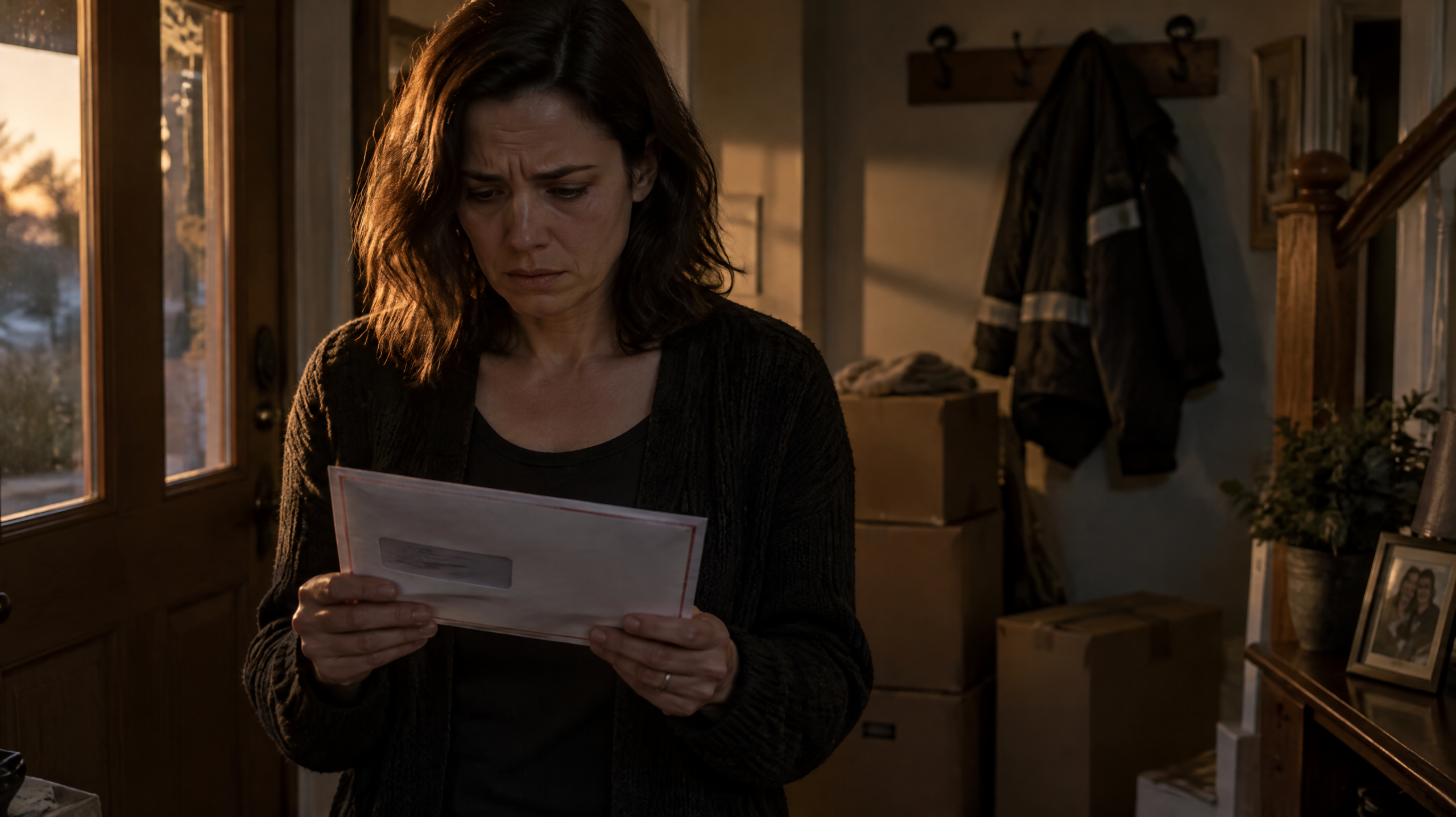
I put my hand flat on the 2016 will, and I thought about a folded page in a dead man’s desk, kept like a confession he never got to make. Dad had known Marcus was innocent before he signed me away. He kept the proof. Maybe he couldn’t fight anymore, or maybe keeping that page was the only fight he had left in him.
Priya was already drafting. The contest would name the 2020 will a void instrument, she said, notarized on a documented day of incapacity, witnessed by the beneficiary’s own employees. She said the words undue influence the way she says everything, level and exact. And somewhere between the notary journal and the 2016 will, the shape of the fight changed for me. I hadn’t come home for money. I’d come home because a letter arrived asking for my signature as if I were already gone. My father, the real one, the 2016 one, had been waiting in a county vault to say otherwise.
I drove to the family home that evening. I told myself I was going to give Mom a chance to explain before Priya filed anything. What I actually wanted was to see her face when I set the notary journal on her kitchen table.
She was wiping the counter when I came in. She saw the folder and stopped wiping, and for a second she looked like she might run.
“June 21, 2021,” I said. I put the copy down next to the sugar bowl. “The same day Dr. Okafor wrote that Dad couldn’t manage his affairs. Two witnesses from Caleb’s firm. You want to tell me Caleb didn’t know what he was signing?”
Mom sat down hard. Then it all came out of her, in the wrong order, the way confessions do.
Caleb had come to her a week after Dad’s diagnosis and told her the care would ruin them unless she let him handle things. When the money moved, he said the accounts were funding Dad’s care and her future, and that if she asked questions, the state could take the house. She’d believed him for a while. She’d wanted to.
“He said if I stayed quiet, I’d be taken care of,” she said. “He said you’d be fine, that Marcus had money. He made it sound like everyone got their share and nobody had to say anything ugly out loud.”
“And you just let me stay gone,” I said. My voice came out flatter than I expected. That was the part I couldn’t get past, and I told her so. Five years. No calls, no Christmas card, nothing.
Then she said the thing that undid me.
“Marcus never let that happen, Nora. He’s been sending me money. Eighteen hundred dollars a month, since 2022. He told me you’d want me to have it.” She wiped her face with the dish towel. “And he went to Cedar Grove. Once a month, every month, like clockwork. I’d see him in the parking lot sometimes. He’d sign the book M. Bell so nobody would ask questions.”
M. Bell. The visitor log I’d held in my hands at the facility, the handwriting I’d traced with my finger and told myself meant nothing. It was my husband. My husband, who’d been cut off with me, driving forty minutes each way to sit with a father-in-law who had signed him away in writing, and he never once came home and mentioned it.
I didn’t know whether to cry or call him and yell. I did neither. I asked Mom to come to Priya’s office in the morning, and I told her to bring her checkbooks from the last four years.
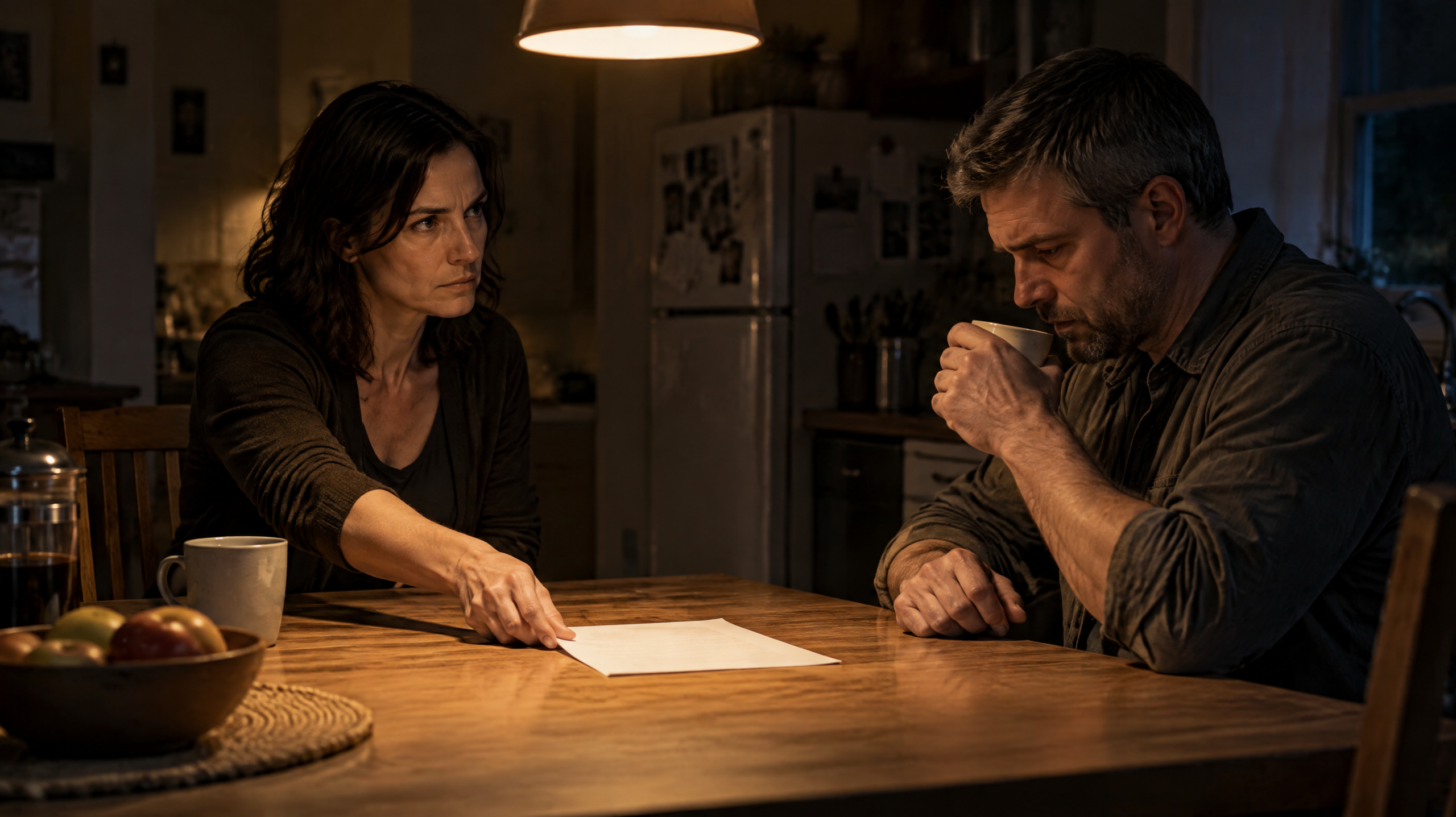
Marcus was up when I got home. I put the visitor log copy in front of him on our kitchen table, the same way I’d done to Mom.
“Every month,” I said.