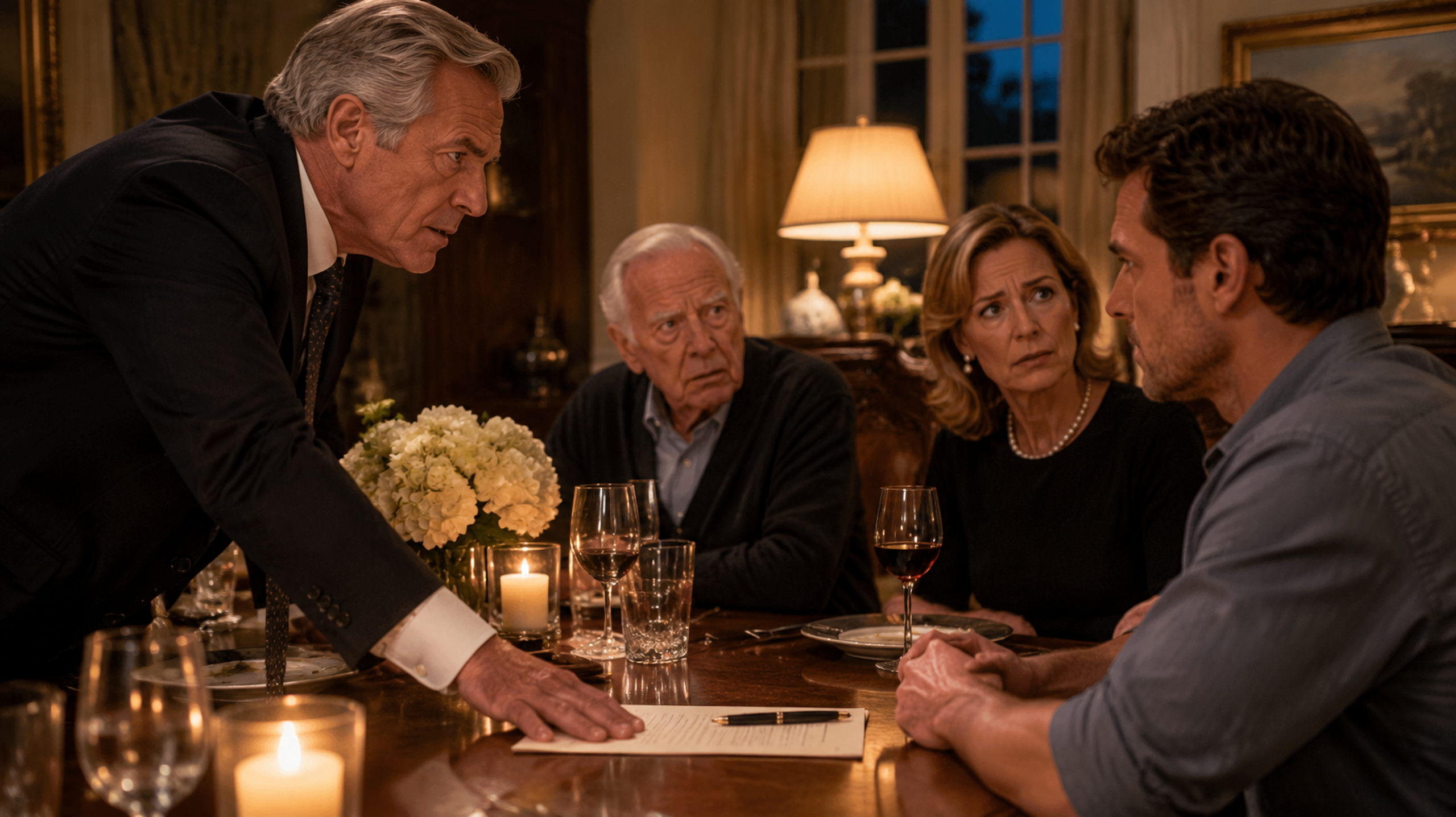
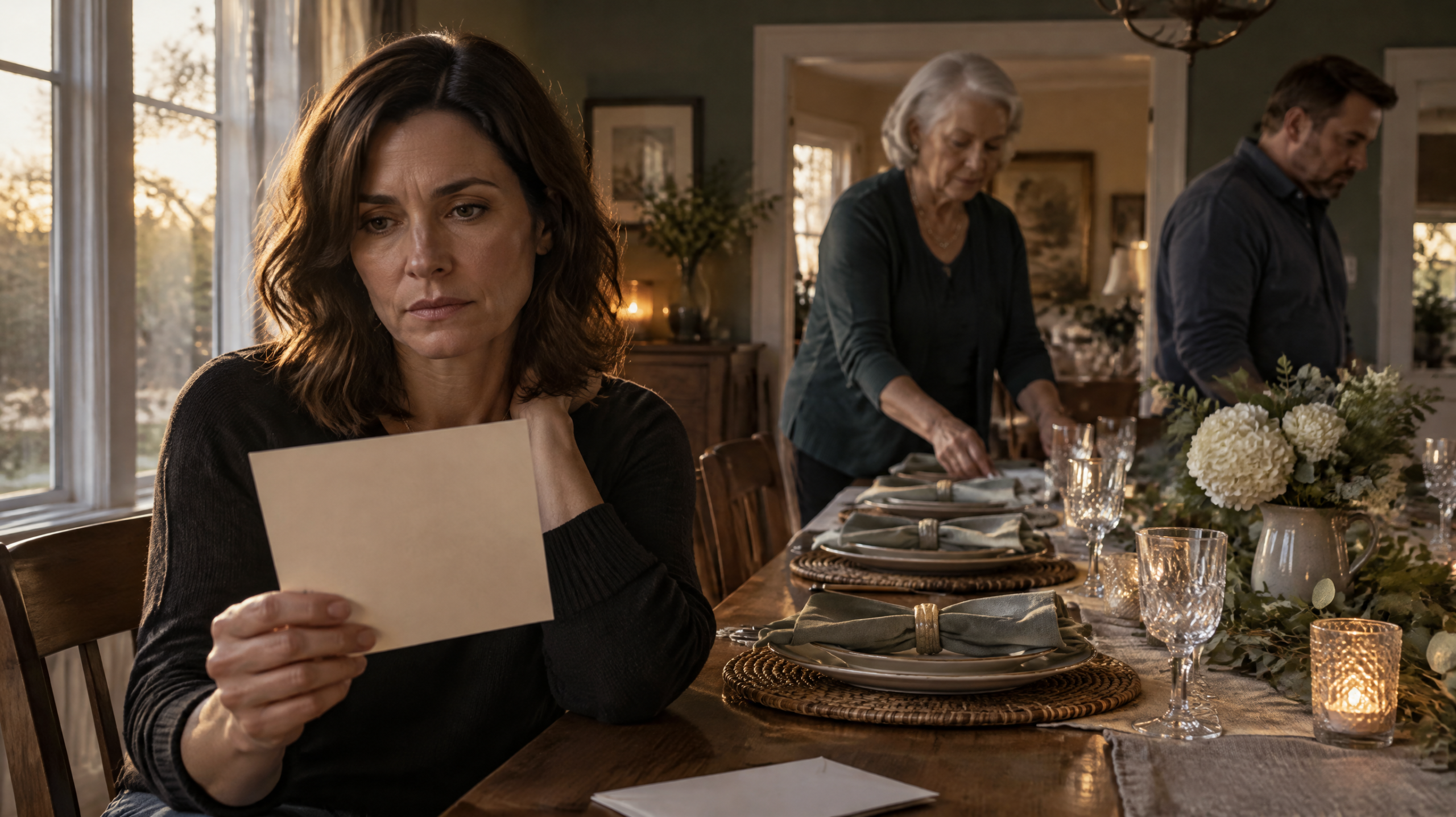
Vernon was in the barn on Saturday morning with the door pulled half shut, which is how he lets you know he wants to be found by one person at a time. He had a manila envelope in his hand and his good boots on, and he did not say hello.
“I hear you’ve been to the county,” he said.
“I have.”
“Your mother-in-law is upset.” He turned the envelope over once, then held it out. “There’s twenty-five thousand in there. I had the deed drawn up. You sign it, we’re square, and nobody has to sit in a lawyer’s office at our age.”
I opened the flap far enough to see the paper inside. A quitclaim, one page, the ridge parcel typed in the description. My name at the bottom, spelled correctly for the first time in nine years. He had taken the trouble. That was the thing that made my hands cold.
“Seventy-eight thousand,” I said. “That’s what I paid.”
“You paid taxes on land that fed you.”
“It fed you. I ate at table nine.”
His jaw worked. “Twenty-five is generous. The taxes were a family matter, and family matters get handled quietly.”
“Then handle it quietly with a check for the whole amount.”
He put the envelope down on the feed bin and looked at me the way he looks at a heifer that won’t go up the ramp. “You’re not a Byrne,” he said. “You never were. That’s not cruelty, Norah, that’s a fact of how this works. If I put your name on the estate papers, my sister in Kilkenny gets a lawyer by Friday. You want that on your conscience?”
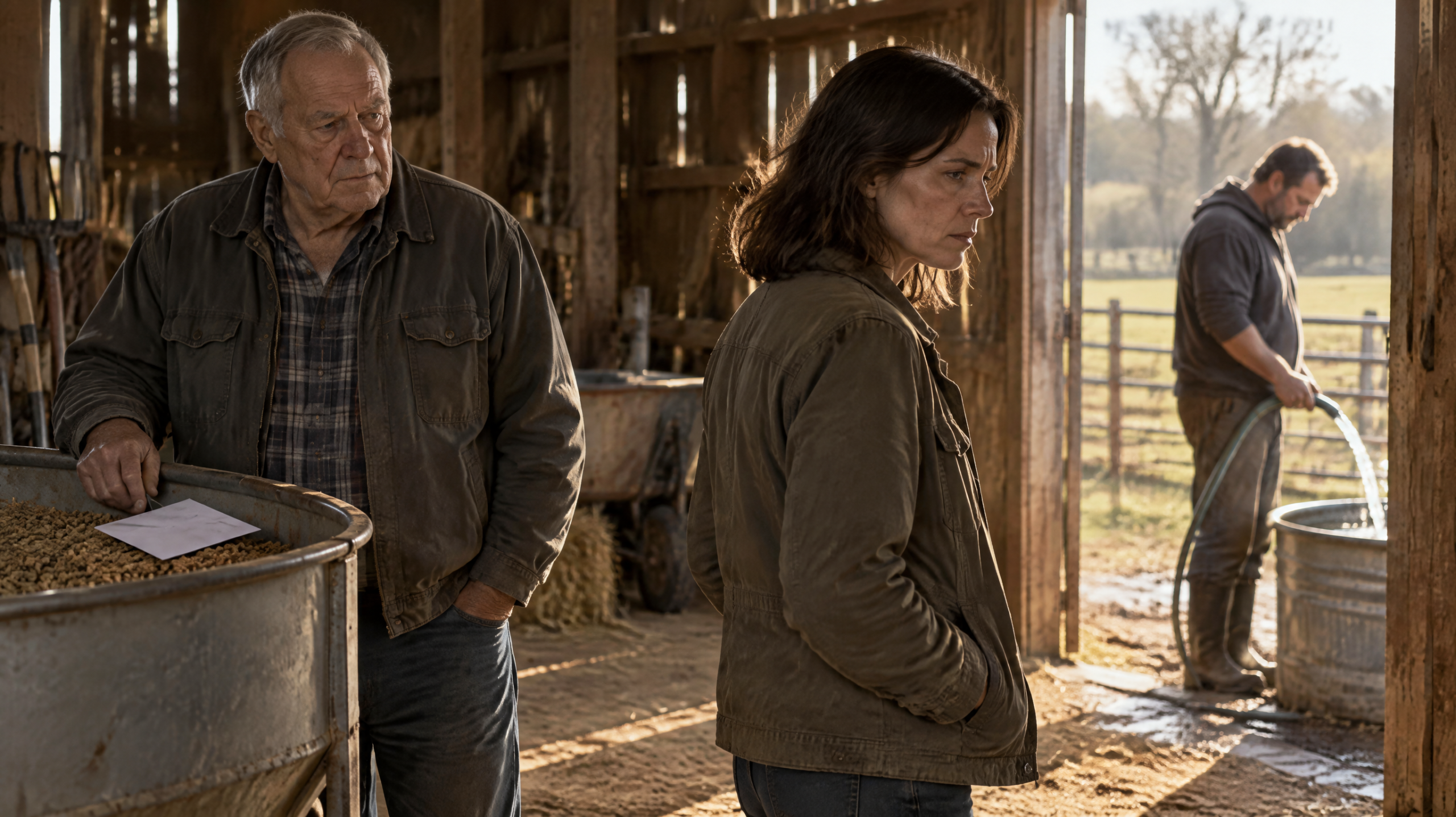
I left the envelope on the feed bin and walked out into the light. Desmond was at the water trough with the hose running, and he had heard all of it, because the barn is not a big barn.
“The forty thousand,” I said. “In the settlement. Where did it go?”
He turned the hose off. “The trucks.”
“The bank loan.”
“There wasn’t a bank loan.” He coiled the hose around his elbow, slow, and his voice went flat and tired. “Dad had it in his head that if I signed off on the household claims he’d paper it as a buyout and I could do the trucks outright. It was supposed to be clean. He said you’d never know, and I let him say it.”
“You sold me for forty thousand dollars and two trucks.”
“I sold a claim I didn’t think you had.” He hung the hose on its hook. “That’s the truth of it. I didn’t think you had one.”
I drove home with my hands at ten and two and did not turn on the radio.
Ilsa called Monday and asked whether I could drop a folder at the attorney’s office in town, since I was going that way, and since her hip was bad. I said I would. She left it in a rubber band on the porch rail, thick with estate correspondence, and I sat in the truck outside the office and opened it, because by then I had stopped being polite.
Two-thirds of the way down, stapled to a letter about the Kilkenny parcel, was a page from 2014. Estate letterhead, the attorney’s initials at the top.
Re: Ridge parcel. Keep Norah Kelleher off all family records circulated to heirs. No correspondence, no invitation lists, no statements. Treat payments as loans of the household and repay at sale.
I read it with the engine running and the heater going and the folder open on my knees. Eleven years. Every card. The girl at the print shop in town who typed the lists fresh, the blade that scratched the first ones out, the guest list with a hundred and eighteen family names and my name not among them. It was not spite. It was a decision, made at a desk, in an office with a view of the square, and then carried out every year like a chore.