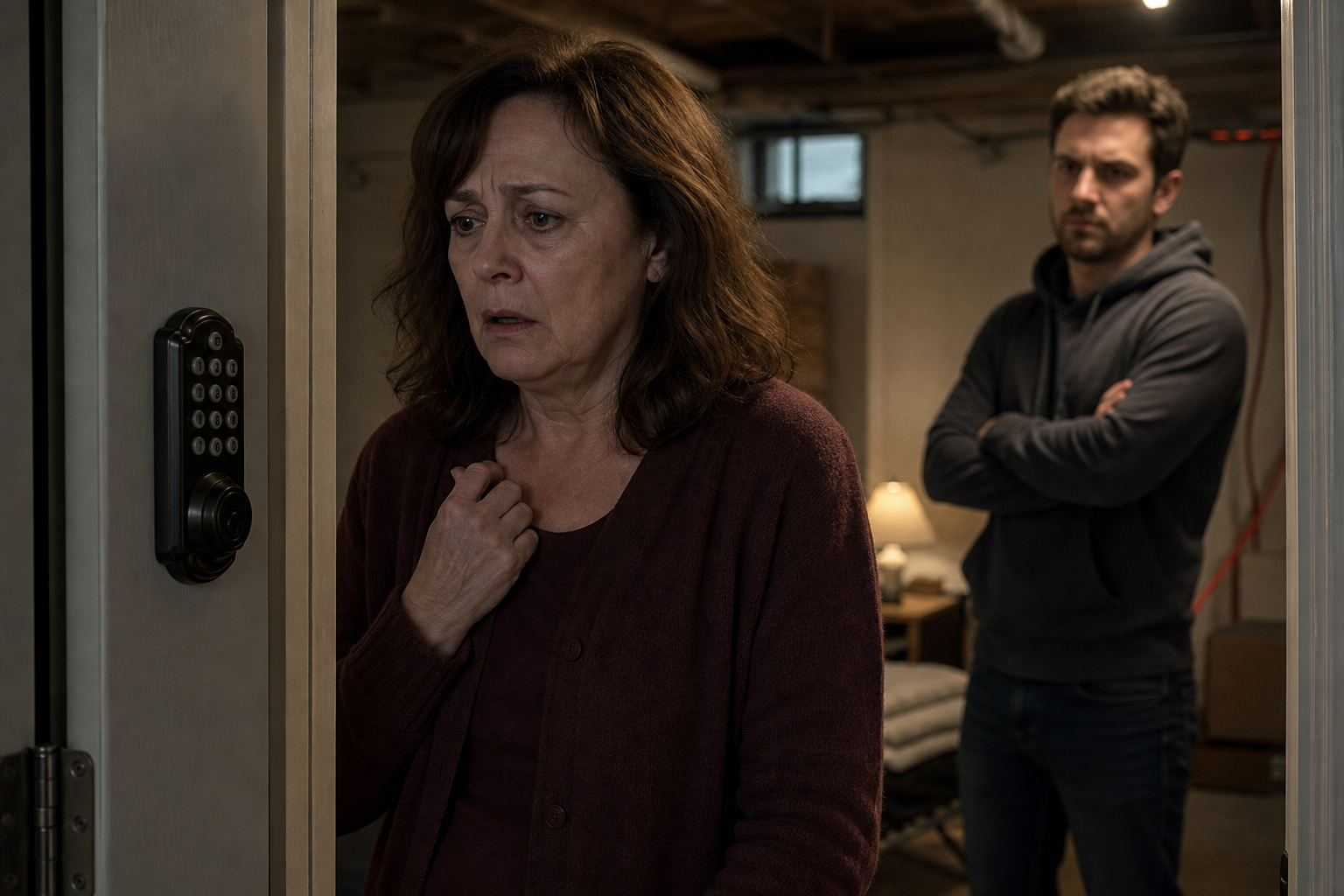

My landlord asked why a man I had never approved as a tenant had his own key to my apartment.
He asked it so calmly that it took me a second to understand what he was saying.
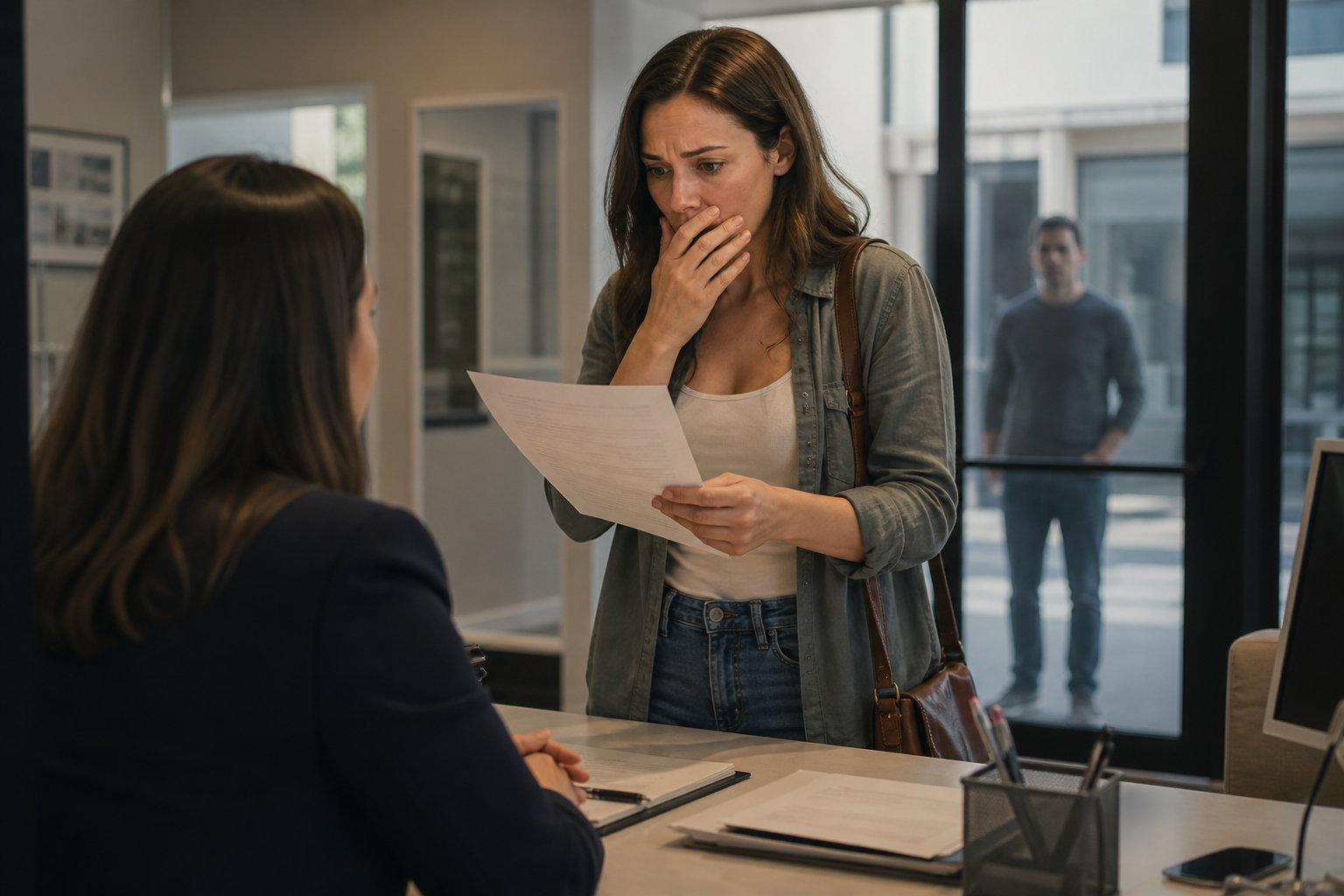
We were standing in the leasing office on a Wednesday morning. I had come downstairs because the receptionist called and said management needed a signature for a plumbing inspection. Instead, Mr. Alvarez folded his hands on the desk, looked at me over his reading glasses, and said, “Leah, if Travis has a key now, I need to know whether he’s living in the unit.”
My stomach dropped so hard I actually grabbed the chair in front of me.
“Travis doesn’t have a key,” I said.
Mr. Alvarez didn’t argue. He turned his monitor toward me. The security camera still showed the side entrance from an hour earlier. Travis let himself in with one hand while balancing a cardboard coffee tray in the other. No buzzing. No knocking. No Jenna opening the door for him. He used a key.
That was the moment I realized the problem in my apartment had grown roots while I was still calling it temporary.
Jenna and I had lived together for almost three years. We met at work in our twenties, stayed friends after I left, and eventually rented a two-bedroom when both of our old leases ended at the same time. She was messy, late with Venmo, and allergic to direct conflict, but she was also funny and loyal in the ways that used to matter to me. She brought soup when I had the flu. She knew how I liked my coffee. She sat with me in the emergency room when my brother split his chin open on black ice and I couldn’t reach anyone else.
So when she showed up in February crying over her breakup with Travis, I believed her when she said she was finally done.
“He’s sleeping in his car,” she told me at our kitchen table, mascara drying in streaks under her eyes. “Just for a few nights, until his cousin calls him back. Three nights, Leah. I swear.”
I remember putting my mug down before I answered.
“Three nights,” I said. “Not a week. Not ‘until things calm down.’ Three nights.”
She reached across the table and squeezed my wrist like I had just saved a life.
That should have been my first warning. People who plan to respect a boundary usually don’t thank you like they’ve beaten one.
At first, it looked manageable. Travis kept his duffel bag by the couch. He left in the morning before I did. He called me “ma’am” in that fake respectful tone some men use when they want credit for not being openly rude. On the third night, I came home from work and found him barefoot in our kitchen making eggs like he had always lived there.
Jenna didn’t even look embarrassed.
“His cousin fell through,” she said. “Just a couple more days.”
I reminded her what we agreed to. She nodded, apologized, and then did nothing.
A couple more days became a week. A week became his shampoo in our shower, his protein powder on my counter, and his work boots parked by the front door so I nearly broke my neck stepping over them one morning while carrying laundry.
Every time I brought it up, Jenna acted like I was interrupting a tragedy with paperwork.
“He’s having a hard time,” she would say.
“So am I,” I finally snapped one night. “I pay to live here too.”
She stared at me like that was somehow the less compassionate fact.
Our building is the kind that looks relaxed until you read the lease. No long-term guests without approval. No duplicate keys without management. No extra vehicles parked in the gated lot unless registered to a tenant. After a bad subletting mess last year, the rules got stricter. Everyone knew that.
Jenna knew it too.
That’s why she kept trying to turn the conversation into friendship instead of housing.
“You’re making this sound so formal,” she told me once, arms folded, while Travis sat six feet away pretending not to listen. “He’s not some random guy. He’s part of my life.”
“Then he can be part of your life somewhere else,” I said.
Travis laughed under his breath at that, and I hated him a little for how sure he seemed that I wouldn’t do anything real.
The first official sign of trouble came as a noise warning taped to our door. I wasn’t even home that night. I had driven to New Jersey after work to help my aunt after her cataract surgery and slept on her couch. When I got back, the notice said there had been shouting, a broken bottle in the hallway, and repeated complaints from the unit below us.
Jenna said the neighbors were exaggerating.
Travis said nothing.
Two days later, I found a stack of his mail on the entry table. Not junk mail. Bank mail. Insurance mail. A DMV envelope.
I held it up and asked Jenna why his address was our apartment.
She didn’t even blink. “He needed somewhere stable for paperwork.”
“Stable?” I said. “Jenna, that’s called establishing residency.”
“You always make everything sound worse than it is.”
I wish I could say that was the moment I drew the line. It should have been. Instead, I did what people do when they’re afraid of becoming the villain in someone else’s emergency: I told myself I would deal with it after the weekend, after payroll, after things were calmer.
Things did not get calmer.
The following Monday, I left early for work and noticed Travis’s car in our assigned lot with a resident parking sticker in the corner of the windshield. We only got one sticker per leaseholder, and mine was already on my car. When I texted Jenna, she replied with a heart and, I’ll explain later.
That same afternoon, my landlord called me into the office.
That was when he asked why Travis had a key.
He also asked why maintenance had received a request the week before for “replacement keys for both current occupants,” and why our file now contained an occupancy update form listing Travis as an additional resident contact. The form included Jenna’s signature and what was supposed to be mine.
I looked at the paper and felt heat climb into my face.
My name was there, but the signature was wrong. It looked like someone had tried to copy my handwriting after seeing it on a receipt.
“I didn’t sign this,” I said.
Mr. Alvarez studied me for a long second and nodded like the answer matched something he had already suspected.
“Then I need an honest answer right now,” he said quietly. “Is this an unauthorized occupant issue, or do I need to treat this as document fraud?”
That sentence changed everything for me.
Up until then, Jenna had framed the whole mess as me being impatient, uptight, unfeeling. But fraud is not a personality conflict. A forged signature is not a rough patch. And if management decided I was part of it, I could lose the apartment I had spent three years keeping afloat while Jenna bounced between late payments and apologies.
I asked if I could see the email attached to the form submission. Mr. Alvarez printed it for me. It had been sent from Jenna’s laptop under her name, with a note saying I was “already aware and in agreement.”
I felt something in me go cold and orderly.
For months I had been trying not to embarrass her. She had not returned the favor even once.
I asked Mr. Alvarez for ten minutes.
I went upstairs, unlocked the apartment, and found Jenna curled on the couch in Travis’s sweatshirt while daytime television played in the background. Travis was in the shower.
I put the forged form on the coffee table.
“Tell me right now why management has paperwork adding Travis to the apartment with my fake signature.”
Jenna sat up so fast the blanket fell to the floor.
For one second, I saw the truth on her face before the excuses arrived. She knew. She had always known.
“Leah, listen—”
“No. You listen.” My voice shook, but I didn’t lower it. “Did you forge my name?”
She started crying almost immediately, which used to work on me better than logic ever did.
“I was going to tell you,” she said. “We just needed more time. He can help with rent. This could actually be better for all of us.”
“You forged my name.”
“Because you would have said no!”
That was the first honest thing she had said.
Travis came out of the hallway toweling his hair and stopped when he saw us. He looked annoyed more than shocked, like I was making the apartment unpleasant.
“What’s going on?” he asked.
“You’re going,” I said.
He laughed once. “It’s not just your place.”
Jenna actually put a hand up toward me like she was calming down a difficult customer.
“Can we please do this tonight? You don’t need to drag management into it.”
I looked at the forged signature again. Then I looked at my own front door, at his boots, at the mail with our address on it, at the key ring on the counter that suddenly made horrible sense.
“You already dragged management into it,” I said.
I went back downstairs and told Mr. Alvarez everything.
I told him Travis was never approved by me, that the signature was forged, that the guest had overstayed by months, and that I wanted a written record showing I had objected. I also told him I would cooperate fully if they needed screenshots of my texts or a statement.
He was kinder than I expected. He said they would treat the forged document separately from the occupancy violation and that my immediate report mattered. Because I had been in good standing for years, he offered me a transfer to a smaller one-bedroom on the third floor that would open the following week. I would lose the extra space, but not my housing.
I signed the transfer before I could talk myself out of protecting myself.
Jenna called me heartless. Travis called me dramatic. Then Jenna’s older sister called and asked if I really thought forcing them out over “one mistake” was worth ending a friendship.
I said yes.
Because it wasn’t one mistake. It was three nights turned into months. It was mail, keys, parking stickers, lies, noise complaints, and my name copied onto a legal document because my boundaries were apparently easier to steal than respect.
I moved the next Saturday with two coworkers and a borrowed dolly. Jenna stayed in the old unit for exactly eleven more days before management terminated her lease. The last text she sent me said I had abandoned her when she was drowning.
I didn’t answer.
Some people call it abandonment whenever you stop letting them climb onto your back.
And maybe that makes me cold. Maybe it just means I finally learned that protecting your home is not the same thing as betraying a friend.
If housing boundaries and hidden paperwork are your kind of slow-burn nightmare, you might also want to read My Best Friend Said She Only Needed My Name on a Storage Unit for One Month — Then the Manager Called About the Auction and “He’s Not a Tenant, He’s Family” — What My Son Said After I Found a Keypad Lock on My Basement Door.